How to Clean Fingernails: 7 Easy Steps at Home
Quick Answer
To clean fingernails safely, wash your hands with mild soap and running water, gently brush beneath the visible nail tips, and rinse away loosened dirt. For stubborn debris, soak your fingertips in warm, soapy water for 2–5 minutes before brushing. Dry thoroughly and moisturize your cuticles. Never dig under your nails with sharp tools or use household bleach.
Time needed
5–10 minutes
Difficulty
Beginner
Items needed
4–6 basic items
Result lasts
Until nails get dirty again
Your fingernails collect more dirt than you might notice, especially when you’re cooking, gardening, applying makeup, or going about your daily routine. Even a beautiful manicure can look untidy when debris builds up beneath the nail tips.
Luckily, you don’t need expensive salon treatments or harsh cleaning solutions. Learning how to clean fingernails correctly takes just a few minutes and a handful of gentle products.
This guide walks you through the safest cleaning steps, common mistakes to avoid, and easy habits that keep your natural nails looking fresh between manicures.


What Do You Need to Clean Fingernails at Home?
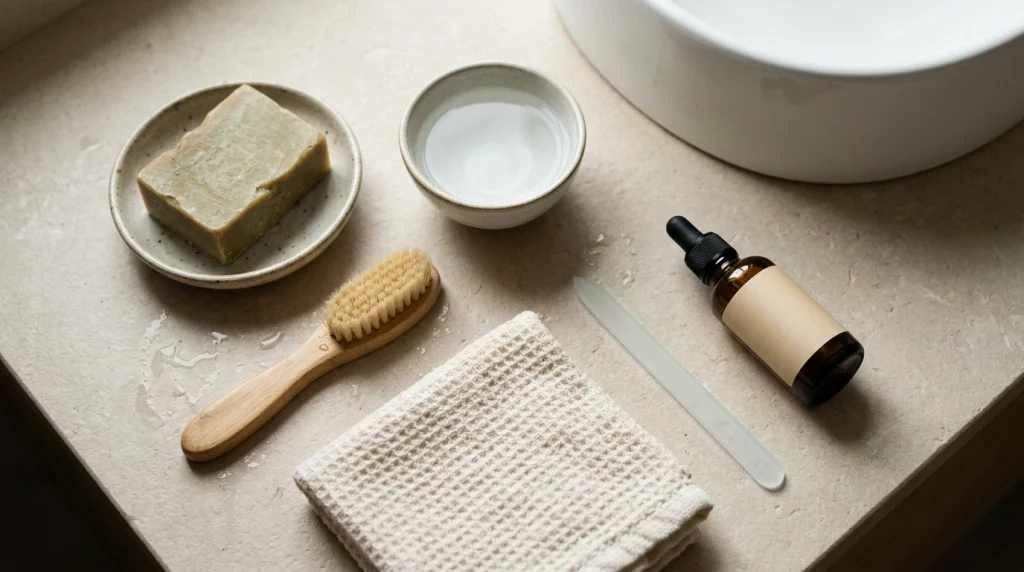
Before you start, gather a few basic supplies. You probably already have most of them beside your bathroom sink.
- Mild hand soap: Helps loosen everyday oils, grime, and dirt without requiring harsh chemicals.
- Comfortably warm water: Softens stubborn debris beneath your nail tips.
- Soft-bristled nail brush: Gently removes visible dirt from the free edges and around your nails.
- Clean towel: Helps dry your fingertips thoroughly after washing.
- Nail clippers or fine-grit nail file: Optional tools for shortening long nails and smoothing rough edges.
- Hand cream or cuticle oil: Replenishes moisture after cleaning.
A soft brush is particularly useful if you regularly wear longer natural nails. Choose gentle bristles rather than a stiff scrubbing brush, which may irritate the delicate skin around your nails.
If you’re shopping for basic supplies, a soft nail cleaning brush is a practical addition to your manicure kit.
You don’t need professional salon equipment for routine hygiene. The goal is to loosen dirt and wash it away, not scrape the underside of your nail plate.
How to Clean Fingernails Step by Step
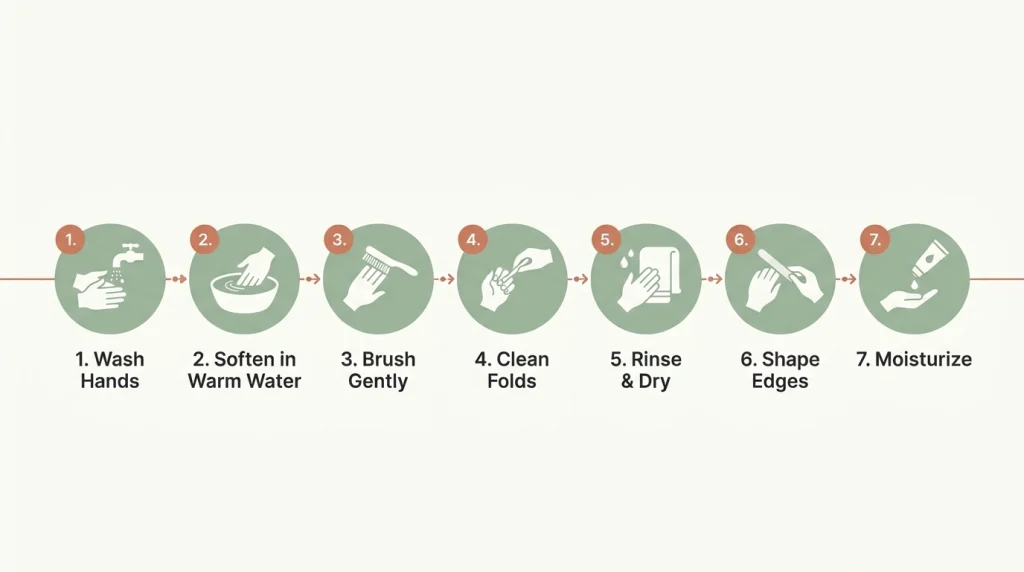
Follow these seven steps whenever your fingernails look dirty or you want to refresh them before a manicure.
Step 1: Wash Your Hands With Mild Soap
1. Wash Away Surface Dirt
Wet your hands under clean running water and apply mild soap. Rub your palms, backs of your hands, between your fingers, and around your fingernails for at least 20 seconds.
Pay attention to the fingertips because dirt often collects around the nail edges. Rinse away the soap and visible grime.
Common mistake: Washing only your palms. Dirt around the fingertips and nail edges may remain even when the rest of your hands look clean.
Step 2: Soften Stubborn Dirt With Warm Water
2. Soak Your Fingertips Briefly
If dirt remains beneath your nails, fill a small bowl with comfortably warm water and a little mild hand soap. Soak your fingertips for approximately 2–5 minutes.
This helps soften dried mud, food residue, and other stubborn debris so you can remove them without aggressive scraping.
Common mistake: Using very hot water or soaking for too long. Excessive water exposure may contribute to dryness and temporarily soften your nails.
If you’re unsure which liquids are appropriate, explore this guide to safe fingernail cleaning soaks.
Step 3: Clean Beneath Your Fingernails Gently
3. Brush Under the Visible Nail Tips
Wet a clean, soft-bristled nail brush and add a small amount of soap. Gently brush the accessible underside of your nail tips using light, controlled movements.
Focus on the free edge, where the nail extends past your fingertip. Stop if brushing causes discomfort.
Common mistake: Pushing a metal nail cleaner deep beneath the nail. This may injure the sensitive tissue underneath and encourage nail separation.
Warning
Never use needles, scissors, toothpicks, or other sharp objects to dig beneath your fingernails. If debris cannot be reached comfortably with a soft brush, avoid forcing it out.
Step 4: Clean Around the Nail Folds and Cuticles
4. Gently Wash the Skin Around Your Nails
Use your soapy fingertips or a very soft brush to clean the skin around each nail. Remove visible residue without cutting or lifting the protective skin at the nail base.
Healthy cuticles and nail folds help protect the area where your nails grow. Keeping them intact is more important than making them look perfectly trimmed.
Common mistake: Cutting living cuticle tissue to create a cleaner appearance. This can leave small wounds and increase irritation.
Step 5: Rinse and Dry Your Fingernails Thoroughly
5. Rinse Away Soap and Loosened Debris
Rinse your hands thoroughly under clean running water. Check the visible undersides of your nails and repeat gentle brushing only if necessary.
Pat your hands dry with a clean towel. Make sure the spaces between your fingers and around the nails are dry rather than leaving moisture trapped against the skin.
Common mistake: Leaving your hands damp after washing. Repeated prolonged moisture exposure can contribute to skin irritation.
Step 6: Trim and Smooth Rough Nail Edges
6. Shape Your Nails if Needed
Inspect each fingernail for rough edges or uneven length. If needed, use clean nail clippers to shorten the free edge, then smooth sharp corners with a fine-grit file.
Keep a practical length that suits your routine. Shorter nails are generally easier to clean, especially if you garden, cook frequently, or work with your hands.
Common mistake: Cutting nails painfully short or filing aggressively. Both can create tenderness and unnecessary nail damage.
Step 7: Moisturize Your Nails and Cuticles
7. Finish With Moisture
Apply a small amount of fragrance-free hand cream or cuticle oil after your nails are completely dry. Massage it gently around the nail folds and fingertips.
Moisturizing helps reduce dryness from repeated handwashing and keeps the skin surrounding your nails comfortable.
Common mistake: Applying oily products immediately before regular nail polish. Residual oil on the nail plate can interfere with polish adhesion.
Pro Tip
Keep a dedicated soft nail brush near your sink and allow it to dry between uses. A clean, dry brush is more hygienic than one left sitting in a damp container.
How Do You Remove Stubborn Dirt Under Fingernails?
Sometimes ordinary handwashing doesn’t remove everything, particularly after gardening, handling potting soil, or doing messy household projects.
Start by repeating a short warm, soapy-water soak. Then gently brush the accessible underside of each nail and rinse thoroughly.
If dirt persists, avoid increasing the pressure. Repeated hard scraping can irritate the skin under your nails and may cause the nail plate to lift away from its attachment.
For people with longer nails, regular gentle cleaning is easier than allowing layers of debris to accumulate. Consider shortening your nails temporarily if your activities make them difficult to keep clean.
You can also follow this more detailed seven-step home nail cleaning routine when you want to combine basic hygiene with nail shaping and moisturizing.
What Should You Avoid When Cleaning Fingernails?
More powerful cleaning products aren’t necessarily better. Many popular home remedies are unnecessary for routine dirt removal and can irritate your skin.
Avoid Household Bleach and Strong Disinfectants
Never soak your nails in household bleach or surface-cleaning chemicals. These products are not intended for routine skin cleansing and may cause irritation or chemical injuries.
Don’t Scrub With Toothpaste or Abrasive Powders
Toothpaste, baking soda mixtures, and abrasive whitening products are popular online, but they aren’t needed for regular nail cleaning. Scrubbing too firmly may irritate the surrounding skin.
Don’t Use Acetone as an Everyday Nail Cleaner
Acetone has a specific purpose in removing certain nail products. It isn’t necessary for washing everyday dirt from natural nails and can leave the skin feeling dry.
Don’t Dig Deep Beneath the Nail Plate
The tissue beneath your nail is sensitive. Pushing sharp tools into this area can cause small injuries, pain, or separation of the nail from its bed.
Warning
If your nail becomes painful, swollen, unusually discolored, loose, or produces drainage, don’t treat it as ordinary dirt. A healthcare professional can assess possible infection or other nail conditions.
How Often Should You Clean Your Fingernails?
Clean your hands regularly throughout the day, including before preparing food, before eating, after using the bathroom, and whenever they become visibly dirty.
Pay attention to your nail tips during normal handwashing. You don’t need a long soaking session every day if your nails are already clean.
A deeper nail-care session can be useful after gardening or other activities that leave visible debris. Use gentle brushing only when needed, and avoid overworking your nail folds.
For everyday maintenance, focus on three practical habits:
- Wash your hands thoroughly and clean beneath the nail tips when needed.
- Keep nails at a manageable length and smooth any snags.
- Apply hand cream after washing whenever your skin feels dry.
For a longer-term routine, see the best nail care routine for healthy nails.
How Can You Keep Fingernails Cleaner Between Washes?
Keeping nails clean is easier when you prevent unnecessary buildup rather than repeatedly scrubbing away stubborn grime.
Wear Gloves for Messy Activities
Gardening gloves help keep soil from collecting beneath your nails. Waterproof household gloves can also protect your hands during dishwashing and cleaning.
Keep Your Nail Length Practical
Long nails can look beautiful, but they require extra attention. If you frequently work with food, soil, or craft materials, a shorter nail length may be easier to maintain.
Clean Your Nail Tools After Use
Wash reusable brushes and manicure tools according to their material and manufacturer instructions. Allow brushes to dry thoroughly before storing them.
Avoid sharing personal nail tools, particularly when anyone has signs of a nail infection.
Moisturize After Frequent Washing
Repeated washing can leave fingertips and nail folds feeling dry. A simple fragrance-free moisturizer helps maintain comfortable skin without requiring an elaborate treatment routine.
Pro Tip
If you wear polish, inspect your natural nails whenever you remove it. Cleaning and checking bare nails gives you an opportunity to notice lifting, unusual discoloration, or irritation before applying another manicure.
What Are the Do’s and Don’ts of Fingernail Cleaning?
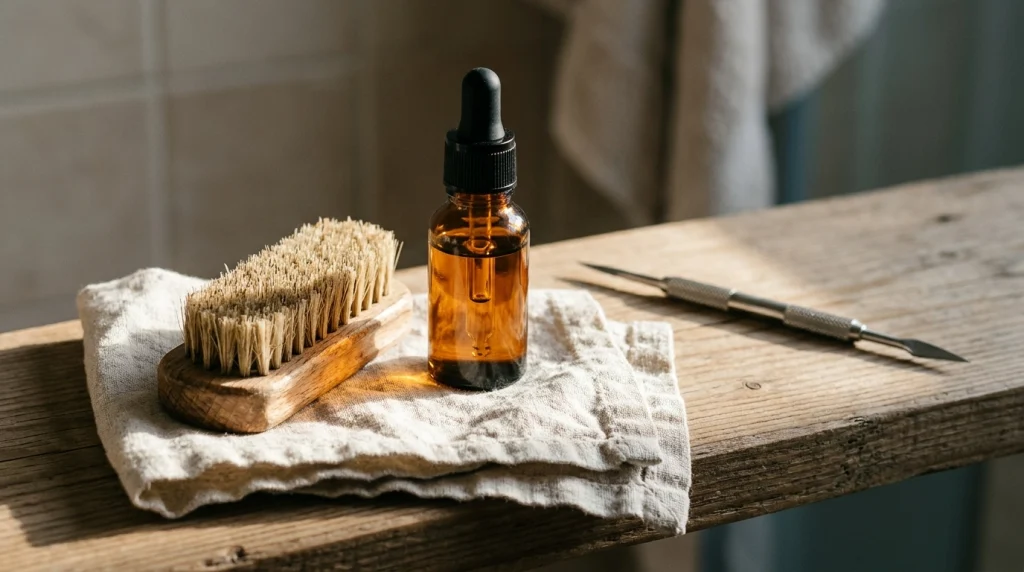
Do
- Use mild soap and running water.
- Choose a soft nail brush.
- Clean visible nail tips gently.
- Dry your hands thoroughly.
- Moisturize dry nail folds.
- Keep nail tools clean.
Don’t
- Dig with sharp metal tools.
- Use bleach on your nails.
- Scrub painfully hard.
- Cut healthy cuticle tissue.
- Share manicure equipment.
- Ignore painful nail changes.
Which Nail Cleaning Products Are Worth Having?
You can maintain clean fingernails with inexpensive essentials. Choose products based on their purpose rather than buying a large manicure kit with tools you may never use.
A Soft Nail Cleaning Brush
A soft-bristled brush can help remove dirt from the accessible underside of longer nails. Look for comfortable bristles, an easy-to-grip handle, and a design that can be rinsed and dried after use.
Recommended Product Type
Soft-Bristled Fingernail Cleaning Brush
A gentle brush helps loosen everyday dirt beneath reachable nail tips without relying on sharp cleaning tools.
As an Amazon Associate, we earn from qualifying purchases.
A Gentle Hand Cream
Choose a hand cream that helps relieve dry skin after washing. A fragrance-free formula may be a better option if your skin is sensitive.
For a simple option, browse fragrance-free hand creams suitable for regular moisturizing.
A Fine-Grit Nail File
A fine-grit file helps smooth sharp or uneven edges that can trap debris or catch on fabric. Use gentle pressure and replace worn disposable files when necessary.
You can compare fine-grit nail files for natural nails if your existing file feels too rough.
Why Do My Fingernails Still Look Dirty After Washing?
If your nails don’t look clean after following these steps, consider whether the issue is actually removable dirt.
Problem: Dirt remains beneath long nails
Try a short soapy-water soak followed by gentle brushing. If debris is inaccessible, don’t dig deeper. Keeping nails shorter may make future cleaning easier.
Problem: Nails look yellow after cleaning
Yellow discoloration may come from polish staining or another nail condition rather than dirt. Don’t scrub aggressively. Have persistent or unexplained changes assessed professionally.
Problem: Cuticles feel dry after washing
Apply fragrance-free hand cream after drying your hands. Use comfortably warm rather than hot water, and avoid unnecessary abrasive scrubbing.
Problem: Dark material won’t brush away
Stop trying to scrape it out. Persistent discoloration, debris beneath a lifting nail, or a new dark streak should be assessed by a healthcare professional rather than treated with stronger cleaners.
Can You Clean Fingernails With Gel Polish or Acrylic Nails?
Yes. You can still wash your hands and gently clean accessible nail tips when you’re wearing gel polish, acrylics, or press-on nails.
Use mild soap and water, avoid forcing a brush beneath attached products, and dry your hands thoroughly. Don’t pry at artificial nails or introduce tools into spaces where the enhancement has lifted.
If an artificial nail separates from the natural nail, moisture and debris may collect in the gap. Don’t seal a visibly dirty or suspicious area with more glue. Arrange safe removal or professional assessment when appropriate.
For more specific maintenance instructions, see how to clean gel nails safely at home.
Frequently Asked Questions About Cleaning Fingernails
Q: What is the best way to clean dirt under fingernails?
A: Wash with mild soap and running water, then use a clean soft-bristled nail brush on the visible underside of your nails. Soften stubborn debris with a brief warm-water soak before brushing.
Q: Can I use baking soda to clean fingernails?
A: Baking soda isn’t necessary for routine fingernail cleaning. Mild soap and water are usually sufficient, while abrasive scrubbing may irritate the skin around your nails.
Q: How do you clean fingernails without a nail brush?
A: Wash your hands thoroughly and gently rub your nail tips against your soapy palm to help clean beneath the accessible edges. Rinse well and avoid substituting sharp objects for a brush.
Q: How long should I soak fingernails before cleaning?
A: For stubborn everyday dirt, approximately 2–5 minutes in comfortably warm, soapy water is generally enough. You don’t need extended soaking to clean your nail tips.
Q: Does hand sanitizer clean underneath fingernails?
A: Hand sanitizer can reduce many germs when used correctly, but it doesn’t physically remove visible dirt trapped beneath nails. Soap and running water are the better choice when your nails are visibly dirty.
Final Thoughts: Keep Fingernail Cleaning Simple
Learning how to clean fingernails doesn’t require expensive products or harsh treatments. Mild soap, clean water, a soft brush, and gentle drying are usually all you need to remove everyday dirt safely.
Make nail hygiene part of your regular handwashing routine, protect your cuticles, and avoid sharp cleaning tools. Save this guide to your Pinterest nail-care board so you can revisit these simple steps whenever your nails need a refresh.

Hi, I’m Jessica, the creator behind Unique Lash & Nails Katy.
I created this website for anyone who loves beautiful nails as much as I do. Here, I share trendy nail designs, seasonal manicure ideas, easy nail care tips, honest product recommendations, and step-by-step guides to help you create salon-worthy nails at home. Whether you’re looking for everyday inspiration or your next favorite nail trend, I hope you’ll find something you love.