How to Care for Ridged Nails: Easy Daily Tips
Quick Answer
To care for ridged nails, moisturize your nails and cuticles daily, keep your nails short and gently filed, and protect your hands from repeated water exposure and harsh chemicals. Avoid aggressive buffing, which can thin the nail plate. Vertical ridges are often harmless, but new horizontal grooves, painful changes, or unusual discoloration deserve medical attention. Consistent care helps protect your nails as they grow.
Have you noticed tiny lines running along your fingernails, making your favorite glossy manicure look uneven? Nail ridges are common, and many don’t indicate anything serious. Still, they can be frustrating when you love smooth, beautiful nails.
The secret isn’t trying to erase every ridge. It’s understanding what causes the lines, protecting your natural nail plate, and building a gentle routine that makes your nails look their best.
Here’s how to care for ridged nails at home, which products can help, what to avoid, and when a change in nail texture needs professional attention.


What Are Nail Ridges, and Why Do They Appear?
Nail ridges are raised lines or depressed grooves in the surface of your fingernails or toenails. Some run from the cuticle to the tip, while others extend across the nail from side to side.
Your nails form in the nail matrix, the growth area beneath the skin near the base of each nail. Changes in nail production can affect the texture of the nail plate as it grows outward.
Not every ridge means that your nails are unhealthy. The direction, depth, and timing of the changes provide important clues.
Vertical Nail Ridges
Vertical ridges travel from your cuticle toward the free edge of your nail. They’re sometimes called longitudinal ridges.
These lines are especially common as you get older. Age-related changes in nail growth can make them more noticeable, even when your nails are otherwise healthy.
Fine vertical ridges usually don’t require medical treatment. However, pronounced splitting, roughness, or rapidly changing nail texture may need assessment.
Horizontal Nail Ridges
Horizontal ridges travel across your nail rather than along its length. Deep horizontal grooves may be called Beau’s lines.
These grooves can develop when nail growth temporarily slows or stops. Possible triggers include significant illness, injury, and certain medical treatments.
Unlike common fine vertical ridges, new deep horizontal grooves shouldn’t automatically be treated as a cosmetic concern. A healthcare professional can help determine what caused them.
Can Dryness Make Nail Ridges Worse?
Dryness doesn’t explain every nail ridge, but brittle or damaged nails may show roughness, splitting, and an uneven surface more prominently.
Frequent exposure to detergents, water, solvents, and aggressive manicure techniques can make nails more vulnerable to damage.
Moisturizing won’t permanently remove age-related ridges. It can, however, improve the condition of the surrounding skin and help keep nails from becoming excessively dry and brittle.
How Can You Care for Ridged Nails at Home?

You don’t need an expensive salon treatment or a complicated routine. A few consistent habits can protect your natural nails while improving how they look and feel.
1. Moisturize Your Nails and Cuticles Every Day
Start with one of the simplest habits: moisturizing your nail plates, cuticles, and surrounding skin.
After washing your hands, apply a fragrance-free hand cream. Massage a little cream over each nail and around the cuticle area.
At bedtime, you can add a small amount of jojoba oil or a dedicated cuticle oil to help soften dry skin around your nails.
If your hands are extremely dry, a thin layer of petroleum jelly over your fingertips before bed can help reduce moisture loss.
Best for: Nails accompanied by dry cuticles, rough fingertips, or frequent handwashing.
Limitation: Moisturizers support nail care but cannot reverse structural ridges already formed within the nail plate.
2. Keep Your Nails at a Manageable Length
Long nails experience more leverage when they catch on clothing, keyboards, or everyday objects. If your ridged nails are also brittle, this increases the chance of splitting.
Keep your nails at a comfortable length, especially while you’re trying to prevent further breakage.
Trim with clean, sharp nail clippers and lightly round the corners to reduce snagging. You can maintain a short oval or squoval shape, depending on your preference.
Best for: Ridged nails that split at the tips or catch on fabric.
Limitation: Trimming prevents mechanical damage but doesn’t change how ridges form.
3. File Rough Edges Gently
A smooth nail edge is less likely to catch, peel, or crack.
Choose a fine-grit file suitable for natural nails. Use gentle, controlled strokes to shape the free edge without pressing hard or repeatedly filing the nail surface.
If a nail has a split or snag, shorten it carefully rather than trying to pull away the damaged layer.
A fine glass nail file can be convenient because its smooth filing surface allows controlled shaping.
Best for: Nails with uneven tips or minor edge roughness.
Limitation: Filing the edge won’t flatten ridges on the top surface.
4. Protect Your Nails From Water and Cleaning Chemicals
Frequent cycles of wetting and drying can weaken nails and contribute to brittleness.
Wear protective gloves when washing dishes, cleaning bathrooms, or handling household detergents. Choose gloves that fit comfortably, and dry your hands thoroughly afterward.
For longer cleaning sessions, breathable cotton liners may make protective gloves more comfortable.
After removing your gloves, wash away any cleaning-product residue if necessary and moisturize your hands.
For more everyday protection strategies, explore our daily nail care routine.
Best for: Anyone who regularly washes dishes, cleans, or works with water.
Limitation: Gloves reduce external stress but can’t treat medical causes of nail changes.
5. Avoid Aggressive Nail Buffing
Buffing is tempting when you want the ridges to disappear before applying polish. Unfortunately, repeatedly removing layers from the nail surface can leave it thinner and more prone to damage.
Rather than trying to grind away every line, embrace the natural texture or use a cosmetic ridge-filling base coat.
If you occasionally use a gentle buffer, follow its instructions and stop immediately if your nails feel thin, sensitive, or warm from friction. Skipping surface buffing altogether is generally the safer option for brittle nails.
Warning
Never deeply sand, scrape, or drill the nail surface to remove ridges. A damaged nail plate cannot be repaired instantly, and excessive thinning can lead to discomfort, splitting, or breakage.
6. Choose Gentle Manicure Products
You don’t have to abandon pretty manicures because you have vertical nail ridges.
A ridge-filling base coat can temporarily create a more even-looking surface beneath regular nail polish. Choose a formula compatible with your polish and follow the manufacturer’s directions.
Apply thin layers rather than loading your brush with a thick coat. Allow each layer to dry before adding another.
When removing polish, avoid scraping or peeling it off. Use a suitable remover gently, then moisturize afterward.
Best for: People who want smoother-looking color without removing nail layers.
Limitation: Ridge fillers improve appearance temporarily; they don’t remove the underlying ridges.
Which Nail Care Products Actually Help Ridged Nails?
The most useful products are often simple ones. Focus on protecting your nails rather than buying treatments that promise unrealistic overnight transformations.
Cuticle Oil for Dry Nail Surroundings
A lightweight cuticle oil can make daily nail care more comfortable, particularly when your skin becomes dry after handwashing.
Look for a formula with ingredients such as jojoba oil, sunflower oil, or vitamin E. If your skin is sensitive, prioritize fragrance-free products.
Recommended Product Type
Jojoba Cuticle Oil
Useful for softening dry cuticles and making your moisturizing routine easier to maintain. It doesn’t remove nail ridges.
As an Amazon Associate, we earn from qualifying purchases.
Glass Nail File for Controlled Shaping
A fine glass file is a practical addition to your nail kit when you frequently experience rough edges.
Choose a smooth, fine filing surface and clean the file according to its manufacturer’s instructions.
Remember that the goal is to shape the edge, not file away the ridges on top.
Recommended Product Type
Fine Glass Nail File
A reusable option for gently smoothing nail edges without aggressive surface buffing.
As an Amazon Associate, we earn from qualifying purchases.
Ridge-Filling Base Coat for Smoother-Looking Polish
If your main concern is the appearance of fine vertical lines, a ridge-filling base coat can be more appropriate than buffing.
These cosmetic formulas help smooth the appearance of the surface beneath polish. They’re especially useful for simple, glossy manicures where nail texture might otherwise show through.
Choose a product that dries evenly and doesn’t cause irritation or sensitivity.
Recommended Product Type
Ridge-Filling Nail Base Coat
A temporary cosmetic solution for achieving a more even-looking manicure without sanding down natural ridges.
As an Amazon Associate, we earn from qualifying purchases.
What Daily Routine Should You Follow for Ridged Nails?
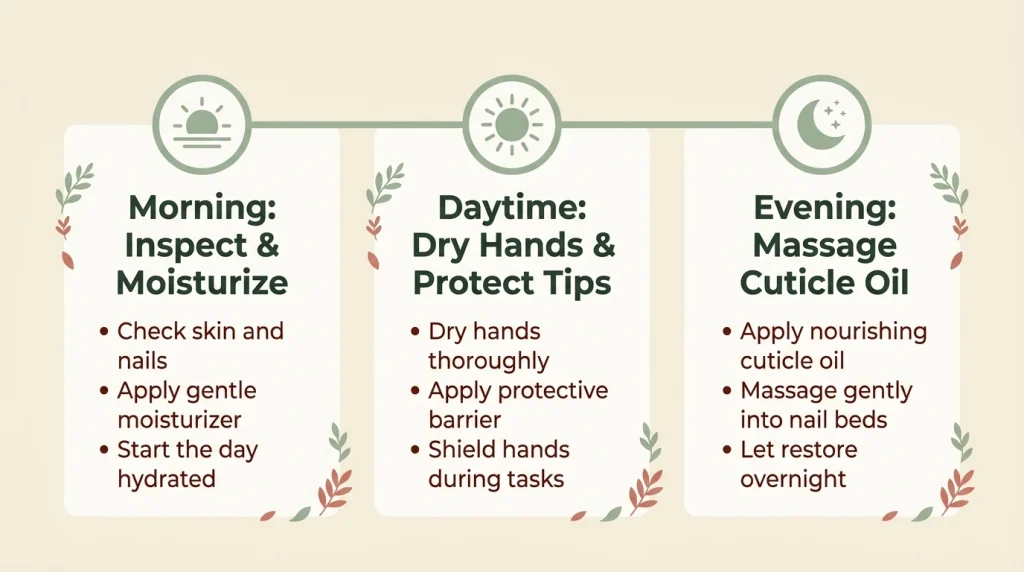
Long-term nail care works best when it’s simple enough to repeat. You don’t need to spend half an hour every morning treating your nails.
Morning: Protect and Moisturize
- Look at your nails briefly for new cracks, unusual color changes, or tenderness.
- Apply hand cream over your nails and surrounding skin.
- Keep protective gloves available if you’ll be cleaning or washing dishes.
- Avoid picking at rough cuticles or using your nails to open containers.
During the Day: Minimize Damage
- Moisturize after washing your hands whenever practical.
- Dry your fingertips carefully after prolonged water exposure.
- Use a tool rather than your fingernail to remove stickers or open packaging.
- Protect any split nail from catching on clothing.
Evening: Condition Your Nails
- Clean your hands gently and dry them.
- Massage a small amount of cuticle oil or moisturizing cream around each nail.
- Apply an additional layer of thicker moisturizer if your skin feels dry.
- Check that nail edges are smooth and free from snags.
Pro Tip
Keep your hand cream beside your soap or toothbrush. Connecting nail care to an existing habit makes it easier to moisturize consistently without adding another complicated beauty routine.
How Often Should You Maintain Ridged Nails?
Daily moisturizing is helpful, but trimming and filing don’t need to happen every day.
Once a week, inspect your nails for splits, rough tips, or changes in texture. File only where necessary, and check whether your manicure products are causing dryness or irritation.
Trim your nails whenever their length becomes uncomfortable or they begin catching on objects. You may need to do this every one to two weeks, depending on your growth rate.
For a more complete schedule, see our guide to building a practical nail care routine.
How Long Does It Take for Ridged Nails to Improve?
There isn’t one universal timeline because the answer depends on why your ridges appeared.
Moisturizing products may make dry cuticles and surrounding skin feel softer soon after application. A ridge-filling base coat can improve the appearance of a manicure as soon as it’s applied.
Structural changes are different. Your fingernails grow gradually, typically around three millimeters per month, although individual growth rates vary.
Replacing an entire fingernail often takes approximately four to six months. Toenails generally take longer.
If ridges developed because of a temporary interruption in nail growth, they may gradually move toward the tip as healthy nail grows behind them, provided the underlying cause has resolved.
Age-related vertical ridges may remain visible despite excellent care. Your goal should be maintaining a strong, comfortable nail plate rather than expecting perfectly smooth nails.
What Should You Eat to Support Healthy Nail Growth?
Your nails are primarily made of keratin, a structural protein. Your body also needs adequate nutrients to support normal nail production.
A balanced diet containing enough protein, iron, zinc, and other essential nutrients supports general health and normal tissue growth.
Include foods such as eggs, beans, lentils, fish, poultry, nuts, seeds, and vegetables according to your dietary needs.
However, visible nail ridges don’t automatically mean you’re deficient in vitamins or minerals. Taking supplements without knowing whether you need them may offer no benefit.
For example, high-dose biotin supplements can interfere with certain laboratory tests. Discuss supplements with a qualified healthcare professional rather than using them as a guaranteed ridge treatment.
If you have unexplained nail changes accompanied by fatigue, hair changes, or other symptoms, a clinician can assess whether testing is appropriate.
What Should You Do and Avoid With Ridged Nails?
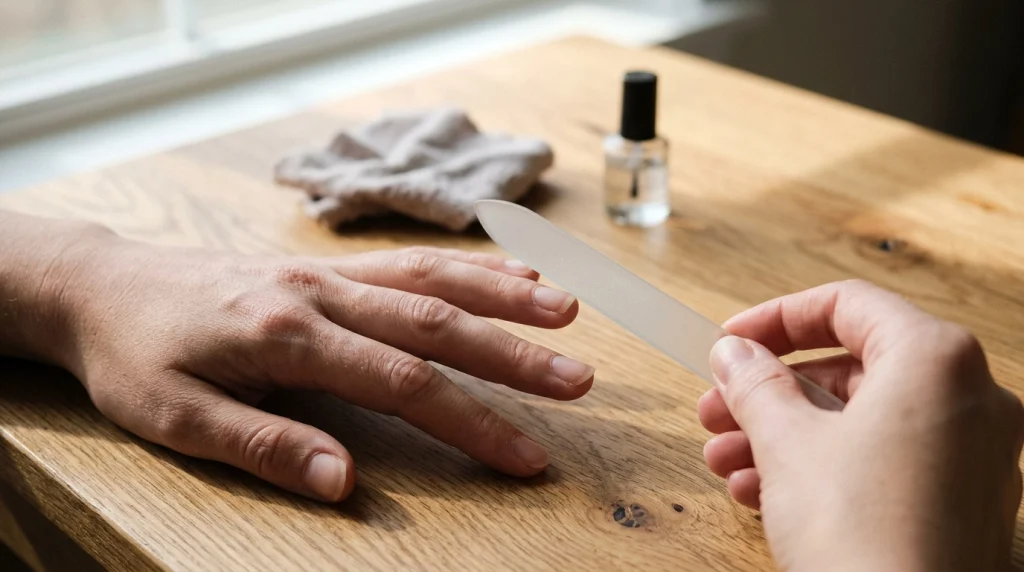
Do
- Moisturize your nails and cuticles daily.
- Keep nail edges smoothly filed.
- Wear gloves when using cleaning chemicals.
- Choose gentle polish removal methods.
- Monitor new or changing nail abnormalities.
- Allow damaged nails time to grow.
Don’t
- Buff away deep nail layers.
- Peel off gel or acrylic enhancements.
- Cut or tear your cuticles.
- Use your nails as tools.
- Assume every ridge is a vitamin deficiency.
- Ignore painful or rapidly changing nails.
How Can You Prevent Ridged Nails From Splitting?
If your nail ridges are accompanied by splitting, concentrate on reducing everyday mechanical damage.
Shorten nails that repeatedly catch on fabric. Avoid excessively pointed shapes while the tips are fragile, and gently smooth any rough edges.
Keep your fingertips protected from cleaning chemicals, and avoid repeatedly soaking your nails in water.
If you wear gel or acrylic enhancements, have them removed using safe methods rather than pulling them away from the natural nail plate.
Our guide on how to stop nails from breaking covers additional habits for protecting fragile nail tips.
Persistent splitting, particularly when it’s severe or affects several nails, deserves a professional assessment rather than endless cosmetic treatments.
When Should You See a Dermatologist About Nail Ridges?
Most fine vertical ridges are harmless, especially when they develop gradually. Certain changes, however, can indicate nail injury, infection, or a health condition.
Arrange a medical evaluation if you notice:
- New, deep horizontal grooves across one or more nails.
- Sudden or rapidly worsening nail texture changes.
- Persistent nail pain, redness, or swelling.
- Nails lifting away from the underlying nail bed.
- Significant thickening, crumbling, or unusual discoloration.
- A new or changing dark streak, particularly on one nail.
- Severe splitting that continues despite gentle nail care.
Important Nail Health Reminder
A new or changing dark stripe in a nail should be examined promptly by a dermatologist. Don’t try to conceal unexplained dark nail changes with polish before getting professional advice.
Ridges alone aren’t enough to diagnose thyroid problems, anemia, psoriasis, or nutritional deficiencies. A dermatologist can examine your nails alongside your medical history and other symptoms to determine whether further investigation is necessary.
What If Your Ridged Nails Still Look Rough?
Problem: Your nail polish looks streaky over vertical ridges.
Try a thin layer of ridge-filling base coat before your color polish. Allow it to dry properly, then apply thin color layers. Avoid buffing away nail thickness just to achieve a temporary smooth finish.
Problem: Your ridged nails split at the ends.
Carefully trim the affected tips and file away snags. Keep your nails shorter while reducing prolonged water exposure. Seek professional advice if splitting is severe or persistent.
Problem: Your cuticles remain dry despite using oil.
Apply a thicker fragrance-free hand cream after washing and consider petroleum jelly at night. Reduce exposure to irritating detergents. Persistent redness or cracking may require medical evaluation.
Problem: Your ridges look deeper over time.
Stop aggressive surface treatments and compare recent nail changes. If grooves are new, pronounced, or progressing, arrange an appointment with a dermatologist instead of trying stronger cosmetic treatments.
Frequently Asked Questions About Ridged Nails
Q: Can you get rid of vertical ridges in fingernails?
A: You usually can’t permanently erase natural age-related vertical ridges. Gentle care can reduce breakage, while a ridge-filling base coat can temporarily make your manicure appear smoother.
Q: Is it safe to buff ridged nails?
A: Aggressive or repeated buffing can thin and weaken your nail plate. If your nails are already brittle, avoid surface buffing and consider a cosmetic ridge-filling base coat instead.
Q: Do nail ridges mean you have a vitamin deficiency?
A: Not necessarily. Fine vertical ridges commonly occur with aging. Certain nutritional deficiencies can affect nail health, but ridges alone cannot identify a deficiency.
Q: Can cuticle oil make nail ridges disappear?
A: Cuticle oil can soften dry surrounding skin and support a comfortable nail care routine. It doesn’t permanently remove ridges already formed in your nail plate.
Q: Should you worry about horizontal nail ridges?
A: New or deep horizontal grooves can reflect a temporary interruption in nail growth. A healthcare professional should assess unexplained grooves, especially when several nails change or other symptoms develop.
Final Thoughts: Give Your Ridged Nails Gentle, Consistent Care
Learning how to care for ridged nails means focusing on protection, moisture, and gentle maintenance rather than trying to force your nails into a perfectly smooth shape.
Keep your nails comfortably short, moisturize regularly, avoid aggressive buffing, and pay attention to unusual changes. With a consistent routine, your nails can look well cared for even when natural ridges remain.
Save this guide on Pinterest so you can revisit these easy nail care habits whenever your nails need a little extra attention.

Hi, I’m Jessica, the creator behind Unique Lash & Nails Katy.
I created this website for anyone who loves beautiful nails as much as I do. Here, I share trendy nail designs, seasonal manicure ideas, easy nail care tips, honest product recommendations, and step-by-step guides to help you create salon-worthy nails at home. Whether you’re looking for everyday inspiration or your next favorite nail trend, I hope you’ll find something you love.