Nail Oil for Damaged Nail Recovery: Benefits & Limits
Quick Answer
Nail oil supports damaged nail recovery by moisturizing dry nail surfaces, softening cuticles, and helping reduce moisture loss around your nails. It can make brittle nails feel more conditioned while you protect them from additional damage. However, oil cannot permanently repair split keratin layers, reverse overfiling, or make damaged nails grow out overnight. The best approach combines consistent moisturizing, gentle nail care, and time for healthy new nail growth.
If your nails feel thin, brittle, or rough after removing gel polish or acrylics, you may be wondering whether nail oil can help them recover.
The answer is yes, but understanding what nail oil actually does is important. It works as a conditioning product, not a miracle repair treatment.
By using nail oil correctly and combining it with protective habits, you can improve dryness and give your nails a better chance to grow without repeated damage.


What Does Nail Oil Actually Do for Damaged Nails?
Nail oil is primarily a moisturizing and conditioning product. Most formulas contain plant-derived oils, mineral oil, or combinations of ingredients designed to soften the skin around your nails.
Some products also contain ingredients such as vitamin E, although their effectiveness depends on the overall formula rather than any single ingredient.
Understanding the main benefits helps you decide where nail oil belongs in your recovery routine.
1. Helps Reduce Nail Dryness
Your nail plate consists mainly of tightly packed keratin cells. Although it looks solid, repeated exposure to water, cleaning products, and nail polish removers can leave it dry and fragile.
Applying nail oil creates a conditioning layer on the surface that can help reduce moisture loss.
When your nails feel less dry, they may become more comfortable and less prone to catching or cracking from everyday activities. This doesn’t mean that oil replaces missing keratin or permanently restores damaged layers.
2. Conditions Dry Cuticles
The skin around your nails has an important protective function. When it becomes excessively dry, you may develop rough edges, hangnails, and uncomfortable cracking.
Nail oil softens this surrounding skin and can make it easier to keep the area comfortable without aggressive trimming.
Maintaining the protective seal near the nail base is especially important because new nail material forms underneath the surrounding skin.
To understand this area better, explore our guide explaining what the cuticle is and how to care for it.
3. Supports a Consistent Recovery Routine
The greatest benefit of nail oil may be how easily it fits into daily care.
A small bottle beside your sink, on your desk, or near your bedside can remind you to moisturize regularly.
Consistency matters because dryness can return when you repeatedly wash your hands, use detergents, or expose your nails to harsh products.
However, oil works best alongside protective habits. Applying it several times a day won’t compensate for repeatedly peeling off gel polish or aggressively filing your nails.
Can Nail Oil Actually Repair a Damaged Nail?
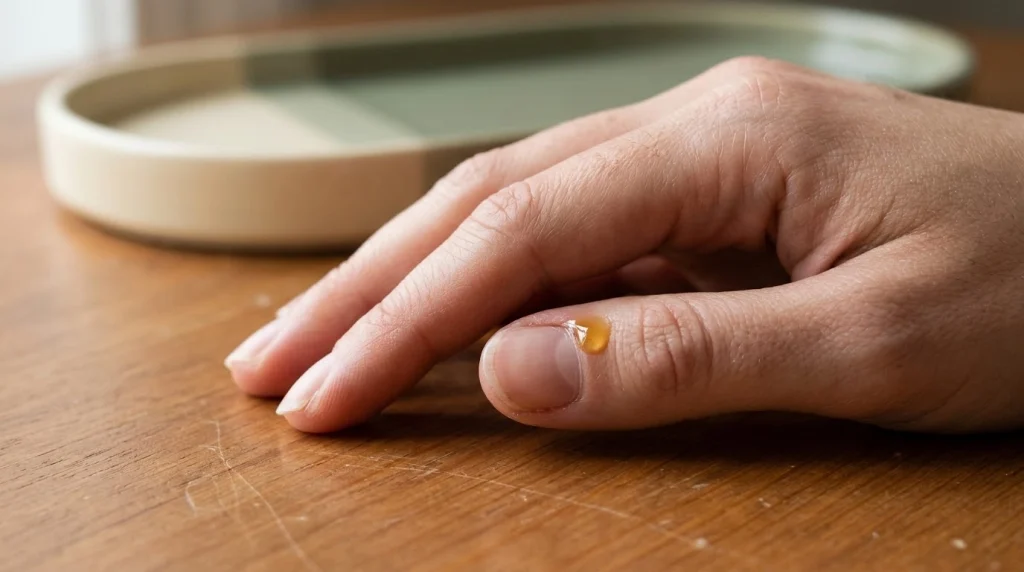
Nail oil can improve dryness and surface conditioning, but it cannot permanently rebuild an already damaged nail plate.
This distinction matters because a visible fingernail is made largely of nonliving keratin cells.
If your nail has been overfiled, peeled, or split, the damaged structure doesn’t regenerate in place the way living skin can repair itself.
Instead, new nail material grows from the nail matrix beneath the skin near the base of your nail. Over time, that new material pushes the damaged section toward the fingertip.
Nail oil helps you care for the remaining nail and surrounding skin during that process.
What Nail Oil May Improve
- Dry, rough-feeling nail surfaces.
- Flaky or uncomfortable cuticles.
- The appearance of dryness around peeling nail edges.
- Rough skin surrounding the nail plate.
- Day-to-day comfort while damaged nails grow out.
What Nail Oil Cannot Fix
- Deep cracks extending into attached nail tissue.
- Missing nail layers caused by aggressive filing.
- Nail separation from the underlying nail bed.
- Fungal or bacterial nail infections.
- Growth problems caused by significant nail matrix damage.
If your nails have experienced repeated trauma, it helps to understand how nail damage affects growth and recovery before choosing a treatment.
Important
If your nail is lifting, bleeding, infected-looking, or painful, don’t rely on nail oil as treatment. These problems may require medical evaluation, and applying cosmetic products can delay appropriate care.
Which Types of Nail Damage Benefit Most From Nail Oil?
Not every nail problem responds equally to moisturizing. The best results are generally seen when dryness is contributing to the problem.
Dry and Brittle Nails
Brittle nails often split, chip, or develop rough edges during ordinary activities.
Repeated wetting and drying, frequent detergent exposure, and harsh nail products can contribute to brittleness.
Applying nail oil regularly can improve surface conditioning, while hand cream helps moisturize the surrounding skin.
Best approach: Keep your nails short, apply a moisturizing product daily, and protect your hands during wet household chores.
Peeling Nail Tips
If the ends of your nails separate into thin layers, you may be dealing with lamellar splitting.
Oil won’t glue these layers together. However, moisturizing and reducing repeated exposure to water may help limit further dryness.
Gently smooth rough free edges with a fine nail file. Never peel away loose layers to make the nail look smoother.
Best approach: Maintain a short nail length, avoid surface buffing, and condition your nails while the damaged tips grow out.
Nails Damaged After Gel or Acrylic Removal
Improper removal of nail enhancements can strip away natural nail layers, leaving your nails thinner and more sensitive.
This type of damage may look like white patches, rough surfaces, peeling tips, or unusually flexible nails.
Cuticle oil can reduce dryness, but it won’t replace the layers that were removed.
If your nails are recovering from enhancements, follow our detailed guide on caring for weak nails after gel or acrylic removal.
Best approach: Stop peeling or scraping enhancements, minimize further filing, moisturize regularly, and allow damaged nail material to grow out.
Dry, Rough Cuticles and Hangnails
When your surrounding skin becomes dry, small tears and hangnails may develop more easily.
Nail oil can soften dry skin and make it less tempting to pick at rough areas.
For an existing hangnail, carefully trim the loose piece with clean clippers rather than pulling it away.
Best approach: Apply nail oil to intact skin and follow with fragrance-free hand cream. Avoid cutting away healthy cuticle tissue.
Which Nail Oil Is Best for Damaged Nail Recovery?
You don’t need an expensive formula to begin a useful nail-care routine.
The best product is one that moisturizes comfortably, doesn’t irritate your skin, and is easy for you to use consistently.
Option 1: Jojoba-Based Cuticle Oil
Jojoba oil is a popular ingredient in nail and cuticle products because it spreads easily and leaves a conditioning film.
A simple jojoba-based formula may suit you if your nails feel dry and your surrounding skin looks rough.
Choose a fragrance-free product when possible, particularly if your skin reacts to scented cosmetics.
Best for: Routine nail and cuticle conditioning.
Limitation: It doesn’t permanently bond split nail layers or guarantee faster nail growth.
Suggested Nail Care Product
Jojoba-Based Cuticle Oil
A convenient everyday option for moisturizing dry cuticles and conditioning natural nails. Compare ingredient lists and choose a formula without irritating fragrances.
As an Amazon Associate, we earn from qualifying purchases.
Option 2: Fragrance-Free Nail and Cuticle Oil
If you have sensitive skin, fragrance-free products are often a sensible starting point.
Look for a short ingredient list and avoid formulas containing strong perfumes or essential oils that have previously irritated your skin.
Try a small amount on intact skin first. Stop using the product if you notice itching, redness, burning, or a rash.
Best for: People who prefer simple formulas or have experienced irritation from scented nail-care products.
You can compare fragrance-free cuticle oils before selecting a product.
Option 3: Hand Cream or Petroleum Jelly
Nail oil isn’t your only moisturizing option.
A rich, fragrance-free hand cream can hydrate the skin around your nails, while petroleum jelly forms an occlusive layer that helps reduce moisture loss.
These options may be especially useful when your hands are very dry from frequent washing.
Best for: Dry hands, rough nail folds, and nighttime moisturizing.
Limitation: Like nail oil, these products cannot reverse existing structural nail damage.
If you need an everyday moisturizer, browse fragrance-free hand creams.
How Should You Apply Nail Oil During Recovery?
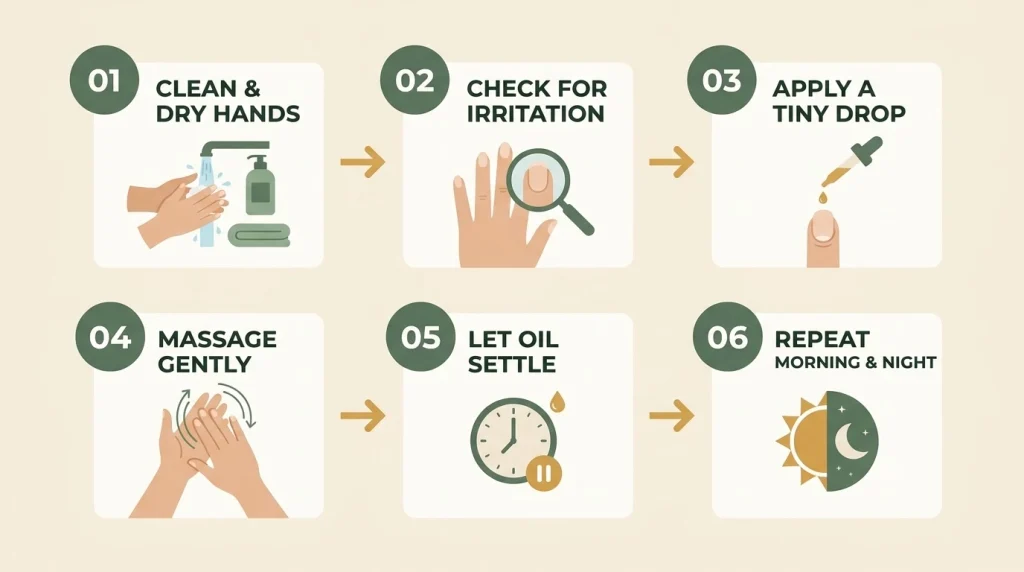
The technique is simple, but gentle application is important when your nails are already fragile.
- Clean your hands. Remove visible dirt using gentle soap and water. Pat your hands and nails dry.
- Check for irritation. Avoid applying cosmetic oil to open wounds, visibly infected areas, or painful exposed nail tissue.
- Apply a small amount. Place a tiny drop of oil around the base and sides of each nail. You don’t need to soak your fingertips.
- Massage gently. Spread the oil over the nail surface and surrounding skin using light circular movements. Avoid lifting or pressing on damaged sections.
- Allow the product to settle. Give the oil a short period to absorb or spread before handling clothing, paper, or other objects.
- Repeat consistently. Start with morning and evening applications, then moisturize again when your hands feel dry.
Pro Tip
Keep your nail oil beside your regular hand cream. After washing and drying your hands, moisturize the surrounding skin and use a little oil on your nails. Pairing both products with an existing habit makes daily care easier.
How Often Should You Use Nail Oil on Damaged Nails?
For ordinary dryness and cosmetic nail damage, applying nail oil once or twice daily is a practical starting point.
You can use it more often if your nails or surrounding skin become dry, provided the product doesn’t cause irritation.
There’s no established medical rule requiring an exact number of cuticle oil applications each day.
The purpose is to maintain comfortable moisture levels rather than to saturate your nails with oil.
Morning Application
After washing and drying your hands, apply a small amount of oil around each nail.
Use hand cream afterward if your surrounding skin needs additional moisture.
During the Day
Reapply moisturizer when your hands become dry, especially after frequent handwashing.
A portable cuticle oil pen may be convenient, but regular hand cream is also a reasonable option.
Before Bed
Nighttime is an easy opportunity for slightly richer moisturizing.
Massage a little oil around your nails, then use hand cream or a small amount of petroleum jelly over very dry surrounding skin.
There’s no need to wrap your fingertips tightly or cover them with plastic overnight.
What Does a Four-Week Nail Recovery Routine Look Like?
A recovery routine should focus on preventing new damage rather than expecting instant nail growth.
Use the following schedule as a simple way to build consistent habits.
Week 1: Reduce Further Damage
Begin by shortening fragile nails to a comfortable length. Smooth rough edges without aggressively buffing the nail surface.
Apply nail oil daily, moisturize your hands, and avoid picking at peeling layers.
If your nails feel tender after enhancement removal, postpone additional cosmetic treatments until they’re comfortable.
Your first goal is protection, not dramatic visible improvement.
Week 2: Make Moisturizing Consistent
Continue using nail oil morning and evening.
Pay attention to activities that make your hands dry, such as dishwashing, cleaning, and repeated exposure to detergents.
Wear appropriate protective gloves during wet chores, then dry your hands and moisturize afterward.
If you need household protection, consider cotton-lined cleaning gloves that fit comfortably.
Week 3: Monitor the Nail Edges
Look for peeling tips, rough corners, or sections that repeatedly catch on fabric.
Trim or gently file those areas before small snags become larger splits.
Keep using moisturizer even if your nails already look less dry.
Avoid interpreting improved shine as proof that the damaged keratin layers have been repaired.
Week 4: Evaluate Progress
Compare the condition of your nails with how they looked at the beginning.
You may notice softer cuticles, less surface dryness, and better comfort during everyday activities.
Meaningful replacement of damaged nail material usually takes much longer than four weeks.
For a broader routine, see our guide on how to make your nails healthy again.
How Long Does Damaged Nail Recovery Take With Nail Oil?
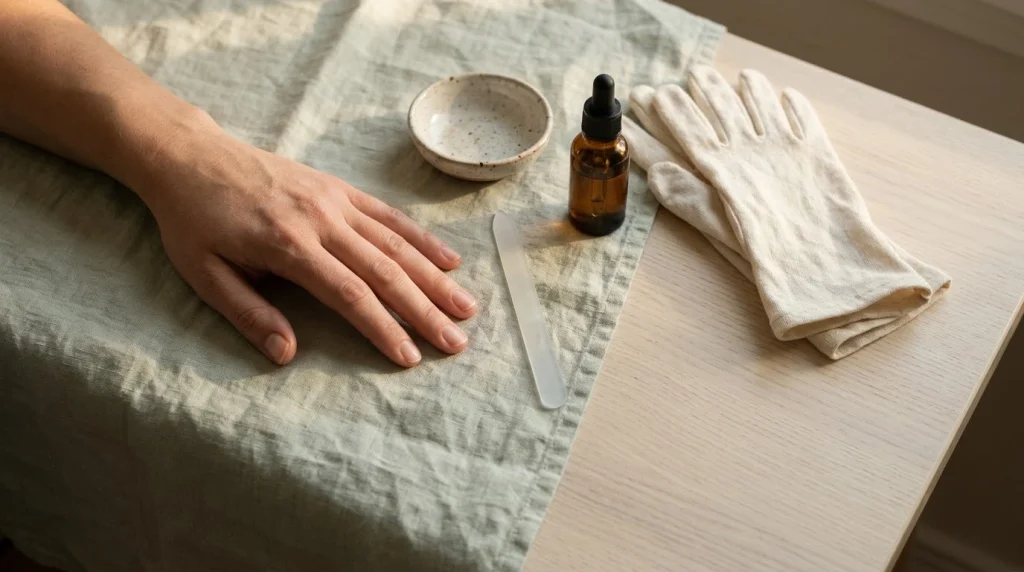
The timeline depends on the type of damage, your natural growth rate, and whether you continue exposing your nails to damaging conditions.
Fingernails typically grow approximately 3 millimeters per month. Replacing an entire fingernail often takes around six months, sometimes longer.
Nail oil doesn’t reliably accelerate that biological growth rate.
Instead, you may notice changes at different stages:
- First few days: Dry cuticles may feel softer and the nail surface may look more conditioned.
- Two to four weeks: With consistent care, rough surrounding skin may become more comfortable and manageable.
- One to three months: New nail growth may become more noticeable near the base, depending on the original damage.
- Approximately six months or longer: A substantial amount of damaged fingernail may have grown out, provided the nail matrix remains healthy.
These are approximate expectations, not guaranteed recovery milestones.
Severe trauma, ongoing nail disease, or damage to the nail matrix can change the outcome significantly.
What Should You Do and Avoid While Using Nail Oil?
Do
- Moisturize nails and surrounding skin regularly.
- Keep fragile nails comfortably short.
- Wear gloves during wet cleaning tasks.
- Choose gentle, non-irritating products.
- Monitor changes as your nails grow.
Don’t
- Peel away damaged nail layers.
- Buff thin nails repeatedly.
- Cut or aggressively push back cuticles.
- Apply irritating oils to broken skin.
- Expect immediate repair or faster nail growth.
Why Might Nail Oil Not Be Helping Your Damaged Nails?
Sometimes your nails continue peeling or breaking even though you’re applying oil every day.
That doesn’t necessarily mean the product is ineffective. It may mean the underlying cause hasn’t been addressed.
Problem: Your Nails Still Keep Peeling
What to do: Keep your nails shorter and carefully smooth loose edges. Avoid additional surface filing.
How to prevent it: Reduce prolonged water exposure, stop picking at damaged layers, and continue moisturizing.
Problem: Your Cuticles Feel Irritated
What to do: Stop using the oil if it causes redness, itching, burning, or swelling. Wash the product off gently.
How to prevent it: Consider a simple fragrance-free moisturizer and avoid ingredients that have caused reactions before. Seek professional advice if irritation continues.
Problem: Your Nails Look Shiny but Still Feel Weak
What to do: Recognize that shine reflects surface conditioning, not restored nail thickness.
How to prevent it: Avoid further nail trauma while allowing new nail material to grow.
Problem: You Don’t See Improvement After Several Weeks
What to do: Review your routine for repeated filing, picking, chemical exposure, or harsh manicures.
How to prevent it: Make protective habits consistent. If damage persists, worsens, or affects multiple nails without an obvious cause, consult a healthcare professional.
When Is Nail Oil Not Enough for Nail Recovery?
Cosmetic nail oil is suitable for managing ordinary dryness, but certain nail changes require more than moisturizing.
Contact a dermatologist or another qualified healthcare professional if you notice:
- Persistent redness, swelling, warmth, or pain around a nail.
- Pus or other signs of infection.
- A nail separating from its underlying nail bed.
- A new or changing dark streak beneath a nail.
- Significant thickening, discoloration, or nail distortion.
- Deep cracks, bleeding, or injury involving attached nail tissue.
- Unexplained nail changes that continue to worsen.
Conditions such as fungal infections, inflammatory skin disorders, nutritional deficiencies, or nail matrix injuries may require specific evaluation and treatment.
Applying more oil won’t address these underlying causes.
If your nails are damaged but otherwise healthy, learning how to strengthen nails after gel polish can help you make better care decisions while they grow.
Frequently Asked Questions About Nail Oil and Damaged Nails
Q: Does cuticle oil help damaged nails grow back?
A: Cuticle oil helps moisturize your nails and surrounding skin, but there’s no strong evidence that ordinary cuticle oil significantly speeds up nail growth. Damaged nail material generally needs to grow out naturally.
Q: Can I use nail oil every day on damaged nails?
A: Yes. For ordinary dryness, daily application is generally reasonable if the product doesn’t irritate your skin. Start once or twice daily and adjust according to your comfort.
Q: Is jojoba oil better than olive oil for nail recovery?
A: Jojoba oil is popular because it spreads easily and feels comfortable in many nail-care formulas. However, strong clinical evidence proving it repairs damaged nails better than olive oil is limited. Choose a product your skin tolerates.
Q: Will nail oil repair nails damaged by acrylics?
A: Nail oil can improve dryness after acrylic removal, but it cannot replace nail layers removed by overfiling or peeling. Protection and gradual nail growth are essential for recovery.
Q: Should I use nail oil or nail strengthener?
A: Nail oil mainly conditions dry nails and surrounding skin. Some nail-strengthening coatings may temporarily reinforce fragile nail surfaces, but they don’t replace missing nail tissue. The better choice depends on why your nails are weak and whether your skin tolerates the product.
The Bottom Line: Nail Oil Is Supportive Care, Not an Instant Repair
Nail oil has a useful place in damaged nail recovery because it can reduce dryness, condition cuticles, and make daily nail care easier to maintain.
For the best results, combine moisturizing with gentle filing, shorter nail lengths, protection from harsh chemicals, and patience while new nail material grows.
Save this guide to your Pinterest nail-care board so you can return to your recovery routine whenever your nails need extra attention.
Sources and Further Reading
- Mayo Clinic — Fingernails: Do’s and Don’ts for Healthy Nails
- Cleveland Clinic — Fingernail and Toenail Anatomy
- Canadian Dermatology Association — Brittle Nails
Medical disclaimer: This article provides general nail-care education and is not a substitute for professional diagnosis or treatment. Seek medical advice for painful, infected, separating, or unexplained nail changes.

Hi, I’m Jessica, the creator behind Unique Lash & Nails Katy.
I created this website for anyone who loves beautiful nails as much as I do. Here, I share trendy nail designs, seasonal manicure ideas, easy nail care tips, honest product recommendations, and step-by-step guides to help you create salon-worthy nails at home. Whether you’re looking for everyday inspiration or your next favorite nail trend, I hope you’ll find something you love.