How to Moisturize Damaged Nails: Easy Daily Routine
Quick Answer
To moisturize damaged nails, apply fragrance-free hand cream over your nails and cuticles after washing, massage in cuticle oil when needed, and use a thin layer of petroleum jelly before bed. Keep your nails short, wear gloves during wet chores, and avoid aggressive filing or polish removal. Moisturizing reduces dryness, but damaged nail layers must gradually grow out.
TIME NEEDED
5–10 minutes daily
DIFFICULTY
Beginner
ITEMS NEEDED
4–5 basic items
RESULTS
Ongoing care; regrowth takes months
Damaged nails can feel rough, dry, thin, or frustratingly easy to break. Maybe your nails started peeling after gel removal, or perhaps constant handwashing has left your cuticles uncomfortable and cracked.
You don’t need an expensive salon treatment to begin caring for them. The right moisturizing routine can improve dryness, support comfortable cuticles, and help protect your nails from further damage.
Here’s how to moisturize damaged nails safely, choose useful products, and understand what results you can realistically expect.


Why Do Damaged Nails Become Dry and Brittle?
Your fingernails are made primarily of layers of keratin. Although the visible nail plate doesn’t heal like living skin, its condition can be affected by moisture, chemicals, repeated friction, and cosmetic treatments.
Understanding the cause helps you avoid repeating the same damage while establishing a moisturizing routine.
1. Frequent Handwashing and Water Exposure
Your nails absorb water and then release it as they dry. Repeated wetting and drying can contribute to splitting, especially when your nails are already fragile.
Frequent soap exposure may also leave the surrounding skin dry. Applying moisturizer after washing helps reduce this problem without compromising good hand hygiene.
2. Gel Polish and Acrylic Removal
Peeling gel polish, scraping away stubborn product, or excessively filing your natural nails can remove protective nail layers.
Acetone-based removal can temporarily increase dryness as well. If your nails feel particularly thin after a manicure, follow a gentle routine for caring for weak nails after gel or acrylic removal.
3. Cleaning Products and Household Chemicals
Dishwashing detergents, household cleaners, and frequent exposure to solvents can leave your nails and fingertips feeling dry and uncomfortable.
Protective gloves reduce unnecessary contact and are especially helpful when you’re trying to improve brittle nails.
4. Aggressive Filing and Cuticle Trimming
Over-buffing removes nail material, while cutting or picking at cuticles can damage the protective seal around the nail base.
Moisturizer can soothe dry surrounding skin, but it cannot replace nail layers that have already been removed.
What Do You Need to Moisturize Damaged Nails?
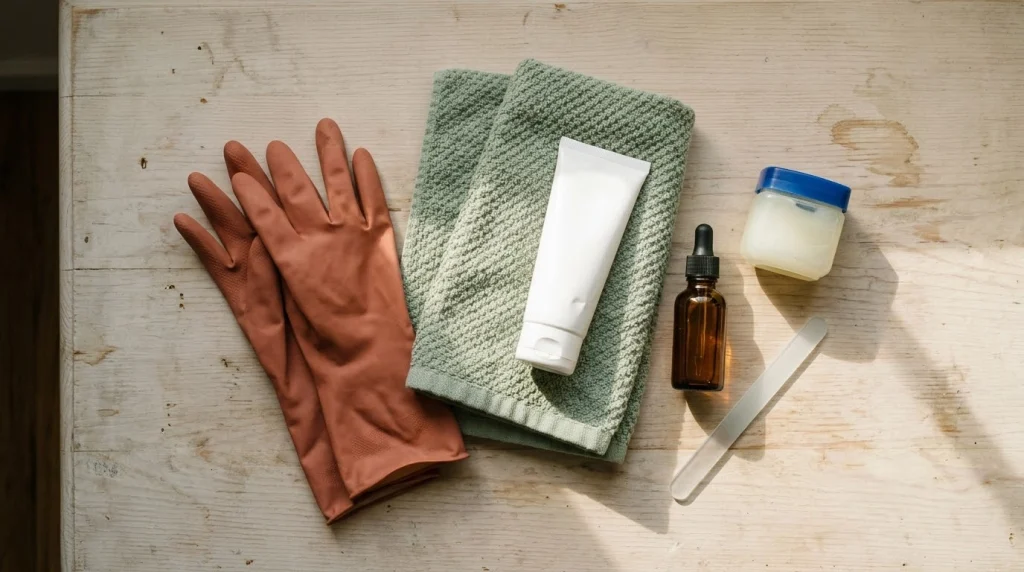
Start with a few simple supplies rather than buying a complicated nail-repair kit.
- Fragrance-free hand cream: Choose a moisturizer with ingredients such as glycerin, ceramides, or petrolatum.
- Cuticle oil: A simple jojoba-based formula can make targeted application convenient.
- Plain petroleum jelly: Useful for sealing in moisture before bed.
- Soft towel: Helps you dry your hands gently after washing.
- Protective household gloves: Reduce exposure to detergents and prolonged water contact.
A fine-grit nail file is optional if your nails have rough edges. You don’t need to buff the nail surface before moisturizing.
How to Moisturize Damaged Nails Step by Step
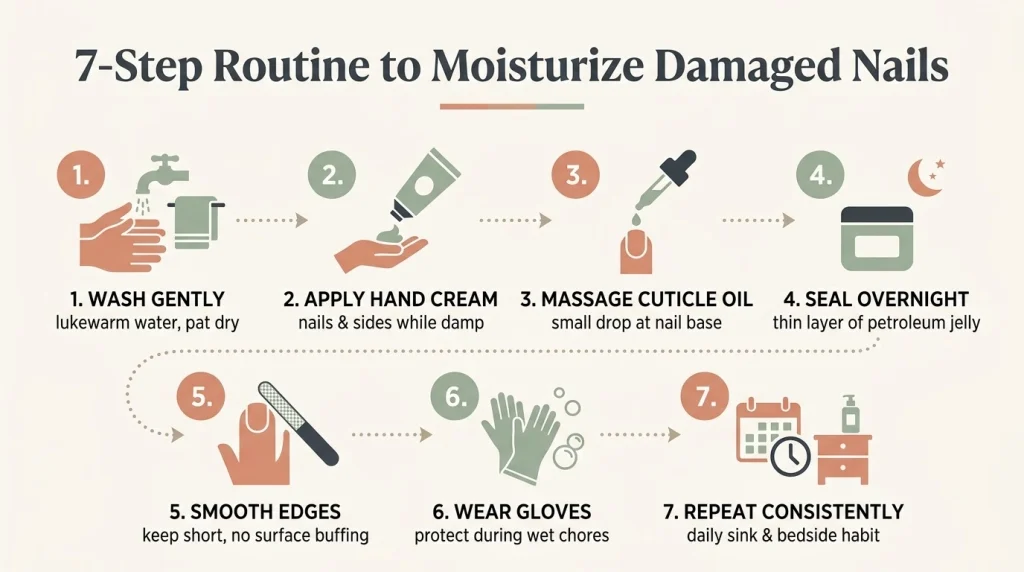
Follow these seven steps to create a manageable routine for dry, peeling, or cosmetically damaged nails.
Step 1: Wash Your Hands Gently
Start with clean hands. Use lukewarm water and a mild soap, then pat your fingers dry with a soft towel.
Avoid unnecessarily soaking your nails or scrubbing them with a stiff brush. If your skin is already irritated, use a gentle fragrance-free cleanser.
Common mistake: Soaking nails in hot water before every moisturizing session. Additional soaking isn’t necessary and may worsen repeated wet-dry exposure.
Step 2: Apply Moisturizing Hand Cream
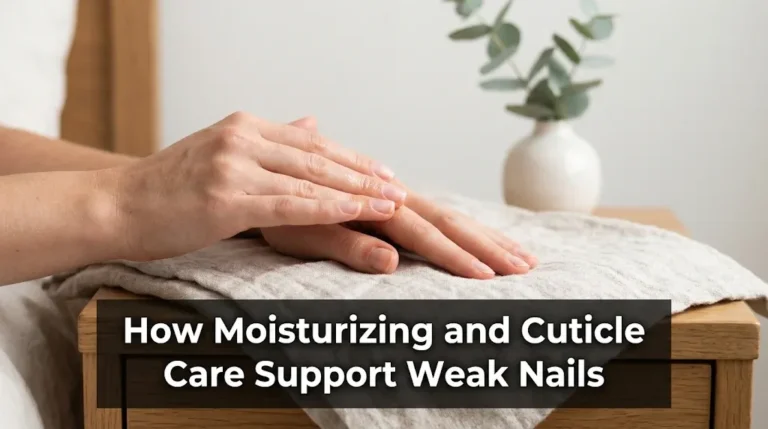
Dispense a small amount of hand cream and massage it across your fingers, nail surfaces, and surrounding skin.
Pay attention to the skin along both sides of each nail. Apply cream after washing your hands while your skin is still slightly damp, rather than waiting until it feels tight or flaky.
Reapply whenever frequent washing removes the moisturizer.
Common mistake: Moisturizing your palms but skipping the fingernails and nail folds, where dryness may be especially noticeable.
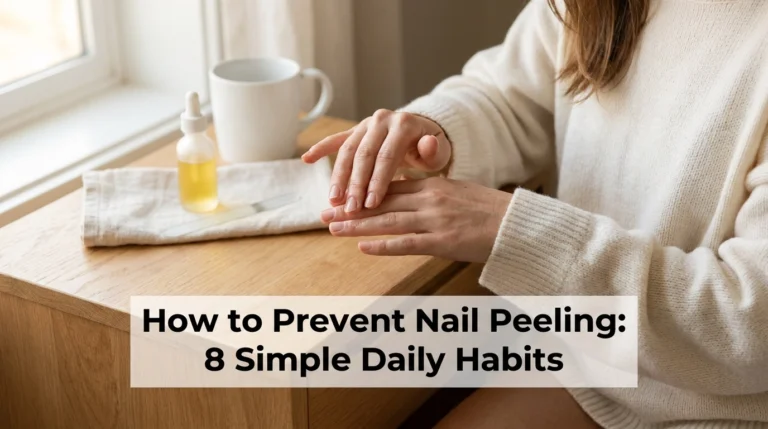
Step 3: Massage Cuticle Oil Around Each Nail
Place a small drop of cuticle oil near the base of each nail. Massage gently across the nail surface and around the surrounding skin.
A lightweight jojoba-based oil is convenient during the day because you can use just a little without leaving your fingertips excessively greasy.
Cuticle oil helps condition dry skin and supports a consistent care routine. It doesn’t permanently reconnect peeling nail layers.
Common mistake: Applying large quantities of oil and expecting an immediate structural repair. A small amount used consistently is enough.
Step 4: Protect Very Dry Areas With Petroleum Jelly
Before bedtime, apply a thin layer of plain petroleum jelly over your nails and around especially dry cuticles.
Petroleum jelly acts as an occlusive barrier, helping reduce moisture loss from the surrounding skin.
You can apply it after hand cream when you want a richer overnight routine. There’s no need to cover your hands with plastic or leave them soaking in oil.
Common mistake: Using heavily fragranced overnight products on irritated cuticles. Plain, simple formulas are often easier to tolerate.
Step 5: Keep Rough Nail Edges Short and Smooth
Examine your nails for rough edges that catch on clothing or hair. If necessary, use a clean, fine-grit file to smooth only the uneven tips.
Keep your nails at a comfortable short length while they’re fragile. Avoid grinding down the entire nail surface to hide ridges or peeling.
For more detailed grooming advice, see how to file and trim brittle nails safely.
Common mistake: Buffing thin nails until they appear glossy. This removes additional material and may make existing damage worse.
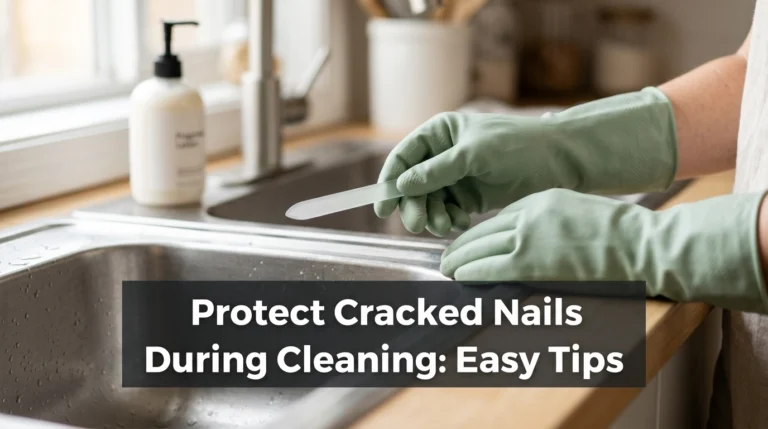
Step 6: Wear Gloves During Wet Chores
Wear well-fitting protective gloves when washing dishes, cleaning bathrooms, or handling household detergents.
For longer cleaning sessions, cotton-lined gloves can improve comfort. Remove them afterward, dry your hands, and reapply moisturizer if necessary.
This matters because moisturizing is less effective as a long-term strategy if your nails continue experiencing avoidable chemical exposure and prolonged wet work.
Common mistake: Wearing damp gloves for extended periods. Trapped moisture can irritate skin, so keep the inside of your gloves clean and dry.
Step 7: Repeat Your Routine Consistently
Keep hand cream beside your sink and cuticle oil near your bedside or workspace.
Apply moisturizer after handwashing, use cuticle oil when your nails feel dry, and add petroleum jelly before bed if you need extra protection.
You don’t need to perform every step repeatedly throughout the day. The goal is to build simple habits that you can maintain.
Common mistake: Following an intensive routine for one evening, then ignoring your nails for the rest of the week.
What Is the Best Moisturizer for Damaged Nails?
The best choice depends on whether you’re dealing mainly with dry skin, brittle nail surfaces, or uncomfortable cuticles.
Fragrance-Free Hand Cream for Everyday Dryness
Best for: Frequent handwashing, dry fingertips, and a simple daytime routine.
Look for a cream containing glycerin or ceramides. These ingredients help support skin hydration and make moisturizing your nails and surrounding skin convenient.
A cream is particularly practical because you can reapply it immediately after washing without needing a specialized nail product.
Jojoba-Based Cuticle Oil for Targeted Care
Best for: Dry cuticles, rough nail folds, and people who prefer a lightweight application.
Cuticle oil can soften surrounding skin and help reduce the uncomfortable feeling of dryness.
Choose a straightforward formula, preferably without strong fragrance if your skin is sensitive. Stop using any product that causes itching, redness, or irritation.
Petroleum Jelly for Overnight Moisture Protection
Best for: Very dry cuticles and fingertips needing an additional protective barrier.
Plain petroleum jelly is inexpensive and works well over moisturizer. Its primary benefit is limiting moisture loss rather than adding new nail material.
If you only want two products, a gentle hand cream and petroleum jelly are a practical starting point.
Useful Nail Moisturizing Products
You don’t need all of these products, but the following options can make your routine easier.
Disclosure: As an Amazon Associate, we earn from qualifying purchases. Product links below are shopping searches, not individual product reviews or verified ratings.
Recommended Product
Fragrance-Free Hand Cream
A rich, gentle cream helps moisturize nails and surrounding skin after frequent handwashing.
Recommended Product
Jojoba Cuticle Oil
A small brush-on bottle makes targeted cuticle moisturizing convenient during the day.
Recommended Product
Plain Petroleum Jelly
A simple option for reducing moisture loss from dry nail folds and fingertips overnight.
Recommended Product
Cotton-Lined Household Gloves
Protective gloves help limit unnecessary exposure to detergents and prolonged water contact.
How Often Should You Moisturize Damaged Nails?
Your routine should match your daily activities and the amount of dryness you experience.
- Morning: Apply hand cream after your usual handwashing routine.
- During the day: Reapply cream after washing your hands, especially if your skin feels dry.
- Evening: Massage a small amount of cuticle oil into your nails and surrounding skin if needed.
- Before bed: Use hand cream and optional petroleum jelly on particularly dry areas.
Think of this as a flexible schedule rather than a strict treatment prescription.
If your hands stay comfortable with fewer applications, that’s fine. If frequent washing causes dryness, you may need to moisturize more often.
How Long Does It Take for Damaged Nails to Improve?
Moisturizing may make dry cuticles and fingertips feel more comfortable soon after application. However, improvement in nail structure follows a different timeline.
Fingernails typically grow around 3 millimeters per month. Replacing an entire fingernail often takes approximately four to six months, sometimes longer.
That means a peeling or thinned section usually needs to grow toward the free edge before it can be trimmed away.
- After application: The surrounding skin may feel softer and less dry.
- After one to two weeks: You may notice more comfortable cuticles and fewer dryness-related problems if you consistently protect your hands.
- After several weeks: New nail growth may become visible near the base, depending on your growth rate.
- After several months: Damaged portions can gradually be replaced by new growth if the underlying cause has been addressed.
These are general expectations, not guaranteed recovery milestones. Persistent or worsening nail changes deserve medical evaluation.
What Should You Avoid While Moisturizing Damaged Nails?
Even the best moisturizer cannot compensate for repeated damage from aggressive manicures or unnecessary chemical exposure.
DO
- Moisturize after washing.
- Keep nails short and smooth.
- Wear gloves during wet chores.
- Choose gentle products.
- Protect your cuticles.
DON’T
- Peel off gel polish.
- Over-buff thin nails.
- Cut healthy cuticles.
- Pick at peeling layers.
- Expect instant regrowth.
If your nails remain fragile, consider taking a break from repeated enhancements. You can also explore daily habits that help protect your natural nails.
Why Are Your Nails Still Dry After Moisturizing?
Problem: Your cuticles still feel dry.
Immediate fix: Apply fragrance-free cream and consider a thin layer of petroleum jelly before bed. Prevention: Keep moisturizer near your sink and use it after washing.
Problem: Your nails keep peeling.
Immediate fix: Avoid pulling peeling layers, shorten snagging tips carefully, and reduce cosmetic treatments. Prevention: Protect new growth and avoid aggressive filing or removal.
Problem: Cuticle oil causes irritation.
Immediate fix: Stop the product and gently wash off any residue. Prevention: Choose a simpler fragrance-free moisturizer and seek medical advice if irritation persists.
Problem: A nail crack keeps catching.
Immediate fix: If the damage is limited to the free edge, gently smooth the snag without pulling it. Prevention: Keep your nail short and avoid impact.
For additional guidance about nail splits, see moisturizing split or cracked nails.
When Should You See a Dermatologist?
Important Nail Health Warning
Moisturizing is appropriate for routine dryness, but not every damaged-looking nail has a cosmetic cause. Seek medical evaluation for significant pain, swelling, bleeding, pus, nail separation, unexplained dark streaks, or persistent changes in thickness or color.
Thick, discolored, crumbly nails may indicate a fungal infection or another nail condition. Nail changes can also occur with skin disorders and certain medical conditions.
If you have diabetes, circulation problems, or a weakened immune system, seek professional advice promptly for suspected nail infections.
Do not attempt to treat a painful, infected, or severely injured nail with oils, glue, or cosmetic coatings alone.
Frequently Asked Questions
Q: Can you moisturize badly damaged nails?
A: You can moisturize dry nail surfaces and surrounding skin, but severe thinning, deep splits, or nail-bed injuries require more than cosmetic care. Moisturizers cannot rebuild missing nail layers. Seek professional evaluation if the damage is painful or extensive.
Q: Is cuticle oil or hand cream better for damaged nails?
A: Both can be useful. Hand cream moisturizes your fingers, nails, and surrounding skin, while cuticle oil provides convenient targeted conditioning. You don’t need both if a simple moisturizer already works well for you.
Q: Can Vaseline help dry, damaged nails?
A: Plain Vaseline, which is petroleum jelly, can help reduce moisture loss from dry cuticles and fingertips. It is useful in a nighttime routine, but it cannot permanently repair peeling keratin layers or reverse nail-bed injuries.
Q: Should you moisturize your nails every day?
A: Daily moisturizing is a reasonable habit, especially after handwashing or polish removal. Reapply as needed for dryness. The goal is comfortable skin and reduced exposure-related brittleness, not following a fixed number of applications.
Q: Can damaged nails become healthy again?
A: Many cosmetically damaged fingernails can look healthier as new nail grows from the base, provided the cause of damage stops. Significant nail injuries or medical conditions may affect regrowth, so persistent abnormalities should be evaluated.
Final Thoughts on Moisturizing Damaged Nails
Learning how to moisturize damaged nails starts with simple habits: apply hand cream regularly, condition dry cuticles, protect your hands from harsh exposure, and let damaged nail material gradually grow out.
Consistency and gentle care matter more than expensive products or overnight promises.
Save this nail-care routine to your Pinterest board so you can follow the steps whenever your nails need extra attention.

Hi, I’m Jessica, the creator behind Unique Lash & Nails Katy.
I created this website for anyone who loves beautiful nails as much as I do. Here, I share trendy nail designs, seasonal manicure ideas, easy nail care tips, honest product recommendations, and step-by-step guides to help you create salon-worthy nails at home. Whether you’re looking for everyday inspiration or your next favorite nail trend, I hope you’ll find something you love.