Dry Fingernails vs Toenails: Easy Care Guide
Quick Answer
To care for dry fingernails vs toenails, moisturize both daily, but protect them from different sources of damage. Fingernails need frequent moisturizing and protection from water, detergents, and manicures. Toenails need gentle moisturizing, straight-across trimming, breathable footwear, and thorough drying between the toes. Keep both short enough to avoid snags, leave your cuticles intact, and seek medical advice for persistent discoloration, thickening, or pain.
Your fingernails may peel after washing dishes, while your toenails can become rough and brittle after weeks inside closed shoes. Both problems look like dryness, but they don’t always have the same cause.
Knowing how to care for dry fingernails vs toenails helps you choose the right moisturizing routine, trimming technique, and protective habits. You don’t need expensive treatments. You need a few reliable steps that fit your daily life.
Here’s how to recognize the differences, care for each type of nail, and avoid mistakes that make dryness and breakage worse.


Are Dry Fingernails and Toenails Really Different?
Fingernails and toenails are both made primarily of keratin, a tough structural protein. However, their locations, growth rates, and everyday exposures create different care requirements.
Your fingernails regularly come into contact with soap, water, cleaning products, nail polish remover, and cosmetic treatments. This repeated exposure can contribute to peeling and splitting.
Your toenails experience pressure from shoes, friction during walking, and warm, sometimes damp conditions. They also grow more slowly, so damaged areas may remain visible for longer.
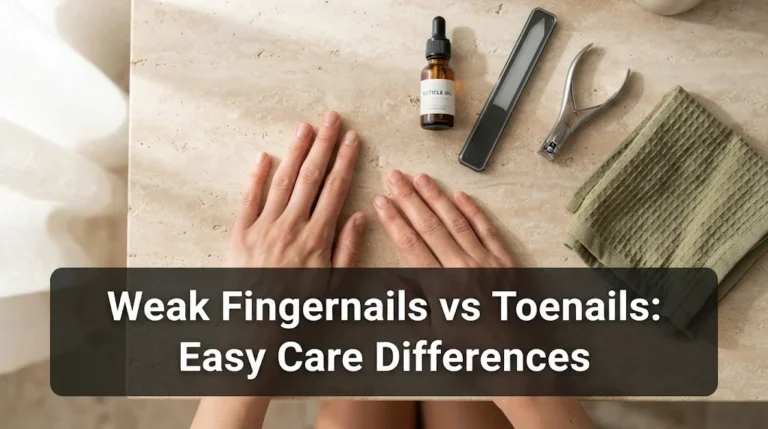
Dry Fingernails vs Toenails: Key Differences
| Care Factor | Fingernails | Toenails |
|---|---|---|
| Common stress | Water, detergents, manicures | Shoe pressure, friction, moisture |
| Growth | Generally faster | Generally slower |
| Typical damage | Peeling, splitting, rough tips | Thickening, cracking, pressure damage |
| Trimming | Straight or slightly rounded | Straight across |
| Main protection | Moisturizer and household gloves | Comfortable footwear and foot hygiene |
The main lesson is simple: use moisturizing products on both, but adjust your protective habits according to what your nails experience.
Why Do Fingernails and Toenails Become Dry?
Dry-looking nails can develop for several reasons. Sometimes the nail plate itself becomes brittle. Other times, the surrounding skin is dry while the nail remains relatively healthy.
1. Repeated Exposure to Water
Frequent wetting and drying can contribute to brittle fingernails. Nail plates absorb water and then release it, creating repeated changes that may encourage splitting in vulnerable nails.
Dishwashing, cleaning, and frequent handwashing are common contributors. Moisturizing after washing and wearing protective gloves during wet chores can help.
2. Harsh Nail Products
Repeated polish removal, aggressive filing, and improper gel or acrylic removal can damage the nail surface. Some removers also leave nails and surrounding skin feeling temporarily dry.
If your nails feel unusually thin after a manicure, reducing cosmetic stress may be more useful than adding another strengthening product.
3. Dry Air and Cold Weather
Cold temperatures, indoor heating, and low humidity may make the skin around your nails rough and uncomfortable. Your cuticles can develop small cracks or hangnails when the surrounding skin loses moisture.
Use a richer cream when your usual lightweight lotion isn’t enough.
4. Friction and Tight Shoes
Toenails experience repeated pressure when footwear is too narrow or short. Friction can contribute to cracking, thickening, discoloration, or nail separation.
Footwear that gives your toes enough space helps reduce this type of damage.
5. Medical or Skin Conditions
Persistent nail changes may sometimes be associated with eczema, psoriasis, fungal infections, thyroid disorders, or iron deficiency.
Dryness alone cannot diagnose these conditions. If your nails change significantly or don’t improve, arrange an examination rather than assuming you simply need more moisturizer.
For a closer explanation of everyday causes, see our guide on why nails become dry and brittle.
How Should You Care for Dry Fingernails?
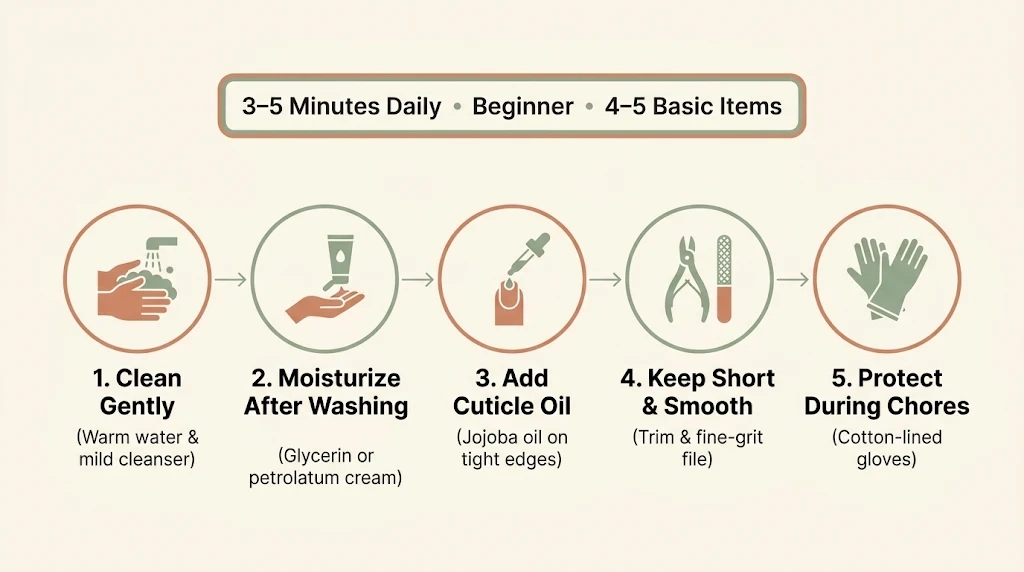
Dry fingernails need a routine that balances moisturizing, gentle grooming, and protection from repeated exposure.
You can start with a few basic products and spend only several minutes on daily maintenance.
Time Needed
3–5 minutes daily
Difficulty
Beginner
Items Needed
4–5 basic items
Results
Gradual improvement
Step 1: Clean Your Fingernails Gently
Wash your hands with comfortably warm water and a gentle cleanser. Avoid scrubbing the nail surface with rough brushes or scraping underneath with sharp objects.
Pat your hands dry, including the spaces around your fingers. You want clean nails without unnecessary friction.
Common mistake: Using very hot water or harsh brushes because you believe cleaner nails require stronger scrubbing.
Step 2: Apply Moisturizer After Washing
Massage a fragrance-free hand cream over your fingers, nails, and surrounding skin after washing your hands.
Look for moisturizing ingredients such as glycerin or petrolatum. These help reduce moisture loss from the skin around your nails.
Pay special attention to the sides of your fingers, where rough skin and hangnails commonly develop.
Common mistake: Applying cream only to your palms while leaving your fingertips and nail edges untreated.
Step 3: Add Cuticle Oil When Needed
Apply a small amount of cuticle oil around each nail, particularly when the surrounding skin feels tight or flaky.
Jojoba-based oils and simple moisturizing formulations are practical choices. Massage gently instead of cutting or aggressively pushing your cuticles.
Oil is an optional addition to a good hand cream, not a requirement for healthy nail growth.
Common mistake: Believing that cuticle oil can instantly repair a nail plate that has already split or peeled.
Step 4: Keep Nails Short and Smooth
Trim your fingernails when they become long enough to catch on objects. Use clean, sharp clippers and a fine-grit file to smooth any rough edges.
A softly rounded or squoval shape can be practical for nails prone to catching. Avoid filing deeply into the sides or repeatedly buffing the nail surface.
Common mistake: Filing away layers from the top of the nail in an attempt to make peeling nails look smooth.
Step 5: Protect Your Nails During Household Chores
Wear suitable household gloves when washing dishes, cleaning bathrooms, or working with detergents.
For longer chores, gloves with a comfortable cotton lining can help manage perspiration and friction. Remove them afterward, dry your hands, and moisturize.
Common mistake: Keeping damp gloves on for extended periods. Constant moisture is not a substitute for moisturizing.
Pro Tip
Keep a travel-size hand cream next to your hand soap or inside your handbag. Making moisturizer easy to reach helps you use it consistently, which matters more than buying numerous expensive nail treatments.
If you want to build a complete maintenance schedule, follow our daily and weekly nail care routine.
How Should You Care for Dry Toenails?
Dry toenails need gentle moisturizing too, but foot hygiene, footwear, and trimming technique deserve extra attention.
Unlike your hands, your feet may remain inside shoes for many hours. This makes managing trapped moisture and pressure just as important as treating dry-looking skin.
Step 1: Wash and Dry Your Feet Thoroughly
Wash your feet regularly with mild soap and water. Clean around your toenails gently without digging underneath them.
After washing, dry your feet carefully, especially between your toes. Damp skin inside closed footwear may encourage fungal growth.
Common mistake: Putting socks and shoes on immediately while the spaces between your toes are still damp.
Step 2: Moisturize the Toenails and Surrounding Skin
Apply a fragrance-free moisturizing cream to your toenails, the skin around them, your heels, and other dry areas of your feet.
You can use a richer product for rough heels, but avoid leaving excessive cream between your toes.
For cracked or very dry skin around the nails, a thin layer of petroleum jelly can provide additional moisture protection.
Common mistake: Applying heavy moisturizer between the toes and immediately putting on tight footwear.
Step 3: Trim Toenails Straight Across
Use clean toenail clippers to trim the nails straight across. Leave a small free edge rather than cutting them extremely short.
If the corners feel sharp, gently smooth them with a nail file. Avoid cutting deeply down the sides, which can increase the risk of ingrown nails.
If your nails are unusually thick, painful, or difficult to cut, ask a podiatrist for assistance.
Common mistake: Cutting curved corners deeply because you want toenails to match a rounded fingernail shape.
Step 4: Choose Shoes That Allow Your Toes to Move
Choose shoes with enough room in the toe box. Your toenails shouldn’t repeatedly press against the front or sides of your footwear.
Change damp socks promptly, rotate shoes when practical, and allow footwear to dry between uses.
If you frequently exercise, check whether your shoes feel too short when walking downhill or running.
Common mistake: Assuming that toenail cracking is always caused by dryness when repeated shoe pressure may be contributing.
Step 5: Inspect Your Toenails Regularly
Look at your bare toenails regularly. Notice any new thickening, crumbling, persistent yellow or white discoloration, separation, or changes in shape.
These symptoms aren’t always caused by simple dryness. Fungal infections and repeated trauma can produce similar changes.
Don’t cover an unexplained nail change with polish without considering whether it needs professional attention.
Common mistake: Applying oil repeatedly to a nail that is becoming thicker and discolored without checking for another cause.
Warning
If your toenail becomes painful, swollen, increasingly thick, crumbly, or discolored, don’t assume that moisturizing will solve it. Seek medical advice, particularly if you have diabetes, poor circulation, or a weakened immune system.
For additional prevention strategies, see our guide to strengthening weak toenails safely.
What Daily Routine Works Best for Both Fingernails and Toenails?
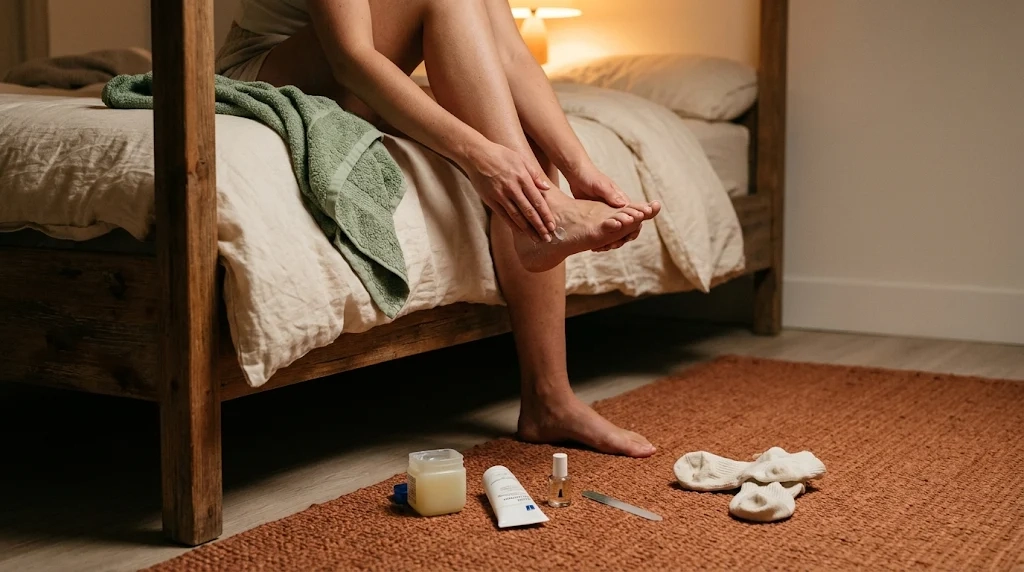
You don’t need two complicated beauty routines. A simple daily schedule helps you care for both without forgetting their different needs.
Morning: Protect Before Daily Activities
- Apply hand cream after your morning handwashing routine.
- Massage a small amount over your fingernails and cuticle area.
- Check whether your toenails are clean, dry, and comfortable inside your shoes.
- Wear clean socks and properly fitting footwear.
- Bring a travel-size moisturizer if your hands dry out frequently.
During the Day: Prevent Repeated Damage
- Moisturize your hands after washing whenever practical.
- Use household gloves for wet cleaning jobs.
- Don’t use your fingernails to scrape labels or open packaging.
- Change wet socks rather than leaving your feet damp.
- Address tight shoes or pressure on your toenails before they cause persistent discomfort.
Evening: Restore Comfort
- Wash and thoroughly dry your feet if needed.
- Apply moisturizer to your hands, nails, and dry areas of your feet.
- Use cuticle oil on rough nail edges if you enjoy it.
- Add petroleum jelly to very dry skin around the nails.
- Check for small snags and smooth them gently.
These habits can improve comfort around your nails and reduce avoidable damage. Already-split nail tissue still needs time to grow out.
What Should You Do Every Week?
Daily care focuses on protection. Weekly maintenance focuses on preventing small problems from becoming larger ones.
- Inspect your nails: Check for splitting, peeling, unusual discoloration, or pressure damage.
- Trim when necessary: Keep fingernails manageable and toenails straight across without cutting too short.
- Smooth snags: Use a gentle file on rough free edges.
- Clean your tools: Wash and maintain clippers according to their care instructions. Don’t share tools when an infection is suspected.
- Review manicure habits: Avoid peeling gel polish or repeatedly buffing already-fragile nails.
- Check your shoes: Make sure your toes aren’t rubbing against the ends or sides.
Your nails won’t need trimming on exactly the same schedule. Fingernails usually grow faster, while toenails often need less frequent trimming.
Which Moisturizers Work Best for Dry Fingernails and Toenails?
The best moisturizing product is one that suits your skin, feels comfortable, and is easy to apply consistently.
Fragrance-Free Hand Cream
Best for: Frequent handwashing and everyday fingernail care.
A fragrance-free hand cream containing glycerin or petrolatum can help the skin around your nails retain moisture. It’s an excellent first choice if your fingertips regularly feel dry after washing.
Apply it over the entire hand, including the nail surface and cuticle area.
Cuticle Oil
Best for: Dry, flaky skin around fingernails or toenails.
Cuticle oil is convenient for targeted application. Jojoba-based options are popular because they spread easily and don’t require a large amount.
Oil can soften surrounding skin, but it cannot permanently bond a split nail back together or replace proper medical treatment.
Petroleum Jelly
Best for: Very dry skin and nighttime moisture protection.
Plain petroleum jelly provides an occlusive layer that helps reduce moisture loss. You can apply a thin amount to rough skin around your nails before bedtime.
It’s affordable and usually more useful than elaborate homemade mixtures. Avoid applying it to infected-looking areas without medical guidance.
Moisturizing Foot Cream
Best for: Dry skin around toenails, rough feet, and heels.
A fragrance-free foot cream may be useful when your feet need richer moisture than a light body lotion provides.
Some formulations contain urea, which can help with rough, thickened skin. Choose an appropriate concentration and follow the label, particularly if your skin is cracked or sensitive.
For more guidance on ingredients, read what to put on nails for healthy everyday care.
What Nail Care Products Are Worth Keeping at Home?
You only need a small collection of basic tools and moisturizers to maintain a practical routine.
Disclosure: As an Amazon Associate, we earn from qualifying purchases.
Recommended Product Type
Fragrance-Free Moisturizing Hand Cream
Choose a moisturizing cream with ingredients such as glycerin, petrolatum, or ceramides for dry hands and the skin around your fingernails.
Recommended Product Type
Jojoba Cuticle Oil Pen
A portable oil pen makes it easier to moisturize the skin around your nails without carrying a full-size bottle.
Recommended Product Type
Fragrance-Free Moisturizing Foot Cream
A comfortable, rich foot cream helps soften dry skin around your toenails and heels. Avoid leaving excess product between your toes.
Recommended Product Type
Fine-Grit Glass Nail File
A smooth nail file helps refine rough edges without unnecessary aggressive filing of the nail surface.
Choose products according to your actual needs. You don’t need to buy every item if you already own suitable tools and moisturizers.
What Should You Do and Avoid When Caring for Dry Nails?
Do
- Moisturize your nails and surrounding skin regularly.
- Wear gloves for wet household work.
- Trim toenails straight across.
- Keep footwear dry and comfortable.
- Use clean, sharp nail tools.
- Check unexplained nail changes.
Don’t
- Peel away split nail layers.
- Cut or aggressively push back cuticles.
- Over-buff fragile nails.
- Wear tight shoes that squeeze your toes.
- Keep damp socks on for long periods.
- Ignore pain, swelling, or discoloration.
How Long Does It Take for Dry Nails to Improve?
The timeline depends on whether you’re dealing with dry surrounding skin, temporary irritation, or actual damage to the nail plate.
Dry skin around your nails may feel more comfortable after several days of regular moisturizing. However, creams cannot instantly reverse cracks or peeling that have already developed in the hardened nail plate.
Fingernails generally take several months to grow out completely. Toenails grow more slowly and can require a year or longer to replace damaged nail material.
That means consistent protection matters. Your goal is to reduce new damage while healthier-looking nail grows from the base.
There is no guaranteed seven-day treatment that permanently repairs every brittle nail. Be cautious of products making dramatic promises.
Can Nail Polish Make Dry Fingernails or Toenails Worse?
Nail polish itself isn’t always the main problem. Frequent removal, aggressive preparation, and peeling off long-wear products often create greater damage.
Both acetone and non-acetone removers may temporarily dry the nails and surrounding skin. If you frequently change your manicure, reducing unnecessary removal may help.
When removing gel or artificial nails, follow appropriate removal instructions rather than pulling the product away from your natural nail.
If you notice soreness, thinning, or significant peeling, leave your nails bare while you evaluate the damage and focus on gentle care.
Toenail polish can also hide changes in color, texture, or thickness. Inspect your natural toenails periodically instead of continuously covering unexplained changes.
What Are the Biggest Mistakes People Make With Dry Nails?
Using Too Many Treatments at Once
Adding oils, hardeners, exfoliants, and multiple serums at the same time can make it difficult to identify irritation.
Better approach: Start with a gentle moisturizer and protective habits. Add specialized products only when they address a clear need.
Trying to Repair Peeling Nails by Buffing Them
Heavy buffing can remove more nail material, making fragile nails thinner.
Better approach: Keep the nail short and gently smooth the free edge without thinning the surface.
Cutting Cuticles for a Cleaner Appearance
The cuticle area helps protect the space where the nail emerges. Cutting healthy tissue may increase irritation and infection risk.
Better approach: Moisturize the surrounding skin instead of removing it.
Confusing Moisturizing With Leaving Feet Wet
Dry toenail care doesn’t mean keeping feet constantly damp. Excess moisture inside socks and footwear can encourage fungal problems.
Better approach: Dry your feet properly, then use a suitable amount of moisturizer on dry skin.
Relying on Supplements Without a Diagnosis
Biotin and other nail supplements aren’t automatically necessary for brittle nails. Evidence of benefit is limited for people without a relevant deficiency, and high-dose biotin may interfere with certain medical blood tests.
Better approach: Eat a balanced diet and speak with a healthcare professional if you suspect a nutritional deficiency.
When Should You See a Dermatologist or Podiatrist?
Most mild nail dryness can be managed with simple home care. However, some nail changes need medical evaluation.
Important Nail Health Signs
Get professional advice for new or unexplained dark nail streaks, persistent yellow or white discoloration, significant thickening, nail lifting, repeated bleeding, painful ingrown nails, or redness and swelling around a nail. Seek prompt assessment for rapidly worsening symptoms or possible infection.
People with diabetes, reduced circulation, or weakened immunity should be particularly careful with foot and toenail problems.
If your toenails are too thick to trim safely, a podiatrist can help. Don’t force clippers through a painful or abnormal nail.
Frequently Asked Questions About Dry Fingernails vs Toenails
Q: Can you use the same moisturizer on fingernails and toenails?
A: Yes. A gentle, fragrance-free moisturizer can be used around both fingernails and toenails. Apply it to clean skin, but avoid leaving excessive cream between your toes, where trapped moisture may cause problems.
Q: Why are my fingernails dry but my toenails look normal?
A: Your hands may experience more frequent washing, detergents, polish removal, and environmental exposure than your feet. Repeated wetting and drying can contribute to splitting or peeling in susceptible fingernails.
Q: Is cuticle oil better than hand cream for dry nails?
A: Neither is automatically better. Hand cream moisturizes a larger area, while cuticle oil is convenient for targeted use around nail edges. You can use either or both according to your needs and preferences.
Q: Why are my toenails thick, yellow, and brittle?
A: Thick, yellow, brittle toenails can develop from fungal infection, repeated trauma, or other nail conditions. These changes aren’t enough to establish a diagnosis. A healthcare professional can assess the cause and recommend appropriate treatment.
Q: How often should you moisturize dry fingernails and toenails?
A: Moisturize fingernails and surrounding skin after washing and whenever they feel dry. For toenails, daily moisturizing after cleaning and drying your feet is a practical starting point. Adjust the frequency according to your skin’s needs.
Final Thoughts: Give Fingernails and Toenails the Care They Need
Learning how to care for dry fingernails vs toenails comes down to understanding their different everyday challenges. Your fingernails need protection from frequent washing and household chemicals, while your toenails need comfortable footwear, careful trimming, and good foot hygiene.
Keep your routine simple: moisturize consistently, avoid unnecessary nail damage, and pay attention to unusual changes. Healthy-looking nails are easier to maintain when you focus on prevention instead of quick fixes.
Save this guide to your Pinterest nail care board so you can revisit these simple fingernail and toenail care tips whenever your nails need extra attention.

Hi, I’m Jessica, the creator behind Unique Lash & Nails Katy.
I created this website for anyone who loves beautiful nails as much as I do. Here, I share trendy nail designs, seasonal manicure ideas, easy nail care tips, honest product recommendations, and step-by-step guides to help you create salon-worthy nails at home. Whether you’re looking for everyday inspiration or your next favorite nail trend, I hope you’ll find something you love.