Why Are My Nails Weak? 9 Causes and Simple Fixes
Quick Answer
Your nails may be weak because of repeated water exposure, harsh cleaning products, gel or acrylic removal, over-filing, or dryness. Less often, brittle nails are linked to iron deficiency, thyroid problems, or skin conditions. Keep your nails short, moisturize after washing, wear gloves for wet chores, and stop picking off manicures. If the change is sudden, painful, or comes with unusual color or shape changes, see a healthcare professional.
You finally grow your nails past your fingertips, and one splits while you’re pulling on your jeans. Another starts peeling the moment you remove your polish. If you’re wondering, “Why are my nails weak?”, the good news is that everyday habits are often involved—and those are things you can change.
The trick is figuring out whether you’re dealing with surface damage, recurring dryness, or a change that deserves medical attention. Here’s how to tell the difference and build a realistic routine that protects your next few months of nail growth.


What Do Weak Nails Actually Look Like?
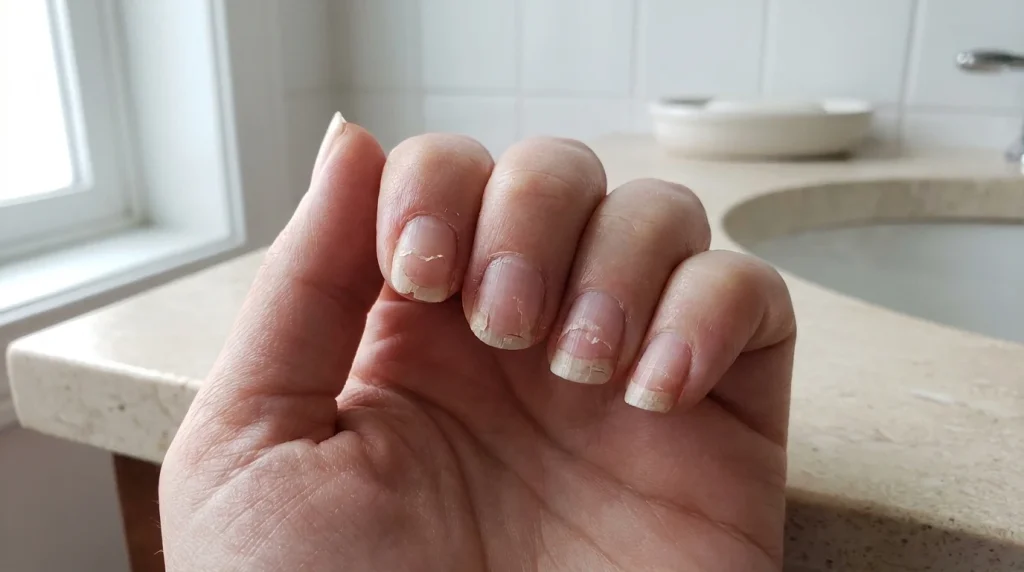
Weak nails aren’t always thin. Some are hard but snap easily; others bend, peel, or develop cracks before they reach the length you want. You may notice more than one of these signs:
- Peeling layers: Thin sheets lift from the free edge, especially after frequent wetting and drying.
- Splitting tips: Small cracks start at the corners and catch on clothing or hair.
- Easy bending: The nail feels unusually soft or flexible when you press gently near its tip.
- Lengthwise splits: A line or crack travels from tip toward the base and keeps reopening.
- Rough, thinning surfaces: Your nails feel uneven after buffing or removing enhancements.
One broken nail after a snag usually points to local trauma. Several nails changing together suggest you should examine your habits and, if the change persists, consider other causes. Our guide to signs of unhealthy nails can help you spot changes that are different from ordinary cosmetic breakage.
Why Are My Nails Weak? 9 Common Causes
Your nail plate is made mostly of keratin, with water and natural lipids contributing to its flexibility. Once part of the plate is damaged, a product can’t permanently rebuild it like living skin. The goal is to reduce further damage while healthier nail grows forward from the base.
1. Your Hands Go Through Constant Wet-Dry Cycles
Water temporarily changes how your nails behave. Repeated soaking followed by drying can make the nail layers more likely to peel or split. Think of washing dishes, rinsing laundry, long baths, or frequent handwashing throughout your shift.
What to try: Keep ordinary handwashing gentle, dry your hands well, then apply cream over the nails and surrounding skin. Use waterproof gloves for prolonged wet work instead of avoiding necessary hand hygiene.
2. Cleaning Products and Solvents Strip Away Moisture
Dish detergent, household cleaners, and repeated contact with polish remover can leave your nail area feeling dry. Alcohol-based hand sanitizer may also dry the surrounding skin, especially when you never moisturize afterward. The problem usually comes from cumulative exposure, not one use.
What to try: Put on protective gloves before using cleaning chemicals. Choose a fragrance-free hand cream you actually enjoy applying and keep it near the sink.
3. Gel, Dip, or Acrylic Removal Damages the Nail Surface
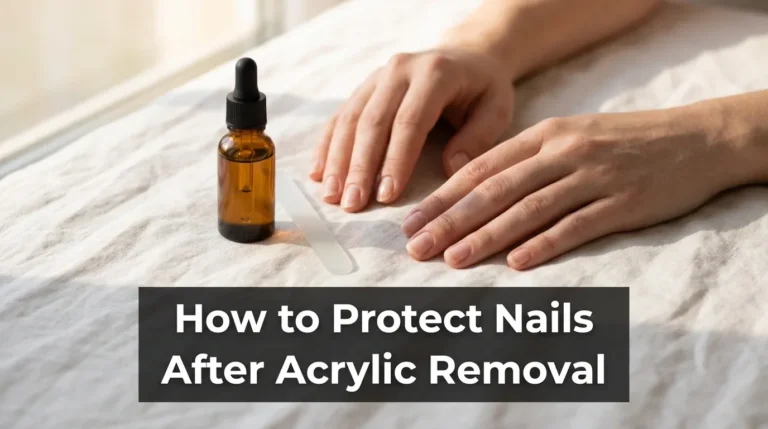
A fresh set can look flawless while the natural nail underneath is getting thinner from aggressive filing, scraping, or peeling. Pulling off lifted gel or acrylic can take superficial nail layers with it. Repeating that process makes weak nails more vulnerable to the next manicure.
What to try: Ask for gentle, product-appropriate removal and never pry enhancements off. If your nails feel sore or visibly thinned, pause enhancements while they grow out. See our guide to whether nails are healthier without polish for when a temporary break makes sense.
4. Buffing, Filing, and Everyday Pressure Add Up
Trying to erase ridges with a coarse buffer removes nail material. Sawing repeatedly at an already peeling edge can make it catch more easily, while using a nail to open cans or scrape labels creates bending and leverage at the tip.
What to try: Skip surface buffing while your nails are fragile. Shorten them slightly, shape the free edge with a fine file, and let a tool—not your thumbnail—do the scraping.
5. Dry Air and Neglected Nail Edges Make Breakage Easier
Cold weather, indoor heating, and lots of washing can make your cuticles and nail folds feel rough. A dry, brittle tip is less forgiving when it knocks against a hard surface. Oil and cream won’t turn a thin nail thick overnight, but they help manage dryness and flexibility.
What to try: Massage a small amount of moisturizer over each nail and its surrounding skin after washing. At bedtime, add a thin layer of petroleum jelly over particularly dry areas.
6. A Nutrient Deficiency May Be Affecting Growth
Your body needs adequate protein and other nutrients to produce nails. Iron deficiency and some other nutritional problems can contribute to nail changes, but peeling nails alone don’t prove you’re missing a vitamin. Starting iron tablets or high-dose “hair, skin, and nails” gummies without a reason can create new problems.
What to try: Eat regular meals with protein, legumes, whole grains, vegetables, and iron-rich foods. If you also have fatigue, unusual paleness, or other symptoms, ask a clinician whether testing is appropriate rather than guessing from your nails.
7. Thyroid Changes Sometimes Show Up in Your Nails
Thyroid disorders can be associated with brittle nails, changes in growth, or lifting of the nail from its bed. That doesn’t mean every split nail is a thyroid warning. Look at the bigger picture: unexplained weight changes, unusual tiredness, hair changes, or feeling much colder or hotter than usual are reasons to discuss your symptoms with a clinician.
What to try: Don’t attempt to diagnose a thyroid condition from nail photographs. Describe when the changes started and ask whether an examination or blood test would help.
8. Skin Conditions or Nail Infections May Be Involved
Eczema around the fingertips can irritate the nail area. Psoriasis can cause pitting, roughness, or nails lifting away from the nail bed. A fungal infection may cause thickening, discoloration, or crumbling, especially in toenails. These conditions need different treatments, so a cosmetic strengthener isn’t the right solution.
What to try: Arrange an evaluation if you notice pitting, persistent inflammation, thickening, nail separation, or unexplained discoloration. Have a possible fungal infection confirmed before using prolonged treatment.
9. Aging, Medication, or Repeated Trauma Can Change Nail Quality
Nails can become more brittle with age. Repeated knocks to the same finger, habitual picking, or a previous injury near the nail base may also affect how a nail grows. Some medicines and medical treatments can change nail texture or growth.
What to try: Notice whether one nail or all ten are affected. If a change began after a new prescription or treatment, discuss it with your prescriber; don’t stop medication just because your nails look different.
When Are Weak Nails a Reason to See a Doctor?
Most ordinary peeling responds to reducing damage, but some changes shouldn’t be covered with polish and ignored. Make an appointment if your nails become persistently weak without an obvious cause, the problem is worsening, or you have symptoms elsewhere in your body.
Warning
Get medical advice promptly for redness with swelling or pus, significant pain, a nail lifting away, or a new or changing dark stripe. Sudden major color or shape changes also deserve assessment. A nail oil, polish, or supplement won’t diagnose or treat an infection or an underlying condition.
How Can You Make Weak Nails Less Likely to Break?
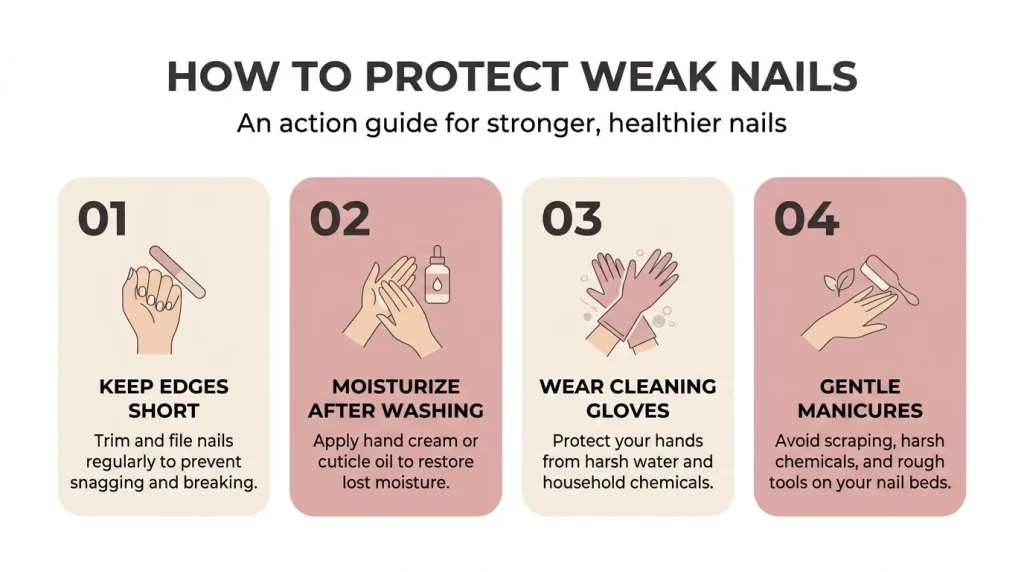
If your nails are splitting from routine wear, build a protective system rather than searching for a one-night cure. Start with the changes that remove the most daily stress, then add simple moisture care.
Keep the Free Edge Short and Smooth
Trim nails to just at or slightly beyond your fingertip for now. The shorter edge is less likely to bend against bags, keyboards, and zippers. Use clean clippers, then gently round any sharp corners with a fine-grit or glass file. File the edge rather than grinding the top of the nail.
If one tip has already started peeling, don’t pull the loose layer back. Carefully shorten past the snag if possible. A smooth, shorter nail is a better starting point than an attractive long nail that splits again tomorrow.
Moisturize Every Time Your Hands Need It
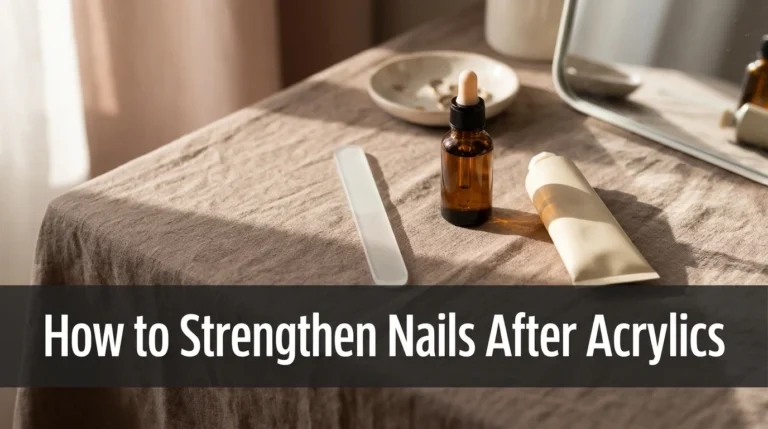
After washing, pat your hands dry and work a fragrance-free cream over your fingertips, nail plates, and cuticle area. Use a small drop of cuticle oil when your nails feel dry, especially after polish removal. Consistency matters more than buying five different serums.
A simple routine might be hand cream after washing, oil once in the evening, and petroleum jelly on very dry cuticles before bed. If you want a more detailed schedule, use our daily nail-care routine as a starting point.
Pro Tip
Keep your hand cream beside the soap and your cuticle oil beside your toothbrush. Pairing care with habits you already have is easier than remembering a complicated seven-step nail routine.
Protect Your Nails During Wet or Messy Tasks
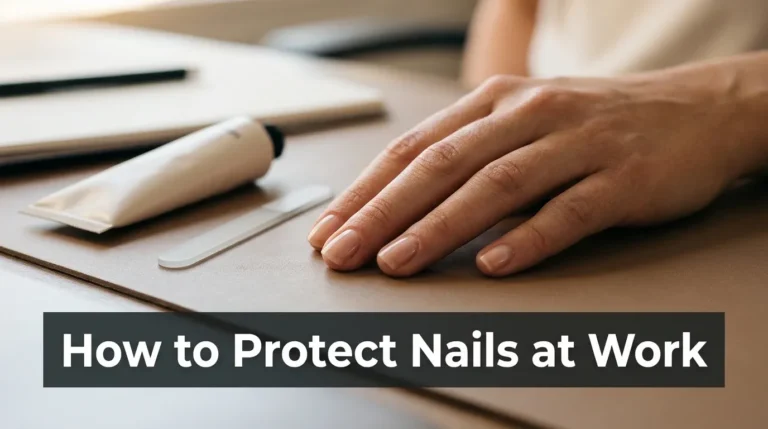
Put on waterproof cleaning gloves before washing dishes or working with detergents. If you sweat inside them, remove the gloves, dry your hands, and change to a dry pair; moisture trapped against your skin isn’t helpful. For longer chores, cotton-lined gloves may feel more comfortable.
Don’t treat gloves as a reason to skip normal handwashing. They’re simply a barrier for extended wet work and chemical exposure. Also try opening packaging with scissors and lifting can tabs with a tool rather than your nails.
Give Damaged Nails a Gentler Manicure Routine
You don’t have to swear off polish forever. Regular polish is often compatible with healthy nails when you apply and remove it gently. The bigger concern is repeated picking, drilling, forceful scraping, and immediately covering a nail that is painful or visibly damaged.
Consider a break from gel, dip, or acrylics if the natural nail feels thin. Avoid cutting cuticles, and tell your nail technician you don’t want aggressive surface filing. If polish removal dries your hands, moisturize afterward and limit unnecessary repeated changes.
Choose Food and Supplements Based on Your Needs
Include a protein source such as eggs, fish, beans, tofu, or dairy in meals, along with varied fruits, vegetables, and iron-containing foods. Good nutrition supports normal nail growth, but no one ingredient can immediately glue split layers back together.
Biotin supplements aren’t a universal fix for brittle nails. High-dose biotin can interfere with certain blood tests, including some thyroid and heart-related tests. Tell your healthcare professional about supplements you’re taking and ask before starting iron or high-dose vitamins.
What Should You Do—and Avoid—While Nails Recover?
Do
- Keep tips short while they split.
- Moisturize nails and skin after washing.
- Wear gloves for dishes and cleaning.
- Track changes with a monthly photo.
Don’t
- Peel off gel or acrylics.
- Buff away visible nail layers.
- Cut or pick at healthy cuticles.
- Use harsh hardeners as a quick fix.
Which Products Are Actually Worth Buying for Weak Nails?
Start with protection and moisturizer, not a cabinet full of treatments. These affordable product categories address common causes of brittleness without promising a miracle cure.
Recommended Product Type
Cotton-Lined Waterproof Cleaning Gloves
Best when frequent dishwashing or cleaning leaves your nails peeling. Choose a comfortable fit, and dry the inside between uses.
As an Amazon Associate, we earn from qualifying purchases.
Recommended Product Type
Jojoba-Based Cuticle Oil Pen
Useful for a lightweight desk or handbag routine. Apply a little to dry nail edges and cuticles; it conditions rather than permanently thickening the nail.
Compare Cuticle Oils on Amazon
As an Amazon Associate, we earn from qualifying purchases.
If you want to compare oils by texture and budget, see our guide to the best oils for weak, damaged, or brittle nails.
Recommended Product Type
Fragrance-Free Hand Cream
A straightforward choice after handwashing, particularly if your fingers and cuticles also feel tight or rough. Look for a rich cream you can reapply comfortably.
As an Amazon Associate, we earn from qualifying purchases.
For snagged corners, a fine glass nail file is an optional fourth tool. It can smooth a rough edge without encouraging you to buff down the nail surface.
How Long Does It Take for Weak Nails to Get Stronger?
Moisturizer can ease dryness quickly, but visible splits won’t magically fuse back together. You may notice fewer new snags within several weeks if you reduce the triggers. The damaged section still needs time to move toward the free edge and be trimmed away.
Fingernails typically grow about 3 millimeters per month, and replacing an entire fingernail takes around six months or longer. Growth varies by person and nail, so don’t judge your progress after one weekend. Take a photo once a month, keep the length manageable, and watch whether the new growth looks healthier.
If the brittleness continues despite gentler care—or a single split repeatedly extends toward the base—get the nail checked. For a longer recovery plan after cosmetic damage, see how to make your nails healthy again.
Frequently Asked Questions About Weak Nails
Q: Why are my nails weak even though I take vitamins?
A: Vitamins won’t prevent damage caused by peeling gel, frequent wet work, or over-filing. If your diet is adequate, extra supplements may not help. Persistent or unexplained brittleness deserves medical evaluation rather than increasingly high doses.
Q: Can cuticle oil make weak nails strong again?
A: Cuticle oil can help manage dryness and keep the nail area conditioned, which may reduce dryness-related cracking. It can’t restore material already filed or peeled away. New nail growth and gentler habits do the long-term work.
Q: Should I stop wearing nail polish if my nails keep breaking?
A: Not necessarily. Gentle regular polish may be fine, but a break is sensible when your nails are thin, peeling, sore, or repeatedly damaged by removal. Skip enhancements until the nail surface improves, and never cover signs of infection.
Q: Are weak nails a sign of low iron or thyroid disease?
A: They can be, but weak nails alone can’t establish either diagnosis. If your nails suddenly change or you also experience fatigue, hair changes, or other symptoms, ask a healthcare professional whether testing makes sense.
Give Your Nails a Fresh Start
The best answer to “Why are my nails weak?” often begins with what your hands do every day. Shorten snagging tips, moisturize regularly, protect your nails from long wet chores, and let damaged sections grow out instead of covering them repeatedly. If something looks unusual or keeps worsening, get it checked.
Save this guide to your Pinterest nail-care board so you can return to the routine whenever your nails need a gentler reset.

Hi, I’m Jessica, the creator behind Unique Lash & Nails Katy.
I created this website for anyone who loves beautiful nails as much as I do. Here, I share trendy nail designs, seasonal manicure ideas, easy nail care tips, honest product recommendations, and step-by-step guides to help you create salon-worthy nails at home. Whether you’re looking for everyday inspiration or your next favorite nail trend, I hope you’ll find something you love.