Why Is There Black Stuff Under My Nails? Causes and Safe Cleaning Tips
Quick Answer
Black stuff under your nails is usually a mixture of dirt, skin cells, natural oils, and keratin trapped beneath the free edge. If it washes away, ordinary buildup is the likely cause. A dark mark that stays inside or beneath the nail could instead be dried blood, staining, infection, or—rarely—a more serious nail condition that needs medical attention.
If dark material seems to reappear under your nails hours after you clean them, you’re not necessarily doing anything wrong. The narrow space beneath each nail is surprisingly good at collecting tiny particles from your skin, clothing, makeup, food, and everyday surfaces.
The important question is whether you’re looking at removable debris or a color change within the nail. Here’s how to tell the difference, clean your nails without damaging them, and recognize the signs you shouldn’t ignore.
Is the Black Stuff Dirt or Part of Your Nail?
Start by washing your hands with soap and gently brushing beneath the nail tips. If the black material loosens or disappears, it was probably surface debris. Dirt beneath a nail often looks irregular, sits near the tip, and affects several nails in slightly different ways.
A color change within or underneath the nail plate behaves differently. It won’t brush away, and it may appear as a spot, patch, narrow line, or larger dark area. You may also notice tenderness, thickening, crumbling, lifting, odor, or changes in the surrounding skin.
Look at your bare nails in bright natural light. Polish, glitter, artificial tips, and shadows beneath long nails can make the area look darker than it really is. Removing polish also gives you a better chance of spotting a persistent change early.
If you’re unsure what a healthy nail should look like, compare your symptoms with these common signs of unhealthy nails.
Why Does Black Debris Keep Collecting Under Your Nails?
The material people call “dirt” is rarely soil alone. It can contain shed skin, lint, natural oils, cosmetic residue, food particles, dust, and fragments of keratin from the nail and nail bed.
Your Nails Extend Beyond Your Fingertips
The longer your free edge becomes, the larger the pocket beneath it. That space collects particles whenever you touch fabric, scratch your skin, apply makeup, handle food, open packages, or clean around the house.
Curved or almond-shaped nails may hold debris along their sidewalls, where it’s harder to see and rinse away. Long enhancements can create an even deeper underside that needs deliberate but gentle cleaning.
You Touch More Pigment Than You Realize
Dark clothing, newspaper ink, gardening soil, spices, hair dye, mascara, charcoal products, and self-tanner can all leave visible residue. Even rubbing your scalp can collect oil, skin cells, and dark fibers beneath your nails.
If the buildup appears after one particular activity, that timing is a useful clue. Check your nails before and after gardening, cooking, cleaning, applying makeup, or styling your hair for a few days.
Your Skin Is Dry or Flaky
When the skin beneath and around your nails is dry, small flakes can mix with oil and pigment to form gray or black debris. Frequent handwashing, acetone, household cleaners, cold weather, and picking at the skin can make flaking worse.
Moisturizing the surrounding skin may reduce this type of buildup. If your hands feel tight after washing, apply a fragrance-free hand cream and a small amount of cuticle oil once the skin is clean and dry.
The Nail Has Started to Lift
A nail that separates slightly from its nail bed creates a larger gap where moisture and debris can become trapped. This separation is called onycholysis. It may follow an injury, aggressive filing, gel removal, prolonged water exposure, psoriasis, or a reaction to a nail product.
The separated area often looks white or yellow at first, but trapped debris can make it appear gray, brown, or dark. Don’t push tools deeply into the gap or try to glue the natural nail back down. Keep it short and dry while new growth replaces the separated section.
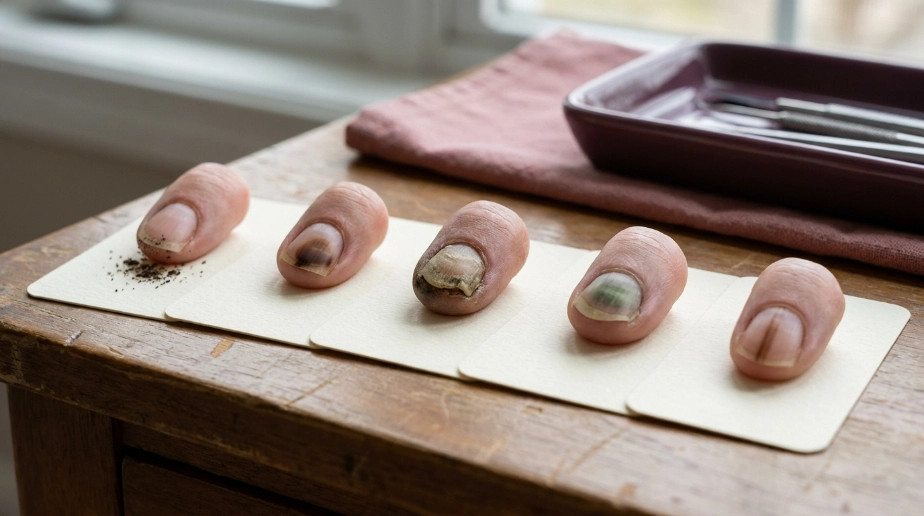
What Else Can Look Like Black Dirt Under a Nail?
 Save
SaveIf the mark doesn’t come off with gentle cleaning, stop treating it as dirt. Several nail changes can create a similar appearance, and scraping harder may injure the nail bed without removing the real cause.
A Bruise or Dried Blood
A subungual hematoma is blood trapped beneath the nail after an impact or repeated pressure. You might get one after catching a finger in a door, hitting the nail, wearing tight shoes, or repeatedly pressing a nail against equipment.
A fresh bruise may look red or purple before becoming brown or black. It normally moves toward the tip as the nail grows. A small, painless bruise usually grows out on its own, but severe throbbing pain or a large collection of blood deserves prompt medical care.
Fingernails grow slowly, so the mark may remain visible for months. The guidance on how a damaged nail regrows explains what you can expect during that process.
Fungal Nail Changes
Fungal infections more often cause yellow, white, or brown discoloration than a truly black mark. However, a thick, crumbly nail can collect dark keratin and debris beneath its edge.
Watch for increasing thickness, brittleness, an uneven surface, lifting, or flaky material that keeps returning. Appearance alone can’t confirm fungus because nail trauma and psoriasis can look similar. A clinician may test a clipping or scraping before recommending treatment.
Green Nail Syndrome
A green, green-black, or very dark stain beneath a lifted nail can occur when certain bacteria grow in a persistently moist gap. This is sometimes called green nail syndrome. It’s more likely when an artificial nail has lifted or your hands spend long periods in water.
The color is within the affected area rather than loose material you can brush out. Remove detachable artificial nail products only by their safe removal method, keep the area dry, and arrange professional advice instead of covering the discoloration with fresh product.
A Splinter Hemorrhage
A splinter hemorrhage looks like a short, thin red-brown or black line beneath the nail. Minor nail trauma is a common cause, especially after a manicure or impact.
If several nails develop unexplained lines or you also feel feverish or unwell, contact a healthcare professional. Multiple unexplained splinter-like lines can occasionally be connected to a condition outside the nail.
A Pigmented Nail Streak
Melanin can create a brown or black vertical band called longitudinal melanonychia. These bands can be normal, particularly in people with darker skin tones, and may affect more than one nail.
A newly appearing streak still deserves attention if it’s changing, becoming wider, developing uneven colors, or spreading pigment onto the nearby cuticle or skin. Rarely, a persistent dark streak can be a form of melanoma beneath the nail.
Warning
Don’t repeatedly scrape a dark spot that won’t wash away. Arrange a medical or dermatology assessment if the mark has no clear cause, begins near the cuticle, changes shape or color, widens, affects the surrounding skin, or fails to move outward as your nail grows.
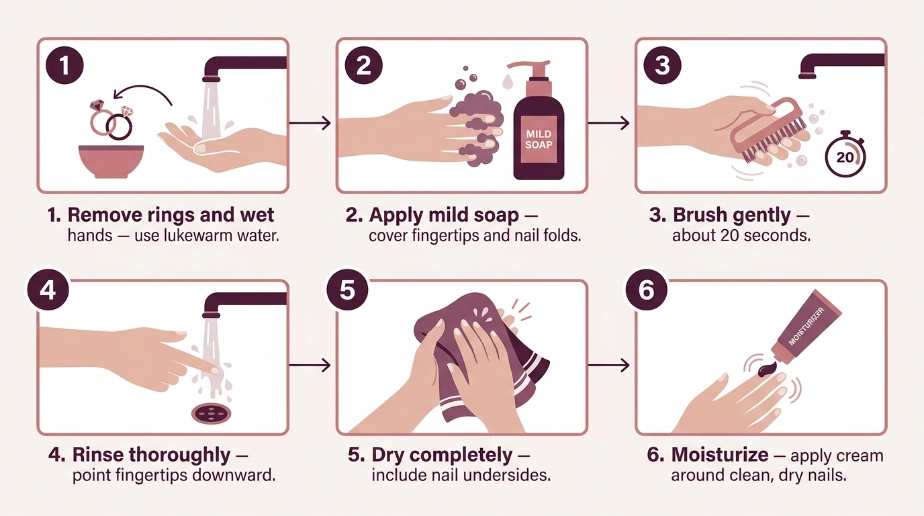
How Can You Safely Clean Under Your Nails?
 Save
SaveYou don’t need bleach, peroxide, lemon juice, or a sharp metal tool. Soap, running water, and a soft brush are enough for ordinary debris.
- Remove rings and wet your hands. Use lukewarm rather than very hot water. Hot water and long soaking can dry the skin and make the nail plate temporarily softer.
- Apply mild soap. Work the lather over your palms, fingertips, nail folds, and beneath the accessible free edge.
- Brush gently. Move a clean, soft-bristled nail brush across the undersides for about 20 seconds. Use light pressure so you don’t separate the nail from its bed.
- Rinse thoroughly. Hold your fingertips downward so loosened particles flow away instead of settling beneath the nails again.
- Dry completely. Pay attention to the undersides and spaces between your fingers. Persistent moisture can encourage microbial growth.
- Moisturize the surrounding skin. Apply hand cream to dry skin and a small drop of cuticle oil around each nail. Keep moisturizer out of any visibly lifted pocket.
Pro Tip
Clean the underside against a white sink or towel. You’ll see whether loose debris is coming away and avoid mistaking the natural shadow beneath a translucent nail for trapped dirt.
For a complete maintenance routine, follow this guide to protecting and repairing a mildly damaged nail at home.
Recommended Product
Soft-Bristled Fingernail Cleaning Brush
★★★★☆ Highly rated on Amazon
A soft brush removes loose debris without the concentrated pressure and scratching caused by pointed tools.
As an Amazon Associate, we earn from qualifying purchases.
What Should You Avoid When Cleaning Beneath Your Nails?
Do
- +Use mild soap and a soft brush.
- +Keep nails short enough to clean easily.
- +Photograph marks that don’t wash away.
Don’t
- −Dig with pins, scissors, or metal files.
- −Pour bleach beneath your nails.
- −Cover unexplained discoloration with enhancements.
Sharp tools can injure the hyponychium, the sensitive skin that seals the area beneath the nail tip. Repeated digging can also force the nail away from its bed, creating more room for debris and moisture—the exact problem you’re trying to solve.
Strong chemicals introduce a different risk. Bleach, peroxide, and repeated acidic soaks can irritate your skin without treating blood, fungus, bacteria, or pigment beneath the nail plate.
How Can You Stop the Black Buildup From Coming Back?
- Trim excess length regularly. Shorter free edges leave less space for particles to collect. Use clean clippers and smooth snags with a fine file.
- Wear gloves for messy jobs. Use appropriate gloves while gardening, handling dye, painting, or cleaning. Add cotton-lined household gloves if sweat becomes trapped inside rubber gloves.
- Brush after high-debris activities. A quick wash after gardening or applying dark makeup is easier on your nails than aggressive scraping later.
- Stop using your nails as tools. Scraping labels, opening packaging, and picking residue from surfaces pushes particles under the tips and can lift the nail.
- Keep manicure tools clean. Wash your brush, allow it to dry between uses, and don’t share clippers or files.
- Dry beneath long nails. Trapped moisture is more concerning than a little ordinary dust because it can support bacterial or fungal growth.
If your nails spend a lot of time in water, learn why frequent hot-water exposure can affect your nails.
Recommended Product
Cotton-Lined Reusable Cleaning Gloves
★★★★☆ Highly rated on Amazon
They protect your nail undersides from cleaning residue while reducing direct exposure to water and detergent.
As an Amazon Associate, we earn from qualifying purchases.
Recommended Product
Fine Glass Nail File
★★★★☆ Highly rated on Amazon
A fine file smooths snagging edges without leaving the rough crevices that readily catch lint and grime.
As an Amazon Associate, we earn from qualifying purchases.
When Should You Have a Dark Nail Checked?
Arrange an appointment with a doctor or dermatologist if:
- The dark material doesn’t wash or brush away.
- A new brown or black streak has appeared without a known injury.
- The streak is widening, changing color, or developing uneven borders.
- Dark pigment extends onto the cuticle or surrounding skin.
- The mark remains in the same place instead of growing toward the tip.
- Your nail is painful, swollen, warm, draining, or separating from its bed.
- The nail has become thick, crumbly, misshapen, or noticeably odorous.
- You have diabetes, poor circulation, or a weakened immune system.
Seek more urgent care after a significant injury if the pain is intense, bleeding won’t stop, the finger looks misshapen, or the nail is badly torn. Don’t pierce a painful blood-filled nail at home because doing so can cause burns, infection, and further injury.
Pro Tip
Photograph a persistent mark once a week beside a ruler. The pictures can show whether it’s moving outward with normal growth or changing in width, shape, or color.
What If the Black Stuff Still Returns After Cleaning?
Debris returns by the end of each day
Wash after pigment-heavy or messy activities and consider shortening your nails. Wear gloves for gardening and cleaning so particles don’t enter the space in the first place.
Cleaning causes soreness or bleeding
Stop digging beneath the nail and allow the irritated skin to heal. Use only soap, water, and gentle surface brushing. Seek care if redness, warmth, swelling, pus, or worsening pain develops.
The nail looks clean but still appears dark
Remove polish and inspect it in natural light. If the discoloration is beneath the nail, treat it as a nail change rather than dirt and arrange an assessment when its cause isn’t obvious.
Dark buildup sits beneath a lifted enhancement
Don’t fill over the lifted area. Have the product safely removed, keep the nail dry, and avoid applying another enhancement until you know whether the discoloration is staining or microbial growth.
Frequently Asked Questions About Black Stuff Under Nails
Q: Does black stuff under my nails mean I have a fungus?
A: Not usually. Removable black debris is more likely to be dirt, skin cells, oils, or pigment. Fungus becomes more likely when discoloration occurs with thickening, crumbling, lifting, or recurring flaky material.
Q: Why do my nails get dirty so quickly?
A: Long or curved nails naturally collect more particles. Gardening, makeup, dark fabrics, cooking, dry skin, and scratching your scalp can also transfer debris beneath the tips throughout the day.
Q: Can I use a toothpick to clean under my nails?
A: It’s safer not to. A toothpick can puncture the skin or separate the nail from its bed. Use mild soap, running water, and a soft-bristled nail brush instead.
Q: How do I know whether a black nail is bruised?
A: A bruise often follows an impact or repeated pressure and may initially feel tender. The dark area should gradually move toward the tip as the nail grows, although complete growth can take several months.
Q: Should I cover a dark mark with nail polish?
A: Leave an unexplained mark visible until you understand its cause. Covering it makes changes harder to monitor and can trap moisture if the nail is lifting.
So, Why Is There Always Black Stuff Under Your Nails?
Most recurring black stuff under your nails is ordinary debris collecting beneath the free edge. Gentle brushing, shorter nails, clean tools, and gloves during messy work usually keep it under control.
If the color won’t wash away, don’t scrape harder or hide it beneath polish. Watch how it changes and have an unexplained, widening, painful, or persistent mark assessed. Save this guide to Pinterest so you can quickly compare the signs the next time something dark appears beneath a nail.

Hi, I’m Jessica, the creator behind Unique Lash & Nails Katy.
I created this website for anyone who loves beautiful nails as much as I do. Here, I share trendy nail designs, seasonal manicure ideas, easy nail care tips, honest product recommendations, and step-by-step guides to help you create salon-worthy nails at home. Whether you’re looking for everyday inspiration or your next favorite nail trend, I hope you’ll find something you love.