Is Hot Water Good or Bad for Nail Growth? What Really Happens to Your Nails
Quick Answer
Hot water does not make your nails grow faster. In fact, frequently soaking your hands in hot water can make nails temporarily softer and repeated wet-and-dry cycles may contribute to peeling, splitting, and breakage. For healthier-looking growth, use comfortably warm water, avoid long soaking sessions, dry your hands well, and moisturize your nails and cuticles afterward.
If you’ve heard that soaking your fingertips in hot water can make your nails grow faster, the idea sounds believable. Warmth feels like it increases circulation, and your nails look softer immediately after a shower or bath.
But softer doesn’t mean faster-growing.
Your nail plate grows from the nail matrix underneath the skin near the base of your nail. Water touching the visible part of your nail can’t suddenly switch that growth process into high gear. What water can influence is how well your existing nail plate holds up while new nail grows forward.
That distinction is important because nails that constantly peel or snap may seem as though they’re growing slowly even when the growth happening underneath is completely normal.


Does Hot Water Make Your Nails Grow Faster?
No. There isn’t good evidence that soaking your nails in hot water makes the nail matrix produce nail faster.
Your fingernails naturally grow only a few millimeters per month. Their growth is influenced by factors such as age, overall health, nutrition, injuries to the nail unit, certain medical conditions, and individual biology. Changing your washing water from cool to hot isn’t a proven way to meaningfully accelerate that process.
This also means a viral nail-growth routine that tells you to soak your fingertips in hot water for 10 or 20 minutes every day is unlikely to give you dramatically longer nails.
If your goal is length, protecting the nail that has already grown is usually much more useful.
For example, if your nails grow normally but the tips repeatedly split before they extend past your fingertips, reducing that breakage can make your nails appear to grow much better. Your actual biological growth rate may not have changed at all.
If you’re focusing on growth from the inside too, see what drinks can support healthy nail growth and which popular nail-growth drinks are mostly hype.
What Does Hot Water Actually Do to Your Nails?
 Save
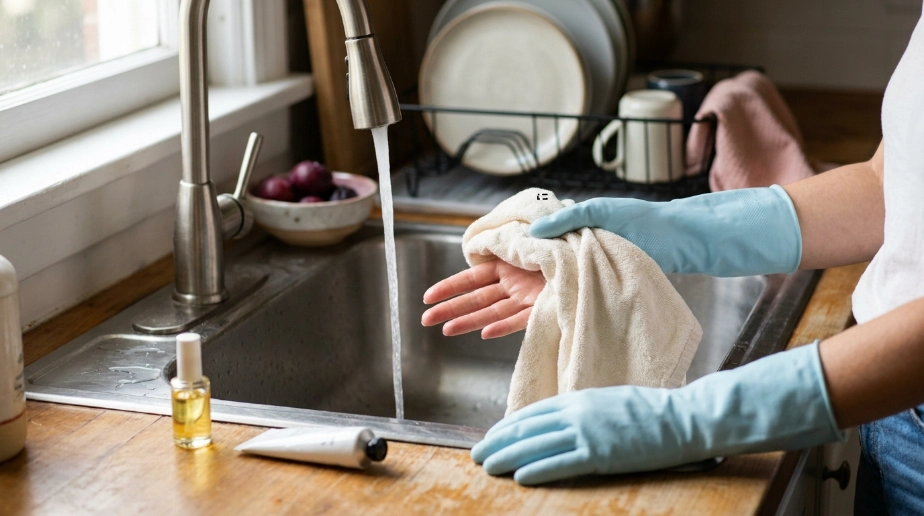
SaveYour nail plate may look hard and solid, but it can absorb water. During prolonged exposure, the nail becomes more hydrated and can temporarily soften.
Once your hands dry, the nail loses that moisture again.
Doing this repeatedly creates a cycle of wetting and drying. The nail plate can expand when wet and contract as it dries. When this happens over and over—especially if your nails are already thin, peeling, or damaged—the layers may become more vulnerable to splitting.
Hot water can also leave the skin around your nails feeling drier, particularly when you combine it with frequent handwashing, strong soap, dish detergent, cleaning chemicals, or long showers.
So the real problem isn’t that a single warm shower ruins your nails. It’s cumulative exposure.
Warning
Don’t deliberately soak weak or peeling nails in very hot water as a growth treatment. Long or repeated soaking can leave the nail softer temporarily, making an already fragile free edge easier to bend, peel, or tear.
Is Warm Water Better Than Hot Water for Your Nails?
For everyday handwashing and nail cleaning, comfortably warm or lukewarm water is a sensible choice.
You don’t need ice-cold water to protect your nails, and normal warm water isn’t something you need to fear. The bigger issue is avoiding unnecessarily hot temperatures and long periods with your hands submerged.
Very hot water
Very hot water offers no special nail-growth advantage. If it leaves your skin tight, red, uncomfortable, or noticeably dry afterward, turn the temperature down.
Warm or lukewarm water
This is generally the easiest option for normal washing. It’s comfortable, helps you clean your hands effectively when used with soap, and doesn’t require intentionally exposing your nails to extreme heat.
Cold water
Cold water doesn’t make nails grow faster either. Switching to freezing water simply because you’re trying to grow your nails isn’t necessary.
Think less about finding a magical temperature and more about limiting prolonged wetness, drying your hands properly, and replacing moisture afterward.
Why Do My Nails Feel Weak After a Shower or Bath?
Have you noticed that your nails bend more easily immediately after a long bath?
That’s because a water-soaked nail can temporarily become softer and more flexible. This is one reason trimming or manipulating wet nails aggressively can sometimes lead to tearing.
The biggest mistake is treating a softened nail as though it’s suddenly stronger.
You might get out of the shower, notice a rough corner, and start pulling at it. Because the nail is softer, the peeling layer can travel farther than expected.
Instead, dry your hands and give your nails a little time before aggressively filing, buffing, picking, or using them as tools.
Pro Tip
Keep a small bottle of cuticle oil or hand cream beside the sink you use most often. Connecting moisturizer with handwashing makes it much easier to protect dry cuticles consistently instead of remembering only when your nails start peeling.
Can Hot Water Make Your Nails Break More Easily?
Frequent water exposure can contribute to brittle, peeling nails in some people, especially when it’s combined with detergents and repeated drying.
Picture what happens during a normal day.
You shower in the morning. You wash your hands several times. You rinse dishes. You clean the kitchen. Maybe you wash your hair again after the gym. Every wet-and-dry cycle puts the nail plate through another change.
If your nails are strong, you may not notice anything.
If they’re already peeling after gel removal or splitting at the tips, that extra exposure may make keeping length more difficult.
This is why nail growth isn’t only about asking, “How can I make my nails grow?” You should also ask, “How can I stop losing the nail I’ve already grown?”
If your nails are currently damaged, the steps in this nail recovery routine for weak and damaged nails can help you simplify your care while the affected portion grows out.
What Water Habits Are Best When You’re Trying to Grow Your Nails?
 Save
SaveYou don’t have to keep your hands dry all day. Instead, focus on reducing unnecessary exposure.
Keep showers comfortable instead of extremely hot
A warm shower is fine. There’s no nail-growth benefit to turning the temperature high enough that your hands or surrounding skin feel dried out afterward.
Don’t soak your nails just to make them grow
A short soak may be useful for certain grooming routines, but daily extended soaking isn’t a proven nail-growth method.
Wear gloves for wet household work
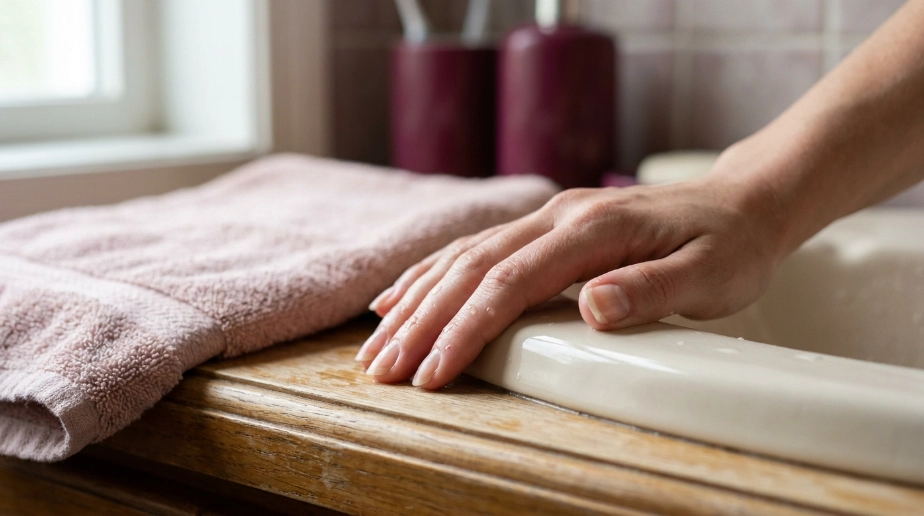
Dishwashing and cleaning can expose your nails to both water and detergent for extended periods. Gloves create a simple physical barrier.
Recommended Product
Reusable Household Cleaning Gloves
★★★★☆ Useful for everyday nail protection
A reusable pair helps reduce prolonged exposure to dishwater, detergent, and cleaning products when you’re trying to protect brittle nails.
As an Amazon Associate, we earn from qualifying purchases.
Dry around your nails after washing
Pat your hands dry instead of leaving water sitting around your nail folds and beneath long free edges.
Moisturize after frequent washing
Hand cream, cuticle oil, or petroleum jelly can help reduce that dry, tight feeling around the nail area. Moisturizing doesn’t make the matrix grow nail faster, but it can support a better maintenance routine for dry, brittle nails.
If you like inexpensive nail-care products, learn how Vaseline can help dry nails and cuticles and what it can’t do for actual nail growth.
Recommended Product
Cuticle Oil for Dry Nails
★★★★☆ Easy daily-care option
A lightweight cuticle oil is convenient after handwashing when the skin surrounding your nails repeatedly feels dry or rough.
As an Amazon Associate, we earn from qualifying purchases.
What Should You Do and Avoid for Better Nail Growth?
Do
- +Use comfortably warm water for routine washing.
- +Moisturize nails and cuticles after frequent washing.
- +Wear gloves for dishes and prolonged wet cleaning.
Don’t
- −Use painfully hot water because you think it speeds growth.
- −Soak brittle nails for long periods every day.
- −Pick, peel, or scrape softened nails after bathing.
What Else Helps You Keep Your Nails Growing Longer?
Water temperature is only one small part of nail care. If you’re serious about keeping more length, build a routine around preventing breakage.
Keep rough edges smooth so they don’t catch on clothing. Avoid using your nails to pry open cans, peel labels, or scrape hard surfaces. Don’t pick gel or acrylic from the nail plate, because removing product this way can take superficial nail layers with it.
Moisturize consistently rather than waiting until your cuticles look visibly cracked.
Nutrition matters too. Your nails are made primarily from keratin, so a balanced diet that supplies adequate protein and essential nutrients supports normal nail production better than chasing one supposed miracle food, drink, or soak.
You can combine these habits into a simple routine using this guide to the best everyday nail care routine.
Recommended Product
Rich Hand and Nail Moisturizer
★★★★☆ Helpful after frequent handwashing
A richer hand cream makes it easier to replace moisture after repeated washing and can keep the skin around your nails from feeling tight and dry.
As an Amazon Associate, we earn from qualifying purchases.
How Long Does It Actually Take for Nails to Grow?
 Save
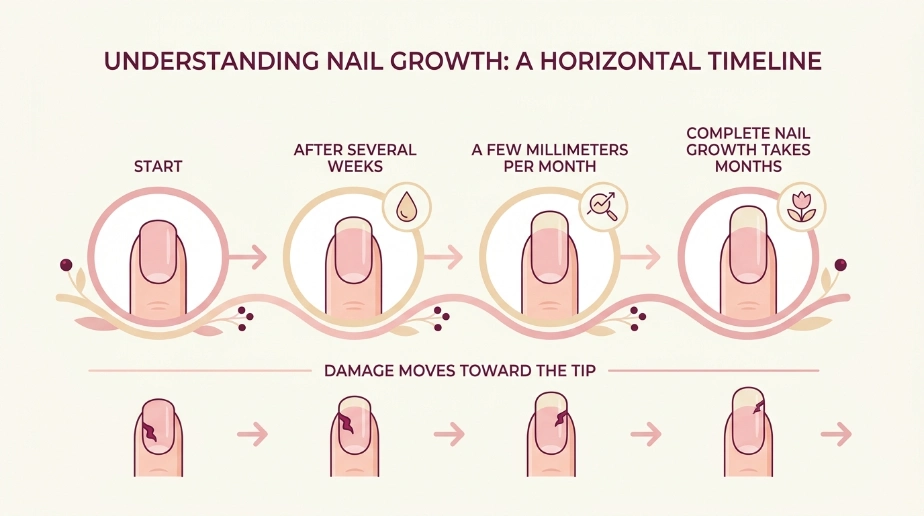
SaveFingernails generally grow around a few millimeters per month, which means meaningful length takes weeks rather than days.
That’s why a seven-day hot-water soak challenge can be misleading. Your nails may look different because they’re hydrated, filed differently, or photographed at another angle, but dramatic biological nail growth in a few days isn’t realistic for most people.
A complete fingernail also takes months to grow from the matrix to the tip.
If you damaged the surface of your nail during gel, dip, or acrylic removal, moisturizer can make it look and feel better, but the damaged portion doesn’t magically transform back into untouched nail. It gradually moves toward the tip as new nail grows behind it.
Patience matters.
Pro Tip
Take a clear photo of your bare nails every two weeks instead of checking them every day. Slow growth is much easier to notice in spaced-out photos, and you’ll also see whether you’re retaining length or repeatedly breaking the same tips.
When Is a Nail Problem More Than Water Damage?
Not every weak, discolored, or unusual nail is caused by showers or handwashing.
If a nail simply feels a little dry after repeated cleaning, adjusting your routine may be enough. Persistent or major changes deserve more attention.
Consider getting medical advice if you notice pain, swelling, warmth, pus, significant separation of the nail from the nail bed, persistent thickening or crumbling, major unexplained color changes, deep grooves, or sudden changes involving several nails.
A new or changing dark stripe should also be professionally evaluated rather than hidden under polish.
If you’re unsure whether what you’re seeing is simply cosmetic damage, learning the common signs of unhealthy nails can help you know when a change deserves more attention.
Frequently Asked Questions About Hot Water and Nail Growth
Q: Does soaking your nails in hot water make them grow?
A: No. Hot-water soaking isn’t proven to make the nail matrix produce nail faster. Long or repeated soaking may actually make the nail temporarily softer and contribute to breakage if your nails are already fragile.
Q: Is cold water better for nail growth?
A: Cold water isn’t a proven nail-growth treatment either. For everyday washing, comfortably warm water is fine. Protecting your nails from repeated soaking, harsh chemicals, and breakage is more useful than chasing a specific temperature.
Q: Can hot showers damage your nails?
A: An ordinary shower won’t suddenly ruin healthy nails. The concern is repeated or prolonged water exposure, especially when your nails are already brittle or when hot water is combined with drying soaps and chemicals.
Q: Should I moisturize my nails after washing my hands?
A: Yes, especially if frequent washing leaves your nails and cuticles dry. Apply hand cream or cuticle oil after drying your hands. A small amount of petroleum jelly can also help seal moisture around very dry cuticles.
Q: What is the best way to make nails grow longer?
A: You can’t force dramatically faster growth with hot water, oils, or overnight remedies. Focus on normal nutrition, gentle manicures, regular moisture, smoothing snags, protecting your hands during wet work, and preventing the tips from breaking as new nail grows.
So, Is Hot Water Good or Bad for Nail Growth?
Hot water isn’t a nail-growth booster, and more heat doesn’t mean faster nails. Occasional exposure is normal, but repeatedly soaking your nails or keeping your hands in very hot water can work against your goal if it contributes to dryness, softness, peeling, and breakage.
Use comfortably warm water, protect your hands during long wet chores, moisturize after washing, and focus on keeping the nail you’ve already grown. That’s a much more realistic route to longer, healthier-looking nails.
Save this guide to Pinterest so you can come back to these nail-growth habits whenever you’re tempted by another hot-water nail hack.

Hi, I’m Jessica, the creator behind Unique Lash & Nails Katy.
I created this website for anyone who loves beautiful nails as much as I do. Here, I share trendy nail designs, seasonal manicure ideas, easy nail care tips, honest product recommendations, and step-by-step guides to help you create salon-worthy nails at home. Whether you’re looking for everyday inspiration or your next favorite nail trend, I hope you’ll find something you love.