Vaseline vs Cuticle Oil: Which Is Better for Your Nails?
Quick Answer
Vaseline isn’t automatically better than cuticle oil. Vaseline is best when you want a thick barrier that helps seal moisture into very dry cuticles, especially overnight. Cuticle oil is lighter, easier to use throughout the day, and better suited to regular nail-care routines. If your cuticles are extremely dry, using cuticle oil first and a thin layer of Vaseline over it can give you the benefits of both.
If you’ve been staring at a jar of Vaseline and wondering whether you really need to buy cuticle oil, the answer is more interesting than simply choosing one product.
Both can make dry skin around your nails feel softer, but they don’t work in exactly the same way. Vaseline mainly creates a protective barrier that slows moisture loss. Cuticle oil gives you a lighter, more convenient way to condition the nail and surrounding skin throughout the day.
Your best choice depends on when you’re applying it, how dry your cuticles are, and whether you want a lightweight daily product or a heavier overnight treatment. If you’re building a complete routine rather than fixing one dry spot, this simple guide to the best nail care routine can help you fit moisturizing into the rest of your nail maintenance.
So, Is Vaseline Better Than Cuticle Oil?
For everyday cuticle care, cuticle oil is usually the more convenient choice. For sealing moisture into severely dry cuticles overnight, Vaseline often has the advantage.
Think of cuticle oil as your everyday conditioner and Vaseline as your protective top layer.
Vaseline Is Better When You Want:
- A thick overnight moisture barrier
- Help softening very rough cuticles
- An inexpensive multipurpose option
- Protection after frequent handwashing
- Something that stays on longer
Cuticle Oil Is Better When You Want:
- A lightweight daily treatment
- Quick application at your desk or on the go
- Less greasy residue
- Easy massage around the nail folds
- A product designed specifically for nail care
You don’t actually have to choose one forever. Your cuticles can need cuticle oil during the day and a heavier Vaseline layer at night.
What Does Vaseline Actually Do for Your Cuticles?
 Save
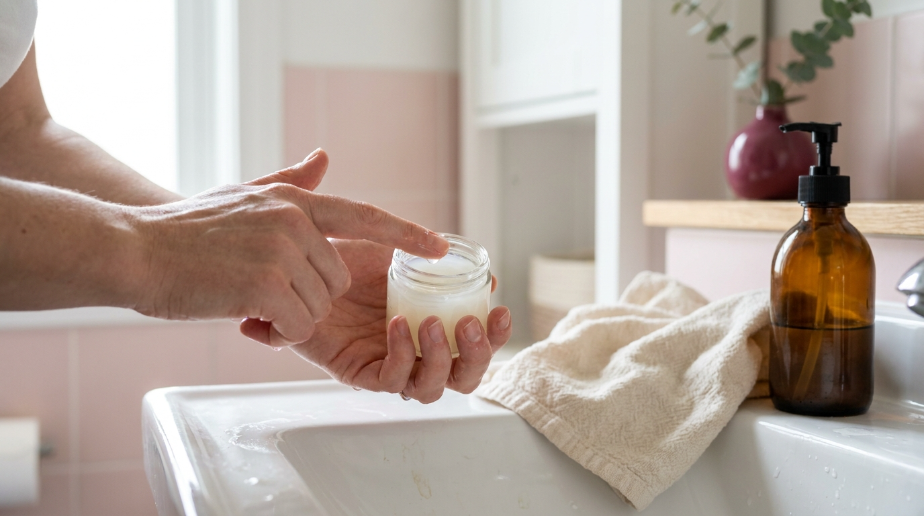
SaveVaseline is a brand of petroleum jelly. Petroleum jelly works primarily as an occlusive, meaning it forms a barrier over the surface of your skin that helps slow water loss.
That’s particularly useful around your nails because constant handwashing, sanitizer, acetone, household cleaners, cold weather, and dry indoor air can leave the cuticle area feeling tight and rough.
Applying a small amount of petroleum jelly while your skin still contains moisture helps keep that moisture from disappearing as quickly. Your cuticles can feel softer, smoother, and less flaky as a result.
It doesn’t magically rebuild a damaged nail or make the nail grow faster. Its strength is protection and moisture retention. For a deeper look at that distinction, see how Vaseline works on dry nails and cuticles.
Recommended Product
Pure Petroleum Jelly for Overnight Cuticle Care
A simple petroleum jelly is useful when you want an inexpensive, long-lasting layer over dry nails and cuticles before bed.
As an Amazon Associate, we earn from qualifying purchases.
What Does Cuticle Oil Do Differently?
Cuticle oil is generally a blend of lightweight plant oils, conditioning ingredients, or both. Depending on the formula, you may see jojoba oil, sunflower oil, sweet almond oil, avocado oil, vitamin E, or similar ingredients.
The biggest practical difference is texture.
A few drops of cuticle oil are easy to massage around your nails without coating your fingertips in a thick layer. That’s why it’s so convenient after washing your hands, while you’re working at a desk, after removing polish, or before bed.
Regular moisturizing helps keep the skin surrounding your nails soft and comfortable. It can also make your manicure look neater because ragged, flaky skin around freshly painted nails is much more noticeable than smooth cuticles.
If you’re comparing other products for maintaining natural nails, you’ll also find cuticle oil discussed in this guide to healthy products to put on your nails.
Recommended Product
Jojoba Cuticle Oil for Daily Nail Care
A lightweight jojoba-based cuticle oil is easy to massage around your nails several times a day without the heavier feel of petroleum jelly.
As an Amazon Associate, we earn from qualifying purchases.
When Is Vaseline the Better Choice?
Reach for Vaseline when your biggest problem is moisture escaping too quickly.
For example, your cuticles might look fine after applying hand cream but become dry again an hour later. A thin layer of petroleum jelly over moisturized skin can give you a longer-lasting protective coating.
It’s especially useful in these situations:
- Your cuticles are very dry at bedtime. You can leave the product undisturbed for several hours.
- You wash your hands constantly. Repeated soap-and-water exposure can make the skin surrounding your nails feel dry.
- Cold weather is making your fingertips rough. The heavier texture gives you more protection than a fast-absorbing product alone.
- Your skin feels dry after polish removal. Acetone can leave the surrounding skin feeling tight, making post-manicure moisture particularly helpful.
- You want the cheapest simple option. One container can serve multiple skincare purposes.
For maximum benefit, apply it after washing your hands and gently patting them dry rather than waiting until your skin feels completely parched.
When Is Cuticle Oil the Better Choice?
Cuticle oil wins when consistency and convenience matter most.
You probably won’t want thick petroleum jelly covering your fingertips while you’re typing, driving, touching your phone, or doing your makeup. A lightweight oil is much easier to work into your routine.
Cuticle oil is especially useful if:
- You want to moisturize several times during the day.
- You dislike sticky or greasy products.
- You wear polish, gel, acrylic, or press-on nails and want the surrounding skin to look neat.
- You enjoy massaging the cuticle area as part of your routine.
- You want a pen, rollerball, or brush format that fits in your handbag.
The best product is the product you’ll actually use. A luxurious bottle that stays forgotten in a drawer isn’t more effective than a simple oil pen you apply every evening.
Can You Use Vaseline and Cuticle Oil Together?
Yes, and this is often the most useful approach when your cuticles are extremely dry.
Apply your lighter product first, then your heavier barrier.
- Wash your hands and gently pat them dry.
- Apply one small drop of cuticle oil around each nail.
- Massage it into your cuticles, nail folds, and nail surface.
- Give it a minute to spread.
- Apply a very thin layer of Vaseline over the cuticle area.
- Leave everything on overnight.
This approach also fits easily into a simple weekly and daily nail care routine without adding a complicated extra step.
Pro Tip
If you hate getting petroleum jelly on your bedding, concentrate it around the cuticles instead of coating your entire hands. Lightweight cotton gloves are another option for an intensive overnight routine.
Should You Apply Cuticle Oil or Vaseline First?
Apply cuticle oil first and Vaseline second.
The thinner product goes underneath. The thicker petroleum jelly sits over the top as your final protective layer.
If you’re also using hand cream, a practical order is:
- Cuticle oil
- Hand cream
- Petroleum jelly on the driest areas
You don’t need huge amounts of any product. More isn’t automatically better. A small amount spread thoroughly is usually more comfortable and less likely to end up all over your phone or pillowcase.
If your entire hands are dry rather than only your cuticles, a fragrance-free hand cream underneath your petroleum jelly can make the routine more useful for the surrounding skin too.
How Often Should You Use Each Product?
You can adjust the frequency based on how your cuticles feel.
Cuticle oil: Once or twice daily is an easy starting routine. Apply it again whenever the skin surrounding your nails starts feeling tight or dry.
Vaseline: Once at bedtime may be enough for ordinary dryness. You can use a small amount more often when repeated handwashing or cold weather is drying your skin.
Both together: Try the combination overnight when your cuticles need more intensive moisture protection. Once the dryness improves, you may find that daily oil plus occasional petroleum jelly is enough.
Consistency matters more than covering your hands in an excessively thick layer once a week.
Do Vaseline or Cuticle Oil Make Your Nails Grow Faster?
Neither product should be treated as a nail-growth accelerator.
Your nail grows from living tissue beneath the skin. Applying petroleum jelly or oil to the visible nail plate doesn’t suddenly speed up that biological process.
What a good moisturizing routine can do is make the surrounding skin feel healthier and help dry nails stay better protected. If dryness and rough edges are contributing to frequent chipping, protecting your existing length may make it easier for you to maintain longer-looking nails.
That’s very different from claiming that a product makes new nail grow dramatically faster.
What Should You Look for in a Cuticle Oil?
You don’t need the longest ingredient list.
Look for a formula that feels comfortable enough for you to use consistently. Common choices include:
- Jojoba oil: Lightweight and popular in everyday nail-care products.
- Sunflower oil: A light plant oil used in many skin-conditioning formulas.
- Sweet almond oil: Common in richer cuticle blends, although you may prefer another option if you have relevant sensitivities.
- Vitamin E: Often included alongside other oils in cuticle products.
- Fragrance-free formulas: A sensible choice if scented products tend to irritate the skin around your nails.
Packaging matters too. Pens and brush applicators are excellent for travel and desks because you can control exactly where the oil goes.
What Are the Biggest Mistakes With Vaseline and Cuticle Oil?
 Save
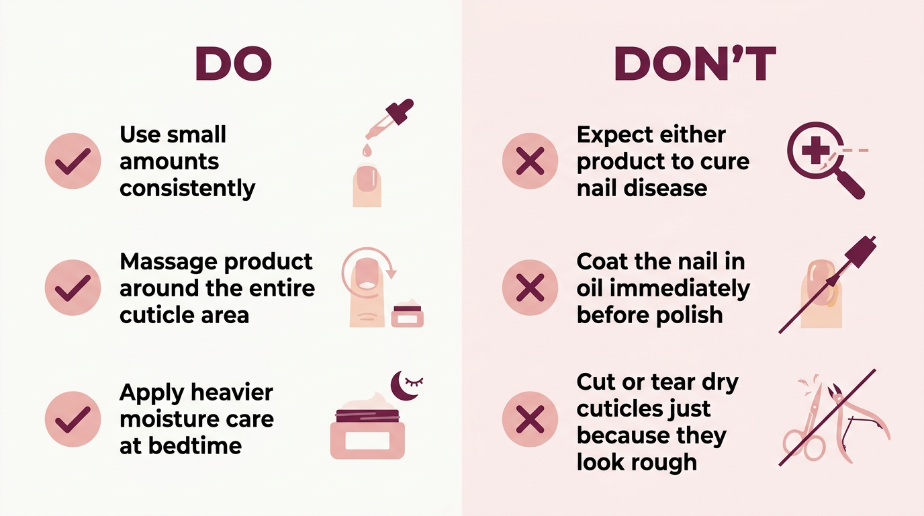
SaveDo
- +Use small amounts consistently.
- +Massage product around the entire cuticle area.
- +Apply heavier moisture care at bedtime.
Don’t
- −Expect either product to cure nail disease.
- −Coat the nail in oil immediately before polish.
- −Cut or tear dry cuticles just because they look rough.
One of the most common manicure mistakes is applying your moisturizer and then painting directly over an oily nail plate. Polish bonds better to a clean, dry surface, so remove greasy residue from the nail itself before base coat while leaving the surrounding skin comfortable.
Which Tricks Make Either Product Work Better?
Pro Tip
Keep your cuticle oil somewhere visible. A pen beside your keyboard or on your nightstand makes daily use almost automatic.
Pro Tip
Apply your overnight routine after your final handwash. Putting products on and washing your hands ten minutes later simply removes much of what you just applied.
Pro Tip
Don’t forget the sides of your nails. Dryness isn’t limited to the visible strip of cuticle at the base; massage your product around the sidewalls too.
What If Your Cuticles Are Cracked, Sore, or Inflamed?
Moisturizing can help ordinary dryness, but not every nail problem is simply dry skin.
Warning
Don’t rely on Vaseline or cuticle oil to treat persistent redness, significant swelling, warmth, pus, severe pain, unusual nail discoloration, or a nail that’s separating from the nail bed. Those changes may need professional medical evaluation rather than additional moisturizer.
If repeated manicures have left your nails peeling, thin, or visibly damaged, focus on reducing trauma while the affected nail grows out. This guide to repairing damaged and weak nails covers a broader recovery routine.
Frequently Asked Questions About Vaseline vs Cuticle Oil
Q: Can Vaseline replace cuticle oil?
A: Yes, if your main goal is simply reducing dryness and you don’t mind the heavier texture. Cuticle oil is usually more convenient during the day, while Vaseline works especially well as a thicker overnight moisture barrier.
Q: Is cuticle oil better than Vaseline for nail growth?
A: Neither should be considered a direct nail-growth treatment. Their practical benefit is keeping the nail area moisturized and protected, which can help you maintain healthier-looking cuticles and reduce problems related to dryness.
Q: Can I put Vaseline over cuticle oil?
A: Yes. Apply cuticle oil first, massage it around your nails, and finish with a thin layer of petroleum jelly. This combination is particularly useful before bed when your cuticles feel unusually dry.
Q: Can you use Vaseline on cuticles every day?
A: Yes, a small amount can be used regularly when your cuticles are dry. Bedtime is usually the most convenient because the thicker product can remain on your skin without interfering with your daytime routine.
Q: Should I use Vaseline or cuticle oil before a manicure?
A: Moisturize before or after your manicure routine, but make sure the nail plate itself is clean and free of oily residue before applying base coat or polish. Grease left on the nail can interfere with adhesion.
Which One Should You Choose?
If you only want one product for quick daytime nail care, choose cuticle oil. It’s lightweight, convenient, and easy to make part of your daily routine.
If your biggest concern is extremely dry, flaky cuticles and you want an inexpensive overnight treatment, choose Vaseline. Its heavier barrier helps keep existing moisture from escaping as quickly.
For stubborn dryness, don’t turn the choice into an either-or decision. Massage in your cuticle oil first, seal the driest areas with a tiny amount of Vaseline, and leave the combination on overnight.
That’s the simple takeaway: cuticle oil for regular conditioning, Vaseline for extra sealing and protection, and both together when your cuticles need more help.
Save this guide to Pinterest so the next time your cuticles start looking dry, you’ll know exactly which product to reach for.

Hi, I’m Jessica, the creator behind Unique Lash & Nails Katy.
I created this website for anyone who loves beautiful nails as much as I do. Here, I share trendy nail designs, seasonal manicure ideas, easy nail care tips, honest product recommendations, and step-by-step guides to help you create salon-worthy nails at home. Whether you’re looking for everyday inspiration or your next favorite nail trend, I hope you’ll find something you love.