What Is the Healthiest Thing to Put on Your Nails? (Nail Care Guide)
Quick Answer
The single healthiest thing you can put on your nails is cuticle oil — applied daily, it hydrates the nail plate, prevents peeling and breakage, and keeps the surrounding skin supple. After that, a quality nail strengthener and a non-toxic base coat round out the most nail-friendly routine you can build. What you don’t put on your nails matters just as much as what you do.
Here’s something most people don’t know: your nails don’t breathe. They’re made of keratin layers that don’t exchange oxygen with the air, which means the idea of “letting your nails breathe” by going bare is mostly a myth.
What your nails actually need is moisture, protection, and the right products applied in the right order.
This guide breaks down exactly what the healthiest options are, why each one works, and which products are worth buying.


Why Your Nail Product Choices Matter More Than You Think
 Save
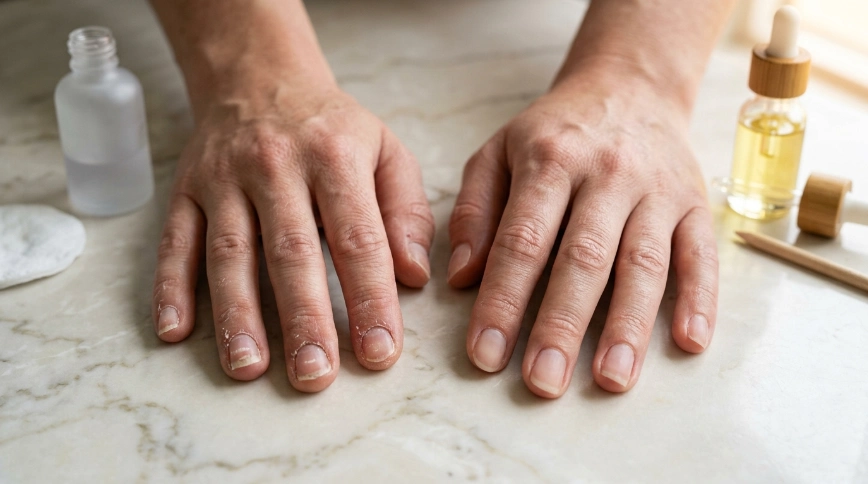
SaveMost nail damage isn’t caused by nail polish itself — it’s caused by the products around it: harsh removers, cheap base coats full of formaldehyde, and skipping cuticle care entirely. Your nail plate is made up of dead keratin cells bonded in flat layers. When those layers dry out or get chemically disrupted, they start to separate — that’s what causes peeling, splitting, and those annoying white patches. Once you understand that, it becomes obvious why moisturizing and protecting are the foundation of healthy nails, not an afterthought.
If you’ve ever wondered whether nails are healthier without polish, the answer is nuanced — it depends entirely on what products you’re using and how you’re using them.
The Healthiest Things You Can Put on Your Nails
1. Cuticle Oil — The #1 Nail Health Essential
Cuticle oil is the most impactful product you can add to your nail routine, and it’s the one most people skip. It works because it penetrates the thin skin around your nail matrix — the area where new nail cells are formed — and keeps it flexible. A healthy cuticle means new nail growth comes in smooth and even instead of ridged or brittle.
The best cuticle oils contain jojoba oil, vitamin E, sweet almond oil, or argan oil. Jojoba is especially effective because its molecular structure closely mimics the skin’s natural sebum, which means it absorbs rather than just sitting on the surface. Apply it every night before bed and massage it in for 30 seconds — that brief friction increases circulation to the nail bed, which speeds up cell turnover and promotes stronger growth.
Recommended Product
Nail Cuticle Oil with Vitamin E & Jojoba
★★★★☆ Highly rated on Amazon
A daily cuticle oil with jojoba and vitamin E hydrates the nail matrix at the root, which means stronger, smoother new growth over time rather than just surface-level moisture.
As an Amazon Associate, we earn from qualifying purchases.
2. Nail Strengthener — For Thin, Peeling, or Brittle Nails
A good nail strengthener adds a cross-linking protein layer over the nail plate, which fills in microscopic gaps between the keratin layers and makes the nail more resistant to bending and breakage. Think of it as invisible armor for your natural nail.
Look for strengtheners that contain hydrolyzed keratin, calcium, or biotin. Avoid anything listing formaldehyde (sometimes called formalin or methylene glycol) as an active ingredient — yes, it does make nails harder short-term, but it makes them so rigid they become more brittle, not less, over time. Apply a strengthener to bare nails two to three times per week, let it fully cure for two minutes, and then remove and reapply rather than layering indefinitely.
Pro Tip
Don’t use a nail strengthener every single day. Nails need a small amount of flexibility to resist trauma — a nail that’s too hard snaps cleanly rather than bending, which is actually more painful and more damaging. Use it three times a week max and alternate with cuticle oil on the other days.
3. A 3-Free (or Better) Base Coat — If You Wear Polish
If you paint your nails regularly, the base coat you use is arguably more important than the polish color. Base coat does two things: it prevents pigment from staining the nail plate (that yellowish tinge you see after dark polish), and it gives the polish something to grip so it doesn’t peel as fast. Peeling polish pulls off the top layers of your actual nail along with it — that’s a huge cause of nail thinning people don’t connect to their manicure routine.
Choose a base coat that’s at least 3-free (free from formaldehyde, toluene, and dibutyl phthalate). Better yet, look for 5-free or 10-free formulas that also exclude formaldehyde resin, camphor, and a handful of other sensitizing chemicals. Brands like Zoya, Ella + Mila, and Orly Bonder make excellent non-toxic base coats that actually extend wear time too.
Understanding what a proper nail care routine looks like will help you see how base coat fits into the bigger picture of nail health.
Recommended Product
10-Free Non-Toxic Nail Base Coat
★★★★☆ Highly rated on Amazon
A non-toxic base coat free from the harshest chemicals protects your nail plate from staining and dramatically reduces polish peeling — which prevents the micro-damage that thins nails over time.
As an Amazon Associate, we earn from qualifying purchases.
4. Vaseline or a Thick Emollient — For Overnight Nail Repair
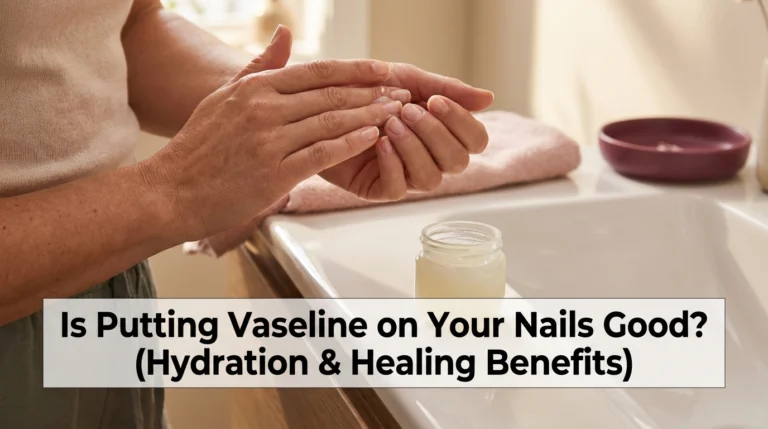
This one surprises people, but pure petroleum jelly (like Vaseline) is one of the most effective overnight treatments for dry, brittle nails. It works as an occlusive — it doesn’t add moisture directly, but it traps the moisture already in your skin and nail bed, preventing it from evaporating overnight. If you apply it after your cuticle oil while your skin is still slightly damp, you get a compounding effect: the oil nourishes and the Vaseline seals it in.
Apply a small amount to your cuticles and nail plate, put on a pair of thin cotton gloves, and sleep in them. You’ll notice softer cuticles and less peeling within three to four nights. This approach works especially well in winter when low humidity dries out your nails faster. You can read a full breakdown on whether Vaseline actually heals nails if you want to go deeper on the science.
5. Biotin Supplements or Collagen — From the Inside Out
What you put on your nails only goes so far. The nail plate is dead tissue — it can be conditioned and protected externally, but the actual quality of what grows is determined by your nutrition. Biotin (vitamin B7) is the most well-researched supplement for nail strength. Studies show that consistent biotin supplementation at 2.5mg per day can increase nail plate thickness by up to 25% over six months.
Collagen peptides are another strong option — they provide the amino acids (particularly glycine and proline) that your body uses to build keratin, which is what nails are made of. If you want to address the root cause of weak or slow-growing nails rather than just managing the surface, start with your diet and a targeted supplement. Pair it with the right foods for nail growth for the most complete approach.
Recommended Product
Biotin Supplements for Nail & Hair Strength
★★★★☆ Highly rated on Amazon
Daily biotin at 2.5mg is one of the few supplements with clinical evidence for improving nail plate thickness and reducing brittleness — results typically show after 8–12 weeks of consistent use.
As an Amazon Associate, we earn from qualifying purchases.
Do’s and Don’ts for Healthy Nails
 Save
SaveDo
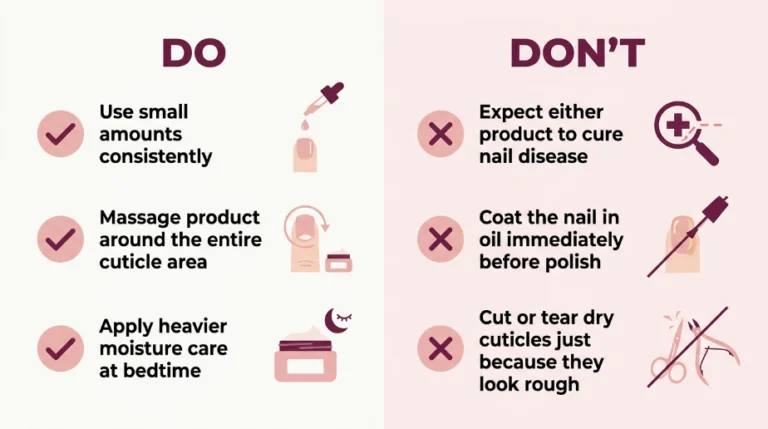
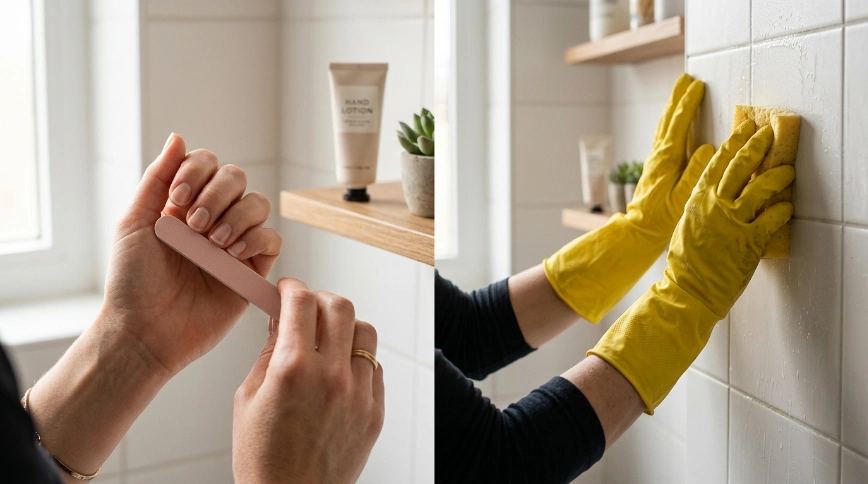
- +Apply cuticle oil every night — consistency is what makes the difference, not the product alone
- +Wear gloves when washing dishes or cleaning with chemical products — prolonged water exposure swells and weakens the nail plate
- +Use an acetone-free remover for regular polish, and save acetone for gel or acrylics only
- +File in one direction only — back and forth sawing creates micro-tears in the nail edge that lead to peeling
Don’t
- −Push your cuticles back too aggressively — they’re a seal that protects against bacteria entering the nail matrix
- −Use your nails as tools for prying, opening, or scraping — that’s how you cause trauma to the nail bed that shows up as dark lines or separation
- −Soak your nails before a manicure — wet nails are significantly weaker and more prone to tearing during filing
- −Skip the base coat thinking it’s optional — one coat of color without a base coat is enough to cause yellow staining that lasts weeks
What Products Should You Avoid Putting on Your Nails?
Not everything marketed for nails is good for them. These are the specific ingredients worth looking out for.
Warning
Formaldehyde in nail hardeners makes nails feel rock-hard at first but disrupts the natural flexibility of the keratin structure over time, leading to increased breakage. It’s also a known allergen and sensitizer. If a strengthener causes redness or inflammation around the nail fold, formaldehyde is the likely culprit — discontinue immediately.
- MMA (methyl methacrylate) — sometimes used in budget acrylic systems, it bonds so aggressively that removal can physically tear the nail plate away from the nail bed. Always ask your tech if they use EMA (ethyl methacrylate) instead, which is the safer professional standard.
- Toluene — a solvent that helps polish flow smoothly, but it’s a neurotoxin with repeated high exposure. It’s been phased out of most reputable brands but still appears in very cheap imported polishes.
- Harsh acetone overuse — acetone isn’t inherently damaging in single uses, but using it daily or leaving it on longer than needed strips the natural oils from the nail plate and surrounding skin, causing the brittleness and peeling you’re trying to avoid.
Understanding what actually causes weak nails helps you connect the ingredient list on your products to the damage you might be seeing.
Pro Tips for Genuinely Healthier Nails
Pro Tip
Layer your cuticle oil application: apply it to slightly damp cuticles after washing your hands, not on completely dry skin. The oil locks in the residual moisture rather than just sitting on dry tissue — this is the same principle professionals use and it dramatically increases how effective even a basic cuticle oil becomes.
Pro Tip
Take a “nail health break” between gel manicures — not by going bare, but by wearing a 3-free regular polish over a strengthening base coat for two to three weeks. Your nails will thank you: gel removal is where most damage occurs, and spacing out the cycle gives the nail plate time to regenerate.
Pro Tip
If you swim regularly, apply a layer of cuticle oil or Vaseline to your nails before getting in the pool. Chlorinated water is especially drying because the chlorine bonds with the proteins in your nail keratin — creating a barrier first means your nails absorb far less of that chemical exposure.
Recommended Product
Nail Repair Kit with Keratin Strengthener
★★★★☆ Highly rated on Amazon
A keratin-based nail repair treatment fills in the gaps between weakened nail layers and restores surface smoothness — ideal after gel or acrylic removal when the nail plate is visibly thinned.
As an Amazon Associate, we earn from qualifying purchases.
Frequently Asked Questions
Q: Is it better to put oil or lotion on your nails?
A: Oil is better specifically for the nail plate and cuticle area. Most hand lotions contain a lot of water and humectants, which feel great on skin but evaporate quickly and don’t penetrate the cuticle tissue as effectively as an oil-based product. Use lotion on your hands and a dedicated oil on your nails and cuticles.
Q: Can I apply cuticle oil over nail polish?
A: Yes — and you should. Cuticle oil applied over polish doesn’t lift or smudge the color once it’s fully cured (allow at least an hour after painting). It keeps your cuticles healthy throughout your manicure and actually makes your polish last longer by preventing the skin from drying out and cracking near the free edge.
Q: How long does it take to see results from a nail health routine?
A: Most people see noticeable improvement in cuticle softness and reduced peeling within two to three weeks of consistent oiling. Because nails grow roughly 3mm per month, genuinely stronger, thicker nail plates from a full routine (including supplements) take about three to four months to grow out visibly from the base.
Q: Is clear nail polish healthy for nails?
A: Clear polish can be healthy if it’s a 3-free or better formula and you’re using it as a protective top or base coat. It physically reinforces the nail plate against chips and breaks. Just make sure you’re removing it with a gentle acetone-free remover and not letting it sit on your nails for more than ten days without refreshing it.
Q: What’s the healthiest nail polish brand to use?
A: Look for brands that are at least 5-free. Zoya, Ella + Mila, Butter London, and Côte are excellent options with clean formulas that actually apply and wear well. For gel polish, the brand matters less than the removal process — slow, non-forceful removal with proper foil wraps is what protects your nails.
Your Healthiest Nail Routine, Simplified
The healthiest thing you can put on your nails isn’t one single product — it’s the combination of daily cuticle oil, a nail strengthener used a few times per week, a clean non-toxic base coat whenever you wear color, and a little patience. Nails grow slowly, which means damage accumulates slowly and improvement also takes time. If you want to go even further, check out how to care for your nails daily for a full routine you can build into your life without it feeling like a chore.
Save this post to your Pinterest nail care board so you have it every time you need a reminder of what your nails actually need — not just what the marketing says they do.

Hi, I’m Jessica, the creator behind Unique Lash & Nails Katy.
I created this website for anyone who loves beautiful nails as much as I do. Here, I share trendy nail designs, seasonal manicure ideas, easy nail care tips, honest product recommendations, and step-by-step guides to help you create salon-worthy nails at home. Whether you’re looking for everyday inspiration or your next favorite nail trend, I hope you’ll find something you love.