What Can You Soak Your Fingernails In to Clean Them? Safe Nail Soaks
Quick Answer
The best thing to soak your fingernails in for routine cleaning is comfortably warm water mixed with a small amount of mild soap. Soak your fingertips for about 2–5 minutes, gently brush beneath the visible nail tips, rinse, and dry completely. You usually don’t need vinegar, bleach, hydrogen peroxide, or other strong DIY mixtures to get everyday dirt off your nails.
If dirt keeps collecting beneath your fingernails, soaking them before cleaning can make the job much easier. The moisture softens stubborn debris so you don’t have to scrape underneath your nails or scrub aggressively.
The important part is choosing the right soak. Something stronger isn’t automatically something better. For ordinary dirt, gardening residue, makeup, food, and everyday grime, a mild soapy-water soak is usually all you need.
Here’s how the most common nail-soaking options compare and which one makes the most sense for your situation.
What is the best thing to soak your fingernails in for cleaning?
 Save
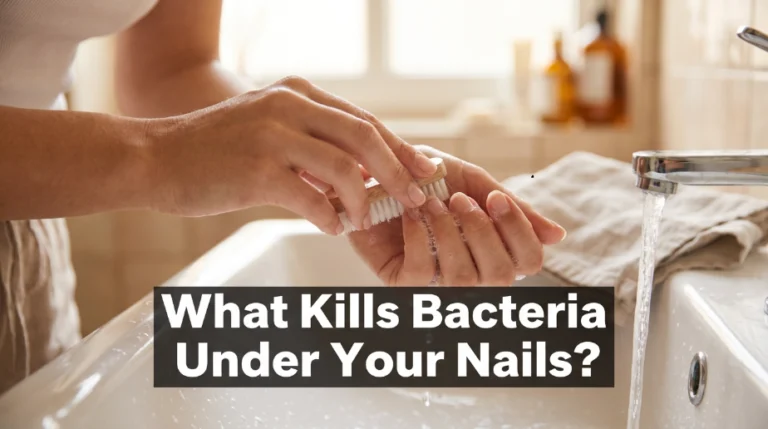
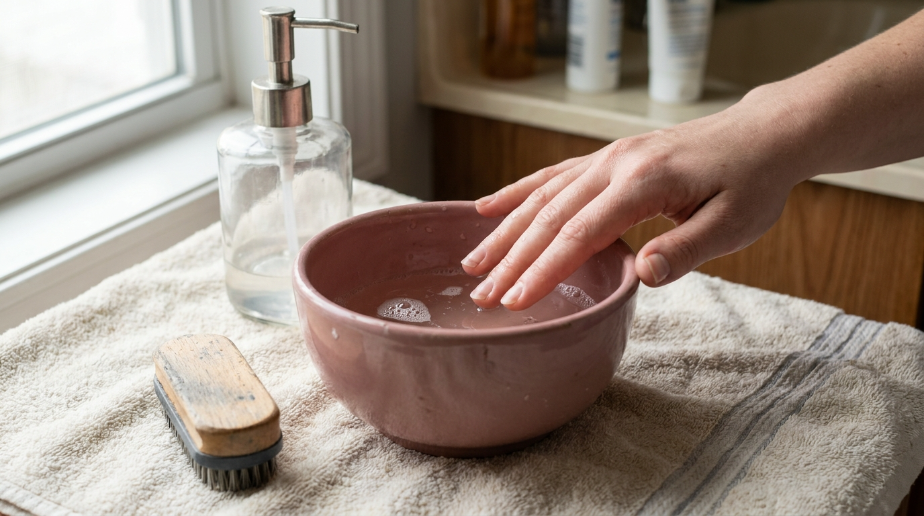
SaveComfortably warm soapy water is the best all-purpose choice. Fill a small bowl with enough warm water to cover your fingertips, add a small amount of mild hand soap, and soak for 2–5 minutes.
The water helps soften debris while the soap helps loosen oils and grime. That combination makes cleaning beneath the free edge of your nails easier without requiring harsh chemicals.
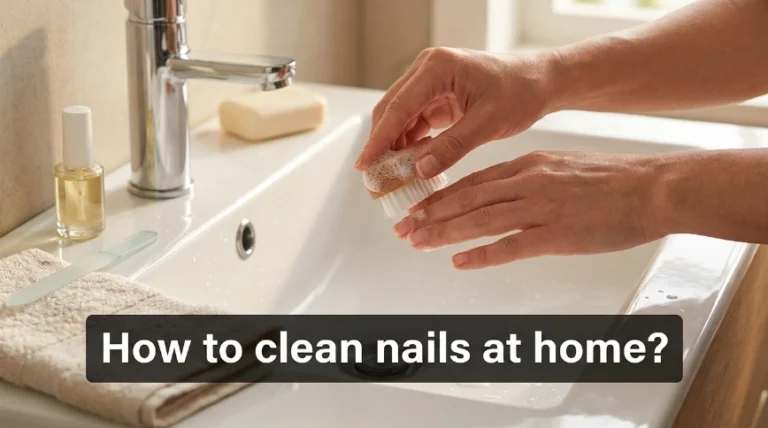
If you want a complete cleaning routine after soaking, follow this guide on how to clean nails at home.
Keep the water comfortably warm rather than hot. Hotter water won’t make the dirt disappear faster, and frequent exposure to very hot water can leave the skin around your nails feeling dry.
Recommended Product
Soft-Bristle Nail Cleaning Brush
A soft nail brush helps remove loosened dirt from beneath the free edge without relying on sharp tools or aggressive scraping.
As an Amazon Associate, we earn from qualifying purchases.
How long should you soak your fingernails to loosen dirt?
You normally only need 2–5 minutes.
The goal isn’t to saturate your nails. You’re simply giving dried dirt and residue enough time to soften so that gentle brushing can remove it.
If something is still stuck beneath a longer nail after five minutes, don’t immediately reach for a metal tool. Rinse, inspect the area, then repeat a short soak for another two or three minutes if needed.
Long soaking sessions aren’t usually helpful. Nails take up water and can temporarily become softer and more flexible. If you plan to file or shape them afterward, let them dry first.
If you’ve heard that hotter water is better for nails, see our explanation of whether hot water is good or bad for nail growth.
Can you soak your nails in salt water to clean them?
You can soak your fingertips briefly in mild salt water, but salt isn’t necessary for routine nail cleaning.
Plain warm water and soap already do the job more directly because soap helps lift oils and everyday grime from the skin and nail area. A salty soak can also leave already-dry skin feeling tighter if you use a strong mixture or soak for too long.
If you enjoy a salt soak, keep it mild, brief, and follow with moisturizer. Don’t expect it to make your nails grow significantly faster or suddenly become stronger.
For a closer look at this popular DIY idea, see whether salt helps grow nails.
Can you soak your fingernails in baking soda water?
Baking soda frequently appears in DIY nail-cleaning recipes, especially when someone wants nails to look brighter. For ordinary dirt, however, it isn’t necessary.
Baking soda is mildly abrasive. The temptation is to combine a soak with vigorous scrubbing, but repeatedly rubbing the nail surface won’t make a healthy nail cleaner. It may simply leave the nail plate looking dull or feeling rough.
If dirt is beneath the nail tip, focus on softening that dirt with soapy water and removing it with a soft brush instead of trying to polish the entire nail surface with an abrasive mixture.
Is vinegar a good fingernail soak?
Diluted vinegar is another common DIY nail soak, but it shouldn’t be your first choice for basic cleaning.
Vinegar is acidic, while everyday dirt usually responds perfectly well to soap and water. If the skin beside your nails is cracked, irritated, freshly trimmed, or has small hangnail wounds, an acidic mixture may sting.
For a normal weekly clean, there’s little reason to make the process more complicated.
Warning
Don’t pour bleach, household disinfectant, or strong cleaning chemicals into a nail-soaking bowl. Products designed for cleaning household surfaces can irritate your skin and aren’t needed for routine fingernail hygiene.
What about hydrogen peroxide for cleaning fingernails?
Hydrogen peroxide is often suggested online for whitening or cleaning nails, but don’t treat it as an everyday hand-soaking solution.
If your problem is actual dirt, mild soap and mechanical cleaning with a soft brush are simpler. Repeated use of stronger products can dry the surrounding skin, especially when you already wash your hands frequently.
Also remember that a nail looking yellow, cloudy, or discolored doesn’t necessarily mean it’s dirty. Nail-polish staining and other nail changes won’t necessarily disappear because you soak or scrub harder.
What should you use if you’re cleaning nails before a manicure?
Cleaning before polish is slightly different from cleaning dirt beneath your nails.
Start by washing your hands and cleaning underneath the nail tips. Then allow your nails to dry thoroughly. If you need to remove surface oils immediately before regular polish, a nail-prep product or appropriate alcohol wipe may be more useful than soaking your hands again.
For a detailed comparison of different liquids and when to use each one, see the best liquid to clean nails.
Avoid applying a heavy layer of cuticle oil immediately before polish because oil on the nail plate can interfere with how well regular polish adheres. Save your final moisturizing step for after your cleaning routine, or wipe the nail plate clean before painting.
How do you soak and clean fingernails safely?
1Fill a bowl with comfortably warm water
Use enough water to cover your fingertips. It should feel comfortably warm when you touch it, not hot enough to make you pull your hand away.
Common mistake: Using very hot water because you assume it will clean faster. Extra heat isn’t necessary for loosening ordinary dirt.
2Add a small amount of mild soap
A little mild hand soap is enough. Swirl the water gently to distribute it. You don’t need to create a bowl overflowing with bubbles.
Common mistake: Adding strong degreasers or household cleaners. More cleaning power isn’t helpful when you’re working directly against your skin.
If your current soap leaves your hands feeling tight after every wash, you can look for a gentle hand soap for sensitive skin.
3Soak your fingertips for 2–5 minutes
Keep only the fingertips submerged if that’s all you’re cleaning. After a few minutes, stubborn debris should be noticeably easier to remove.
Common mistake: Turning a quick cleaning soak into a 20- or 30-minute treatment. A longer soak usually isn’t necessary.
4Brush beneath the visible nail tips
Wet a clean soft-bristle nail brush and use light strokes beneath the free edge. Concentrate on visible debris instead of forcing the brush deeply underneath attached nail tissue.
Common mistake: Digging with pins, scissors, tweezers, or sharp manicure tools. These can injure the delicate skin beneath your nail.
5Rinse, dry, and moisturize
Rinse your hands with clean running water and dry carefully around the fingertips and beneath longer nails. Once dry, apply hand cream or a small amount of cuticle oil if your skin feels tight.
Common mistake: Leaving the hands damp after soaking. Drying completes the routine and makes it easier to see whether any debris remains.
A simple cuticle oil or moisturizing hand cream is useful after frequent handwashing or soaking.
What should you do and avoid when soaking your nails?
Do
- + Use comfortably warm water.
- + Keep cleaning soaks short.
- + Moisturize afterward if needed.
Don’t
- − Dig beneath nails with sharp tools.
- − Use bleach or household cleaners.
- − Assume every discoloration is dirt.
How can you keep fingernails cleaner between soaks?
 Save
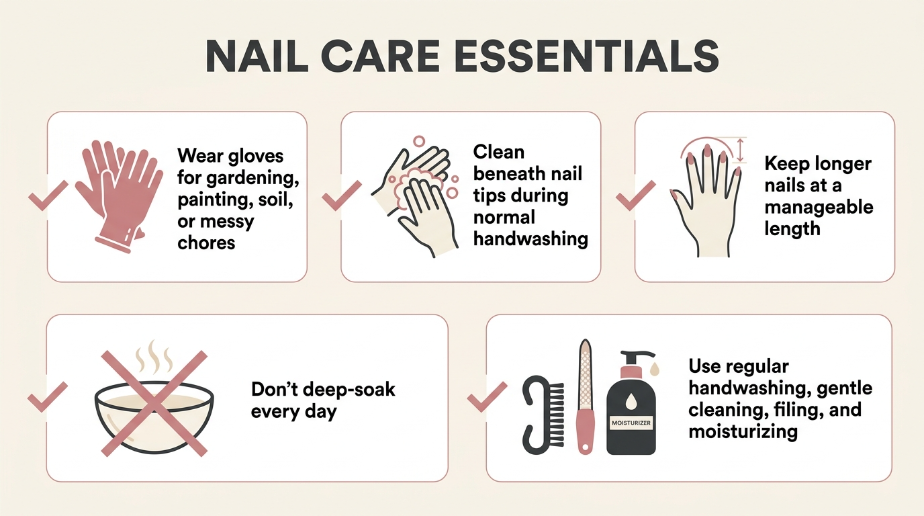
SaveCleaning becomes much easier when you prevent debris from building up in the first place.
Wear gloves when gardening, painting, handling soil, or doing messy household jobs. Include the underside of your nail tips when washing your hands, and keep longer nails at a length you can clean comfortably.
You also don’t need a deep soak every day. A consistent routine of normal handwashing, gentle nail cleaning, filing rough edges, and moisturizing is usually easier on your nails than repeatedly trying strong DIY treatments.
For an easy maintenance schedule, use this simple nail care routine as your weekly reset.
Pro Tip
Keep a soft nail brush beside the sink you use after gardening, cooking, or crafts. Cleaning fresh debris during normal handwashing is much easier than trying to remove dried material later with a long soak.
What if soaking doesn’t make your nails look clean?
Dirt is still trapped beneath a long nail
Repeat a short 2–3 minute warm soapy-water soak and brush gently again. Prevent the problem next time by wearing gloves during messy activities and cleaning beneath longer tips during regular handwashing.
Your nails still look yellow after cleaning
Stop scrubbing harder. Dark nail polish can leave temporary staining, and persistent unexplained discoloration may not be surface dirt. Pay attention to whether the change grows out or continues.
Your skin feels dry after soaking
Apply hand cream or cuticle oil after drying. Next time, shorten the soaking time, keep the water comfortably warm, and use a milder soap.
The skin around a nail is sore, swollen, or damaged
Skip experimental soaking mixtures and avoid digging around the area. Persistent pain, swelling, drainage, or worsening discoloration is a reason to seek professional medical advice rather than repeatedly trying to clean the nail yourself.
Frequently Asked Questions
Q: What can I soak my nails in to remove dirt underneath them?
A: Soak your fingertips in comfortably warm water with a little mild soap for about 2–5 minutes. Then use a clean soft nail brush beneath the visible free edge and rinse thoroughly.
Q: Can I soak my nails in dish soap?
A: A very small amount can help loosen greasy residue, but a mild hand soap is usually enough for normal cleaning. If your skin becomes dry easily, choose the gentler option and moisturize afterward.
Q: How often should I soak my fingernails?
A: You don’t need a scheduled daily soak. Use a brief soak when dirt is difficult to remove with regular handwashing, then return to normal cleaning and moisturizing.
Q: Does soaking nails make them stronger?
A: A cleaning soak is meant to loosen debris, not strengthen your nail plate. Protecting your nails from repeated damage and keeping your hands and cuticles moisturized are more useful long-term habits.
Q: What should I avoid soaking my fingernails in?
A: Avoid household bleach, disinfectants, concentrated cleaners, and unnecessarily harsh DIY mixtures. For everyday dirt, warm water, mild soap, and gentle brushing are simpler and safer choices.
What is the simplest nail soak to remember?
Keep it simple: warm water, mild soap, 2–5 minutes, gentle brushing, thorough drying, and moisturizer afterward. That’s enough for most everyday fingernail cleaning, and it helps you avoid turning a basic hygiene routine into an unnecessarily harsh treatment.
If your nails frequently collect dirt, focus on prevention and regular gentle cleaning rather than stronger soaking mixtures. Save this guide to Pinterest so you have the safe method ready the next time your nails need a quick at-home clean.

Hi, I’m Jessica, the creator behind Unique Lash & Nails Katy.
I created this website for anyone who loves beautiful nails as much as I do. Here, I share trendy nail designs, seasonal manicure ideas, easy nail care tips, honest product recommendations, and step-by-step guides to help you create salon-worthy nails at home. Whether you’re looking for everyday inspiration or your next favorite nail trend, I hope you’ll find something you love.