Is Olive Oil Good for Fingernails? Benefits, Risks & How to Use It
Quick Answer
Olive oil can be useful for dry fingernails and cuticles because it coats the nail area and helps reduce that rough, dry feeling. However, it isn’t proven to make fingernails grow faster or permanently strengthen damaged nails. If you want to try it, use a very small amount and stop if the surrounding skin becomes red, itchy, or irritated.
Olive oil sounds like the perfect DIY nail treatment. It’s inexpensive, easy to find, and rich enough to make dry skin feel softer almost immediately.
That doesn’t mean every claim you’ve seen about it is true.
Olive oil may help your nails feel smoother and your cuticles look less dry, but it can’t rebuild a nail that has already peeled, split, or been filed thin. It also isn’t a scientifically proven nail-growth treatment.
The most useful way to think about olive oil is as an optional moisturizer for the nail area rather than a miracle nail strengthener.
What Does Olive Oil Actually Do for Your Fingernails?
When you massage a little olive oil over your fingernails, most of the immediate effect comes from conditioning the surface of the nail and the skin surrounding it.
Dry cuticles may look smoother. Rough nail edges can feel less chalky. The nail plate may temporarily appear shinier because the oil coats the surface.
This can be useful if your hands regularly become dry from frequent washing, cold weather, household cleaning, acetone, or repeated manicures.
Moisture care is already an important part of a sensible nail routine. If dryness is a recurring problem, our guide on how to properly care for your nails explains how moisturizing fits alongside filing, trimming, and protecting your hands from water.
The important distinction is that moisturizing and repairing aren’t the same thing.
Your visible nail plate is hardened keratin. Once part of it has split, peeled, or been aggressively filed away, olive oil can’t fuse those damaged layers back together. Your goal is to protect the nail while healthier new growth gradually moves forward from the base.
Can Olive Oil Make Brittle Nails Stronger?
 Save
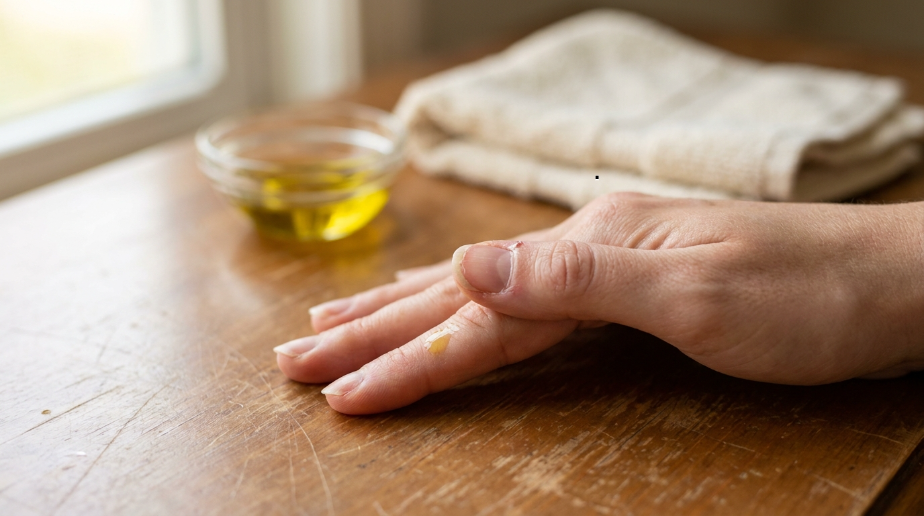
SaveOlive oil may make very dry nails feel more flexible, which can be helpful when dryness contributes to snapping or peeling. But that isn’t the same as permanently increasing the structural strength of the nail.
Brittle nails can have many causes. Repeated wetting and drying, acetone exposure, aggressive gel removal, cleaning chemicals, trauma, and simply using your nails as tools can all contribute.
If your nails have become weak after manicures, shortening them slightly and protecting them while they grow is usually more realistic than expecting one oil to reverse the damage.
You can follow the recovery strategies in how to make your nails healthy again if peeling, thinning, or breakage is your main concern.
Pro Tip
Judge whether your routine is working by looking at the newest nail near the cuticle. The damaged tip may stay rough until you eventually trim it away, even when new growth looks healthier.
Does Olive Oil Help Fingernails Grow Faster?
There’s no good reason to expect olive oil applied to the outside of your nails to dramatically accelerate the biological growth process occurring beneath your skin.
What it may do is help you retain more of the length you’re already growing.
Imagine your nails grow normally but the tips keep peeling and snapping. You may feel as though your nails aren’t growing at all because you’re losing length almost as quickly as you’re gaining it.
If regular moisturizing makes your nail edges and surrounding skin less dry, you may experience less dryness-related breakage. Your nails can then appear to grow better because you’re preserving more of the free edge.
That’s very different from claiming that olive oil makes the nail matrix produce nail faster.
Is Olive Oil Good for Dry Cuticles?
This is where olive oil is most likely to feel useful.
A thin layer can make dry skin around the nail feel softer and smoother. If you constantly wash your hands or use polish remover, you may notice the cuticle area becoming flaky or tight. A small amount of oil can temporarily improve that dry feeling.
However, olive oil isn’t ideal for everyone. Research on olive oil applied repeatedly to skin has produced mixed results, and some people may experience irritation or worsening dryness.
That’s why more isn’t necessarily better.
You don’t need to soak your fingertips in a bowl of oil or repeatedly apply thick layers throughout the day. Start with a tiny amount and see how your skin responds.
Warning
Stop using olive oil if the skin around your nails becomes red, itchy, swollen, burning, or increasingly dry. A natural ingredient can still irritate your skin.
How Should You Use Olive Oil on Your Fingernails?
 Save
SaveYou don’t need a complicated olive-oil soak. A small topical application is less messy and gives you much more control.
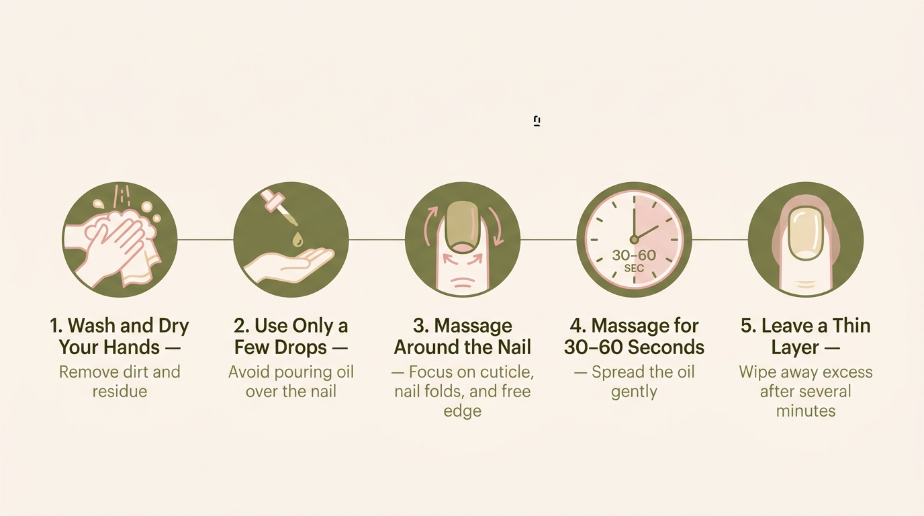
- Wash and dry your hands. Remove visible dirt and make sure there isn’t polish remover or cleaning residue around your nails.
- Use only a few drops. Place a drop on your fingertips rather than pouring oil over the entire nail.
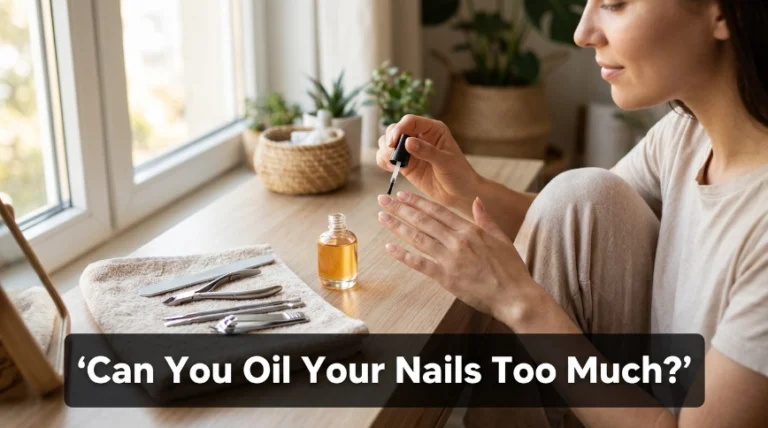
- Massage it around the nail. Concentrate on the cuticle, nail folds, free edge, and any visibly dry skin.
- Massage for about 30–60 seconds. Gentle massage spreads the oil without aggressively pushing or cutting the cuticle.
- Leave a thin layer in place. You can leave it for several minutes and wipe away excess. If your skin tolerates it well, using a tiny amount before bed is another option.
Once daily is more than enough for an initial trial. If you only have occasional dryness, you may need it much less often.
Don’t heat olive oil until it’s uncomfortably warm. Heat isn’t necessary for the basic moisturizing effect and creates an avoidable risk of irritating or burning your skin.
What Kind of Olive Oil Should You Use?
If you’re determined to try olive oil, keep it simple.
Choose plain olive oil without added fragrance, essential oils, lemon juice, garlic, or other DIY ingredients. Mixing several ingredients together makes it harder to tell which one caused irritation if your skin reacts.
You also don’t need an expensive beauty-branded bottle for your nails. A small amount of plain extra virgin olive oil is sufficient for testing whether your nail area tolerates it.
Recommended Product
Plain Extra Virgin Olive Oil
If you want to test olive oil as a nail moisturizer, a plain formula without fragrance or extra essential oils keeps the routine simple.
As an Amazon Associate, we earn from qualifying purchases.
Is Olive Oil Better Than Cuticle Oil?
Not necessarily.
A dedicated cuticle oil is designed specifically for easy use around nails. Many formulas are lighter, absorb with less mess, and come in pens or brush applicators that are convenient to use during the day.
Jojoba-based cuticle oils are especially popular because they spread easily and don’t usually leave the same heavy kitchen-oil feeling on your fingers.
Olive oil has the advantage of already being available in many homes. If you tolerate it and only want occasional moisture care, you may not need to buy anything else.
If you want something you can keep beside your desk, handbag, or nightstand and use consistently, a dedicated cuticle oil will often be more convenient.
Recommended Product
Jojoba Cuticle Oil
A cuticle-oil pen or small bottle is easier to use consistently if you want a lighter everyday option than olive oil.
As an Amazon Associate, we earn from qualifying purchases.
Is Petroleum Jelly Better Than Olive Oil for Nails?
If your main problem is severe dryness, plain petroleum jelly is another inexpensive option.
Petroleum jelly works mainly by forming a protective layer that slows moisture loss. That makes it useful around dry nails and cuticles, particularly after handwashing or before bed.
Our complete guide on using Vaseline on nails explains when that heavier moisture-sealing approach makes sense.
You can also combine approaches. Apply your normal hand moisturizer first, then use a very thin layer of petroleum jelly around especially dry cuticles.
Recommended Product
Plain Petroleum Jelly
A fragrance-free petroleum jelly is useful when you want a simple overnight barrier for very dry cuticles and surrounding skin.
As an Amazon Associate, we earn from qualifying purchases.
What Should You Do — and Avoid — When Using Olive Oil?
Do
- +Use only a small amount.
- +Massage it gently around dry cuticles.
- +Stop if irritation develops.
Don’t
- −Expect overnight nail growth.
- −Use it to treat suspected nail infections.
- −Apply oily residue immediately before polish.
Who Should Be Careful With Olive Oil Around Their Nails?
If you have eczema, very reactive skin, an existing rash, cracked skin, or a history of irritation from topical products, don’t assume olive oil will automatically be gentle simply because it’s natural.
Test a tiny amount first. If your skin feels worse rather than better, wash it off and use a moisturizer your skin already tolerates.
You should also avoid relying on olive oil when the issue looks like more than ordinary dryness.
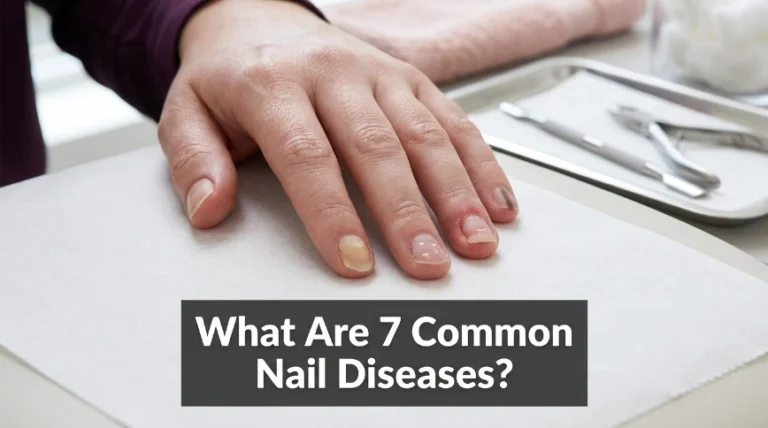
Persistent discoloration, significant thickening, crumbling, pain, swelling, drainage, or separation of the nail from the nail bed can have causes that moisturizer won’t correct.
If you’re unsure what changes deserve attention, see our guide to signs of unhealthy nails.
What Else Helps If Your Fingernails Keep Breaking?
 Save
SaveOlive oil won’t matter much if your daily habits keep damaging the nail faster than you can protect it.
Start with the basics:
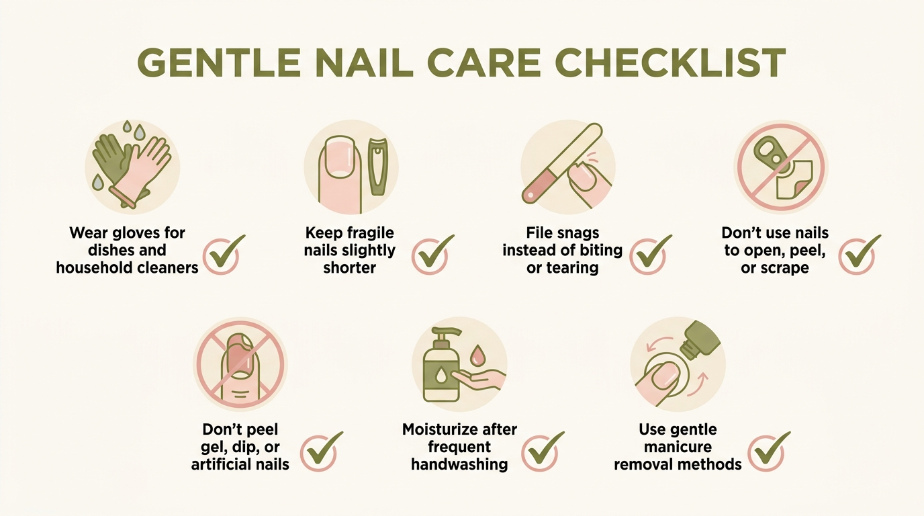
- Wear gloves when washing dishes or using household cleaners.
- Keep fragile nails slightly shorter until damaged portions grow out.
- File snags instead of biting or tearing them.
- Don’t use your fingernails to open cans, peel labels, or scrape surfaces.
- Avoid peeling gel polish, dip powder, or artificial nails away from the natural nail.
- Moisturize your hands and nail area after frequent washing.
- Use gentle manicure removal methods instead of aggressive scraping or filing.
Those habits aren’t glamorous, but they’re much more important than choosing one particular oil.
Frequently Asked Questions About Olive Oil and Fingernails
Q: Can I put olive oil on my nails every day?
A: You can try a small amount daily if your skin tolerates it, but more isn’t necessarily better. Stop if your nail folds or cuticles become irritated, itchy, red, or increasingly dry.
Q: Does olive oil harden fingernails?
A: Olive oil isn’t a nail hardener. It may make dry nails feel more conditioned and flexible, but it doesn’t permanently rebuild or thicken damaged nail plate.
Q: How long should I leave olive oil on my nails?
A: You don’t need a long soak. Massage a small amount around the nails, leave a thin layer for several minutes, and wipe away excess. If your skin tolerates it, a tiny amount can also be used before bed.
Q: Is olive oil or coconut oil better for fingernails?
A: Neither oil is proven to dramatically increase nail growth. Your best choice is the moisturizer your skin tolerates and that you’re willing to use consistently without irritation.
Q: Can olive oil fix peeling nails?
A: It can moisturize the area, but it can’t reattach layers that have already peeled. Keep the nail protected, smooth rough edges gently, reduce repeated water and chemical exposure, and allow damaged sections to grow out.
So, Is Olive Oil Good for Fingernails?
Olive oil can be a reasonable occasional moisturizer if your fingernails and cuticles feel dry and your skin tolerates it well. Its biggest realistic benefit is helping the nail area feel softer and less dry—not making your nails suddenly grow faster or permanently repairing damaged nail plate.
Use a tiny amount, watch for irritation, and remember that consistent protection from water, chemicals, picking, and rough manicure removal matters more than any single oil. Save this guide to Pinterest so you can come back to the routine whenever your nails need extra moisture.

Hi, I’m Jessica, the creator behind Unique Lash & Nails Katy.
I created this website for anyone who loves beautiful nails as much as I do. Here, I share trendy nail designs, seasonal manicure ideas, easy nail care tips, honest product recommendations, and step-by-step guides to help you create salon-worthy nails at home. Whether you’re looking for everyday inspiration or your next favorite nail trend, I hope you’ll find something you love.