How Gel Polish Can Damage Nails: Risks and Recovery
Quick Answer
Gel polish can damage nails by making them thinner, weaker, brittle, and more likely to peel or split. The biggest problems often come from aggressive filing, picking off gel, repeated acetone removal, and allergic reactions to uncured ingredients. UV curing lamps also expose your hands to ultraviolet radiation. Gentle application, careful removal, moisturizing, and breaks when your nails are damaged can reduce these risks.
Gel manicures look gorgeous. Your nails stay shiny, the color resists everyday chipping, and you can enjoy beautiful designs without constant touch-ups. But what happens when that glossy finish comes off and your natural nails suddenly feel paper-thin?
Understanding how gel polish can damage nails helps you protect them without automatically giving up your favorite manicure. From peeling nail layers to ingredient allergies, here’s what actually causes damage, which warning signs matter, and how to keep your nails healthier.


Why Can Gel Polish Damage Your Natural Nails?
Your natural nails are made from compact layers of keratin, a protective protein. These layers create a flexible nail plate that can withstand ordinary daily activities.
Gel polish works differently from traditional nail polish. Instead of simply drying in the air, most true gel products contain ingredients that harden through a chemical reaction triggered by a UV or LED curing lamp.
The resulting coating is durable and adheres firmly to your natural nail. That strong bond is useful for a long-lasting manicure, but it also means removal requires extra care.
The important distinction: Nail damage isn’t always caused by the gel coating alone. Preparation techniques, removal methods, product ingredients, and manicure frequency can all contribute.
When several of these factors happen repeatedly, your nails may become increasingly fragile even though the manicure initially looks perfect.
What Are the 7 Main Ways Gel Polish Can Damage Nails?
1. Excessive Buffing Can Thin the Nail Plate
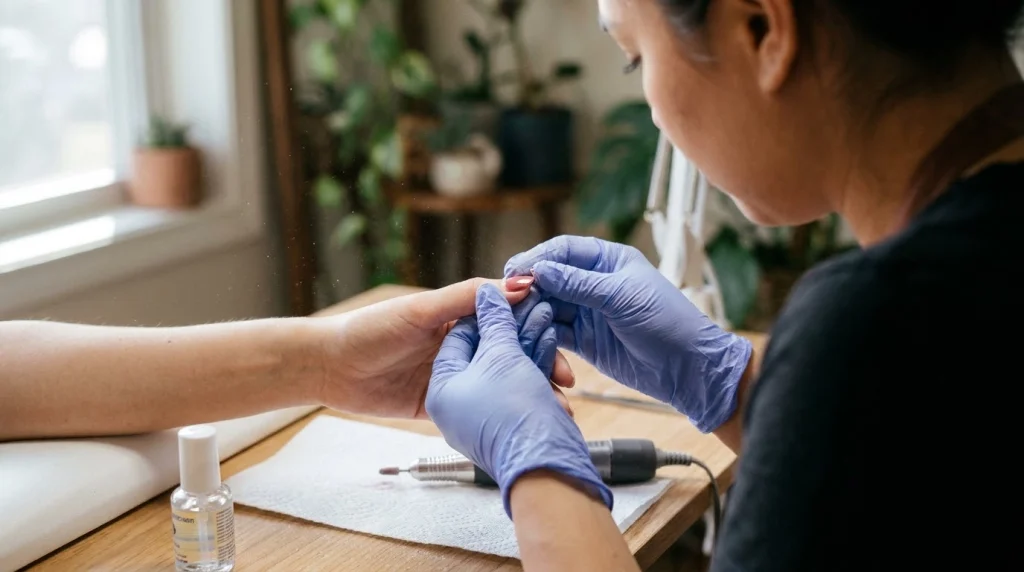
Before applying gel polish, a nail technician may lightly prepare the nail surface to improve adhesion. However, aggressive filing or repeated buffing can remove more of your natural nail than necessary.
Once the protective outer layers become thinner, your nails may bend easily, feel unusually sensitive, or split when they grow longer.
Repeated electric-file use directly against the natural nail can make this problem worse, particularly when removing old product.
What to do: Choose a technician who uses gentle preparation techniques. Ask them to avoid unnecessary filing of your natural nail plate, especially if your nails already feel thin.
2. Peeling Off Gel Can Remove Natural Nail Layers
When gel starts lifting near your cuticle, pulling it off can feel incredibly tempting. Unfortunately, the hardened coating may still be attached to the surface of your nail.
As you peel away the polish, pieces of the outer nail layers can come off with it. The result may be rough patches, white marks, peeling edges, and uncomfortable sensitivity.
Even one aggressive removal can leave visible damage that must grow out gradually.
Warning
Never peel, bite, scrape, or forcibly lift gel polish from your natural nails. If the coating resists removal, stop and use the correct removal method or ask a trained professional for help.
3. Repeated Acetone Removal Can Cause Dryness
Many soak-off gel polishes require acetone for removal. Acetone breaks down or loosens the coating so it can be removed without excessive scraping.
However, repeated exposure can temporarily strip oils from your nails and surrounding skin. Your cuticles may feel tight, and already fragile nails can become more prone to splitting.
This doesn’t mean acetone is always worse than filing. For soak-off gel, careful acetone removal is often preferable to aggressively scraping the nail surface.
Learn more about the different effects of manicure products in our guide to how acetone, gel polish, and acrylics affect brittle nails.
4. Gel Ingredients Can Trigger Allergic Reactions
Some gel nail products contain acrylates or methacrylates, which help form the durable coating.
When uncured gel touches your skin, certain ingredients can cause allergic sensitization. Once an allergy develops, later exposure may trigger reactions even when you previously tolerated the product.
Possible symptoms include:
- Itching, redness, or swelling around your fingertips.
- Small blisters or irritated skin near your nails.
- Burning sensations or persistent tenderness.
- Nail lifting or changes in nail appearance.
- Eczema-like reactions on areas such as your eyelids or face.
Allergic reactions may appear hours or days after a manicure. If you suspect an allergy, stop using gel products and arrange an assessment with a dermatologist. Patch testing can help identify the cause.
Remember that HEMA-free doesn’t automatically mean allergy-free. Other acrylates may still cause reactions.
5. Incorrect Curing Can Increase Exposure Risks
Gel polish must cure correctly to form its intended hardened coating. Applying overly thick layers or using an incompatible lamp may leave some ingredients insufficiently cured.
That matters because residual uncured ingredients can increase the chance of skin sensitization, especially when gel touches your cuticles or fingers.
For safer application, use the curing lamp specified by the product manufacturer, follow the recommended curing instructions, and keep liquid gel away from your skin.
Don’t assume that simply leaving your hands under a lamp longer will fix every curing problem. Lamp compatibility and product instructions matter.
6. UV Nail Lamps Expose Your Hands to UVA Radiation
Both traditional UV nail lamps and many LED curing lamps emit ultraviolet radiation. LED systems generally cure compatible products faster, but they aren’t necessarily UV-free.
Repeated UVA exposure can contribute to premature skin aging and potentially increase skin cancer risk. The exact risk from typical nail-lamp use remains uncertain, so reducing unnecessary exposure is sensible.
Before your manicure, consider applying broad-spectrum, water-resistant SPF 30 or higher sunscreen to exposed skin on your hands.
You can also use UV-protective manicure gloves that cover most of your hands while leaving your nails exposed.
7. Lifting Gel Can Trap Moisture and Hide Nail Problems
When gel polish separates from your natural nail, small gaps can develop beneath the coating. Water and debris may collect in these areas.
Moisture trapped beneath a lifted enhancement can create conditions that allow bacteria or fungi to grow, although not every lifted manicure becomes infected.
Don’t seal a visibly lifted, discolored, or painful nail beneath another layer of product. Have the coating assessed and removed appropriately.
Green, yellow, or dark discoloration deserves attention, particularly when accompanied by pain or nail separation.
What Are the Warning Signs of Gel Polish Nail Damage?
Early damage isn’t always obvious while you’re wearing gel. You may first notice changes after the coating has been removed.
- Thin, flexible nails: Your nails bend more easily than they normally would.
- Peeling layers: Thin pieces of your nail separate near the tips.
- Surface roughness: Your nails feel uneven, flaky, or unusually fragile.
- Frequent splitting: Small cracks form during routine activities.
- White patches: Surface changes appear after filing or removing product.
- Skin irritation: Your cuticles become itchy, swollen, or inflamed.
- Nail lifting: Part of the nail plate separates from the skin underneath.
Not every nail change is caused by gel polish. Eczema, psoriasis, infections, repeated wet work, and other conditions can produce similar symptoms.
If your nails become painful, swollen, persistently discolored, or detached, get medical advice rather than attempting to cover the problem with another manicure.
Can Gel Polish Permanently Damage Nails?
Most superficial damage from filing, peeling, or dryness improves as healthy nail grows out. However, the damaged portion of the nail plate cannot instantly repair itself.
Your fingernails grow slowly, and replacing an entire nail generally takes several months. That means deep grooves, thinning, and peeling may remain visible until new nail replaces the affected area.
More serious complications, including significant allergic reactions, infections, or injury to the nail-producing matrix, can cause longer-lasting problems.
That’s why a manicure that causes persistent pain, inflammation, or nail separation should never be treated as normal.
How Can You Prevent Gel Polish From Damaging Your Nails?
You don’t necessarily have to stop wearing gel forever. Protecting your nail surface and minimizing unnecessary exposure can make a meaningful difference.
Choose Gentle Nail Preparation
Ask your nail technician to avoid aggressive filing, unnecessary cuticle cutting, and excessive electric-file pressure on your natural nails.
Healthy cuticles help protect the area where your nails grow. Cutting or damaging them can increase irritation and infection risk.
Use Proper Application and Curing
Avoid getting uncured gel on your skin. If you apply gel at home, follow the manufacturer’s instructions for layer thickness, lamp compatibility, and curing.
Don’t experiment by combining unrelated gels and lamps without confirming compatibility.
Protect Your Hands During Curing
Use appropriate UV protection on the exposed skin of your hands. Avoid unnecessary lamp exposure beyond the recommended curing process.
Remove Gel Before It Becomes Severely Lifted
Don’t keep a peeling manicure simply because most of the polish still looks attractive. Lifted edges snag easily and can encourage you to pull at the coating.
Take Breaks When Your Nails Show Damage
If your nails become brittle or sore, avoid immediately applying another gel manicure. Dermatologists often recommend a polish break of one to two weeks or longer depending on your nail condition.
For more prevention advice, see our detailed guide on how to protect nails during gel manicures.
Pro Tip
Before every gel appointment, examine your bare nails in bright light. If you notice new splitting, persistent tenderness, lifting, or inflammation, postpone the manicure until the issue has been assessed.
How Should You Remove Gel Polish Without Unnecessary Damage?
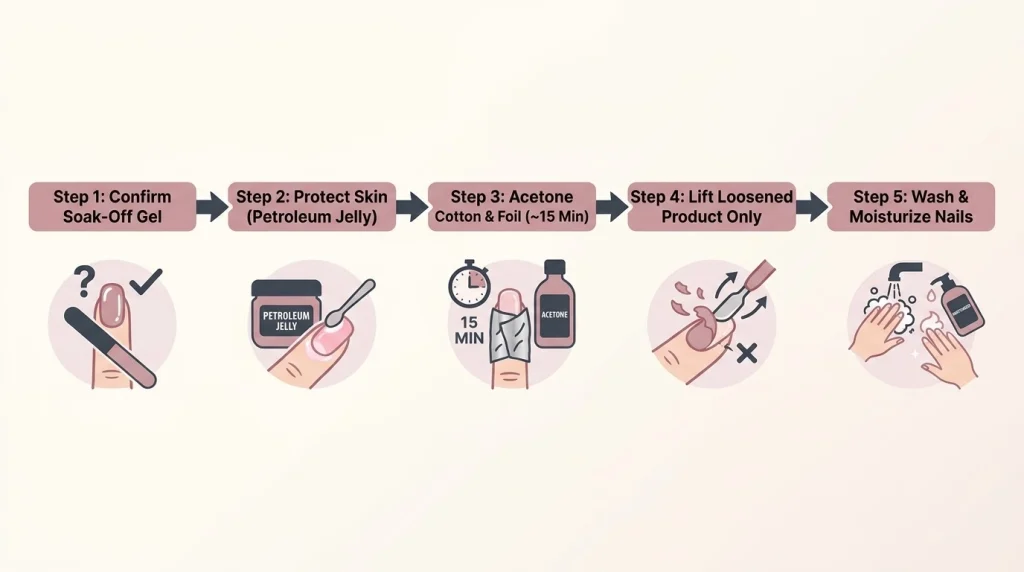
Correct removal is one of the most important ways to protect your nails. The following general method applies to soak-off gel polish, not hard gel or every builder gel system.
If you’re unsure which product you’re wearing, ask your nail technician before attempting removal.
Step 1: Confirm Your Polish Is Soak-Off Gel
Some gel products dissolve or loosen with acetone, while others must be professionally filed down. Never assume every hard-looking coating uses the same removal method.
Step 2: Protect the Surrounding Skin
Apply a small amount of petroleum jelly around the surrounding skin, avoiding unnecessary application directly on the gel coating.
This can help reduce skin dryness during removal.
Step 3: Apply Acetone to the Nail
For compatible soak-off gel, place acetone-soaked cotton against the nail and secure it with foil or an appropriate removal wrap.
Choose a suitable acetone nail polish remover and follow the product’s instructions.
Around 15 minutes may be sufficient for some systems, but actual removal time depends on the product.
Step 4: Remove Only Loosened Product
Check whether the coating has softened enough to release gently. Never dig into the nail plate with metal tools or force off stubborn sections.
If the coating remains firmly attached, stop rather than increasing pressure. Seek professional removal if needed.
Step 5: Wash and Moisturize
Once removal is complete, wash your hands and apply a moisturizing product to your nails and surrounding skin.
Don’t immediately buff the entire surface to eliminate every visible imperfection. Additional filing can worsen existing thinning.
How Can You Help Damaged Nails Recover After Gel Polish?
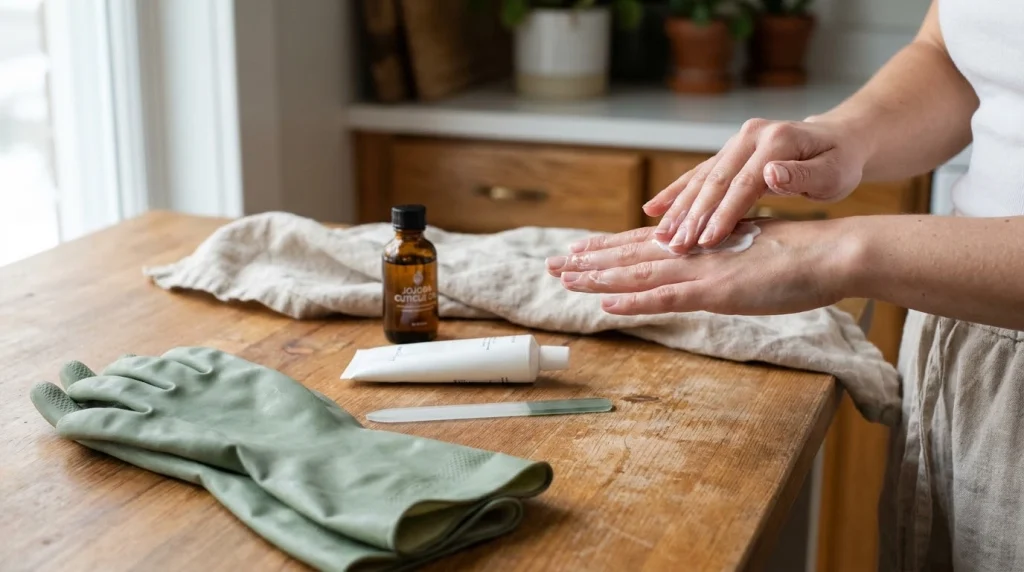
Recovery focuses on protecting the existing nail while healthy new nail grows. Moisturizers improve dryness and flexibility, but they cannot instantly rebuild nail layers that were physically removed.
Keep Your Nails Short
Long, weakened nails can catch on clothing and bend painfully. Trim them to a comfortable length and smooth snags gently with a fine-grit nail file.
Moisturize Consistently
Apply moisturizer to your nails, cuticles, and surrounding skin several times daily, especially after washing your hands.
A simple jojoba cuticle oil can help condition dry cuticles. Plain petroleum jelly or a fragrance-free hand cream can also work well.
Limit Repeated Water and Chemical Exposure
Use protective gloves when washing dishes or handling cleaning products. Repeated wetting, drying, and detergent exposure may contribute to nail brittleness.
Give Your Nails Time to Grow
Try a gentle nail care routine rather than repeatedly switching between different hardeners and treatments.
If your nails are already damaged, follow our guide to caring for weak nails after gel or acrylic removal for additional recovery advice.
Recommended Nail Care Essential
Plain Petroleum Jelly for Nail and Cuticle Care
Petroleum jelly helps reduce moisture loss from dry skin and cuticles. It’s an inexpensive option for everyday care between manicures, although it won’t restore missing nail layers.
As an Amazon Associate, we earn from qualifying purchases.
What Should You Do and Avoid When Your Nails Are Damaged?
Do
- Keep fragile nails comfortably short.
- Moisturize nails and cuticles daily.
- Wear gloves during household cleaning.
- Use gentle removal methods.
- Allow damaged nails time to grow.
- Seek help for persistent symptoms.
Don’t
- Peel or rip off gel polish.
- Over-file your natural nails.
- Ignore itching or swollen cuticles.
- Apply gel over painful nail damage.
- Use incompatible curing equipment.
- Cover suspicious discoloration.
When Should You See a Dermatologist?
Minor surface roughness after gel removal doesn’t always require medical treatment. However, some symptoms can indicate an allergy, infection, or deeper nail problem.
Seek professional medical advice if you notice:
- Persistent itching, blistering, or swelling after gel application.
- Increasing pain, warmth, redness, or pus around a nail.
- New green, dark, or unexplained discoloration.
- Significant nail separation from the nail bed.
- Thickening, deformity, or nail changes that persist.
- Repeated reactions whenever you wear gel products.
Severe pain, rapidly spreading redness, or fever warrants prompt medical attention.
A dermatologist can evaluate the cause and determine whether testing or treatment is needed. Avoid trying to treat suspected infections by sealing them underneath new polish.
Is Regular Nail Polish Better for Damaged Nails?
Traditional nail polish doesn’t usually require UV curing and is generally easier to remove than long-wearing gel systems. This can make it a practical alternative when your nails are fragile.
However, ordinary polish and its removers can still contribute to dryness, especially with frequent application and removal.
When your nails are painful, peeling significantly, or showing signs of infection, leaving them bare may be more appropriate until the problem improves.
For ongoing care, follow a simple nail care routine for healthy, strong nails that focuses on moisturizing, gentle grooming, and protecting your nail plate.
Frequently Asked Questions About Gel Polish Nail Damage
Q: Does gel polish make your natural nails thinner?
A: Gel manicures can contribute to thinner-feeling nails, especially when repeated filing or peeling removes layers of the natural nail plate. Gentle preparation and proper removal help reduce this risk.
Q: How long does it take for damaged nails to recover after gel polish?
A: Mild dryness may improve within days or weeks with consistent moisturizing. Physical damage must grow out, and replacing a full fingernail can take several months. Recovery depends on the severity and cause.
Q: Should you take a break between gel manicures?
A: Taking a one-to-two-week break or longer can be helpful, particularly when your nails are brittle or damaged. A short break supports gentle care, but visibly thinned nail layers still need time to grow out.
Q: Are LED gel nail lamps safer than UV lamps?
A: Compatible LED lamps often cure gel faster, potentially reducing exposure time. However, many still emit UVA radiation. Using sunscreen or suitable protective gloves remains a sensible precaution.
Q: Can you wear gel polish if your nails are already weak?
A: It’s generally better to postpone gel manicures when your nails are unusually thin, splitting, painful, or inflamed. Applying another coating can hide damage and may require additional preparation and removal.
Final Thoughts: Protect Your Natural Nails While Enjoying Gel Polish
Knowing how gel polish can damage nails makes it easier to recognize problems before they become severe. Gentle nail preparation, careful removal, proper curing, UV protection, and regular moisturizing all help reduce unnecessary damage.
Your natural nails deserve as much attention as your manicure design. If they show signs of irritation or weakness, give them the care and recovery time they need.
Love practical nail care advice? Save this guide to your Pinterest nail care board so you can revisit these tips before your next gel manicure.
Editorial Sources
This article draws on dermatology guidance about gel manicures, nail damage, and allergic reactions:
- American Academy of Dermatology — Gel Manicures: Tips for Healthy Nails
- British Association of Dermatologists — Artificial Nail Allergy and At-Home Kit Safety
Medical disclaimer: This article provides general nail care education and does not replace professional medical advice. Consult a qualified healthcare professional for persistent nail changes, suspected allergic reactions, or possible infections.

Hi, I’m Jessica, the creator behind Unique Lash & Nails Katy.
I created this website for anyone who loves beautiful nails as much as I do. Here, I share trendy nail designs, seasonal manicure ideas, easy nail care tips, honest product recommendations, and step-by-step guides to help you create salon-worthy nails at home. Whether you’re looking for everyday inspiration or your next favorite nail trend, I hope you’ll find something you love.