Why Do Toenails and Fingernails Change Color? Causes
Quick Answer
Why do toenails and fingernails change color? Common reasons include nail polish stains, injuries, fungal or bacterial infections, and certain medications. Sometimes, changes in nail color can reflect an underlying health condition. Yellow, white, green, blue, brown, and black nails have different possible causes. A new dark streak, persistent discoloration, pain, or nail separation deserves medical evaluation. Sudden blue nails accompanied by breathing difficulty require emergency care.
Have you ever removed your favorite nail polish and discovered that your nails look yellow? Or noticed a strange white spot, green patch, or dark streak that wasn’t there before?
Although a change in nail color can be surprising, it doesn’t automatically mean something serious is wrong. Your nails respond to everyday activities, cosmetic products, injuries, infections, and changes in your health.
The important part is recognizing which nail color changes are usually harmless and which ones deserve attention. This guide explains the possible causes of different nail colors, how fingernail and toenail discoloration can differ, and what you can safely do next.


What Color Should Healthy Fingernails and Toenails Be?
Healthy nails are generally translucent, allowing the color of the tissue underneath to show through. Depending on your natural skin tone, the nail bed may appear pink, pinkish-brown, or another natural shade.
The visible white tip is the portion of the nail that extends beyond your fingertip or toe. A pale, crescent-shaped area near the cuticle, called the lunula, may also be visible on some nails.
Healthy-looking nails generally share several characteristics:
- A relatively consistent natural color.
- A smooth or gently ridged surface.
- A nail plate that remains attached to the nail bed.
- No persistent swelling, drainage, or tenderness around the nail.
- No unexplained or rapidly changing dark pigmentation.
However, healthy nails don’t look identical on everyone. Normal pigmentation, aging, minor ridges, and individual differences can affect their appearance.
What matters most is noticing a new change from your usual nail appearance, especially when it continues, spreads, or appears with other symptoms.
Why Do Toenails and Fingernails Change Color?
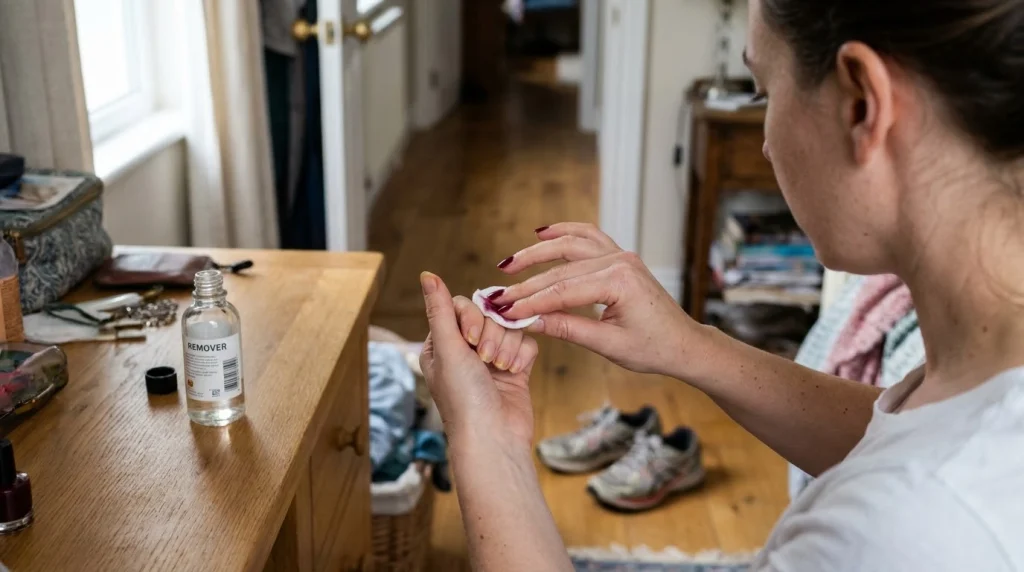
Your nails can change color for several different reasons. Some affect only the surface of the nail, while others involve the nail plate, nail bed, or surrounding tissues.
1. Nail Polish and Cosmetic Staining
Dark or highly pigmented nail polishes can leave yellowish or orange stains on your natural nails, particularly when applied repeatedly without a protective base coat.
The staining is usually cosmetic. It often becomes less noticeable as the affected nail grows out.
Artificial nails and nail enhancements can also hide early discoloration, making it more difficult to notice changes underneath.
2. Fungal Nail Infections
Fungal nail infections, also called onychomycosis, commonly affect toenails but can develop in fingernails as well.
An infected nail may become yellow, white, brown, or otherwise discolored. You might also notice thickening, brittleness, crumbly edges, or separation from the nail bed.
Because several nonfungal conditions produce similar changes, appearance alone cannot always confirm a fungal infection. A healthcare professional may collect a nail sample before recommending treatment.
3. Injuries and Repeated Pressure
Accidentally hitting your finger, dropping something on your toe, or wearing shoes that repeatedly press against your toenails can cause bleeding underneath a nail.
This trapped blood, called a subungual hematoma, can appear red, purple, dark brown, or black.
The discoloration typically moves toward the nail tip as the nail grows. A painful injury, especially with intense pressure or a damaged nail, may require prompt treatment.
4. Bacterial Infections
Certain bacteria can affect the nail area and cause unusual discoloration. One example is Pseudomonas, which can produce green or greenish-black staining, particularly when a nail has lifted from the nail bed.
Frequent moisture exposure and spaces beneath artificial nails may create conditions that favor this problem.
5. Skin Conditions
Conditions such as psoriasis and eczema can affect the appearance of your nails.
In addition to changes in color, you might notice tiny pits, ridges, thickening, or nail lifting. Psoriasis, for example, sometimes produces yellow-orange discoloration known as an oil-drop or salmon-patch appearance.
6. Medications and Medical Conditions
Some medicines can change nail pigmentation. Certain treatments may cause darker bands, unusual coloring, or changes in nail growth.
Medical conditions affecting the liver, kidneys, lungs, blood, or circulation can sometimes influence nail appearance, too.
However, nail color alone cannot diagnose a vitamin deficiency, anemia, or another internal illness. Your symptoms, medical history, examination, and sometimes laboratory tests are needed to understand the cause.
What Do Different Nail Colors Mean?
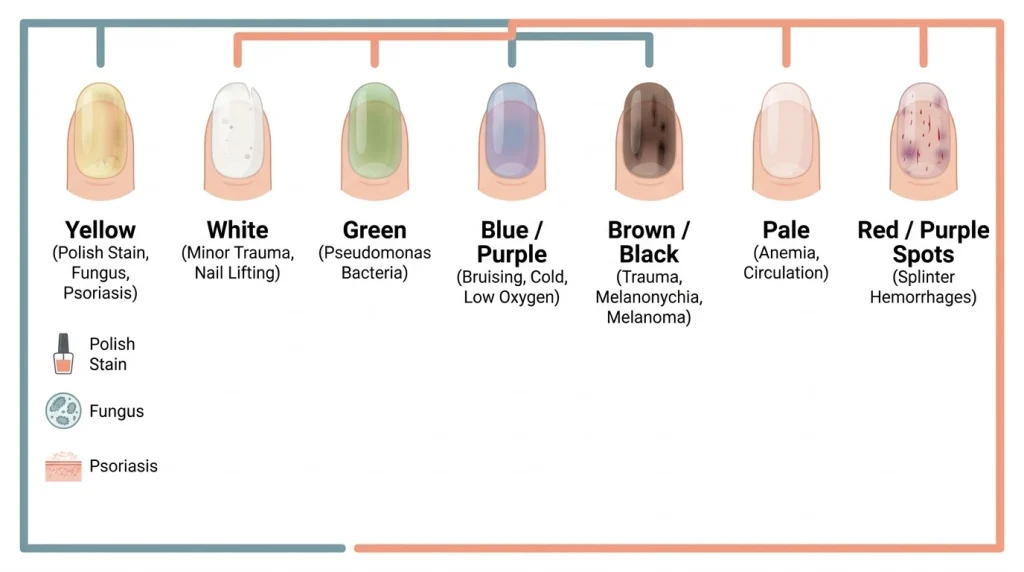
The exact shade of discoloration can offer useful clues, but it isn’t a diagnosis by itself. The number of affected nails, associated symptoms, and how quickly the color appeared are equally important.
Why Are My Fingernails or Toenails Turning Yellow?
Yellow nails are one of the more familiar nail color changes.
Possible explanations include:
- Staining from highly pigmented nail polish.
- Fungal nail infections, particularly when nails thicken.
- Smoking-related staining.
- Nail psoriasis.
- Rare conditions such as yellow nail syndrome.
If your nails look mildly yellow after removing dark polish but remain smooth and firmly attached, superficial staining may be responsible.
On the other hand, a yellow nail that becomes progressively thicker, crumbly, or distorted should be examined for possible infection or another nail disorder.
What to do: Avoid applying another coat of polish just to hide an unexplained change. Give yourself an opportunity to inspect the nail and arrange an evaluation if the discoloration persists or worsens.
Why Do Nails Turn White?
White nail discoloration can appear as small spots, broad patches, or changes affecting much of the nail.
Small white spots are often associated with minor trauma to the nail-producing area. You might develop them after accidentally bumping your fingers or during nail care.
Other possible causes include fungal infections, nail separation, and certain medical conditions.
When a nail lifts away from the underlying skin, the separated area often looks white because air replaces the usual close contact between the nail and nail bed.
More extensive whitening across multiple nails can occasionally be associated with medical conditions that require investigation.
Important: White spots do not automatically mean you have a calcium deficiency. This common explanation is not a reliable way to interpret nail changes.
Why Do Nails Turn Green?
Green discoloration is often associated with bacterial colonization involving Pseudomonas aeruginosa. This is commonly referred to as green nail syndrome.
The bacteria may grow in a moist space beneath a partially detached nail.
You may notice:
- A green, blue-green, or greenish-black area.
- Partial separation of the nail from the nail bed.
- Discoloration that remains after removing nail polish.
- Occasional nail tenderness or surrounding irritation.
What to do: Remove cosmetic coverings safely, keep the area clean and dry, and arrange an appointment with a healthcare professional.
Avoid sealing the discoloration beneath fresh gel, acrylic, or glue-on nails. Covering the nail can make monitoring the problem harder.
Important Warning
Do not assume every green nail is harmless staining. If you notice spreading redness, swelling, warmth, pus, or increasing pain, seek prompt medical attention.
Why Do Nails Turn Blue or Purple?
Blue or purple coloring can have different explanations depending on whether the change affects one nail or several nails.
A single purple nail following an injury may indicate bruising underneath the nail plate.
Cold temperatures can temporarily change the appearance of your fingertips. Certain medications may also cause nail pigmentation changes.
However, blue nails or blue discoloration involving the fingertips can sometimes indicate inadequate oxygenation or circulation.
When to get help: Sudden blue nails accompanied by shortness of breath, chest pain, confusion, or blue lips require emergency medical care. Persistent unexplained blue discoloration should also be evaluated.
Why Do Nails Turn Brown or Black?
Dark discoloration can come from trauma, natural pigmentation, medications, infections, or pigment-producing cells in the nail matrix.
For example, repetitive pressure from running shoes can cause a dark bruise beneath a toenail.
Some people naturally develop brown or black longitudinal nail bands, known as melanonychia. These bands may be benign and can be more common in people with darker skin tones.
Nevertheless, a new or changing dark band can occasionally indicate nail melanoma, a serious form of skin cancer.
Warning features include:
- A new brown or black streak, especially in one nail.
- A dark band that becomes wider or changes shape.
- Irregular coloring within the streak.
- Dark pigmentation spreading onto the surrounding skin.
- Nail splitting, lifting, or an unusual bump.
If you notice one of these changes, arrange a dermatologist assessment rather than trying to remove the color with cosmetic treatments.
Why Do Nails Look Pale?
Unusually pale nail beds can sometimes be associated with anemia or changes in circulation. However, lighting, temperature, natural complexion, and other factors can also affect their appearance.
If your nails seem noticeably paler than usual and you also experience unusual fatigue, dizziness, breathlessness, or weakness, contact your healthcare professional.
Blood tests may be needed to determine whether anemia or another condition is present. Don’t start iron supplements solely because your nails appear pale.
Why Do Nails Have Red or Purple Spots?
Small red or purple spots may develop after minor trauma or bleeding beneath the nail.
Thin reddish-brown lines can sometimes represent splinter hemorrhages, which are tiny areas of bleeding under the nail plate.
These marks may follow injury, but unexplained changes across several nails or spots accompanied by other symptoms deserve professional assessment.
Why Do Toenails Change Color More Often Than Fingernails?
Toenails experience a different environment from fingernails. They spend much of the day enclosed in socks and shoes and regularly experience pressure during walking, running, and exercise.
Several factors can make toenail discoloration particularly noticeable:
- Footwear pressure: Tight shoes may cause repetitive trauma and bruising.
- Moisture: Sweaty shoes and damp socks can favor fungal growth.
- Slower growth: Toenail discoloration can take longer to disappear as the nail grows.
- Delayed detection: Nail polish or infrequent inspections may conceal early changes.
- Repeated exercise-related impact: Running and hiking may repeatedly stress the same toenails.
Fingernails, meanwhile, are frequently exposed to water, detergents, manicures, nail polish removers, and artificial nail products.
These exposures can contribute to staining, irritation, or separation of the nail plate.
Neither type of nail is immune to infection, injury, or medical conditions. The difference is often the pattern of exposure rather than an entirely different biological process.
Can Nail Polish and Gel Manicures Change Your Natural Nail Color?
Yes. Cosmetic nail products can contribute to nail color changes, especially when used frequently.
Dark nail polish may leave pigment behind. Aggressive filing or removal techniques can damage the nail surface, while prolonged lifting of artificial enhancements can create spaces where moisture collects.
That doesn’t mean every manicure is harmful. Proper application, careful removal, and regular inspection can reduce avoidable damage.
How Can You Reduce Cosmetic Nail Staining?
- Apply a compatible base coat before highly pigmented polish.
- Remove polish gently rather than scraping it from your nails.
- Avoid repeatedly filing the natural nail plate.
- Replace lifting nail enhancements instead of sealing over trapped moisture.
- Inspect your natural nails when removing cosmetic coverings.
Nail Care Tip
Take a clear photo of unexplained discoloration before applying new polish. Comparing photographs over time can help you describe whether the mark is spreading, staying in place, or moving outward with nail growth.
How Can You Tell Whether Nail Discoloration Is Serious?
Although many nail changes are manageable, some symptoms should never be dismissed as cosmetic problems.
Make an appointment with a dermatologist or another qualified healthcare professional if you notice:
- A new or changing brown or black nail streak.
- Persistent green discoloration.
- A nail that becomes increasingly thick, distorted, or detached.
- Discoloration without an obvious explanation that continues to change.
- Several nails changing appearance along with other health symptoms.
- Swelling, tenderness, or recurrent inflammation around a nail.
Seek more urgent care for severe pain after an injury, spreading infection, or sudden discoloration accompanied by serious symptoms.
It’s especially important to arrange timely assessment of nail problems if you have diabetes, poor circulation, or a weakened immune system.
How Do Doctors Diagnose Nail Color Changes?
A healthcare professional usually starts by examining the affected nails and discussing your symptoms.
You may be asked when the change started, whether you’ve injured the nail, what nail products you use, and whether you take medications that can affect pigmentation.
Depending on the findings, evaluation may include:
- Physical examination: Checking the color, shape, attachment, and surrounding skin.
- Nail sampling: Testing for fungal infection when appropriate.
- Dermoscopic examination: Closely inspecting suspicious pigment patterns.
- Blood tests: Investigating a possible medical condition when symptoms warrant them.
- Biopsy: Examining nail tissue when a concerning growth or pigment change needs further investigation.
Not everyone needs every test. The appropriate approach depends on the appearance of the nail and your medical history.
Will Discolored Nails Return to Their Normal Color?
Often, yes. Whether the color improves depends on the underlying cause and whether the nail-producing tissues remain healthy.
Surface staining and bruising may gradually disappear as new nail grows. Infections may require appropriate treatment before healthy nail can replace the affected portion.
Fingernails commonly take around four to six months to grow out completely. Toenails grow more slowly and may take approximately twelve to eighteen months to replace fully.
These are general estimates, not guaranteed recovery times. Age, health, injury, and individual nail growth patterns can affect the process.
If a change does not move outward with nail growth, becomes darker, or develops an irregular appearance, don’t simply continue waiting for it to disappear.
How Can You Help Prevent Nail Discoloration?

You can’t prevent every nail condition, but everyday habits can reduce some common causes of discoloration and damage.
Keep Your Nails Clean and Dry
Wash your hands and feet regularly, then dry them thoroughly, especially between your toes.
Change damp socks promptly and allow frequently worn footwear to dry between uses.
Choose Shoes That Fit Properly
Make sure your toes have enough room to move without repeatedly striking the front of your shoes.
Properly fitted footwear can help reduce pressure-related bruising and nail injury.
Practice Gentle Nail Care
Trim nails with clean tools and avoid aggressively digging beneath the nail plate.
Don’t forcibly remove gel polish, acrylics, or other nail enhancements.
Protect Your Hands During Wet Work
If you frequently wash dishes or handle cleaning products, suitable protective gloves may reduce prolonged water and chemical exposure.
Dry your hands afterward and apply a fragrance-free moisturizer to your skin and cuticle area.
Avoid Sharing Nail Tools
Personal nail clippers, files, and other grooming tools should be cleaned appropriately.
Choose nail salons that follow proper hygiene and equipment-disinfection practices.
Do
- Inspect bare nails regularly.
- Keep feet dry.
- Wear comfortable shoes.
- Clean nail tools.
- Seek care for suspicious changes.
Don’t
- Ignore changing dark streaks.
- Cover suspected infections.
- Forcefully scrape nails.
- Share unclean tools.
- Use harsh home bleaching treatments.
Should You Use Home Remedies for Discolored Nails?
It’s tempting to search for a quick whitening treatment when your nails look yellow or stained.
However, home remedies such as concentrated lemon juice, vinegar mixtures, and hydrogen peroxide are not reliable solutions for every cause of discoloration.
Some substances can irritate the skin surrounding your nails, particularly if your cuticles are damaged or your skin is already inflamed.
If your nails are stained from polish, gentle nail care and allowing healthy nail to grow may be sufficient.
If you suspect an infection, proper diagnosis is more useful than repeatedly trying different home treatments.
Never attempt to bleach away a dark streak, green discoloration, or a painful nail change. These findings require an explanation, not cosmetic concealment.
What Nail Care Products Can Help Maintain Healthy-Looking Nails?
A few basic products can support daily nail care. They won’t treat internal medical conditions or replace antifungal or antibacterial treatment when an infection is present.
1. Gentle Nail Clippers and Files
Using sharp, clean clippers and a suitable nail file helps you trim your nails without unnecessary tearing or splitting.
For toenails, trim carefully and avoid cutting deeply into the corners.
Browse stainless steel nail clipper sets on Amazon.
2. Fragrance-Free Cuticle Moisturizer
A simple moisturizer or cuticle oil can help condition dry skin around your nails.
Apply it to clean skin without forcing the cuticles backward or disturbing damaged areas.
Explore cuticle oils on Amazon.
3. Protective Nail Polish Base Coat
If you regularly use dark nail polish, a base coat may help reduce direct pigment contact with your natural nail plate.
It is a cosmetic precaution, not a treatment for discoloration caused by infections or diseases.
Find protective nail base coats on Amazon.
As an Amazon Associate, we earn from qualifying purchases.
Frequently Asked Questions About Nail Color Changes
Q: Why are my toenails yellow but my fingernails normal?
Yellow toenails may result from fungal infection, nail polish staining, or repeated shoe pressure. Toenails experience more moisture and friction than fingernails, making certain nail problems more common. Persistent thickening or crumbling should be evaluated.
Q: Can stress cause fingernails to change color?
Stress alone is not a reliable explanation for nail discoloration. Severe illness or physiological stress may temporarily interrupt nail growth and produce horizontal grooves. An unexplained change in color should still be assessed based on its appearance and associated symptoms.
Q: Does nail discoloration always mean a fungal infection?
No. Nail discoloration can result from staining, injury, medication, bacterial infection, skin conditions, or natural pigmentation. Fungal infections are only one possible cause. Testing may be necessary before starting treatment.
Q: Can vitamin deficiencies change nail color?
Some nutritional deficiencies can affect nail appearance, but color alone cannot identify a deficiency. For example, pale nail beds may occur with anemia, which has several possible causes. A healthcare professional can determine whether testing is appropriate.
Q: When should I worry about a black toenail?
A black toenail after an obvious injury may be caused by bleeding beneath the nail. However, a new or changing dark streak, pigment spreading onto nearby skin, or discoloration without an identifiable cause deserves a prompt dermatology assessment.
Final Thoughts: Pay Attention to Changes in Your Nail Color
Understanding why toenails and fingernails change color can help you respond appropriately instead of worrying about every small mark or ignoring an important warning sign.
Many changes come from everyday staining, minor injuries, or treatable nail problems. Others require medical assessment. When something looks new, persists, spreads, or causes pain, getting a professional opinion is the safest choice.
Save this guide to your Pinterest nail care board so you can revisit these nail health tips whenever you notice a change.
Medical References
- American Academy of Dermatology: Nail Changes a Dermatologist Should Examine
- American Academy of Dermatology: How to Check Your Nails for Melanoma
- MedlinePlus: Nail Abnormalities
- Cleveland Clinic: Health Warnings Hidden in Your Fingernails
Medical disclaimer: This article is for general educational purposes and is not a substitute for medical diagnosis or treatment. Consult a qualified healthcare professional about unexplained nail changes or symptoms.

Hi, I’m Jessica, the creator behind Unique Lash & Nails Katy.
I created this website for anyone who loves beautiful nails as much as I do. Here, I share trendy nail designs, seasonal manicure ideas, easy nail care tips, honest product recommendations, and step-by-step guides to help you create salon-worthy nails at home. Whether you’re looking for everyday inspiration or your next favorite nail trend, I hope you’ll find something you love.