Nail Stains vs Nail Discoloration: What’s the Difference?
Quick Answer
The main difference between nail stains and nail discoloration is their possible cause. Nail stains usually develop when pigments from nail polish, dyes, or other external substances discolor the nail plate. Nail discoloration is a broader term that includes staining but can also result from injury, infection, medication, or medical conditions. A harmless stain often follows a clear exposure, while unexplained or changing nail color deserves closer attention.
You remove your favorite burgundy manicure, expecting clean natural nails, but discover a yellow tint underneath. Is it leftover polish pigment, or could something else be causing the color change?
Understanding nail stains vs nail discoloration helps you make safer nail-care decisions. Some changes are temporary cosmetic concerns, while others may signal problems that no whitening treatment can solve.
Here’s how to recognize the differences, understand common causes, and decide when your nails need more than a manicure refresh.


What Is the Difference Between Nail Stains and Nail Discoloration?
Nail staining and nail discoloration aren’t completely separate conditions. Instead, staining is one possible cause of discoloration. The distinction becomes useful when you’re trying to determine whether a color change came from something touching your nails or from a process affecting the nail itself.
What Are Nail Stains?
Nail stains are color changes commonly caused by outside pigments or substances. Certain nail polishes, hair dyes, self-tanners, and other coloring agents can leave visible pigment on or within the nail plate.
Your nail plate contains layers of keratin. Some pigments can cling to or penetrate the superficial layers, so removing the original product doesn’t always remove the color immediately.
Typical features of cosmetic nail staining include:
- A yellow, orange, or brownish tint after removing strongly pigmented nail polish.
- Color changes that match recent exposure to a dye or staining product.
- Several nails developing a similar tint after the same manicure.
- Nails that otherwise remain smooth, comfortable, and firmly attached.
- Staining that gradually fades or moves outward as the nail grows.
For example, wearing red polish for several days without a base coat may leave your nails looking slightly yellow after removal. That doesn’t automatically mean your nails are unhealthy.
What Is Nail Discoloration?
Nail discoloration describes any noticeable change from your nail’s usual color. It can appear as a general tint, isolated patch, spot, or vertical or horizontal band.
Possible causes include cosmetic staining, injury, bacterial or fungal infections, inflammatory nail conditions, medications, and certain medical disorders.
Unlike a straightforward pigment stain, discoloration may develop without a recent manicure or obvious contact with a coloring product.
Some cases also involve changes in nail thickness, texture, shape, or attachment to the nail bed.
The key point is that appearance alone cannot reliably determine the cause. The history of the color change and any accompanying symptoms matter just as much as the shade.
Nail Stains vs Nail Discoloration: Side-by-Side Comparison
| Feature | Cosmetic Nail Stains | Other Nail Discoloration |
|---|---|---|
| Typical cause | Polish pigment, dyes, or external substances | Infection, injury, medication, nail disease, or another cause |
| Common colors | Yellow, orange, or brown | Yellow, green, white, brown, black, blue, or purple |
| Appearance | Often a relatively even tint | May form patches, bands, streaks, or widespread changes |
| Other symptoms | Usually none | Sometimes thickening, lifting, pain, or swelling |
| Home care | Gentle cleaning, moisturizing, and time | Depends on the underlying cause |
| Professional evaluation | Often unnecessary when clearly cosmetic and improving | Important for unexplained, persistent, or concerning changes |
These differences are useful clues, not diagnostic rules. A nail can be stained and still have another condition, and not every unexplained color change is serious.
Why Do Nails Become Stained?
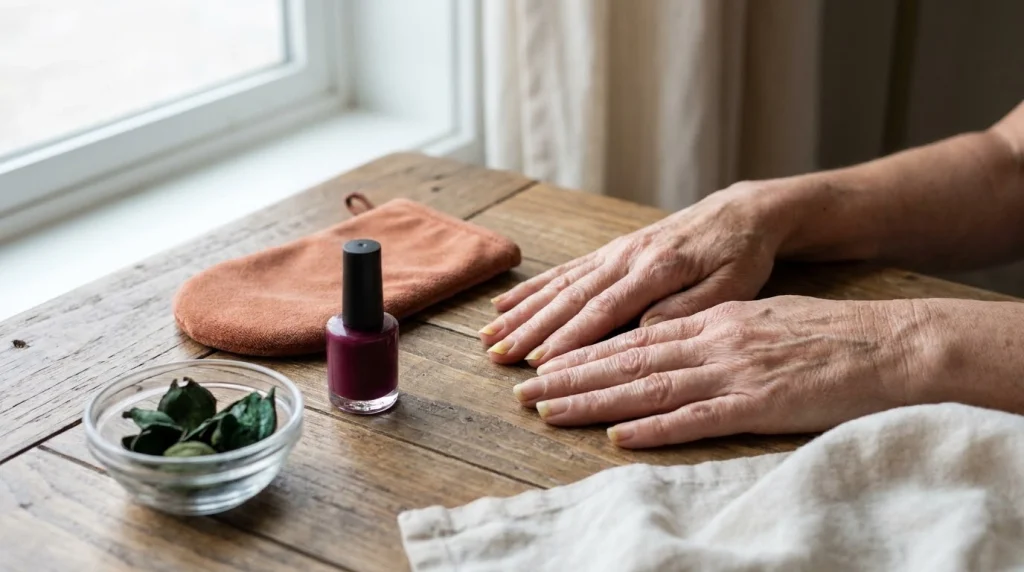
Understanding where nail stains come from can help you identify which everyday habits might be contributing to unwanted color.
1. Highly Pigmented Nail Polish
Dark red, burgundy, purple, orange, and other saturated polish shades can leave pigment behind after removal.
Staining is especially noticeable when a color stays on for an extended period or is applied directly to the natural nail.
A compatible base coat may reduce pigment contact, although it cannot guarantee complete protection.
If you regularly wear dark manicures, learn more about protecting nails from nail polish damage before choosing your next color.
2. Hair Dye and Other Coloring Products
Hair coloring products and some cosmetic dyes can transfer pigment to fingernails during application.
You may notice stains concentrated around the fingertips or on the nails you used to handle the product.
Wearing properly fitted protective gloves helps prevent direct exposure and makes cleanup easier.
3. Self-Tanning Products
Self-tanning products containing dihydroxyacetone, commonly called DHA, react with compounds in the outer layers of skin and can leave temporary color on nails and cuticles.
Stains can become particularly noticeable when product collects near the nail folds or underneath the free edge.
Applying self-tanner with a mitt and cleaning your hands appropriately afterward helps reduce accidental staining.
4. Tobacco Exposure
Smoking can contribute to yellow or brown staining of the fingers and nails exposed to tobacco residue.
Unlike a single polish stain, this type of discoloration may recur with repeated exposure.
5. Repeated Contact With Pigments
Craft dyes, inks, and certain household products may also change the appearance of your nails.
However, not every yellow or brown nail is an external stain. If the color appears without an identifiable exposure or continues changing, avoid assuming that a cosmetic product caused it.
What Causes Nail Discoloration Beyond Cosmetic Stains?
When a color change doesn’t fit a recent staining event, several other explanations become possible.
Fungal Nail Infections
Fungal infections can cause yellowish, whitish, or brown discoloration. Affected nails may also become thick, crumbly, brittle, or separated from the nail bed.
Toenails are commonly affected, but fingernails can develop fungal infections too.
Not every thick or yellow nail has fungus. A healthcare professional may need to examine or test the nail before recommending appropriate treatment.
Bacterial Infections
Some bacterial infections produce green or greenish-black nail discoloration.
One example is green nail syndrome, commonly associated with Pseudomonas bacteria. It can develop when moisture accumulates around a damaged or partially lifted nail.
This type of discoloration shouldn’t be treated as ordinary polish staining or covered with another manicure.
Nail Injuries
Hitting or crushing a finger can cause bleeding beneath the nail plate, producing a red, purple, brown, or black patch.
This is called a subungual hematoma. The affected area may be tender or painful, especially soon after the injury.
Although some bruises grow out naturally, severe pain, significant injury, or unexplained darkening warrants medical attention.
Inflammatory Nail Conditions
Conditions such as nail psoriasis can affect nail color and structure. You might notice pitting, thickening, lifting, or patches of unusual color.
Because inflammatory disorders sometimes resemble fungal infections, guessing based on appearance can lead to ineffective treatment.
Medications and Medical Conditions
Certain medications can change nail pigmentation. Some illnesses may also affect nail color, although a color change alone cannot diagnose a specific disease.
Blue-looking nails, marked paleness, or unusual changes affecting multiple nails deserve medical assessment, particularly when accompanied by other symptoms.
For more visual clues, explore our guide to signs of unhealthy nails.
What Do Different Nail Discoloration Colors Mean?
Color provides clues, but it isn’t enough to confirm a diagnosis. The pattern, timing, symptoms, and medical history all influence what a change might mean.
Yellow Nails
Yellow nails can result from polish staining, fungal infections, inflammatory conditions, or less common medical disorders.
A mild, even yellow tint appearing after dark polish is often cosmetic. Thickening, crumbling, lifting, or persistent unexplained yellowing calls for closer evaluation.
Green Nails
Green discoloration may indicate a bacterial infection, particularly when a nail has lifted and remained exposed to moisture.
A green appearance should not automatically be dismissed as leftover green polish, especially if it develops beneath a nail enhancement.
White Spots or Patches
Small white spots can appear after minor nail trauma. White patches may also result from surface changes, fungal infections, or other nail conditions.
Repeated aggressive buffing and improper manicure removal may damage the upper nail layers and contribute to a rough, chalky appearance.
Brown or Black Nails
Brown or black discoloration can occur after injury, from external pigmentation, or due to pigment produced within the nail.
Some longitudinal brown bands are benign, but a new or changing dark streak, especially on one nail, requires a dermatologist’s evaluation to rule out serious causes, including nail melanoma.
Blue or Purple Nails
Blue or purple coloring may occur after an injury, from certain medications, or because of circulation or oxygenation problems.
If blue nails appear suddenly with breathing difficulty, chest pain, or severe illness, seek emergency medical care.
Important Warning
Never diagnose a nail condition using color alone. New dark streaks, unexplained green discoloration, persistent changes, painful swelling, or nail lifting should be assessed by a qualified healthcare professional.
How Can You Tell Whether Your Nails Are Stained or Discolored?
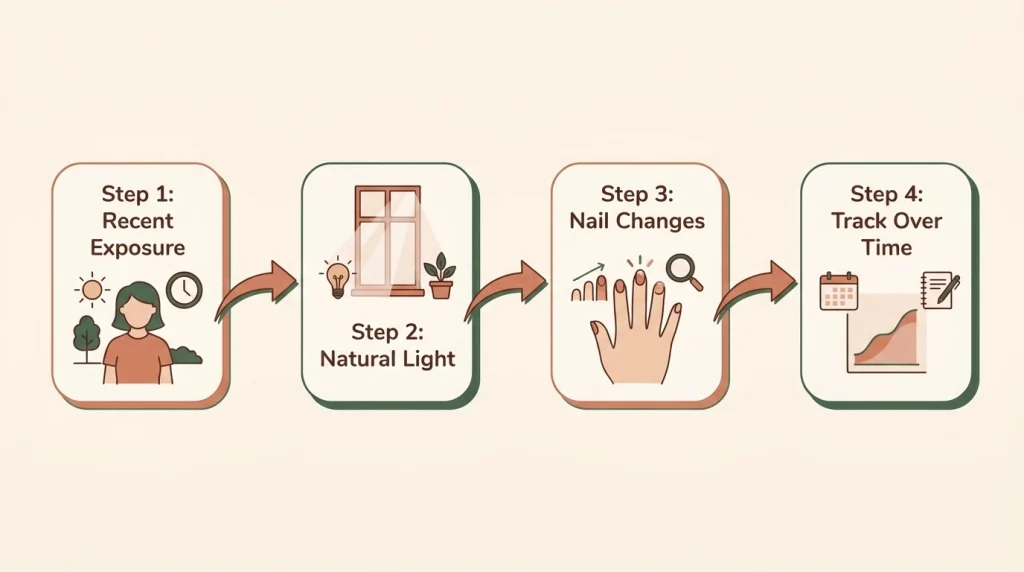
You cannot always distinguish cosmetic staining from a nail disorder at home. However, a few simple observations can help you decide whether gentle nail care is appropriate or professional advice would be safer.
Step 1: Think About Recent Product Exposure
Ask yourself whether you’ve recently worn dark polish, applied self-tanner, handled hair dye, or used another strongly pigmented product.
A clear connection between exposure and color change supports the possibility of staining, but it doesn’t prove that staining is the only cause.
Step 2: Examine Your Nails in Natural Light
Remove regular polish gently, wash your hands with mild soap, and dry them thoroughly.
Look for the location and pattern of the color. Is it an even tint across several nails, or a distinct patch or streak affecting only one?
Don’t dig beneath the nail or buff away layers to investigate.
Step 3: Look for Other Nail Changes
Check whether the affected nail is thicker, more brittle, unusually rough, painful, or lifting away from the nail bed.
Redness, swelling, or drainage around the nail also deserves attention.
These features make a simple cosmetic stain less likely to be the complete explanation.
Step 4: Notice Whether the Color Is Changing
When you know a mark followed a manicure, you can photograph it in consistent lighting and monitor whether it gradually grows outward with the nail.
A stain may fade or remain visible until the affected nail portion grows out.
Don’t delay evaluation of a new dark streak, unexplained change, or concerning symptoms just to see whether the color disappears.
Pro Tip
Photograph an unusual nail in indirect natural light before changing your manicure routine. A clear baseline image can help you describe the timing and appearance of the change to a dermatologist.
Can Nail Stains Be Removed Safely at Home?
If your nails have a mild cosmetic stain from a known product and otherwise look healthy, gentle care is usually the best starting point.
There’s no need to force the nail plate back to its original color in one session.
Remove the Original Product Gently
Use an appropriate polish remover for regular polish and follow the manufacturer’s removal instructions for other coatings.
Don’t peel gel polish, scrape away attached product, or repeatedly soak your skin in solvents.
Once the coating is removed, wash your hands and examine your nails before considering any additional treatment.
Clean Without Aggressive Scrubbing
Warm water, mild soap, and a soft nail brush are suitable for removing ordinary debris and residue.
Scrubbing cannot reliably remove pigment embedded within the nail plate, and excessive pressure can damage its surface.
Our guide to cleaning nails at home
Moisturize Your Nails and Cuticles
Apply fragrance-free hand cream or a small amount of cuticle oil after washing and polish removal.
Moisturizing won’t remove deeply embedded pigment, but it can help maintain comfortable surrounding skin and reduce dryness associated with repeated manicures.
Allow the Stained Area to Grow Out
Some cosmetic staining fades after polish removal, while other pigment remains visible until the affected nail section grows forward.
Fingernails typically grow around 3 millimeters per month, although individual growth rates vary. Complete fingernail replacement commonly takes several months.
That means a stubborn stain doesn’t necessarily indicate damage simply because it remains visible for a few weeks.
Avoid Harsh DIY Whitening Methods
Concentrated peroxide, household bleach, repeated acidic soaks, and abrasive filing can irritate your skin or damage the nail plate.
Even popular home remedies have limited evidence for removing deeply embedded pigment.
If you’re considering a lemon-based treatment, review whether lemon juice can whiten yellow nails and understand its limitations first.
Warning
Never use household bleach on your nails to remove discoloration. Avoid whitening treatments on painful, cracked, inflamed, infected, or partially detached nails. Cosmetic whitening cannot treat the underlying cause of these problems.
Which Nail-Care Products Are Actually Useful?
You don’t need an expensive whitening kit to maintain natural nails. A few practical products can support safer cleaning, polish application, and moisturizing.
Disclosure: As an Amazon Associate, we earn from qualifying purchases.
Recommended Product Type
Clear Nail Polish Base Coat
A compatible clear base coat creates a layer between your natural nail and colored polish. It may help reduce direct pigment contact, especially with darker manicures, although staining can still occur.
As an Amazon Associate, we earn from qualifying purchases.
Recommended Product Type
Soft Nail Cleaning Brush
A soft-bristled nail brush can remove visible dirt from the nail surface and free edge without requiring aggressive scraping. Use light pressure and let the bristles do the work.
As an Amazon Associate, we earn from qualifying purchases.
Recommended Product Type
Jojoba-Based Cuticle Oil
A cuticle oil can help soften dry skin around your nails after washing or polish removal. It supports a comfortable nail-care routine but isn’t a treatment for abnormal nail pigmentation.
As an Amazon Associate, we earn from qualifying purchases.
How Can You Prevent Nail Stains and Protect Your Natural Nails?
Prevention is easier than trying to remove deeply embedded pigment. Your everyday manicure habits can make a meaningful difference.
Do
- Apply a compatible base coat before dark polish.
- Wear gloves when handling strong dyes or cleaning products.
- Remove manicures gently.
- Keep nails clean and dry.
- Moisturize your nails and surrounding skin.
- Inspect natural nails between manicures.
Don’t
- Assume every yellow nail is a harmless stain.
- Peel off gel or acrylic enhancements.
- Buff aggressively to erase pigment.
- Use household bleach on nails.
- Keep covering unexplained discoloration with polish.
- Ignore new dark streaks or painful changes.
Consider switching between strongly pigmented shades and lighter colors if staining repeatedly bothers you. The purpose isn’t to make your nails breathe; it’s to reduce repeated pigment exposure and give yourself opportunities to examine your natural nails.
You can also learn how nail polish affects nail strength to make informed choices about your routine.
When Should You See a Dermatologist About Nail Discoloration?
You don’t need a medical appointment for every temporary cosmetic stain. However, certain changes should not be managed with whitening products or hidden beneath polish.
Arrange a professional evaluation if you notice:
- A new or changing brown or black streak, particularly on one nail.
- Dark pigmentation extending onto the surrounding skin.
- Persistent green or greenish-black discoloration.
- Unexplained yellowing with thickening, crumbling, or lifting.
- Swelling, warmth, tenderness, or drainage near the nail.
- A nail separating from its nail bed.
- A color change that worsens or appears without an obvious explanation.
- Unusual changes affecting multiple nails alongside other health symptoms.
Severe pain after a nail injury also deserves prompt evaluation. Sudden blue discoloration accompanied by breathing difficulty or chest pain requires emergency medical care.
A dermatologist can evaluate the pattern of discoloration, ask about your health and product exposures, and determine whether testing is necessary.
That approach is more reliable than treating every unusual nail color as either fungus or polish staining.
Frequently Asked Questions About Nail Stains and Nail Discoloration

Q: Are yellow nails always caused by nail polish?
A: No. Dark nail polish can cause yellow stains, but fungal infections, certain skin conditions, and other medical causes can also change nail color. Thickening, crumbling, pain, or unexplained persistent yellowing warrants medical evaluation.
Q: How long do nail polish stains take to disappear?
A: Mild cosmetic staining may fade within days or weeks after polish removal. Deeper pigment can remain until the affected nail grows out, which may take several months. The timeline depends on the stain and individual nail growth.
Q: Can nail discoloration be a sign of a fungal infection?
A: Yes. Fungal infections can cause yellow, white, or brown nail changes, often with thickening, brittleness, or crumbling. However, appearance alone cannot confirm fungus, and testing may be needed before treatment.
Q: Can a base coat completely prevent nail staining?
A: A base coat can help separate polish pigment from your nail plate, potentially reducing staining. However, protection isn’t guaranteed, particularly with heavily pigmented colors or repeated applications.
Q: Should I cover discolored nails with nail polish?
A: If you know the discoloration is a harmless cosmetic stain and your nails otherwise look healthy, polish may be a personal choice. Don’t cover a new, unexplained, painful, or changing discoloration before having it assessed.
Final Thoughts: Know the Difference Before Treating Your Nails
The most important distinction between nail stains vs nail discoloration is the cause, not simply the color. A stain from your favorite polish is often a manageable cosmetic issue, while an unexplained nail change may need professional evaluation.
Choose gentle nail care, protect your nails during manicures, and pay attention when color changes come with unusual symptoms.
Save this guide to your Pinterest nail-care board so you can recognize common staining patterns and know when a nail change deserves a closer look.
Medical disclaimer: This article provides general educational information and is not a substitute for diagnosis or treatment from a qualified healthcare professional.

Hi, I’m Jessica, the creator behind Unique Lash & Nails Katy.
I created this website for anyone who loves beautiful nails as much as I do. Here, I share trendy nail designs, seasonal manicure ideas, easy nail care tips, honest product recommendations, and step-by-step guides to help you create salon-worthy nails at home. Whether you’re looking for everyday inspiration or your next favorite nail trend, I hope you’ll find something you love.