How to Prevent Dry Nails: Easy Daily Care Tips
Quick Answer
To prevent dry nails, apply a rich, fragrance-free hand cream after washing your hands, massage cuticle oil into the skin around your nails daily, and wear protective gloves when cleaning or washing dishes. Keep your nails trimmed, avoid aggressive filing and harsh manicure removal, and protect your fingertips from repeated water exposure. Consistency is the key to keeping your nails flexible and reducing peeling and breakage.
TIME NEEDED
2–5 minutes daily
DIFFICULTY
Beginner
ITEMS NEEDED
Cream, oil, gloves, nail file
RESULTS
Gradual, ongoing improvement
Have you ever looked down at your nails and noticed peeling tips, rough edges, or dry cuticles, even though you regularly take care of your hands? Dry nails can be frustrating, especially when you love beautiful manicures and want your natural nails to look healthy between appointments.
The problem often comes from everyday habits you barely notice. Frequent handwashing, cleaning products, aggressive manicures, and repeated exposure to water can gradually make your nails more vulnerable to splitting.
Fortunately, you don’t need an expensive nail treatment collection to improve your routine. A few practical changes can help protect your nails and keep the surrounding skin comfortable.
This guide explains what causes dry nails, how to prevent them, which products are useful, and what habits to avoid.


Why Do Your Nails Become Dry and Brittle?
Your nails are made primarily of keratin, a tough protein that gives the nail plate its structure. Although nails are designed to protect your fingertips, repeated exposure to water, chemicals, and physical damage can make them more likely to peel, crack, or split.
The visible nail plate cannot heal a split the way living skin heals a scratch. Damaged nail material generally needs to grow out. That makes prevention especially important.
1. Frequent Handwashing
Washing your hands is essential for hygiene, but repeated wetting and drying may contribute to brittle nails and dry surrounding skin. Soap can also remove some of the oils that help keep your skin comfortable.
Apply hand cream after washing to reduce moisture loss from the skin around your nails.
2. Household Cleaning Products
Dish soap, detergents, and cleaning chemicals can irritate the skin surrounding your nails. Spending long periods with your hands in water can also contribute to nail splitting.
Protective gloves create a barrier between your fingertips and irritating substances.
3. Aggressive Nail Treatments
Repeated filing, excessive buffing, picking off gel polish, and scraping away enhancements can damage the nail surface. Removing these products incorrectly may leave nails thin and vulnerable.
4. Dry Weather and Indoor Heating
Cold weather, low humidity, and indoor heating can cause the skin around your nails to feel rough and tight. Dry cuticles may develop cracks or painful hangnails when they are neglected.
5. Picking or Biting Your Nails
Nail biting and cuticle picking can damage the nail edges and surrounding skin. These habits may also create openings through which bacteria can enter.
Persistent nail brittleness can sometimes be associated with skin conditions or other health issues. If your nail changes are unexplained or worsening, consider professional evaluation.
What Do You Need to Prevent Dry Nails?
You can build an effective nail care routine with a few affordable products. Choose gentle formulas and avoid buying products simply because they promise dramatic overnight results.
- Fragrance-free hand cream: Helps moisturize the skin around your nails after handwashing.
- Cuticle oil: Conditions rough skin around the nail base.
- Petroleum jelly: Helps reduce moisture loss from particularly dry skin.
- Protective cleaning gloves: Reduce contact with dishwater and household detergents.
- Fine nail file: Smooths uneven edges without unnecessary abrasion.
- Gentle nail polish remover: Allows careful polish removal without scraping.
If you want to improve your overall routine, explore our guide to the best nail care routine for additional everyday nail maintenance tips.
How to Prevent Dry Nails Step by Step
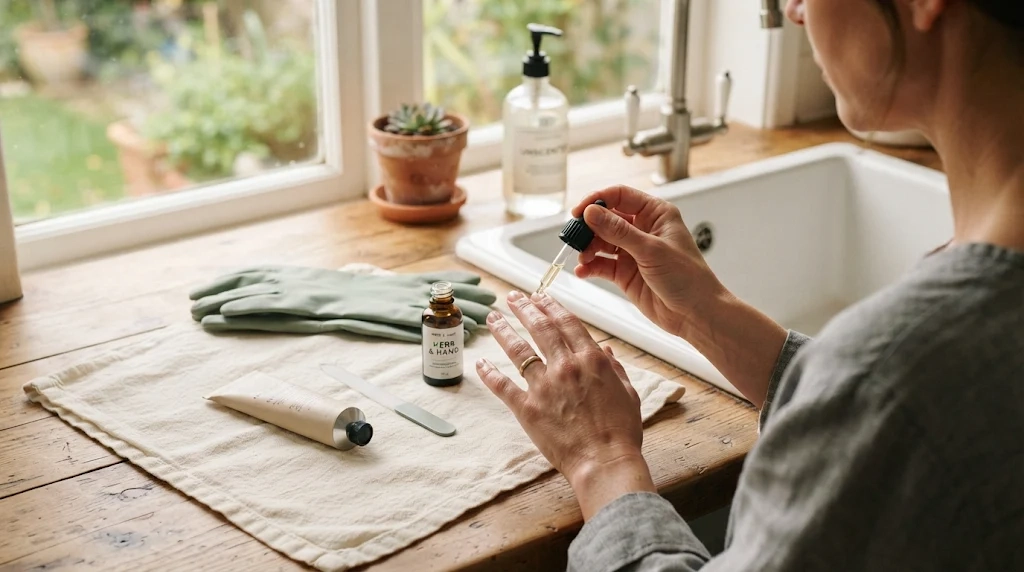
Follow these simple steps consistently. They are designed to prevent everyday dryness and unnecessary damage rather than repair existing splits instantly.
Step 1: Moisturize Your Nails After Washing
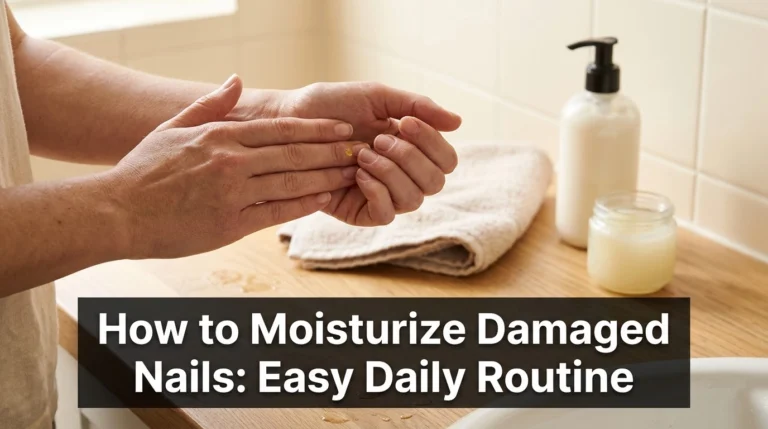
After washing your hands, gently pat them dry with a clean towel. Apply fragrance-free hand cream and massage it over your fingertips, nails, and cuticle areas.
Keep a small tube of moisturizer near your sink or in your handbag so you can reapply it throughout the day.
Common mistake: Applying cream only to your palms and ignoring the nail folds and fingertips.
Step 2: Apply Cuticle Oil Daily
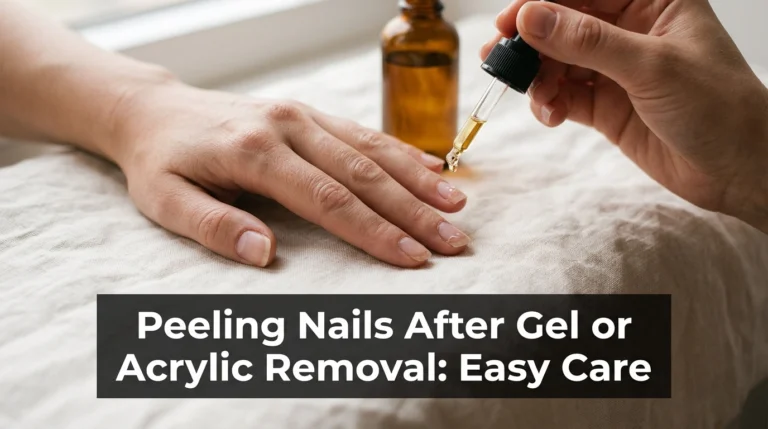
Place a small drop of cuticle oil near the base of each nail. Gently massage the oil into the surrounding skin for approximately 30 seconds.
Jojoba-based oils are a convenient option for conditioning dry cuticles. You can apply oil during the day or before bedtime.
Cuticle oil is optional, but it can complement regular moisturizing and make rough nail folds feel softer.
Common mistake: Expecting oil to repair peeling nail layers. Existing splits need to grow out.
Step 3: Protect Your Hands During Cleaning
Before washing dishes or using household cleaning products, put on protective gloves.
Choose gloves that fit comfortably and keep your hands dry. For longer cleaning sessions, cotton-lined gloves may be more comfortable.
Remove the gloves afterward, dry your hands, and apply moisturizer.
Common mistake: Leaving damp gloves on for extended periods, which may irritate your skin.
Step 4: Keep Your Nail Edges Smooth
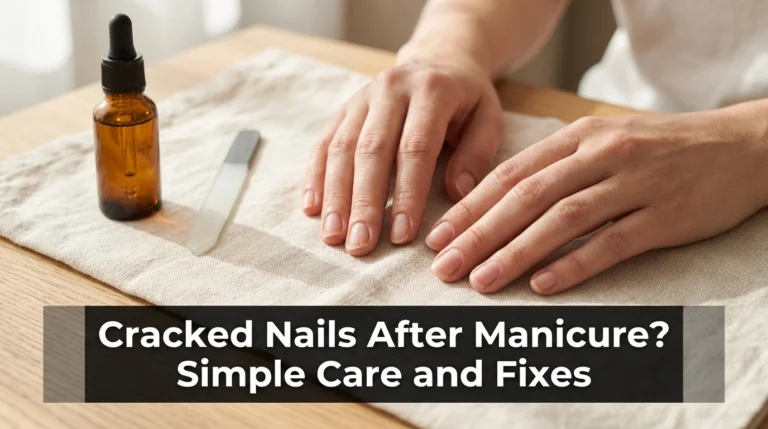
Trim your nails to a manageable length and gently smooth rough edges with a fine file.
If your nails are already brittle, keeping them shorter can reduce the chances of catching and splitting them on clothing or everyday objects.
Avoid aggressive filing and excessive surface buffing because these actions can thin the nail plate.
Common mistake: Filing repeatedly over the same weak area until the nail becomes thinner.
Step 5: Remove Nail Polish Gently
When removing regular nail polish, use an appropriate remover and avoid scraping or pulling at the nail surface.
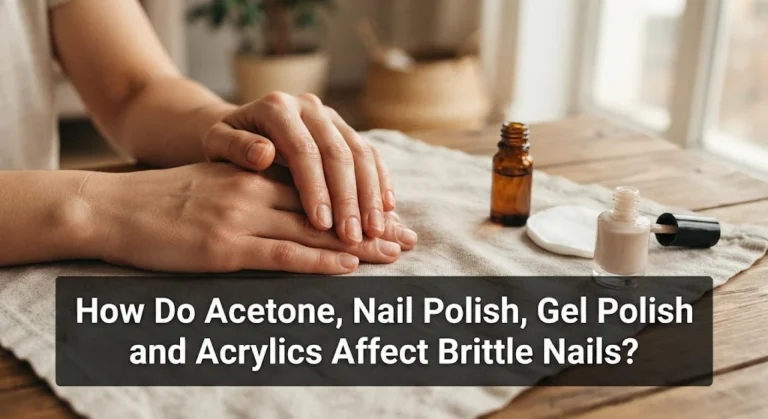
Acetone can dry the surrounding skin, so minimize unnecessary exposure and moisturize after removing polish.
Never peel off gel polish or artificial nails. If you are unsure how to remove an enhancement safely, have it removed professionally.
Common mistake: Picking off gel polish, which can pull away layers of natural nail.
Step 6: Moisturize Your Cuticles Before Bed
Before going to sleep, apply a rich hand cream to your fingertips and nail folds.
If the skin around your nails feels particularly dry, apply a small amount of plain petroleum jelly over the affected areas to help limit moisture loss.
Repeat this routine regularly. Consistent care is more useful than using several new treatments every week.
Common mistake: Applying a treatment once and expecting damaged nails to recover overnight.
What Daily Habits Help Prevent Dry Nails?
Small choices throughout the day can make a meaningful difference. The goal is to reduce unnecessary irritation while maintaining healthy nail hygiene.
Moisturize Consistently
Keep hand cream where you use it most often. Apply it after washing your hands and whenever the surrounding skin feels dry.
Protect Your Cuticles
Your cuticles help protect the space between the nail and surrounding skin. Avoid cutting or pushing them aggressively, and never pull hangnails with your fingers.
Avoid Using Nails as Tools
Use a tool instead of your fingernails to open packaging, scrape labels, or pry objects apart. These actions can cause small cracks that gradually become larger splits.
Be Gentle With Manicures
Beautiful manicures do not require excessive filing. Choose gentle preparation methods and follow appropriate removal procedures for each type of nail enhancement.
Protect Your Hands in Cold Weather
Wear gloves when practical, apply moisturizer regularly, and avoid exposing already irritated skin to harsh products.
For more seasonal tips, read our guide to protecting nails from dry air.
What Should You Avoid If Your Nails Are Dry?
Warning
Repeatedly peeling gel polish, cutting cuticles, aggressively buffing the nail plate, or exposing damaged nails to harsh chemicals may worsen splitting and irritation. Stop any treatment that causes burning, swelling, or pain.
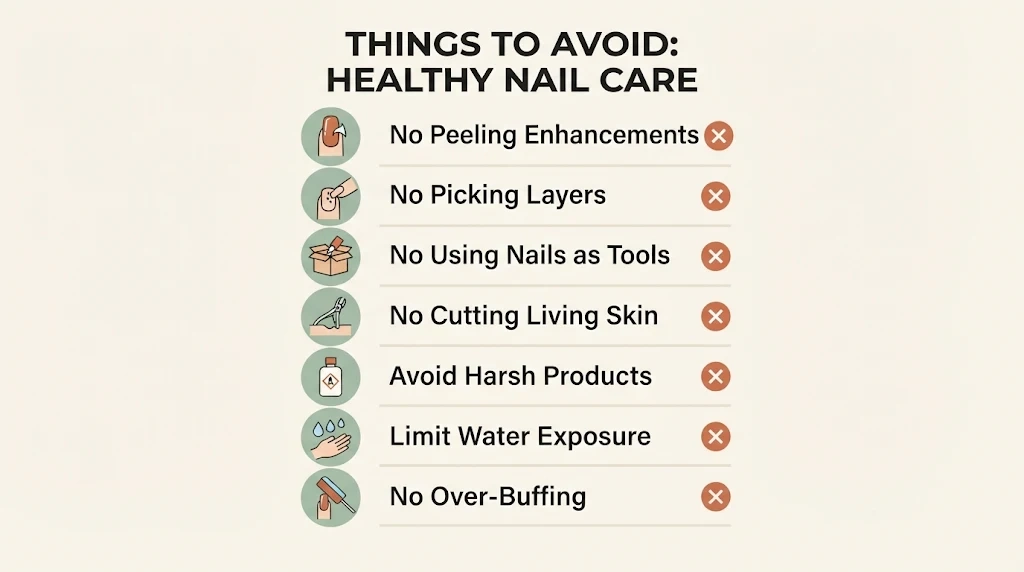
Avoid these common habits:
- Peeling off gel polish or acrylic enhancements.
- Picking at loose nail layers.
- Using your nails to open containers or scrape surfaces.
- Cutting living skin around the nail base.
- Applying irritating nail products to damaged skin.
- Leaving your hands in water unnecessarily.
- Over-buffing nails to hide peeling or ridges.
What Are the Do’s and Don’ts for Dry Nail Prevention?
DO
- Moisturize after handwashing.
- Wear gloves for wet chores.
- Keep nail edges smooth.
- Protect your cuticles.
- Remove polish gently.
- Maintain a simple daily routine.
DON’T
- Peel off gel manicures.
- Pick loose nail layers.
- Over-buff the nail plate.
- Cut cuticles aggressively.
- Use irritating products on broken skin.
- Expect overnight nail repair.
Which Products Help Prevent Dry Nails?
You do not need expensive treatments to maintain comfortable fingertips. A gentle moisturizer, optional cuticle oil, and protective gloves are a practical starting point.
Affiliate disclosure: As an Amazon Associate, we earn from qualifying purchases. Product links below lead to Amazon search results, where prices, availability, and customer ratings may vary.
Recommended Product
Fragrance-Free Hand Cream
A rich hand cream is one of the most useful products for managing dry fingertips and cuticles. Look for moisturizing ingredients such as glycerin or petrolatum.
Best for: Everyday moisturizing after handwashing.
Recommended Product
Jojoba-Based Cuticle Oil
Cuticle oil can help condition rough, dry nail folds. Apply a small amount and massage it into the surrounding skin.
Best for: Additional cuticle conditioning.
Recommended Product
Cotton-Lined Cleaning Gloves
Protective gloves reduce direct contact with dishwater and household detergents. Choose a comfortable size and keep the inside dry.
Best for: Washing dishes and cleaning around the house.
How Long Does It Take to Improve Dry Nails?
The answer depends on whether you are dealing with dry skin, brittle nail plates, or both.
Dry skin surrounding your nails may begin feeling softer after several days of consistent moisturizing. However, a nail that is already peeling or splitting cannot instantly repair itself.
Fingernails generally take several months to grow from the base to the tip. Damaged sections need time to grow forward so they can eventually be trimmed away.
Instead of expecting immediate results, pay attention to whether fewer new cracks appear and whether the skin around your nails becomes less irritated.
PRO TIP
Take a photo of your bare nails every few weeks. Comparing photos under similar lighting can help you notice changes in new nail growth without relying on how your nails look from day to day.
What Should You Do If Your Nails Keep Peeling?
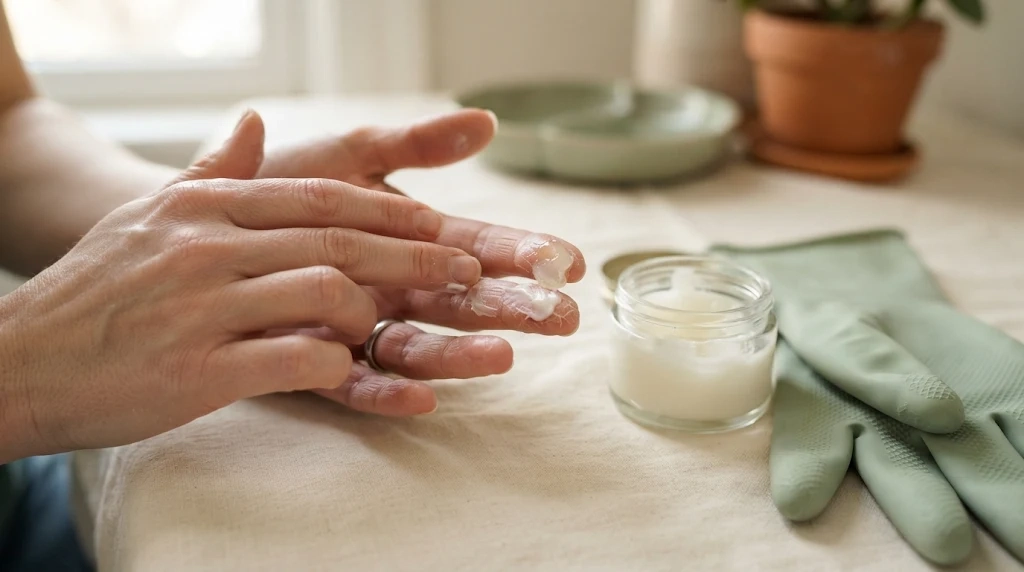
Sometimes, nails continue peeling even after you introduce moisturizing products. Here are a few common problems and practical ways to respond.
Problem: Your nail tips keep splitting.
Immediate fix: Trim the affected nails to a manageable length and gently smooth loose edges.
Prevention: Reduce wet work, avoid picking, and protect your hands with gloves.
Problem: Your cuticles remain rough and cracked.
Immediate fix: Apply a thick fragrance-free moisturizer and a small amount of petroleum jelly.
Prevention: Moisturize consistently and avoid products that sting or irritate your skin.
Problem: Your nails feel thin after gel removal.
Immediate fix: Stop aggressive filing and keep your natural nails short while damaged areas grow out.
Prevention: Avoid peeling enhancements and choose careful removal methods.
Can Nail Polish Make Dry Nails Worse?
Nail polish itself is not always the problem. However, repeated removal, aggressive buffing, and improper handling of gel or acrylic enhancements can contribute to nail damage.
If your nails are already peeling, consider taking a break from enhancements while the affected portions grow out. Avoid hardening products that irritate your skin, and be cautious with formulas containing formaldehyde.
When you return to wearing polish, choose gentle application and removal practices. A manicure should not require scraping away layers of your natural nail.
When Should You See a Dermatologist?
Most everyday dryness around the nails can be managed with moisturizing and protection. However, not every nail problem is caused by dryness.
Contact a qualified healthcare professional if you notice:
- Persistent nail splitting without an obvious cause.
- Pain, redness, swelling, or pus around a nail.
- Nails lifting away from the nail bed.
- Unusual or persistent nail discoloration.
- A new or changing dark streak in a nail.
- Substantial thickening or changes in nail shape.
These symptoms deserve professional attention rather than repeated cosmetic treatments.
You can also explore our step-by-step nail care guide for everyday maintenance of otherwise healthy nails.
Frequently Asked Questions About Preventing Dry Nails
Q: How can you prevent dry nails naturally?
A: Moisturize regularly, protect your hands with gloves during wet chores, keep nails short, and avoid aggressive filing or polish removal. A gentle daily routine is usually more helpful than complicated treatments.
Q: Should you apply cuticle oil every day?
A: You can use cuticle oil daily if it helps keep the surrounding skin comfortable. A small amount is enough. Regular hand cream remains an important part of your routine.
Q: Does drinking more water prevent dry nails?
A: Normal hydration supports overall health, but drinking extra water is not a proven way to repair brittle nail plates. Protecting your nails from irritation and moisturizing the surrounding skin are more practical steps.
Q: Is petroleum jelly good for dry nails?
A: Petroleum jelly helps limit moisture loss from dry skin around your nails. Apply a thin layer after moisturizer, especially before bed. It will not repair an existing split in the nail plate.
Q: How long does it take for dry nails to improve?
A: Surrounding skin may feel softer within days of consistent care. Damaged nail plates need considerably longer because split or peeling sections must grow out, which can take several months.
Final Thoughts: Keep Your Nails Hydrated and Protected
Preventing dry nails doesn’t require a complicated beauty routine. Moisturize your fingertips after washing, protect your hands during cleaning, care for your cuticles gently, and avoid treatments that damage the natural nail surface.
The biggest improvement often comes from being consistent with small habits rather than searching for an instant solution. Give your nails time to grow and pay attention to how they respond to everyday care.
Save this guide to your Pinterest nail-care board so you can return to these simple tips whenever your nails need a little extra attention.

Hi, I’m Jessica, the creator behind Unique Lash & Nails Katy.
I created this website for anyone who loves beautiful nails as much as I do. Here, I share trendy nail designs, seasonal manicure ideas, easy nail care tips, honest product recommendations, and step-by-step guides to help you create salon-worthy nails at home. Whether you’re looking for everyday inspiration or your next favorite nail trend, I hope you’ll find something you love.