Strengthen Weak, Thin, Brittle Nails: Easy 4-Week Routine
Quick Answer
Strengthen weak, thin, and brittle nails by protecting them from water and harsh removers, filing in one direction, oiling your cuticles daily, and using a strengthening base coat for a few weeks. Keep your nails short while they recover, wear gloves for wet chores, and give the routine at least four to six weeks. New nail grows slowly, so steady care matters far more than one intensive treatment.
Your nails bend, peel, or snap before they ever look long enough to enjoy, and that cycle gets frustrating fast. This guide gives you a simple system you can follow at home, without buying every product on the shelf or giving up polish forever. You’ll learn why your nails weaken, what to change first, and how to build a routine that fits real life.


Why Do Your Nails Get Weak, Thin, and Brittle?
Think of each nail as layers of keratin pressed together like thin sheets of paper. Water, soap, acetone, and rough filing loosen those layers, which is why peeling often starts at the free edge. Repeated gel removal, picking at polish, and using your nails as tools create tiny cracks that travel deeper with every catch on fabric or a keyboard.
Age, frequent hand washing, cold weather, and low moisture in the air can dry the nail plate and the skin around it. A very short nail shape does not cause weakness by itself, but long, square corners catch more easily and break under sideways pressure. Filing back and forth, cutting cuticles, and buffing the surface until it looks shiny all remove material your nail needs for strength.
Some weakness comes from inside your body, too. A diet low in protein, iron, or overall calories can leave new nail growth thinner, because nails are made from the same building blocks as hair and skin. Thyroid changes, certain medicines, and long-term illness can also change nail texture, so persistent ridging, splitting, or discoloration deserves a clinician’s opinion rather than another coat of strengthener.
How Do You Know Your Nails Need a Strengthening Routine?
Peeling in layers is the clearest sign, especially when the tips split into thin flakes after washing dishes or showering. Bending is another clue: a healthy nail flexes slightly and returns to shape, while a weak nail folds, creases, or tears at the sides. Breaks that always happen in the same spot often point to a habit, such as prying open cans or peeling off gel polish.
Look closely at the surface as well. Vertical ridges become more visible with age and are usually harmless, but deep grooves, pits, lifting from the nail bed, or a sudden colour change need attention. Pain, swelling, redness around the cuticle, or a nail that separates after an injury is not a cosmetic problem, so book an appointment instead of covering it with polish.
What Do You Need to Start?
You don’t need a salon kit to strengthen your nails. Gather these basics before your first session, and keep them in one small pouch so the routine stays easy:
- A glass nail file, which seals the edge more smoothly than a coarse emery board
- Jojoba oil or another plain cuticle oil for daily moisture
- A nail strengthener or ridge-filling base coat
- An acetone-free remover and lint-free cotton pads
- Rubber gloves for cleaning, gardening, and long dishwashing sessions
- A soft nail buffer, used only lightly and no more than once a month
- Wooden cuticle sticks for gently pushing back softened cuticles
Skip metal files and rough buffers while your nails recover, because both create micro-tears that turn into splits. Keep your polish remover gentle too, since acetone strips natural oils from the nail plate and the surrounding skin in minutes.
Your 4-Week Nail Strengthening Routine
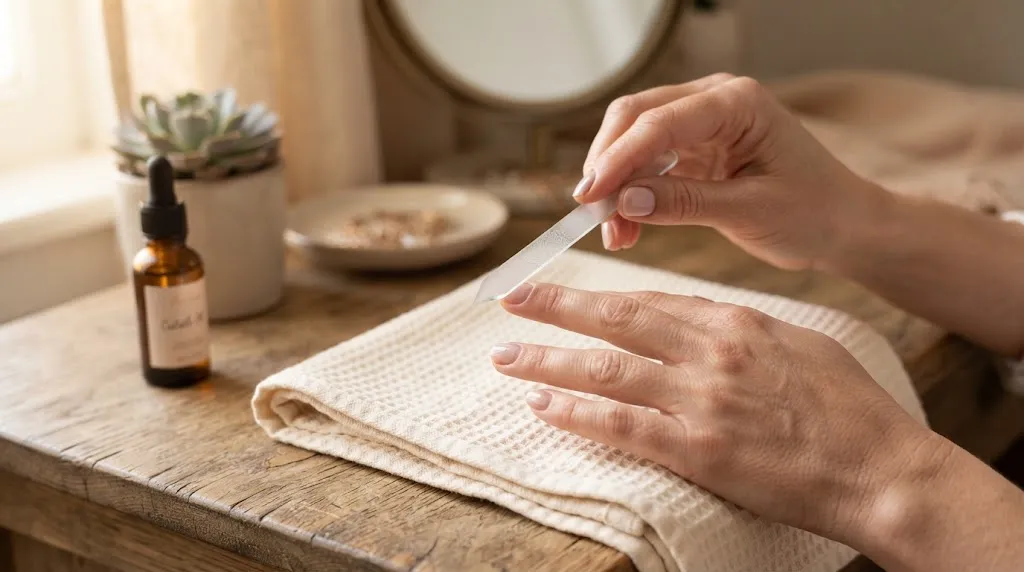
Follow this sequence once a week, then repeat the daily steps between sessions. Short nails recover faster, so file yours to a length that clears your fingertips by only a millimetre or two for the first month.
1
Remove Old Polish Gently
Press a remover-soaked pad onto each nail for 20 to 30 seconds, then wipe in one direction toward the tip. Soaking gives the remover time to dissolve polish without scrubbing, which protects the top layers of your nail.
Common mistake: Peeling off gel or polish pulls up nail layers with it, leaving thin, patchy spots that peel for weeks.
2
File in One Direction
Shape your nails with light strokes from each side toward the centre, keeping the file flat against the edge. One-direction filing seals the layers together instead of fraying them, and a rounded shape spreads pressure more evenly than sharp corners.
Common mistake: Sawing back and forth frays the free edge, so even a careful manicure starts peeling within days.
3
Soften and Tidy Your Cuticles
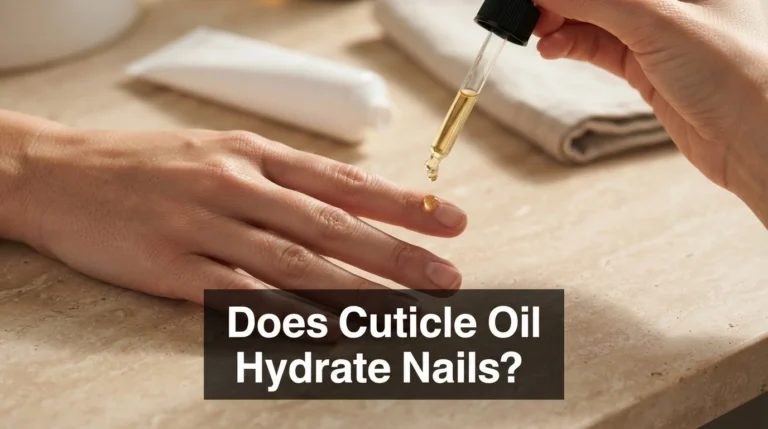
After a warm shower, massage a drop of cuticle oil around each nail and gently push the cuticle back with a wooden stick. Soft cuticles move without tearing, and keeping them intact protects the matrix where new nail forms.
Common mistake: Cutting cuticles opens a path for infection and can damage the growing nail underneath.
4
Apply a Strengthening Base Coat
Brush on one thin layer of strengthener, let it dry fully, and add a second thin layer only if the product directions suggest it. Thin layers bond better than one thick coat, which chips in sheets and tempts you to peel it off.
Common mistake: Layering strengthener every day without removal builds a rigid shell that cracks instead of flexing with your nail.
5
Oil Every Night
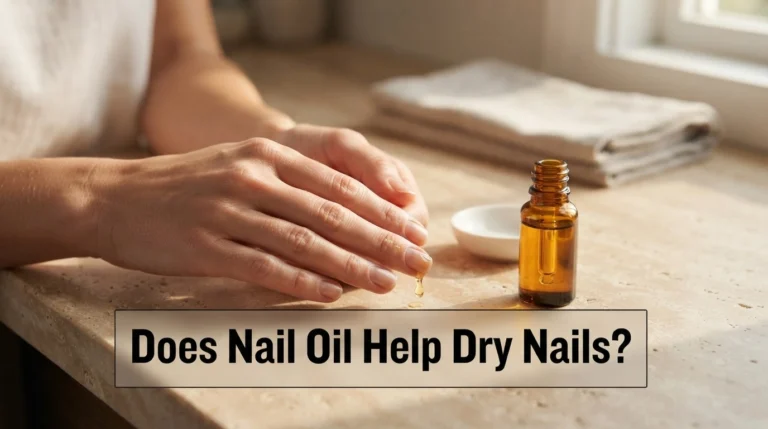
Massage jojoba cuticle oil into each nail, cuticle, and fingertip before bed. Night-time oil replaces moisture lost during the day, and the massage increases blood flow to the area around the matrix.
Common mistake: Oiling only the nail surface misses the cuticle and sidewalls, where flexibility and protection matter most.
6
Protect Your Hands During the Day
Wear gloves for cleaning and gardening, and reapply hand cream after washing your hands. Gloves limit the wet-dry swelling cycle that weakens nails, while cream keeps the surrounding skin supple enough to support the nail edge.
Common mistake: Skipping gloves for quick chores still adds up, because repeated short soaks dry your nails just as surely as one long soak.
3 Ways to Strengthen Nails That Work Together
No single product repairs a weak nail on its own. Protection, moisture, and gentle support work as a team, and each one covers a gap the others leave behind.
1. Protect the Nail You Already Have
Protection means fewer breaks while new, stronger nail grows in from the base. Keep your nails short, round the corners, and use a tool instead of your nails to open packages or scrape off labels. Remember that hot water can weaken your nails, so lukewarm water and gloves make a real difference during chores.
2. Feed Moisture Back Into the Nail and Cuticle
Moisture keeps keratin flexible, so a well-oiled nail bends instead of snapping. Apply cuticle oil at least once a day, and add hand cream after every wash during dry weather. For a gentler polish routine, consider gentler polish formulas and a base coat that seals the surface without harsh solvents.
3. Support Growth With a Break From Damage
Support means giving your nails a pause from the habits that thin them. Taking a break from polish for two to four weeks lets you see your natural nail clearly and removes the removal cycle that causes peeling. During that break, you can still shine your nails without polish by buffing very lightly, or try a Japanese manicure without polish for a polished look with less chemical exposure.
How Long Before You See Stronger Nails?
Expect less peeling and fewer snags within two to three weeks, because the free edge becomes smoother and better protected. Real change in thickness takes longer, since fingernails grow about 3 millimetres a month and a full replacement takes roughly six months. Judge progress by the new nail near your cuticle, not by the old tip, which already carries past damage.
Keep the routine steady for at least six weeks before deciding whether it works for you. Changing products every few days makes it impossible to tell what helped, and frequent removal undoes the protection you just built. Photograph your nails in the same light every two weeks if you want an honest comparison.
Do’s and Don’ts for Weak Nails
Do
- +File in one direction and keep nails short while they recover.
- +Oil your cuticles nightly and wear gloves for wet work.
- +Use a base coat and remove polish by soaking, not peeling.
Don’t
- −Peel off gel, acrylic, or polish, or use nails as tools.
- −Cut cuticles, buff aggressively, or file back and forth.
- −Soak bare hands in hot water or harsh cleaning products.
Pro Tips That Make the Routine Work Faster
Pro Tip
Seal the free edge by brushing base coat lightly across the tip as well as the top, because that edge absorbs water first and peels first.
Keep a small file in your bag so you can smooth a snag the moment it appears, instead of letting it catch and tear deeper. Carry cuticle oil in the same pouch, and apply a drop after washing your hands at work when your skin feels tight. Eating enough protein across the day supports new nail growth more reliably than a single supplement, so pair the routine with balanced meals and plenty of water.
Choose a shorter, rounded shape during recovery, even if you love long almond nails. Length returns naturally once the new growth near your cuticle feels firm and smooth, and keeping it short meanwhile prevents the frustrating break that resets your progress.
Warning
Stop using a strengthener if your nails become rigid, yellow, or painful, because over-hardening can make them snap more easily. Remove the product, oil nightly for a week, and seek advice if pain, swelling, or lifting continues.
What If Your Nails Still Break?
Peeling keeps returning at the tips
File the peeled edge smooth right away, seal it with base coat, and oil nightly. Next time, wear gloves for every wet chore and switch to an acetone-free remover.
Nails bend and tear at the sides
Shorten the nail slightly and round the corners so pressure spreads evenly. Avoid sideways prying, and check whether a strengthener has made the nail too rigid.
One nail splits in the same place again and again
Keep that nail extra short, file only in one direction, and protect it with a base coat while the damaged section grows out. See a clinician if the split reaches the nail bed or bleeds.
Strengthener makes nails feel brittle instead of strong
Take a one-week break from hardeners, oil nightly, and restart with a flexible ridge-filling base coat used only once a week. Rigid formulas suit some nails and over-harden others.
Editorial Product Picks That Support Stronger Nails
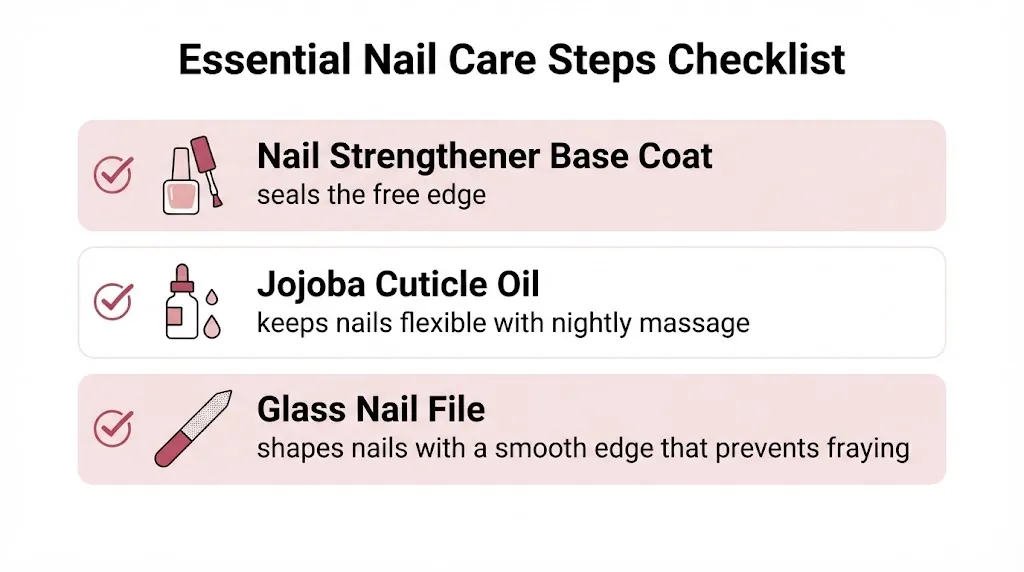
These picks are editorial suggestions for the routine above, not a tested ranking. Choose one product from each category only if it fills a gap in your kit, and stop using any product that irritates your skin.
Editorial Pick
Nail Strengthener Base Coat
A thin strengthening base coat seals the free edge and gives weak nails a flexible layer of support while new growth comes in.
As an Amazon Associate, we earn from qualifying purchases.
Editorial Pick
Jojoba Cuticle Oil
Jojoba oil absorbs well around the cuticle, so nightly massage keeps the nail flexible instead of dry and snappy.
As an Amazon Associate, we earn from qualifying purchases.
Editorial Pick
Glass Nail File
A glass file shapes weak nails with a smooth edge, which helps prevent the fraying that leads to peeling.
As an Amazon Associate, we earn from qualifying purchases.
Frequently Asked Questions
Q: How can I strengthen my nails fast?
A: You can reduce peeling within two to three weeks by filing in one direction, oiling nightly, and wearing gloves for wet work. Lasting thickness takes longer, because only new growth from the cuticle can be truly stronger.
Q: Do nail strengtheners really work?
A: A flexible strengthening base coat can protect weak nails and reduce breakage while they grow out. Rigid hardeners can backfire, so stop if your nails feel stiff, yellow, or more likely to snap.
Q: Should I take a break from polish to strengthen my nails?
A: A two-to-four-week break helps if removal, peeling, or gel damage caused the weakness. You can still use a base coat and cuticle oil during the break, so your nails stay protected and moisturised.
Q: Is cuticle oil enough for brittle nails?
A: Cuticle oil helps a lot with flexibility and peeling, but it works best alongside gloves, gentle filing, and a base coat. Oil alone cannot undo damage from peeling polish or harsh removers.
Q: When should I see a doctor about weak nails?
A: Seek advice for pain, swelling, lifting, sudden colour change, or weakness that does not improve after six weeks of gentle care. Those signs can point to infection, injury, or a health condition that needs checking.
Your Stronger Nails Start With One Gentle Week
Stronger nails come from protection, moisture, and patience, not from a harder coat or a harsher routine. Start tonight with oil and gloves, file gently at the weekend, and let the new growth near your cuticle show you the change first. Save this guide on Pinterest so your four-week routine stays easy to find when you need a refresh.

Hi, I’m Jessica, the creator behind Unique Lash & Nails Katy.
I created this website for anyone who loves beautiful nails as much as I do. Here, I share trendy nail designs, seasonal manicure ideas, easy nail care tips, honest product recommendations, and step-by-step guides to help you create salon-worthy nails at home. Whether you’re looking for everyday inspiration or your next favorite nail trend, I hope you’ll find something you love.