Nail Growth Rate: How Fast Nails Grow & Grow Faster
Quick Answer
Your fingernails grow about 3 millimetres a month on average, while your toenails grow about 1 millimetre a month. You cannot force your nail matrix to work much faster, but you can keep more of the length you grow by protecting your free edge, oiling your cuticles daily, filing gently, and giving harsh removers and picking a break.
Waiting for length can feel slow, especially when one nail breaks just as the rest catch up. This guide gives you the full picture first, so you can set a realistic timeline and stop chasing tricks that only weaken your nails. You’ll learn how your growth cycle really works, what changes your rate, and a simple routine that helps you keep the length you grow.


How Fast Do Your Nails Actually Grow?
On average, your fingernails grow around 3 millimetres each month, which works out to roughly 0.1 millimetre a day. That pace may sound tiny, yet it adds up to about 3.6 centimetres over a year if you never trim or break a nail. Your toenails move much more slowly, at about 1 millimetre a month, so patience matters even more for your feet.
Individual fingers grow at slightly different speeds, too. Your middle finger often leads the pack, while your thumb and little finger tend to lag behind. Dominant-hand nails may also grow a little faster, possibly because you use that hand more and blood flow stays higher. Seasonal change can nudge your rate as well, with many people noticing slightly faster growth in warmer months.
Age plays a role in your timeline. Children and young adults usually grow nails faster than older adults, and growth often slows gradually after middle age. Illness, poor circulation, and a major change in your health can slow growth for a while, so a sudden change across all ten nails deserves a closer look. One nail growing oddly, by contrast, often points to local damage or pressure on that finger.
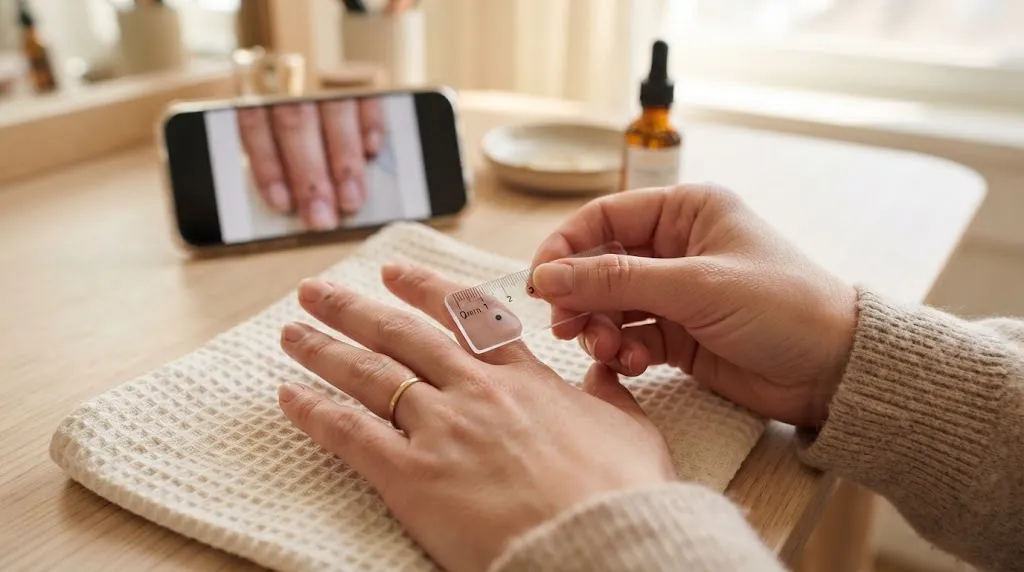
Try measuring your own rate instead of comparing yourself with someone online. Mark the spot where your polish or a tiny dot sits near your cuticle, then check how far that mark moves after four weeks. A photo in the same light each month makes progress easier to see, even when daily change feels invisible.
What Is Your Nail Growth Cycle, Really?
Your nail does not follow a hair-style cycle of growing, resting, and shedding. New cells form continuously in your nail matrix, the hidden tissue tucked under the skin at the base of your nail. Those cells harden into keratin, flatten, and push older cells forward, which creates the smooth plate you paint and file.
Think of your cycle as a slow conveyor belt rather than a set of seasons. Production starts at the matrix, hardening happens as cells move forward, and the visible plate travels toward your fingertip over several months. Finally, length reaches your free edge, where you trim it, file it, or lose it to a break. Because production never fully stops in a healthy nail, your plate keeps replacing itself bit by bit.
A full fingernail usually takes around six months to replace itself from matrix to free edge. Your toenails need far longer, often 12 to 18 months, because they grow more slowly and travel a shorter but slower path. That long replacement time explains why a dent or ridge from an injury can stay visible for months, even after the cause has gone.
Your cuticle and nail folds protect this whole process. They seal the matrix area from germs and moisture, which helps new cells form without interruption. Cutting your cuticles aggressively can disturb that seal and irritate the matrix, so gentle pushing back after a shower works better than trimming living skin. When you protect the base, you protect every millimetre that follows.
Why Do Your Fingernails Grow Faster Than Your Toenails?
Your hands simply get more blood flow, movement, and everyday stimulation than your feet. Fingers move constantly, touch surfaces, and stay warmer in daily life, while toes spend much of the day inside shoes with less circulation. That difference helps explain the gap between roughly 3 millimetres a month for fingernails and 1 millimetre a month for toenails.
Length and leverage matter, too. Fingernails face more frequent light use, which may encourage blood flow to the matrix, whereas toenails deal with pressure from shoes and walking. Tight shoes will not help your toenails grow, and repeated pressure can thicken or damage them instead. Comfortable footwear gives your toenails a calmer environment for steady growth.
What Slows Your Growth or Makes Length Disappear?
Breakage often looks like slow growth, even when your matrix works perfectly well. Each chip, peel, or snap removes length before you get to enjoy it, so your nails seem stuck at the same short length for months. Dryness makes this worse, because a dry plate bends less and splits more easily under normal use.
Harsh habits chip away at your progress in small, repeated ways. Peeling off gel or press-ons can lift layers from your plate, while picking at a lifted edge turns a tiny flaw into a tear. Acetone soaks, frequent filing back and forth, and using your nails as tools all add micro-damage that shows up later as peeling. Hot water can weaken your nails as well, especially when long, hot soaks leave them soft and swollen, then dry and brittle as they dry out.
Health and nutrition affect your rate from the inside, but not in the way many ads suggest. A balanced diet with enough protein supports keratin production, because your nails form from protein-rich cells. Low iron, thyroid changes, and circulation problems can slow growth, so persistent changes across many nails are worth discussing with your clinician. A supplement will not speed up healthy growth on its own, and it helps most when a clinician has found a true deficiency.
Stress and illness can also leave a temporary mark. A serious illness, high fever, or major stress may slow matrix activity for a short period, sometimes leaving a horizontal groove once growth resumes. That groove usually grows out over months, which fits the slow replacement time of a full nail. Give your nails that time rather than filing the groove away aggressively.
How Can You Grow Your Nails Faster Without Damage?
Focus on keeping length, not forcing speed. Your matrix sets your basic pace, while your daily habits decide how much of that new growth survives to your fingertips. A gentle routine beats an intense one, because consistency protects your plate week after week.
1. Oil and massage your cuticles every day. Apply a drop of cuticle oil around each nail, then massage it in for a few seconds. Oil keeps your plate flexible, softens your cuticles, and increases blood flow around the matrix through light massage. Evening works well, because the oil can absorb overnight without washing away straight away.
2. File in one direction with a gentle file. Shape your nails with a glass nail file, moving from each side toward the centre instead of sawing back and forth. Sawing creates tiny tears at the edge, and those tears become splits under everyday pressure. A rounded or soft squoval shape also survives daily life better than a sharp square corner.
3. Keep your nails short enough to survive your life. Growing longer does not help if your length breaks every week. Let your nails pass your fingertips by just a little, then hold that length for a few weeks while your plate strengthens. Once breakage stops, you can add a millimetre or two at a time and see how your nails cope.
4. Give polish breaks a real purpose. A short break lets you check your natural colour, hydration, and peeling without another layer hiding the clues. Giving your nails a polish break also lets oil and moisturiser reach the plate directly, which helps dry nails recover. During a break, use a strengthener only if your nails feel soft or bendy, and stop if peeling increases.
5. Protect your hands during wet and dirty work. Wear gloves for washing up, cleaning, and gardening, because water, detergents, and soil dry out your nails and lift your polish. Moisturise your hands after washing, and pay attention to your nails as well as your skin. Small protection habits save more length than any single product, since they stop damage before it starts.
Do
- +Oil your cuticles daily and moisturise after washing your hands.
- +File gently in one direction and keep your shape slightly rounded.
- +Wear gloves for cleaning, washing up, and gardening.
- +Track progress monthly with a photo in the same light.
Don’t
- −Peel off gel, press-ons, or a lifted edge.
- −Cut your living cuticle skin or file back and forth aggressively.
- −Use your nails to open cans, scrape labels, or pry things apart.
- −Expect a supplement or oil to double your growth rate overnight.
Pro Tips That Help You Keep More Length
Pro Tip
Cap your free edge with base coat and top coat, because sealing the edge slows water getting in and out of your plate. That small step reduces swelling and shrinking, which helps prevent peeling at the tip.
Choose your polish with growth in mind. Choosing a gentler polish matters most when you wear colour for weeks at a time, since gentler formulas and careful removal put less stress on a dry plate. Remove polish with a gentle method, never scrape it off, and let your nails breathe for a day or two between sets when they feel dry.
Watch one nail at a time when you troubleshoot. When a single nail keeps breaking, check for pressure, a habit like tapping that finger, or damage near its matrix. Treating all ten nails the same way can hide a local cause, while a quick change for one finger often solves the pattern. Keep a short note on your phone about breaks, so you spot the trigger faster next time.
Why Isn’t Your Length Showing Up Yet?
Your nails peel at the tips every week
File the peeling edge smooth, oil your nails nightly, and seal your free edge with top coat. Next time, wear gloves for wet work and avoid long hot soaks, because repeated swelling and drying weakens the tip.
One nail always breaks first
Keep that nail slightly shorter than the rest until it catches up, then shape it rounder than your other nails. Check whether you use that finger for typing, opening, or tapping, and change the habit if you can.
Your nails look dull even as they grow
Buff very lightly, only once in a while, and follow with oil rather than buffing harder for shine. For a gentler glow routine, read how to make your nails glow without harsh polishing.
Warning
Seek advice from a clinician if your nails suddenly stop growing, change colour across many nails, lift from the nail bed, or become painful and swollen. Those changes can signal an injury, infection, or health issue that home care alone will not fix.
Products That Support Your Growth Routine
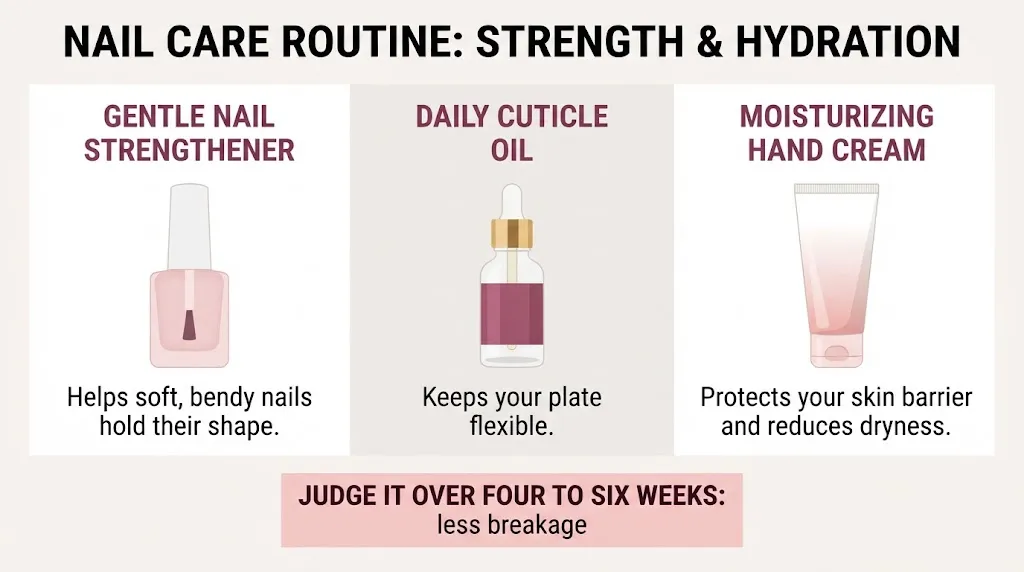
Products help most when they protect length, not when they promise speed. Use them as part of your routine, and judge them by whether breakage drops over four to six weeks. The picks below are editorial picks for this routine, not tested results.
Editorial Pick
Gentle Nail Strengthener
A thin strengthener can help soft, bendy nails hold their shape while you grow length, especially when peeling starts at the tip.
As an Amazon Associate, we earn from qualifying purchases.
Editorial Pick
Daily Cuticle Oil
Daily oil keeps your plate flexible and your cuticle area comfortable, which makes your routine easier to keep up every evening.
As an Amazon Associate, we earn from qualifying purchases.
Finish your routine with a simple moisturizing hand cream after washing your hands. Cream alone will not grow your nails, yet it protects your skin barrier and reduces the dryness that leads to snags and peeling.
Frequently Asked Questions
Q: How fast do fingernails grow in a month?
A: Your fingernails grow about 3 millimetres a month on average, although your exact rate varies by finger, age, season, and circulation. Measure your own growth over four weeks for a number that fits your hands.
Q: How long does it take to replace a full nail?
A: A full fingernail usually takes around six months to replace itself, while a toenail often takes 12 to 18 months. That slow timeline explains why ridges and dents stay visible for months after an injury.
Q: Can you make your nails grow faster?
A: You cannot safely double your natural rate, but you can keep more length by oiling daily, filing gently, wearing gloves, and avoiding peeling. Those habits make growth visible, even when your matrix pace stays the same.
Q: Do biotin supplements grow nails faster?
A: Biotin helps most when you have a true deficiency, and it does not guarantee faster growth for healthy nails. Talk with your clinician before starting a supplement, especially if you take other medicines or have a health condition.
Q: Why do toenails grow so slowly?
A: Your toes get less movement and blood flow than your fingers, and they spend much of the day inside shoes. That slower environment leads to roughly 1 millimetre of growth a month, so toenail recovery takes much longer.
Your Simple Takeaway
Your nails grow steadily, not overnight, and your best results come from protecting that steady progress. Oil daily, file gently, wear gloves, and give your nails a break when they feel dry or weak. Save this guide on Pinterest, then check your progress in four weeks — you may be surprised by how much length you kept.

Hi, I’m Jessica, the creator behind Unique Lash & Nails Katy.
I created this website for anyone who loves beautiful nails as much as I do. Here, I share trendy nail designs, seasonal manicure ideas, easy nail care tips, honest product recommendations, and step-by-step guides to help you create salon-worthy nails at home. Whether you’re looking for everyday inspiration or your next favorite nail trend, I hope you’ll find something you love.