How Water Damages Nails: Causes and Easy Prevention
Quick Answer
Water damages nails mainly when repeated soaking makes the nail plate absorb water and soften, followed by drying that leaves it vulnerable to peeling and splitting. Detergents, harsh cleaners, and frequent polish removal can make the problem worse. You don’t need to avoid normal handwashing: shorten long soaks, wear gloves for wet chores, dry your hands thoroughly, and moisturize your nails and cuticles afterward.
How Water Damages Nails
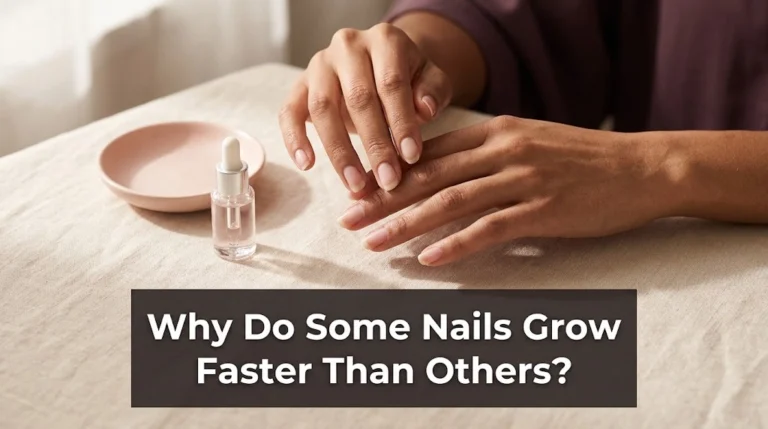
Here’s something surprising: in a laboratory study, fingernails gained roughly 22% of their starting weight after two hours in water. Your nail plate is tougher than it looks, but it isn’t waterproof. If your tips are peeling despite regular cuticle oil, your everyday wet-and-dry routine may explain part of the problem. This guide shows what water actually does, which signs matter, and how to protect your manicure without avoiding the sink.


Why Does Water Make Your Nails Weak?
Your nails are made of closely packed layers of keratin, a strong structural protein. These layers aren’t sealed like glass. They can absorb water, becoming more flexible and slightly swollen during prolonged exposure. Once the water evaporates, the nail returns toward its previous state. That temporary change is normal; the trouble usually comes from repeating it over and over.
Imagine washing dishes without gloves every night, taking a long shower, then cleaning the bathroom the next morning. Each activity exposes the free edge of your nails to another wet-and-dry cycle. Over time, especially when your nails are already thin, the layers at their tips may separate. Dermatologists call this horizontal, layered peeling onychoschizia.
Water isn’t acting alone. Dishwashing liquid, household cleaners, and frequent contact with solvents can remove protective oils from the nail surface and surrounding skin. A nail that repeatedly gets wet and then dries out may become fragile even though it feels unusually soft while you’re in the bath.
Water exposure isn’t the same thing as healthy nail hydration. Excessive wetting followed by drying can make brittleness worse. If your nails bend or snap easily even when they’re dry, explore these common causes of weak nails, because water may be only one contributor.
What Happens to Your Nails During Repeated Soaking and Drying?
1. Your Nail Plate Takes In Water and Becomes More Flexible
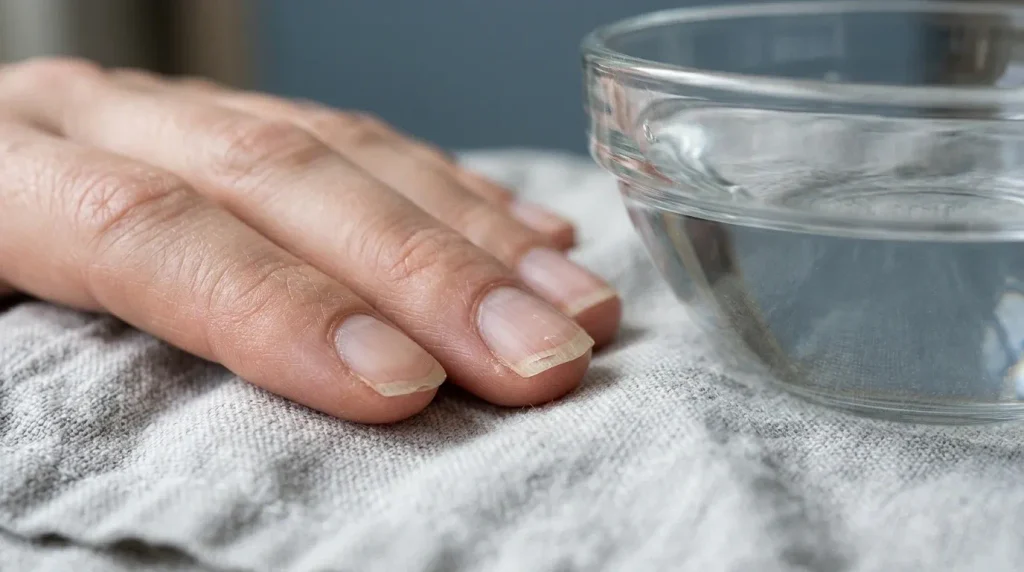
A long bath or an extended session at the sink exposes the nail plate to water long enough for noticeable absorption. Laboratory measurements show that prolonged immersion can increase nail weight and flexibility. That doesn’t mean every shower adds the same amount: exposure time and individual nail condition matter. The key point is that your nails change physically when soaked.
2. The Nail Dries and Loses That Temporary Softness
When you leave the water, your nail gradually dries. The resulting change in water content can repeatedly stress areas that are already fragile. You may notice a nail that felt bendy after a shower becomes rough and prone to catching on fabric later that day. Harsh cleansers can also dry the surrounding skin.
3. The Free Edge Can Begin to Peel and Split
Your free edge—the part extending past your fingertip—has less support than the attached part of the nail. It’s also the section that gets bumped, filed, painted, and removed most often. Repeated moisture changes combined with that everyday friction can encourage thin layers to separate. Pulling off one peeling layer can tear away even more nail, leaving a weaker edge underneath.
4. Other Damage Can Make the Cycle Harder to Tolerate
If you’ve recently scraped off gel polish, aggressively buffed the nail surface, or repeatedly used polish remover, your nail may already be compromised. Water can then add to the problem rather than being its only cause. This is also why two people can wash dishes equally often and have very different-looking nails.
What Are the Signs of Water-Damaged Nails?
Water-related damage usually develops gradually. Rather than blaming a single shower, look for a pattern that appears after weeks of wet work, frequent washing, or long soaking sessions. The following signs are common, but none proves water is the sole cause:
- Peeling nail tips: Thin horizontal layers lift from the ends of your nails, sometimes catching on your hair or clothes.
- Splitting free edges: Tiny cracks return even after you file the tips smooth.
- Temporary bendiness: Nails feel softer immediately after bathing or prolonged dishwashing.
- Dry nail folds: Rough skin, flaking cuticles, and hangnails show that the surrounding area may be losing moisture.
- Short-lived manicures: Polish chips more easily when the nail underneath is fragile or an edge has begun lifting.
- Persistent breakage: Your nails keep snapping before they grow beyond the fingertip.
Look at the pattern across your hands. If several nails are affected and you spend a lot of time in water, wet work may be contributing. One painful, swollen, dramatically discolored, or lifting nail deserves a different level of attention.
Warning
Don’t assume every peeling or discolored nail is water damage. Pain, swelling, pus, increasing nail separation, a new dark streak, or persistent thickening can signal another nail condition. Arrange a healthcare or dermatology assessment rather than covering the change with gel or acrylic.
Does Hot Water Damage Nails More Than Cold Water?
Water temperature matters, but the length and frequency of exposure are often more important than a brief splash. Warm water is perfectly reasonable for normal handwashing. Holding your fingertips in a hot, soapy sink for twenty minutes, however, combines prolonged soaking with cleanser exposure. Very hot water can also irritate your skin and make the area around your nails feel drier.
There’s no need to wash your hands in icy water. Choose a comfortable lukewarm temperature, complete the wash normally, and dry afterward. Short showers are different from deliberately soaking your hands for an extended manicure ritual. For a closer look at temperature, see how hot water affects nails and peeling.
Can Water Damage Gel Polish, Acrylic Nails, and Press-Ons?
Gel Polish
A properly applied and fully cured gel manicure usually tolerates ordinary handwashing. Still, repeated water exposure can be troublesome if the coating is already lifting or the natural nail underneath is peeling. Don’t pick at a loose edge or try to remove cured gel by soaking it in hot water. Use a removal method designed for the product, preferably with professional help when you’re unsure.
Acrylic and Other Enhancements
Acrylic doesn’t dissolve during a normal shower. The concern is a gap between the enhancement and your natural nail. Moisture caught under lifted material may make irritation harder to notice and create conditions that favor microbial growth. If an acrylic is lifting, don’t seal an unclean gap with glue or cover it with another coat of product.
Press-On Nails
Adhesives may loosen with moisture, heat, and stress. Follow the adhesive’s application instructions and avoid unnecessary soaking, particularly soon after application. If a press-on loosens, remove or replace it safely rather than trapping water underneath.
Regular Nail Polish
Normal washing won’t wash away dry conventional nail polish. However, fragile tips and repeated soaking can make chipping and edge wear more noticeable. Let freshly painted nails dry properly before bathing or washing dishes. A top coat may improve wear, but it doesn’t make the underlying nail waterproof.
How Can You Protect Your Nails From Water Every Day?
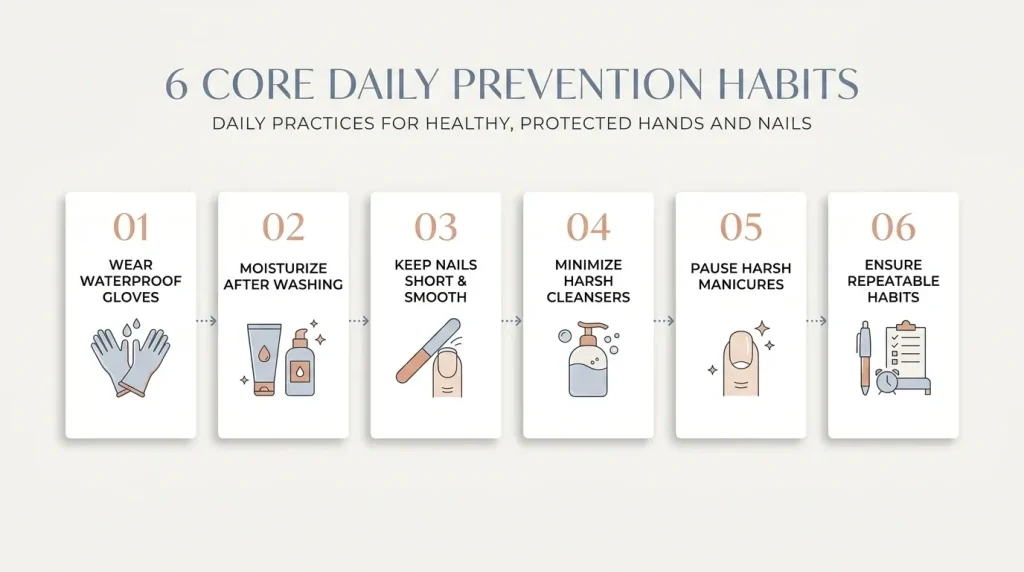
Your routine can stay simple. Focus on reducing avoidable soaking, limiting harsh products, and replacing moisture after the water is gone. These six habits are more useful than purchasing a shelf full of strengthening treatments.
1. Wear Protective Gloves for Wet Chores
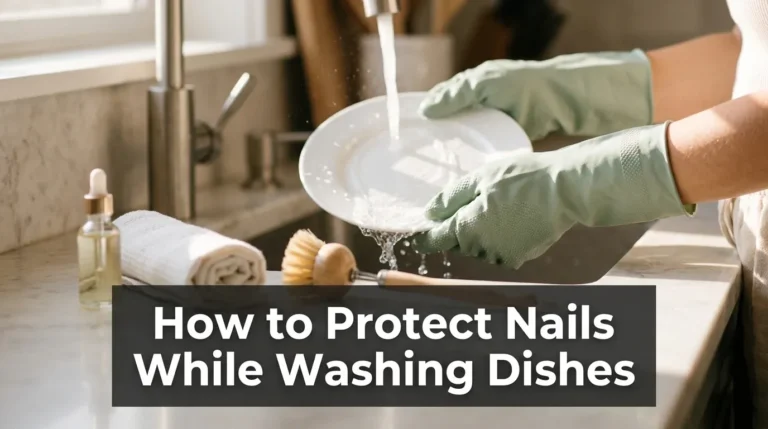
Keep a pair of reusable waterproof dishwashing gloves near your kitchen sink. Wear them for dishes, bathroom cleaning, and handwashing laundry. For longer tasks, cotton-lined gloves or thin cotton liners can make sweaty hands more comfortable. Remove gloves afterward and let the inside dry completely; a damp glove isn’t a good long-term environment for your skin.
2. Moisturize After Washing, Not Before Another Soak
Gently pat your hands dry, including the nail folds and the spaces beneath longer tips. Then apply a fragrance-free hand cream with ceramides or glycerin. A richer cream or ointment can slow moisture loss from your skin; the goal is to condition the nail area, not leave it wet for hours.
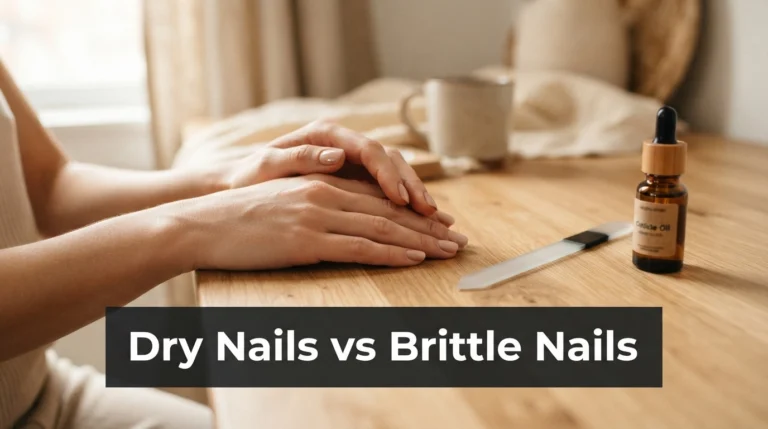
When you have a moment, massage a little jojoba cuticle oil across the nail plate and around the edges. It won’t permanently fuse separated layers, but it can make dry nails and surrounding skin feel more comfortable. For a simple sequence, follow this guide to moisturizing nails naturally.
3. Keep Peeling Nails Short and Smoothly Shaped
Shorter nails experience less leverage when they hit a keyboard, countertop, or bag zipper. Trim carefully and round the corners slightly rather than creating very pointed tips. Use a fine-grit or glass nail file on rough edges, but avoid filing the top surface of the nail; thinning the plate can make splitting worse.
4. Reduce Harsh Cleanser Contact
Choose a gentle hand cleanser whenever practical and rinse it away thoroughly. Don’t skip necessary handwashing. Save heavy-duty detergents and household cleaners for gloved tasks, and follow label directions when handling stronger products.
5. Give Your Nail Plate a Break From Aggressive Manicures
If your nails are already peeling, avoid scraping off polish, over-buffing, and ripping off enhancements. Frequent remover use and rough preparation add another source of stress. Consider keeping your nails bare or wearing a simple, gently removed manicure while damaged tips grow forward. Avoid formaldehyde-containing hardeners if your nails are already fragile; more rigidity doesn’t necessarily prevent cracks.
6. Make the Habit Easier to Repeat
Put hand cream where you wash your hands most and keep a small oil pen near your bed. If you wash your hands dozens of times a day, you may not moisturize after every single wash; focus on consistency and always reapply after prolonged wet work. Tiny practical changes are more useful than a complicated routine you abandon after a week.
Pro Tip
Check your gloves before every long chore. A tiny leak at one fingertip lets soapy water sit against the nail while the rest of your hand seems protected. Replace leaking gloves and dry reusable pairs between uses.
What Should You Do If Your Nails Are Already Peeling From Water?
Start by stopping the repeated stress rather than reaching for a stronger polish. Carefully trim the affected nails to a comfortable length and file down snags once the nails are dry. Don’t pull away lifted layers, because the peeling may travel farther back into the attached nail.
For the next few weeks, put gloves on before wet chores, apply moisturizer after washing, and use a little cuticle oil at bedtime. Check whether your tips catch less often and whether you experience fewer new splits. If you’re using gel, dip, or acrylic, consider gentler professional removal instead of repeatedly filing the exposed natural nail.
Already-separated nail layers won’t stitch themselves back together. Your goal is to prevent further damage while fresh nail grows from the base. For more help after enhancement damage, use this healthy nail recovery routine.
How Long Does It Take for Water-Damaged Nails to Recover?
Dry skin around your nails may feel better within days of consistent moisturizing. Breakage can become less frequent over the following weeks if you reduce soaking and protect the free edge. But a visibly peeled or thinned nail plate can’t be rebuilt immediately by cream or oil. That section has to grow toward the tip and be trimmed away.
Fingernails typically take around four to six months to grow out completely, although growth varies. If only the last few millimeters are affected, you may see a neater edge sooner. Nail-matrix injury, ongoing inflammation, or an untreated nail disorder can change the timeline, so don’t assume every persistent problem is cosmetic.
Photograph your nails in the same lighting every month. Rather than judging only the oldest damaged tip, watch for smoother growth near the cuticle and fewer fresh splits. You can also maintain a realistic daily nail-care routine while the compromised section grows out.
Which Common Water and Nail-Care Myths Should You Ignore?
Myth 1: Soaking Nails Daily Makes Them Stronger
A soak can temporarily soften your nails, but softness isn’t the same as improved strength. Long, repeated soaking may worsen peeling when your nails are already brittle. Use moisturizer after normal washing rather than prolonged water baths as a strengthening treatment.
Myth 2: Cold Water Completely Prevents Nail Damage
Cold water isn’t a protective shield. The repeated wet-and-dry cycle still happens, and detergent exposure still matters. Comfortable water temperatures, reasonable washing times, and gloves during wet work offer a more practical approach.
Myth 3: A Nail Hardener Will Fix Peeling Layers Instantly
A coating may temporarily change how a nail feels, but it can’t restore layers that have already separated. Some stiff hardeners may make an already brittle nail less able to bend safely. Gentle shaping, reduced exposure, and patient growth remain important.
Myth 4: Water Damage Means You Have a Fungal Infection
Water exposure alone doesn’t diagnose infection. Fungal and bacterial problems have multiple contributing factors, and their signs can overlap with trauma or irritation. Unusual thickening, lifting, discoloration, pain, or swelling warrants evaluation rather than a DIY antifungal guess.
Frequently Asked Questions About Water-Damaged Nails
Q: Does washing your hands too much damage your nails?
A: Frequent washing can contribute to dry skin and brittle nails, especially when combined with harsh soap. Keep washing whenever hygiene requires it, but choose a gentle cleanser and moisturize afterward.
Q: Can drinking more water repair water-damaged nails?
A: Staying normally hydrated supports your health, but drinking extra water won’t glue peeling nail layers together. Protect the nail surface from repeated wet work and moisturize while the damaged area grows out.
Q: Is swimming bad for your fingernails?
A: Swimming exposes nails to prolonged water contact and may make already fragile tips feel softer. You don’t have to give it up; rinse off pool chemicals, dry thoroughly, and moisturize afterward.
Q: Can water cause nails to separate from the nail bed?
A: Repeated moisture and trauma can contribute to nail problems, but separation has several possible causes, including injury, skin conditions, and infection. Don’t dig underneath a lifting nail; seek medical advice if separation persists or worsens.
Q: Can peeling nails become healthy again?
A: Often, yes. Mild peeling can improve when you reduce water exposure, friction, and harsh removal habits. Damaged tips must grow out gradually.
What Is the Most Important Thing to Remember About Water and Nails?
Normal washing isn’t your enemy. The combination of repeated soaking, drying, detergent exposure, and existing nail damage is what makes water a problem for many brittle nails. Protect your hands during wet chores, moisturize consistently, and give peeling tips time to grow out.
Save this guide to your Pinterest nail-care board so you can revisit these simple habits before your next manicure or dishwashing session.

Hi, I’m Jessica, the creator behind Unique Lash & Nails Katy.
I created this website for anyone who loves beautiful nails as much as I do. Here, I share trendy nail designs, seasonal manicure ideas, easy nail care tips, honest product recommendations, and step-by-step guides to help you create salon-worthy nails at home. Whether you’re looking for everyday inspiration or your next favorite nail trend, I hope you’ll find something you love.