How Nail Polish Affects Nail Strength
Quick Answer
Regular nail polish does not automatically weaken your nails. A coat of color can provide temporary surface protection, but it cannot permanently strengthen the nail plate. Dryness from frequent remover use, excessive buffing, peeling off gel, and rough salon techniques are more common causes of manicure-related weakness. To protect your nails, use a base coat, remove polish gently, moisturize daily, and watch for changes between manicures.
Your nails can look strong and glossy with polish on, then suddenly seem thin or flaky when the color comes off. Does the polish cause that change, or has it been hiding a problem all along?
Understanding how nail polish affects nail strength helps you keep the manicures you love without overlooking preventable damage. The key is to separate what a coating does on the surface from what happens inside your natural nail.


Does Nail Polish Make Your Nails Stronger or Weaker?
The most accurate answer is neither, by itself. Traditional nail polish creates a film over the nail plate. That film can make the tip feel firmer, smooth small imperfections, and give the surface a little protection from everyday friction. Once you remove it, however, the natural nail has not gained permanent thickness or strength.
Your nail plate consists mainly of layers of keratin. The visible part is already formed, so a cosmetic coating cannot rebuild areas that have split or been filed too thin. New nail grows from the matrix beneath the skin near the base of your nail. Healthy growth and gentle daily care matter more than whether your favorite shade has a strength-related claim on the bottle.
Regular polish also is not clearly established as a direct cause of brittle nails. Think about the entire manicure cycle: preparation, application, wear, removal, and aftercare.
If you are deciding whether a bare-nail break makes sense, compare the benefits in our guide to whether nails are healthier without nail polish.
What Actually Happens to Your Nails When You Wear Polish?
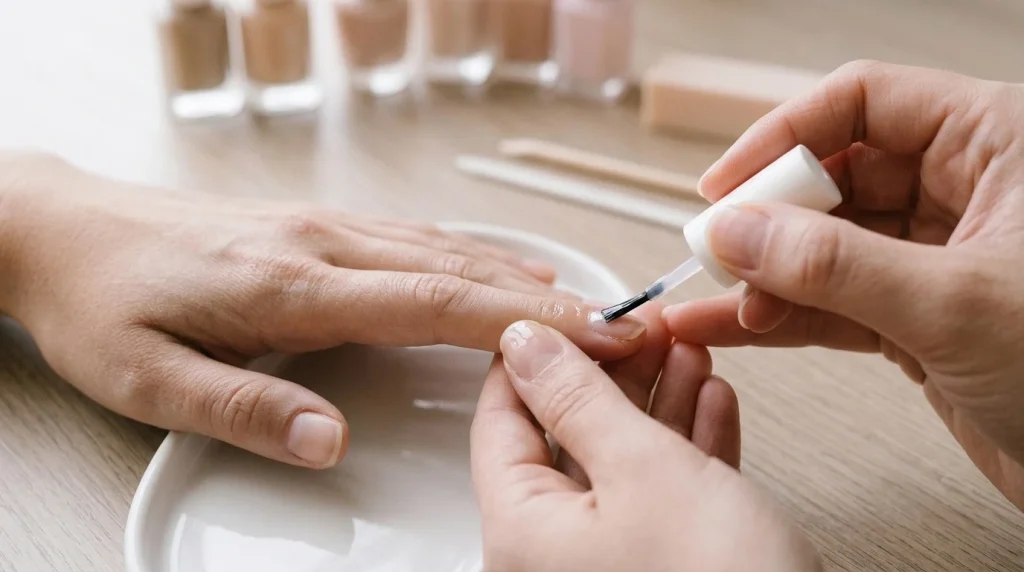
A polish layer adds temporary surface support
When regular polish dries, its ingredients form a flexible coating that sits on top of your nail. This may reduce minor snagging and help a free edge hold together during ordinary tasks. The effect lasts only while the coating is intact; it does not mean the underlying keratin has become tougher.
Polish can affect moisture exposure, but it does not feed your nails
A coating changes how the nail surface contacts water, detergents, and air. It may temporarily limit some contact with water, yet it cannot protect your hands from repeated soaking or cleaning chemicals. Moisture balance still depends on daily habits and the condition of your nail plate.
Polish does not deliver nutrients to the growing nail or substitute for eating well. Your nails also do not need to “breathe” between manicures: the visible nail plate is nonliving keratin, and the tissues that form it receive oxygen and nutrients through your blood supply.
Dark colors may stain without weakening the nail
Deep red, burgundy, navy, and other strongly pigmented shades sometimes leave a yellowish tint, especially when you skip base coat. Staining can be frustrating, but discoloration alone does not prove that your nail has become weak. Apply a compatible base coat before dark colors and inspect your nails after removal.
Persistent yellowing accompanied by thickening, crumbling, or lifting deserves professional attention because not every color change is caused by pigment. Do not keep painting over an unusual change simply to hide it.
Why Do Nails Feel Weak After You Remove Nail Polish?
Often, what feels like “polish damage” happened before or during removal. Here are the most common reasons.
- Repeated remover exposure: Solvents can leave the nail plate and nearby skin dry, especially when you remove and reapply color very frequently.
- Peeling or picking: Pulling off gel, glitter, or a firmly attached coating can take superficial nail layers with it, creating rough, flaky patches.
- Heavy surface buffing: Filing the top of your natural nail removes real keratin. Repeated thinning can lead to bending, splitting, or tenderness.
- Frequent wet work: Nails absorb water and change slightly as they dry. Repeated soaking and drying can contribute to splitting in susceptible nails.
- Underlying brittleness: Nail weakness may also relate to age, skin conditions, injury, certain illnesses, or nutritional issues rather than polish.
Warning
Do not peel or pry off stubborn gel or dip products. Removing attached layers by force can tear away part of your natural nail. If a nail is painful, swollen, lifting, or developing a new dark streak, stop covering it and have a dermatologist assess it.
Is Regular Polish Better for Nail Strength Than Gel or Dip?
When your nails are thin or easily irritated, traditional air-dry polish is usually the simpler choice. You can take it off without curing lamps, heavy filing, or the prolonged acetone contact often involved with long-wear systems. That does not make every regular-polish formula harmless, but it gives you more control over removal.
Traditional air-dry nail polish
Best for: Anyone wanting color with relatively easy removal, especially when nails already feel fragile.
Advantages: A wide range of shades, no UV curing lamp, and a manicure you can refresh without mechanically stripping the nail surface. Tradeoffs: Chipping may tempt you to repaint often, and repeated remover use can cause dryness. Applying several thick layers also makes polish harder to dry and easier to pick.
Gel nail polish
Best for: People who prioritize extended wear and can commit to proper application and removal.
Advantages: A durable, glossy finish and less frequent touch-up. Tradeoffs: Some systems require nail preparation that can be overdone. Removal may involve acetone soaking and gentle product release, and peeling off a bonded layer can thin the nail. Gel products can also trigger allergic contact dermatitis in some people.
Gel lamps emit ultraviolet radiation, including lamps marketed as LED. Before a UV-cured manicure, protect your hands with broad-spectrum, water-resistant SPF 30 or higher sunscreen or suitable fingertip-exposing protective gloves. If your nails repeatedly peel after gel, return to conventional polish while you assess the damage.
Dip powder and acrylic enhancements
Best for: People seeking added length or substantial durability who have healthy nails and a skilled technician.
Advantages: A firm finish that can withstand normal wear. Tradeoffs: Extra filing, adhesives, and difficult removal can increase the risk of thinning and irritation. Artificial coatings should not be used to conceal unexplained nail problems. If you are prone to brittle nails, these options deserve extra caution.
What Signs Suggest Your Manicure Routine Is Damaging Your Nails?
Inspect your bare nails in bright, natural light each time you remove color. A single small chip is usually less concerning than a pattern that keeps returning.
- Peeling at the tips: The free edge separates into thin layers or catches on fabric.
- Unusual bendiness: Nails feel noticeably softer than before, especially after heavy buffing or gel removal.
- Rough white patches: Chalky-looking marks appear where a product was scraped or peeled off.
- Frequent splitting: Nails crack during low-impact tasks that they previously tolerated.
- Red or itchy skin: Irritation around the nail or on the fingers may indicate a reaction to a product.
These signs do not identify the cause on their own. For additional changes worth watching, use our guide to the signs of unhealthy nails. Seek medical care for persistent pain, swelling, lifting, spreading discoloration, a new dark band, or a problem affecting multiple nails without a clear explanation.
How Can You Wear Nail Polish Without Sacrificing Nail Strength?
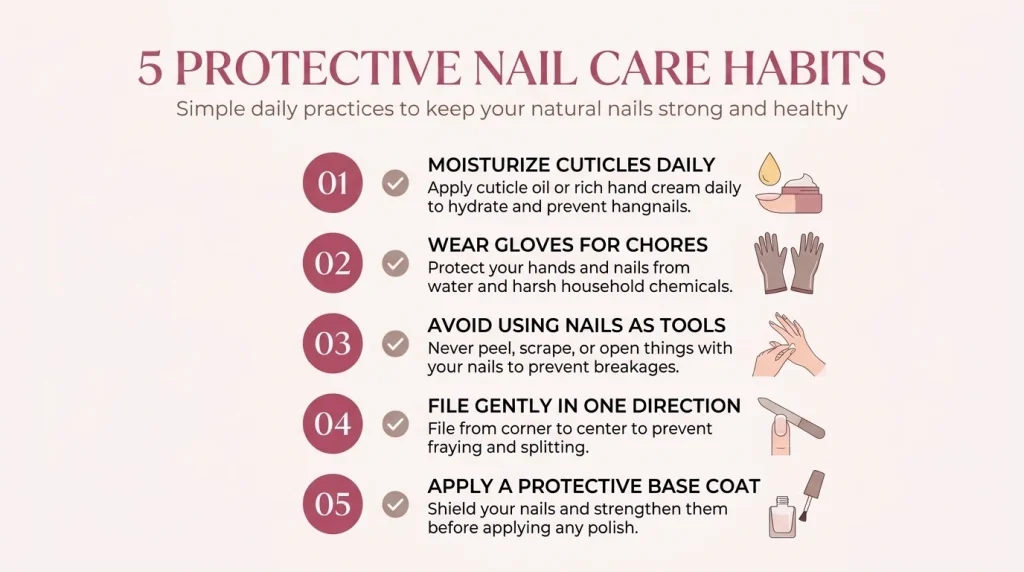
You do not need a complicated ten-product routine. A handful of consistent habits makes each manicure gentler and gives your natural nails a better chance to grow without repeated damage.
1. Start with clean nails, not aggressively buffed ones
Remove old color with a pad and the appropriate remover, then wash and dry your hands. If the nail surface is smooth, do not file it just to help the next polish stick. Buffing away healthy layers may make the coating adhere but leaves less nail underneath. Use a soft file only on snags at the free edge.
2. Use a base coat before pigmented polish
Apply one thin, even layer of regular base coat to dry nail plates. It gives your color a consistent surface and may reduce pigment staining. You do not need to pile on extra base coat for “strength”; too many thick layers can make your manicure less comfortable and slower to dry.
3. Apply thin color coats and avoid skin contact
Two thin coats are a useful starting point, though sheer shades may need another. Keep the brush away from your cuticles and sidewalls, because products left on skin can cause irritation or sensitivity. Let each layer set according to the product directions instead of adding more color to wet polish.
If you love frequent color changes, our article on whether you can apply nail polish every day explains why your removal habits deserve just as much attention as application.
4. Remove polish patiently, without scraping
For regular polish, hold a remover-soaked cotton pad against the nail briefly, then wipe gently. Repeat with a fresh pad rather than scrubbing a stained or glittery nail until it feels sore. Acetone-free remover can be a reasonable choice for standard polish if your skin feels dry, although it is not automatically irritation-free and may take longer.
For soak-off gel, follow the manufacturer’s removal instructions or see a qualified technician. Keep acetone mainly on the nails, not the whole hand, and never pry off product that still resists.
5. Moisturize and protect your hands between manicures
Massage fragrance-free hand cream over your hands and around each nail after washing. At bedtime, add a small amount of cuticle oil or plain petroleum jelly to the surrounding skin. This helps relieve dryness; it does not reverse nail plate thinning overnight. Wear protective gloves while doing dishes or handling cleaning products, and take them off if they become damp inside.
A steady routine is easier to maintain than an elaborate rescue treatment. Use our simple nail care routine to keep the basics manageable.
Pro Tip
Photograph your bare nails in the same lighting after every removal. Compare the areas near the cuticle, not just the tips. That helps you notice whether fresh nail growth looks smoother while older damage moves outward.
Should You Take a Break From Nail Polish to Restore Strength?
Healthy nails do not require scheduled polish breaks to get oxygen. A break helps when it eliminates a stressful manicure cycle and gives you a clear view of the nail surface. It is especially useful after repeated gel removals, peeling, or heavy filing.
If your nails feel dry or flaky, consider a week or two without polish while you moisturize and keep the edges short. You may need a longer pause from gel or artificial enhancements if your nails are visibly thinned. Expect comfort and dryness to improve sooner than actual thickness: damaged nail must grow forward, and a full fingernail can take several months to replace.
Watch for new growth at the base rather than expecting old layers to fuse back together. If the nails keep worsening or you see inflammation, do not simply extend the break indefinitely. Arrange a dermatology assessment to look for a treatable cause.
What Should You Do and Avoid When Your Nails Are Weak?
Do
- Keep fragile nails short and file rough edges gently.
- Moisturize after washing and after polish removal.
- Use a base coat under dark colors.
- Wear gloves for wet or chemical-heavy chores.
Don’t
- Pick off polish, gel, or dip product.
- Buff nail surfaces until they feel thin or tender.
- Cut or forcefully push back protective cuticles.
- Cover persistent pain or unusual nail discoloration.
Which Nail Care Products Are Worth Using?
Choose products that make gentle habits easier. A basic base coat, moisturizer, and appropriate remover can do more for your routine than an aggressive hardener. These options are helpful starting points, not treatments for nail disease.
Recommended Product
Regular Nail Polish Base Coat
A thin base layer offers a smoother surface for color and may limit staining from highly pigmented shades. It is not a substitute for healthy nail growth.
As an Amazon Associate, we earn from qualifying purchases.
Recommended Product
Jojoba Cuticle Oil
A small amount around the nail folds helps soften dry skin and makes a nightly care habit easy to repeat.
As an Amazon Associate, we earn from qualifying purchases.
Recommended Product
Acetone-Free Remover for Regular Polish
An option to try if standard remover leaves your nails or skin feeling dry; stop using it if irritation occurs and avoid using it as a substitute for proper gel removal.
As an Amazon Associate, we earn from qualifying purchases.
If you are choosing between oils and thick moisturizers for the surrounding skin, our comparison of Vaseline versus cuticle oil can help you decide based on dryness and convenience.
Frequently Asked Questions
Q: Does wearing nail polish all the time weaken nails?
A: Not necessarily. Regular polish is usually compatible with healthy nails when you apply and remove it gently. Frequent solvent use, picking, and rough preparation are more likely to cause trouble.
Q: Can clear nail polish strengthen weak nails?
A: Clear polish may make the nail feel firmer while it is on, but it cannot rebuild a thin or split nail plate. Avoid relying on very rigid hardeners if they make your tips snap.
Q: Is gel nail polish worse for weak nails?
A: It can be harder on already fragile nails because preparation and removal often require more care. If gel repeatedly leaves you with peeling or tenderness, choose traditional polish and avoid peeling off bonded layers.
Q: How long does it take for nails to recover from polish damage?
A: Dryness may improve within days or weeks when you reduce irritants and moisturize. A thinned or split part of the nail must grow out, which can take several months for a fingernail.
Q: Do nails need to breathe between polish changes?
A: No. Nails do not breathe through their surface. Going bare can still be helpful if it gives you time to examine changes, moisturize, or stop a damaging manicure routine.
Keep the Color, Protect the Nail
The biggest lesson about how nail polish affects nail strength is that your technique matters more than the color itself. Regular polish can fit into a healthy routine, but no bottle can undo repeated peeling, excessive filing, or neglected dryness.
Use gentle removal, moisturize consistently, and pay attention to new growth. Save this guide on Pinterest before your next manicure so your nails can look beautiful without being pushed past their limits.

Hi, I’m Jessica, the creator behind Unique Lash & Nails Katy.
I created this website for anyone who loves beautiful nails as much as I do. Here, I share trendy nail designs, seasonal manicure ideas, easy nail care tips, honest product recommendations, and step-by-step guides to help you create salon-worthy nails at home. Whether you’re looking for everyday inspiration or your next favorite nail trend, I hope you’ll find something you love.