How Long Does It Take to Strengthen Nails? A Real Timeline
Quick Answer
You may notice less dryness and fewer snags within 1–2 weeks of gentle nail care, but meaningful improvement in repeated breakage often takes several weeks. New, healthier nail grows from the base at roughly 3 mm per month; fully replacing a damaged fingernail typically takes around six months or longer. Keep nails short, moisturize daily, protect them from wet chores, and stop peeling off manicures while they grow.
If your nails bend, peel, or snap before they reach your ideal length, you probably want to know when your efforts will finally show. The answer depends on whether you’re trying to prevent the next break or replace nail that’s already damaged. Here’s a realistic strengthening timeline, plus a routine you can actually follow without giving up pretty nails forever.


How Long Does It Take to Strengthen Nails? A Realistic Timeline
There’s no universal date when weak nails suddenly become strong. A nail’s visible plate is made of hardened keratin, not living tissue that can heal a crack from the inside. Your daily care protects what’s already there while the nail matrix beneath the skin produces fresh nail.
Days 1–7: Nails may feel less dry
Moisturizer and cuticle oil can make your nails and surrounding skin feel smoother quickly. Filing a snag also stops it from catching on sweaters or hair. Those are useful early changes, but they don’t mean an old split has fused back together or that your nail plate has permanently thickened.
Weeks 2–4: Fewer new breaks may become noticeable
When you consistently wear cleaning gloves, keep your free edges short, and stop using nails as tools, you reduce the stresses that create fresh damage. Some people notice fewer chips during this period. If your nails were severely thinned by repeated filing or picking, improvement can take much longer.
Weeks 4–8: Watch for a healthier-looking strip near the cuticle
New nail is moving forward from the base. At an average growth rate of about 3 mm monthly, you may see a small area that looks smoother or less damaged than the older tip. Compare bare-nail photos in the same lighting rather than judging only how long your manicure lasts.
Months 3–6 and beyond: Damaged sections gradually grow out
Several months of protection allow more of the older, fragile nail to reach the edge where you can trim it away. A fingernail may need at least six months for complete regrowth. The schedule varies with injury, health, age, and individual growth rate. If the nail’s growth area was injured, the replacement may not look completely normal.
Pro Tip
Measure progress by fewer breaks, not just faster growth. A nail that grows normally but snaps every weekend won’t appear longer; protecting the free edge lets you keep the length you’re already growing.
Why Do Some Nails Take Longer to Become Stronger?
The reason for weakness matters more than the price of your nail products. Repeated handwashing, long dishwashing sessions, detergents, and polish removal expose nails to cycles of wetting and drying. That can leave the layers more prone to peeling. Picking off gel, heavy buffing, or removing acrylics roughly can physically thin the plate.
Some nails are naturally more fragile, and health conditions can also affect them. A dietary deficiency, thyroid problem, skin disorder, or infection may need medical care rather than another bottle of nail oil. If you’re uncertain what you’re seeing, our guide to signs of unhealthy nails helps you recognize changes worth discussing with a professional.
Think of strengthening as two goals: stop avoidable damage today and support normal new growth over time. Neither requires a harsh treatment that makes your nails rock-hard. Healthy nails need some flexibility to handle everyday bumps.
What Actually Helps Weak Nails Get Stronger?
1. Moisturize your nails and cuticles every day
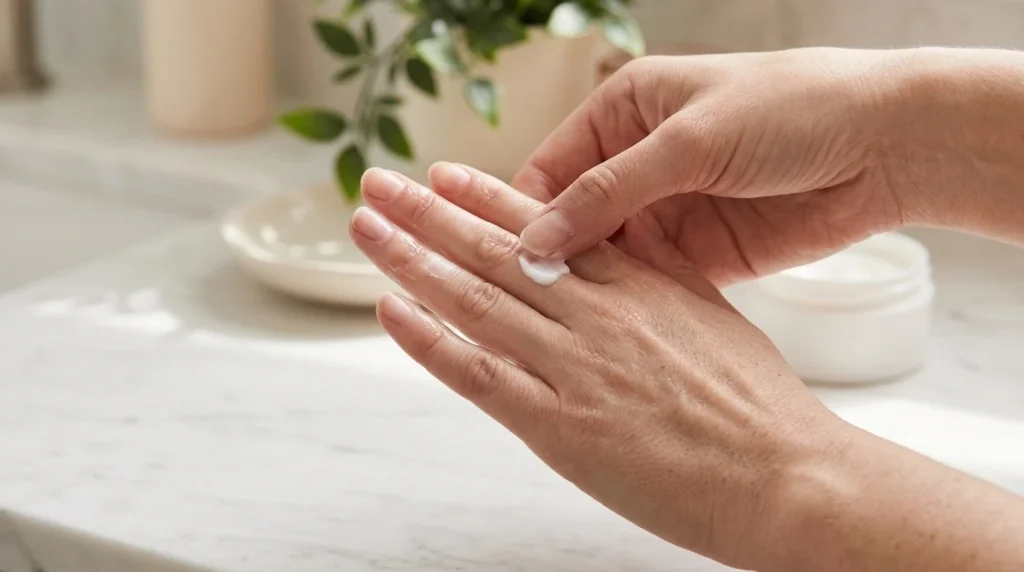
Best for: nails that look dull, feel dry, or peel at the tips. Apply a fragrance-free hand cream after handwashing, rubbing a little into each nail and the surrounding skin. Before bed, massage in a drop of oil or a thin layer of petroleum jelly to reduce moisture loss.
A jojoba cuticle oil can make the habit easier if you prefer a brush or dropper. Its main value is convenient conditioning, not magically speeding nail growth. The advantage is softer skin and less dryness; the limitation is that no oil can permanently repair a crack already in the plate.
2. Protect your hands from water and detergents
Best for: frequent handwashers, swimmers, and anyone who cleans or does dishes regularly. Wear cotton-lined cleaning gloves for longer wet jobs. Dry your hands afterward and follow with cream. If gloves become sweaty inside, take a break and dry your hands before putting them on again.
The benefit is less exposure to moisture and irritants that can encourage splitting. The trade-off is remembering to use them. You don’t need gloves for every quick rinse; focus on repeated soaking and cleaning products.
3. Keep nails short and file away tiny snags
Best for: nails that keep breaking in the same spot. Trim to around fingertip length while they’re fragile, then gently round sharp corners. A fine glass nail file gives you control over rough edges without needing to buff the nail surface.
Shorter tips experience less leverage when they hit a keyboard, handbag clasp, or drawer. The downside is temporarily sacrificing length, but a tidy short oval or squoval shape can still look intentional and polished. For a nail that’s already cracked, see these tips on repairing a damaged nail at home without making the tear worse.
4. Change how you wear and remove manicures
Best for: nails that became thin after gel, dip, or acrylic sets. Never peel off lifting gel or pry off an enhancement. That can pull away layers of your natural plate. Follow appropriate removal instructions or have a qualified nail technician remove a product you’re unsure about.
If your nails feel sore, chalky, or noticeably thinner, take time away from enhancements while the damaged portion grows out. Regular polish can be an option once nails are comfortable; remove it gently rather than repeatedly scrubbing or scraping. You can explore whether nails are healthier without polish to decide what suits your current nail condition.
The benefit is avoiding another cycle of physical damage. The downside is postponing extensions or elaborate nail art while your nails recover. You can still enjoy a sheer manicure on healthy-looking nails if products don’t irritate you.
5. Eat consistently instead of chasing a miracle supplement
Best for: anyone whose meals are irregular or limited. Nail growth depends on normal body functions, so a varied diet with adequate protein and nutrients is a sensible foundation. Include foods you enjoy, such as eggs, beans, fish, tofu, nuts, and vegetables, rather than treating one ingredient as a cure.
Biotin is often marketed for strong nails, but evidence for extra biotin in people without a deficiency is limited. High-dose biotin can also interfere with certain blood tests. Ask a healthcare professional before using nail-growth supplements, especially if you have other symptoms or upcoming laboratory work.
6. Be selective about nail strengtheners
Best for: people considering a protective coating, not those seeking a permanent rebuild. A regular base coat can provide a temporary surface layer, but it won’t restore tissue removed by over-filing. Some hardeners make nails so stiff that they crack rather than flex, and formaldehyde-containing formulas can be irritating.
If you try a coating, follow its label, stop if it stings or causes a rash, and don’t reapply so often that constant removal creates more dryness. If you already have peeling or sensitive nails, focus on moisture and protection first. The biggest limitation of any topical strengthener is that results are cosmetic or protective, not instant new nail.
What’s a Simple Daily Routine for Stronger Nails?
You don’t need a complicated schedule. Start with a few repeatable actions and stick with them long enough to see whether breakage is improving.
- Morning: Inspect the tips for snags. Apply hand cream to your fingers and nail edges before starting your day.
- After washing: Dry your hands and moisturize when practical, especially after long or frequent washing sessions.
- During chores: Wear suitable gloves for cleaning, dishwashing, and contact with detergents.
- Evening: Apply cream or a small amount of petroleum jelly around nails and cuticles. Leave the cuticles intact.
- Once a week: Gently shorten or shape rough tips, check for changes, and take a photo if you’re tracking recovery.
For very dry hands, an inexpensive fragrance-free petroleum jelly ointment can help seal in moisture at bedtime. Use a small amount; making a nightly habit is more important than buying a luxury treatment.
How Can You Tell If Your Nails Are Actually Improving?
Look beyond the shine of a fresh manicure. Stronger-looking nails usually show their progress through fewer new problems, while old damage remains visible until it grows away.
- Fewer edge splits: You can go longer without catching a peeling layer on clothing.
- Less roughness: Moisturized nail folds and tidy tips feel more comfortable.
- Better length retention: Nails reach past your usual break point without snapping as often.
- A clearer new-growth area: The strip nearest the cuticle may look healthier than the older section.
Take a photo of bare nails on day one and again every four weeks. Use the same hand position and lighting. If your nails aren’t breaking as much after several weeks, your prevention routine may be working even if the original damage hasn’t disappeared.
What Should You Do—and Avoid—While Strengthening Nails?
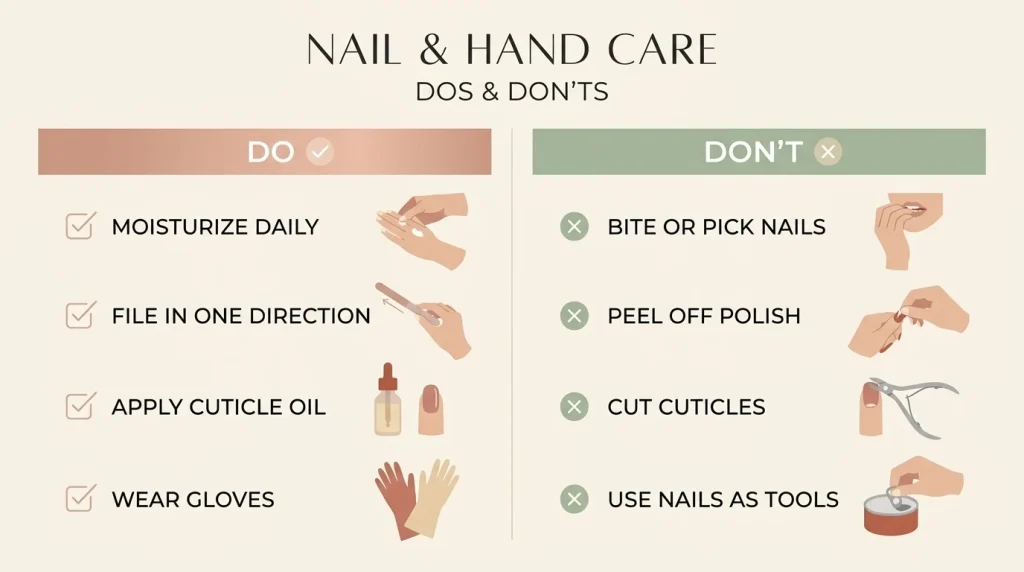
Do
- Moisturize after washing and at bedtime.
- Keep weak tips short and smoothly shaped.
- Wear gloves for wet or chemical-heavy chores.
- Give visibly damaged nails time to grow out.
Don’t
- Pick off gel, dip powder, or acrylics.
- Buff already thin nails to make them shiny.
- Cut cuticles or use nails to open packages.
- Expect oils or supplements to work overnight.
What Small Changes Make the Biggest Difference?
Put nail cream next to your hand soap
You’ll use a basic moisturizer more often if it’s beside an existing habit. Keep another tube at your bedside if dry nails are your main concern. A consistent, affordable product usually beats an elaborate routine you rarely follow.
Choose your nail shape for the way you use your hands
Rounded and softly squared corners have fewer sharp points to catch on fabric. If you’re typing, lifting, or handling boxes every day, try a shorter length until breakage settles. You can grow them longer gradually rather than jumping straight to extensions.
Check the removal process before booking a manicure
Ask how the salon removes the product, not only how long it lasts. Repeated scraping and drilling may leave the plate thin even when the final design looks beautiful. Gentler application and removal protect the progress you’ve already made.
Separate growth problems from breakage problems
If you constantly see new nail near the base but never gain length, your tips may be breaking faster than you notice. If there is little visible new growth over months, or the texture changes suddenly, consider a medical evaluation instead of adding stronger chemicals. For more context, see how damaged nails grow back.
When Should You See a Doctor About Weak Nails?
Many brittle nails improve with better protection, but nail care shouldn’t hide a possible health problem. Contact a dermatologist or healthcare professional if several nails suddenly change, they stop growing, or the problem persists despite avoiding obvious damage.
Warning
Get a new or changing dark streak, nail lifting, marked thickening, pain, swelling, bleeding, or pus checked rather than covering it with polish. These signs can have causes that a home strengthening routine cannot treat.
A clinician can consider conditions such as iron deficiency, thyroid disease, eczema, psoriasis, or infection based on your history and examination. Nail appearance alone cannot tell you which, if any, is responsible.
Frequently Asked Questions About Strengthening Nails
Q: Can you strengthen nails in one week?
A: You can make nails feel less dry and prevent new snags within a week. Existing thinning and deep splits won’t disappear in seven days; those damaged areas need to grow out.
Q: How long do nails take to recover after gel or acrylic removal?
A: Mild dryness may feel better sooner, but heavily thinned or over-filed sections can take months to grow away. Complete fingernail replacement often takes six months or more, depending on the damage.
Q: Does cuticle oil make nails grow faster?
A: There’s no good evidence that cuticle oil dramatically accelerates growth. It helps condition dry nails and surrounding skin, which may reduce breakage and help you retain length.
Q: Should you use a nail hardener every day?
A: Not automatically. Some hardeners increase stiffness and may make brittle nails more likely to snap. Follow the product directions, watch for irritation, and prioritize moisture and gentle handling.
Q: Why do my nails still break after a month of care?
A: Old weak nail remains at the tips until you trim it away, and repeated exposure to water or friction may still be causing breaks. If weakness persists or comes with other changes, ask a clinician to check for underlying causes.
So, When Will Your Nails Feel Stronger?
For many people, the first win is less dryness and fewer fresh breaks over the first several weeks. For truly different nail from base to tip, plan on months, not days. Start with short nails, daily moisture, protective gloves, and gentler manicures—and save this guide to your Pinterest nail-care board so you can check your progress each month.

Hi, I’m Jessica, the creator behind Unique Lash & Nails Katy.
I created this website for anyone who loves beautiful nails as much as I do. Here, I share trendy nail designs, seasonal manicure ideas, easy nail care tips, honest product recommendations, and step-by-step guides to help you create salon-worthy nails at home. Whether you’re looking for everyday inspiration or your next favorite nail trend, I hope you’ll find something you love.