Is Coconut Oil Good for Nails? The Truth Every Nail Lover Needs to Know
Quick Answer
Yes — coconut oil is genuinely good for your nails. It moisturizes the nail plate and surrounding cuticles, strengthens nails by reducing protein loss, and fights the bacteria and fungi that cause brittle, unhealthy nails. It won’t make your nails grow faster, but used consistently — a few drops massaged in each night — it will make them noticeably stronger, more flexible, and less prone to peeling and breakage within 2 to 4 weeks.
Coconut oil has been praised as a beauty cure-all for so long that it’s easy to roll your eyes. But here’s the thing — the research behind its nail benefits is actually solid, and the results are ones you can genuinely see and feel. This guide breaks down exactly what coconut oil does to your nails, what it can’t do, and how to use it so you’re not just greasing up your fingers for nothing.


Why Coconut Oil Works Differently Than Other Oils on Your Nails
Most oils — like argan or jojoba — sit on top of the nail surface and moisturize from the outside. Coconut oil is different. It’s rich in lauric acid, a medium-chain fatty acid that’s small enough in molecular size to actually penetrate the nail plate itself, not just coat it. That’s a meaningful distinction because nails lose moisture and protein through their layers — coconut oil gets in there and helps slow that loss.
Lauric acid also has well-documented antimicrobial and antifungal properties. Your cuticle area is constantly exposed to water, detergent, and environmental bacteria — all of which degrade nail health over time. Coconut oil creates a light protective barrier that reduces that damage while simultaneously conditioning the skin around the nail, which directly impacts how your nail grows out.
The other key component is vitamin E, which naturally occurs in unrefined virgin coconut oil. Vitamin E is a fat-soluble antioxidant that reduces oxidative stress in nail cells — which is part of why nails that are consistently oiled look healthier and more uniform in color than nails that are left dry and exposed.
What Coconut Oil Actually Does for Your Nails — and What It Doesn’t
It’s worth being specific here, because a lot of articles oversell what any oil can do. Here’s an honest breakdown:
What it does: Coconut oil deeply moisturizes the nail plate and cuticle, reduces brittleness and peeling caused by dehydration, helps prevent hangnails by keeping the cuticle supple, and fights the minor bacteria and fungi that cause nail discoloration or infection at the nail border. If your nails tend to crack or split at the tips, consistent coconut oil use addresses the root cause — dryness — rather than just patching the symptom.
What it doesn’t do: It won’t make your nails grow faster. Nail growth rate is controlled by nutrition, circulation, and genetics — not topical products. It also won’t repair nails that are damaged from gel or acrylic removal on its own; for that level of damage, you’ll want to pair it with a targeted approach to repairing weak nails that includes both topical care and a break from extensions.
Pro Tip
Always use unrefined virgin coconut oil, not refined. Refined coconut oil has been processed and stripped of most of its lauric acid and antioxidants — the exact compounds that make it effective on nails. The unrefined version smells like actual coconut and is solid at room temperature. That’s how you know you’re getting the real thing.
How to Use Coconut Oil on Your Nails the Right Way
 Save
SaveThe method matters as much as the product itself. Here’s how to get the most out of it.
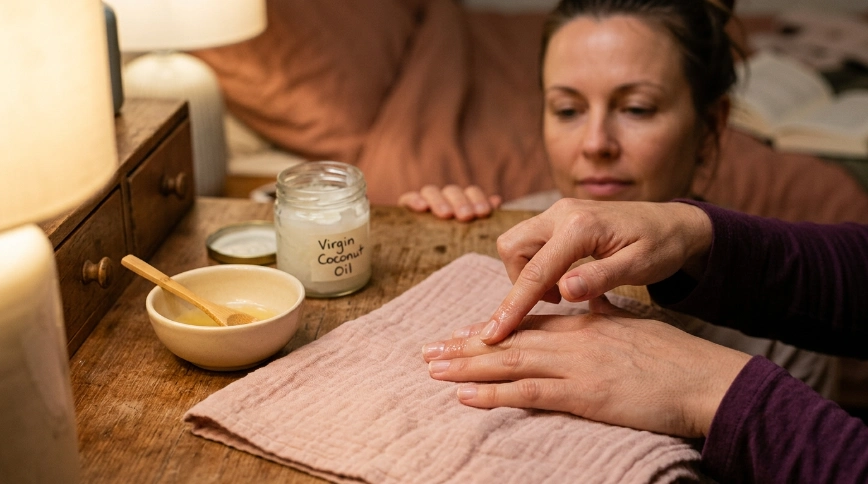
The nightly soak-in method (most effective): Scoop a pea-sized amount of solid coconut oil — it melts instantly on contact with skin — and press it directly onto each cuticle and the lower half of each nail. Massage it in using small circular motions for 30 to 60 seconds per hand. Do this right before bed so it absorbs overnight without washing off. You don’t need to wipe it off. If your hands feel greasy on your sheets, wear a pair of thin cotton gloves for 30 minutes after application and then remove them.
The warm oil soak (for very dry or damaged nails): Melt two tablespoons of coconut oil in a small bowl set in warm water. Soak your fingertips for 10 minutes. This drives more oil into the nail plate faster — it’s the better option if your nails are currently peeling, splitting, or recovering from removal damage. Do this twice a week alongside your nightly routine.
You can also mix coconut oil with a few drops of lemon essential oil if your nails have yellowing — lemon’s natural bleaching properties work well when suspended in a carrier oil that actually penetrates the nail, which coconut oil does.
Recommended Product
Organic Virgin Coconut Oil for Skin and Nails
★★★★★ Highly rated on Amazon
Cold-pressed, unrefined virgin coconut oil retains all the lauric acid and natural antioxidants your nails actually need — unlike refined versions that have been stripped of their benefits.
As an Amazon Associate, we earn from qualifying purchases.
Do’s and Don’ts When Using Coconut Oil on Nails
Do
- +Use unrefined, virgin, cold-pressed coconut oil — it retains all the active compounds that refined versions lose during processing.
- +Apply it nightly, consistently — two weeks of irregular use won’t show meaningful results, but nightly use over a month will.
- +Warm the oil first (either between your palms or in a warm water bath) so it penetrates more deeply into the nail plate.
- +Massage into cuticles as well as the nail — healthy cuticle tissue directly produces stronger nail growth.
Don’t
- −Apply coconut oil right before painting your nails — any oily residue on the nail plate will prevent polish from adhering properly and it’ll peel within a day.
- −Expect results overnight — nail plate cells turn over slowly, and the improvement you’re looking for takes consistent use over 3 to 4 weeks to become visible.
- −Use coconut oil as a substitute for a nail hardener if your nails are severely structurally weak — oil adds flexibility and moisture, not structural rigidity. You may need a nail strengthener alongside it.
- −Ignore the cuticle — applying oil only to the nail plate and skipping the cuticle area means you’re missing the zone where new nail growth is most affected by hydration.
Can You Use Too Much Coconut Oil on Your Nails?
This is a question more people should ask. If you’re wondering about the right amount, here’s exactly how much nail oiling is too much — but the short version is that once daily is ideal. More than that doesn’t speed up the process; your nails can only absorb so much oil at a time, and the excess just sits on the surface or washes off. Overdoing it also makes your nails slightly more flexible than you’d want if you’re trying to keep them from bending and breaking — excessive softness is its own problem.
If you’re using coconut oil under gel or acrylic enhancements, stop 48 hours before your appointment. Over-oiled nail plates have weaker product adhesion, which leads to premature lifting.
What Results to Expect and When
Week 1–2: Your cuticles will feel noticeably softer and less prone to catching and tearing. Hangnails will start to appear less frequently. The visible nail plate may look slightly more glossy and hydrated, especially if your nails were very dry before.
Week 3–4: New nail growth coming in at the base will be stronger and more flexible. Existing peeling or splitting at the tips won’t magically disappear — that nail has already been damaged — but you’ll see it stop progressing and eventually grow out as the new nail comes in healthier.
Month 2 and beyond: If you’ve kept a consistent routine, you should have a noticeably different baseline. Nails that were constantly peeling become ones that make it to a reasonable length before needing to be filed. The change is cumulative — the longer you keep it up, the better your nails hold.
If you want to build a full nail care system around this, it helps to understand what a solid routine nail care practice actually looks like day to day so coconut oil is one part of a bigger approach rather than the only thing you’re relying on.
Pro Tips for Getting Even More Out of Coconut Oil
 Save
SavePro Tip
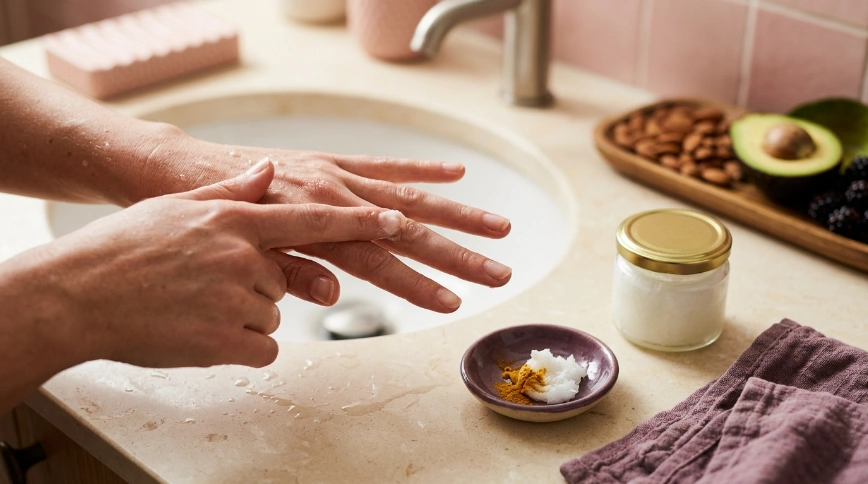
Mix coconut oil with a pinch of turmeric for stained or yellowed nails. Turmeric is a natural brightener and has its own antifungal properties. Apply the paste to the nail surface, leave for 5 minutes, then rinse. Don’t leave it longer than that or you’ll temporarily yellow the skin around the nail instead of brightening it.
Pro Tip
Apply coconut oil immediately after washing your hands while your nails and skin are still slightly damp — not soaking wet, but not bone dry either. That slight residual moisture creates a better absorption environment, which means more of the oil gets into the nail plate rather than evaporating off the surface.
Pro Tip
If you want to take your nail health even further, pair coconut oil with a diet adjustment. Certain foods directly impact nail strength and growth rate — and topical care works best when the nail is being built from the inside out with the right nutrients too.
Recommended Product
Cuticle Oil Pen with Vitamin E and Coconut Oil Blend
★★★★☆ Highly rated on Amazon
A click-pen applicator makes nightly coconut oil application mess-free and portable — ideal if you want to stay consistent without pulling out a jar every evening.
As an Amazon Associate, we earn from qualifying purchases.
Frequently Asked Questions About Coconut Oil and Nails
Q: Can I use coconut oil on my nails every day?
A: Yes — daily use is actually ideal, and nightly is the best time to apply it since there’s no handwashing or water exposure to wash it off before it absorbs. A pea-sized amount across both hands is more than enough; you don’t need to slather it on thickly to see results.
Q: Is coconut oil good for nails after gel removal?
A: It helps, but it’s not a complete solution on its own. After gel removal, your nail plate is often thinned and dehydrated — coconut oil addresses the dehydration component well. Pair it with a nail hardener like OPI Nail Envy for the first two weeks, and avoid any new gel application for at least 3 to 4 weeks to let the nail plate recover its structure.
Q: Does coconut oil help with nail fungus?
A: Coconut oil’s lauric acid has proven antifungal properties, and it can help with very mild surface-level fungal issues around the nail border. However, it’s not a treatment for an established nail fungal infection — that requires antifungal medication, either topical or oral depending on severity. If your nail is discolored, thickened, or separating from the nail bed, see a dermatologist rather than relying on coconut oil alone.
Q: Which is better for nails — coconut oil or olive oil?
A: Coconut oil wins for nail health specifically because of its molecular size — it actually penetrates the nail plate rather than just moisturizing the surface. Olive oil is a good emollient for the skin around the nail, but it doesn’t absorb into the nail plate itself the way coconut oil does. For the cuticle alone, both work well. For the nail plate, coconut oil is the better choice.
Q: Can I apply coconut oil over nail polish?
A: You can apply it to your cuticles and skin around the nail while you have polish on — it won’t damage cured regular polish. If you have gel polish, avoid saturating the area directly at the edge of the gel, since excess oil can work its way under the seal and cause lifting. Focus the oil on the cuticle skin rather than the nail surface when you’re wearing any type of polish.
The Bottom Line on Coconut Oil for Nails
Coconut oil is one of the few natural nail remedies that has genuine science behind it — not just beauty blog hype. Its ability to actually penetrate the nail plate, combined with its antifungal and moisturizing properties, makes it legitimately useful for nails that peel, crack, or dry out easily. Use unrefined virgin coconut oil, apply it nightly to both the nail plate and cuticle, and give it a full month before judging the results. That consistency is what separates the people who swear by it from the ones who tried it once and shrugged.
If you want to build on this foundation, take a look at how to keep your natural nails long and strong for a complete approach that pairs oil care with the other habits that actually make a difference. Save this to Pinterest so you have it ready when you’re ready to start your routine.

Hi, I’m Jessica, the creator behind Unique Lash & Nails Katy.
I created this website for anyone who loves beautiful nails as much as I do. Here, I share trendy nail designs, seasonal manicure ideas, easy nail care tips, honest product recommendations, and step-by-step guides to help you create salon-worthy nails at home. Whether you’re looking for everyday inspiration or your next favorite nail trend, I hope you’ll find something you love.