How to Care for Nails With Persistent Color Changes
Quick Answer
To care for nails with persistent color changes, first identify whether the discoloration is a cosmetic stain or a possible nail condition. Keep your nails clean, dry, trimmed, and moisturized, avoid harsh whitening treatments, and temporarily stop covering unexplained changes with polish. Arrange a medical assessment for persistent or unexplained discoloration, especially if you notice thickening, lifting, pain, or a new dark streak.
You remove your favorite manicure, expecting clean, natural-looking nails, but something looks different. Maybe there’s a yellow tint that won’t fade, an unusual white patch, or a dark spot that seems to stay in the same place.
It’s natural to wonder whether your nails simply need some extra care or whether something more important is happening beneath the surface.
Learning how to care for nails with persistent color changes means doing more than trying to restore their appearance. You’ll need to recognize different types of discoloration, protect your natural nails, and understand when professional care is necessary.
This guide will help you build a gentle nail routine while avoiding treatments that could make an underlying problem worse.


Why Do Nails Develop Persistent Color Changes?
Your nail plate is made primarily of keratin, a tough structural protein. Its appearance depends on the nail plate itself, the nail bed underneath it, and the condition of the surrounding tissue.
When nail color changes and stays different, the explanation may involve pigment, injury, infection, inflammation, medication, or a medical condition.
Although some causes are harmless, color alone cannot reliably tell you what’s happening.
1. Staining From Dark Nail Polish
Deep red, burgundy, navy, black, and other strongly pigmented polishes can leave yellow or orange discoloration behind.
Staining is more likely when you frequently apply dark colors without a protective base coat.
A cosmetic stain usually affects the nail plate without causing pain, swelling, or significant changes in thickness.
If the discoloration appears immediately after polish removal and matches the nails you painted, staining is one possible explanation.
However, don’t automatically assume that every yellow nail is stained.
2. Fungal Nail Infections
A fungal nail infection, medically called onychomycosis, can cause white, yellow, brown, or other changes in nail color.
You might also notice:
- Thickening of the nail plate
- Brittle or crumbly nail edges
- Changes in nail shape
- Separation from the nail bed
- Discoloration that gradually spreads
Fungal infections occur more frequently in toenails, although fingernails can also be affected.
Because psoriasis, injuries, and other conditions can look similar, a healthcare professional may need to examine or test your nail before recommending treatment.
3. Repeated Nail Trauma
Your nails experience more physical stress than you might realize.
Tight shoes, repeated tapping, aggressive filing, picking at gel polish, and accidental impacts can damage the nail or the tissue underneath.
A bruise beneath the nail may appear reddish-purple, brown, or black. When it comes from a single injury, the discolored area often moves toward the free edge as the nail grows.
A dark spot that does not grow out as expected, or appears without a clear injury, should be examined instead of being treated as an ordinary bruise.
4. Nail Lifting and Moisture Exposure
When a nail separates from the underlying nail bed, the detached section may appear white or yellowish because air occupies the space beneath it.
This condition is called onycholysis.
It can occur after trauma, nail product irritation, certain skin conditions, or infections.
Repeated moisture exposure may aggravate an already damaged nail and create conditions that encourage microbial growth.
A greenish discoloration can sometimes occur with bacterial colonization, including Pseudomonas species, especially when a nail has lifted.
Don’t try to seal the detached area under acrylics or gel. Have an unexplained green or lifting nail assessed.
5. Skin Conditions and Medical Causes
Some persistent nail color changes have causes unrelated to your manicure routine.
Nail psoriasis can produce yellowish discoloration, pitting, thickening, or separation. Other systemic conditions and certain medications can also change nail appearance.
Unusually pale, blue, or widespread white nail changes may sometimes be associated with health conditions, but nail appearance alone cannot establish a diagnosis.
If several nails change unexpectedly, particularly alongside other symptoms, a healthcare professional can help determine whether additional examination or testing is appropriate.
What Do Different Nail Color Changes Mean?
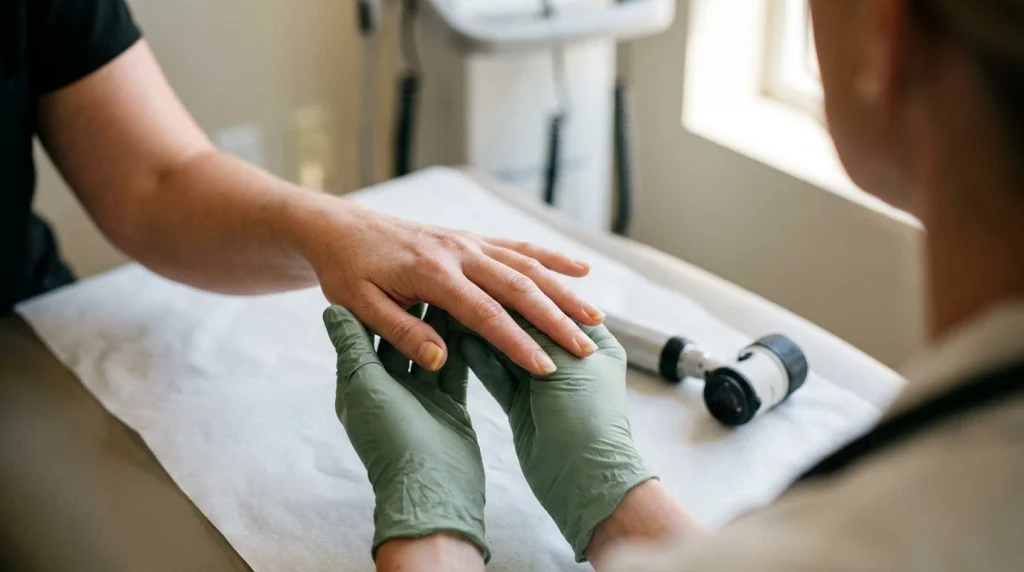
The color and pattern of your nail discoloration provide useful clues, but they should never be used as a diagnosis by themselves.
Yellow Nails
Yellow discoloration may follow dark polish use or develop with fungal infection, nail thickening, or other conditions.
If your nails remain smooth, comfortable, and firmly attached, recent polish staining may be contributing.
When yellowing appears with crumbling, thickening, or persistent lifting, request a professional evaluation.
White Spots or White Areas
Small white spots often follow minor trauma to the nail matrix, the area responsible for producing new nail.
They are not automatically a sign of calcium deficiency.
Larger white areas can have different causes, including nail lifting or changes within the nail plate.
Unusual whitening affecting multiple nails deserves attention, particularly when it develops alongside other symptoms.
Brown or Black Discoloration
Brown or black nail discoloration may result from injury, natural pigmentation, medication effects, or other conditions.
However, a new or changing dark vertical streak can occasionally indicate nail melanoma, a form of skin cancer.
Do not wait for a new dark streak to disappear before arranging a dermatologist appointment.
Pay particular attention if a band widens, becomes irregular, extends into surrounding skin, or appears with splitting or lifting.
Green Nail Discoloration
A greenish nail may suggest bacterial colonization, particularly in a nail that has separated from its bed.
Artificial nail enhancements, prolonged moisture exposure, and existing nail damage can contribute to the problem.
Remove the cosmetic covering safely, keep the area dry, and arrange medical advice. Avoid using household bleach, vinegar, or concentrated essential oils as an improvised treatment.
Blue or Unusually Pale Nails
Blue-looking nails can sometimes occur with cold exposure, circulation changes, or inadequate oxygenation.
If your nails suddenly turn blue along with blue lips, breathing difficulty, chest pain, faintness, or confusion, seek emergency medical care.
Persistent unexplained paleness or unusual color changes in several nails also warrant clinical assessment.
When Should You See a Doctor About Nail Discoloration?
You shouldn’t have to guess whether an unusual nail color is harmless.
According to guidance from the American Academy of Dermatology, a new or changing dark streak, unexplained nail lifting, or significant changes in nail color should be evaluated by a dermatologist.
Important Warning Signs
Seek medical advice for a new or changing brown or black streak, dark pigment extending onto the surrounding skin, unexplained nail lifting, thickening, recurring discoloration, or a nail that becomes painful or distorted. Seek prompt care for pus, increasing redness, swelling, or significant pain. Rapidly spreading redness, fever, or severe symptoms require urgent assessment.
Arrange an appointment sooner if you have diabetes, impaired circulation, or a weakened immune system and suspect a nail infection.
For a broader explanation of changes worth watching, see our guide to the signs of unhealthy nails.
How Can You Care for Nails With Persistent Color Changes Every Day?
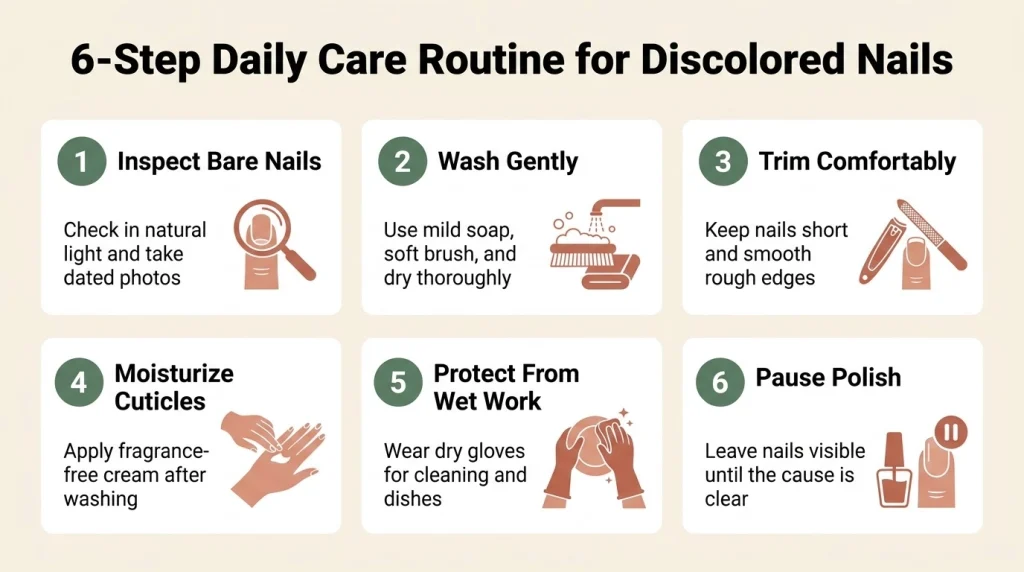
A gentle daily routine helps protect the nail plate and surrounding skin while you identify the reason for the discoloration.
These care steps do not replace medical treatment for an infection or underlying condition.
1. Examine Your Bare Nails in Natural Light
Remove existing polish carefully and inspect your nails without a colored coating.
Look at the location, pattern, and intensity of the discoloration. Notice whether the nail has become thicker, more brittle, or separated from the skin underneath.
Take a clear photograph in consistent lighting and record the date. This can help you explain changes to a clinician.
Common mistake: Relying on memory alone to decide whether a streak has changed. A photograph can help document progression, but it shouldn’t delay an appointment for concerning signs.
2. Wash Your Nails Gently
Wash your hands with mild soap and lukewarm water.
If visible dirt remains under the free edge, use a soft nailbrush without scraping deeply beneath the nail.
After washing, dry your hands and the spaces around your nails thoroughly.
Common mistake: Scrubbing yellow or stained nails aggressively. Excessive friction can damage the surface without addressing the underlying cause.
For a practical cleaning routine, follow our guide on how to clean nails at home.
3. Keep Your Nails at a Comfortable Length
Trim your fingernails regularly and gently smooth rough edges with a clean file.
Keeping nails reasonably short can reduce snagging and pressure on already fragile areas.
For toenails, trim straight across rather than digging into the sides.
Never forcibly remove a section that’s still attached to the nail bed.
Common mistake: Cutting deeply into the corners or trying to remove discoloration by trimming healthy attached nail.
4. Moisturize the Nail Folds and Cuticles
Apply a fragrance-free hand cream after washing your hands and before bedtime.
Massage a small amount around the nail folds and cuticles to reduce dryness and support the surrounding skin barrier.
A basic moisturizer containing glycerin or petrolatum is often sufficient.
Moisturizing cannot remove fungal discoloration, reverse a dark pigment band, or treat a medical condition, but it can make everyday nail care gentler.
Common mistake: Using concentrated essential oils directly on irritated cuticles. These can trigger additional irritation or allergic reactions.
5. Protect Nails From Chemicals and Repeated Wet Work
Wear suitable protective gloves when washing dishes, cleaning, or handling household detergents.
Dry your hands after removing the gloves, especially if moisture has collected inside.
For toenails, change sweaty socks, choose properly fitting shoes, and allow footwear to dry between uses.
Common mistake: Wearing damp gloves for prolonged periods or keeping wet socks on for hours.
6. Pause Cosmetic Treatments When the Cause Is Unclear
Resist the temptation to cover a persistent color change immediately with opaque polish, gel extensions, or acrylic nails.
Leaving the nail visible makes it easier to observe changes and allows a healthcare professional to examine the affected area.
If you’ve already confirmed that the problem is only cosmetic staining, you may return to your regular manicure routine when appropriate.
Common mistake: Repeatedly covering a thickened, lifting, painful, or unexplained discolored nail instead of having it checked.
What Treatments Help Different Types of Nail Discoloration?
The appropriate treatment depends on the cause, not simply the color you see.
For Ordinary Nail Polish Stains
Stop using the polish that appears to be causing the stain, clean your nails gently, and allow new nail growth to replace the affected portion.
When you resume wearing polish, consider a compatible base coat beneath strongly pigmented shades.
Don’t repeatedly buff away the nail surface or apply harsh chemicals in an attempt to speed up the process.
Our article on how to remove yellow nail stains explains the difference between cosmetic staining and changes that need medical attention.
For Suspected Fungal Nail Infections
Ask a pharmacist or healthcare professional about suitable antifungal treatments and whether testing is needed.
Depending on the infection and your health history, treatment may involve a medicated nail lacquer or prescription oral medication.
Not every thick or yellow nail is fungal, so avoid treating an uncertain diagnosis indefinitely.
Fungal nail treatment often requires months of consistent use, and visible improvement depends on healthy new nail growth.
For Injuries and Bruising
If a nail has changed color after an injury, reduce repeated pressure and protect it from further trauma.
A small uncomplicated bruise may gradually move outward as the nail grows.
Severe throbbing pain, a significant crush injury, or a badly damaged nail requires prompt medical attention.
Never puncture or drill your own nail to release trapped blood.
For Unexplained Dark Streaks
Skip home lightening treatments and arrange an examination with a dermatologist.
A clinician may inspect the nail with magnification and determine whether further testing is necessary.
A dark band does not automatically mean cancer, but a concerning change should not be dismissed as staining.
Which Nail Care Products Are Worth Having?
You don’t need an expensive nail restoration kit to practice gentle everyday care.
Simple products that support hygiene and protect the surrounding skin are often more useful than aggressive whitening formulas.
Affiliate disclosure: As an Amazon Associate, we earn from qualifying purchases. Product links below lead to Amazon search results.
Recommended Care Essential
Fragrance-Free Hand and Cuticle Moisturizer
Choose a simple moisturizing formula to help protect dry nail folds and cuticles during frequent handwashing.
Best for: Dry skin and everyday nail maintenance.
Recommended Care Essential
Soft Nail Cleaning Brush
A soft brush can remove ordinary visible debris without the harsh scraping associated with pointed manicure tools.
Best for: Gentle routine nail hygiene.
Recommended Care Essential
Clean Stainless Steel Nail Clipper Set
A comfortable, well-maintained clipper helps keep nails manageable and reduces accidental snagging.
Best for: Regular trimming and nail maintenance.
Remember: These are grooming supplies, not treatments for fungal infection, melanoma, or other medical causes of discoloration.
What Should You Avoid When Your Nails Stay Discolored?
Some popular nail care shortcuts can create more damage than the discoloration itself.
Do
- Inspect bare nails regularly.
- Keep nails clean and dry.
- Moisturize surrounding skin.
- Use clean grooming tools.
- Seek care for unexplained changes.
Don’t
- Use household bleach on nails.
- Scrape beneath lifted nails.
- Over-buff discolored areas.
- Hide suspicious streaks with gel.
- Ignore worsening symptoms.
Avoid applying undiluted tea tree oil, lemon juice, concentrated hydrogen peroxide, or harsh cleaning solutions to irritated or damaged nails.
Although home remedies are frequently promoted online, they cannot reliably diagnose or treat the many possible causes of persistent nail discoloration.
How Long Does It Take for Discolored Nails to Return to Normal?
Recovery time depends on the reason for the discoloration and whether the affected portion must grow out.
Fingernails generally take approximately four to six months to replace themselves. Toenails grow more slowly and may take 12 to 18 months.
A cosmetic stain may gradually disappear as fresh nail grows. An uncomplicated bruise may also move toward the tip with growth.
Fungal infections often need several months of treatment, and their appearance may improve slowly even after treatment begins.
In contrast, discoloration associated with some chronic conditions may continue until the underlying issue is addressed.
Pro Tip
If your clinician advises observation, photograph the affected nail with a date label under similar lighting. This can make growth-related changes easier to discuss at follow-up appointments. Do not use home monitoring as a reason to postpone assessment of a new or changing dark streak.
How Can You Prevent Future Nail Color Changes?
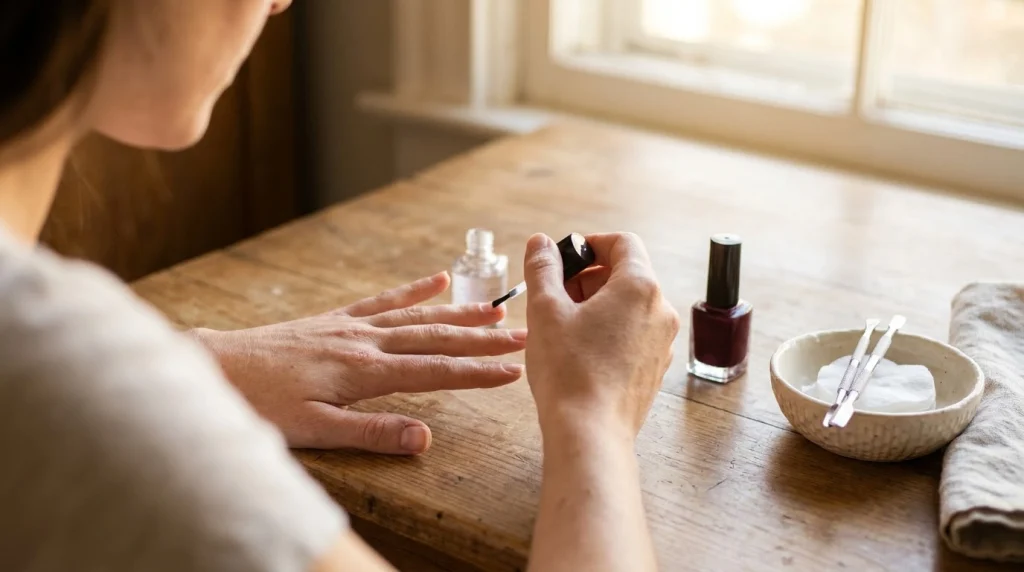
Not every nail disorder is preventable, but you can reduce common cosmetic staining and avoidable damage through better everyday habits.
Use a Base Coat Before Dark Polish
A base coat creates a layer between nail pigments and your natural nail plate. It may reduce staining from strongly colored polish, although it cannot guarantee complete protection.
Remove Nail Products Gently
Follow the appropriate removal instructions for regular polish, gel, or other nail enhancements.
Never peel or pry off hardened enhancements, because doing so can remove surface layers of the natural nail.
Keep Grooming Tools Hygienic
Clean reusable manicure tools appropriately after use and avoid sharing nail clippers or files with anyone who has a suspected infection.
Discard disposable files when they become contaminated or worn.
Reduce Excess Moisture
Dry hands thoroughly after wet work and keep feet comfortable with breathable footwear and clean socks.
Promptly addressing athlete’s foot may help reduce the chance of fungal organisms spreading to toenails.
Check Your Nails Between Manicures
Before applying a new set, look for unusual pigmentation, separation, swelling, or other changes.
If something appears abnormal, postpone your cosmetic treatment until the cause is understood.
For additional preparation tips, explore our guide to nail hygiene before a manicure.
Can You Wear Nail Polish While Treating Nail Discoloration?
That depends on the cause and the treatment you’re using.
If a clinician confirms an ordinary cosmetic stain and your nails are otherwise healthy, you may be able to wear polish again using careful application and removal habits.
However, polish can conceal important changes in an undiagnosed nail.
Some medicated nail treatments also have specific instructions regarding cosmetic polish, so follow the product label or your clinician’s advice.
Avoid applying artificial nails over an active or suspected infection, a painful nail, or unexplained lifting.
Your natural nails don’t need to look flawless every day. Being able to inspect them is more important than temporarily hiding a problem.
Frequently Asked Questions About Persistent Nail Color Changes
Q: Why are my nails still yellow after removing nail polish?
A: Dark polish can leave pigments in the nail plate, causing yellow staining that gradually grows out. If the yellowing persists without a clear cosmetic cause or appears with thickening, crumbling, or lifting, seek medical evaluation.
Q: Can persistent nail discoloration go away on its own?
A: Some cosmetic stains and uncomplicated injury-related changes disappear as the nail grows. Infections and other conditions may require specific treatment. Unexplained or changing discoloration should not simply be left untreated indefinitely.
Q: Does a brown line on my nail always mean melanoma?
A: No. Brown nail bands have several possible causes, including benign pigmentation. However, a new or changing dark streak should be examined by a dermatologist because nail melanoma is one possible cause.
Q: Will cuticle oil remove nail discoloration?
A: Cuticle oil can help condition dry surrounding skin, but it cannot treat fungal infections, internal pigmentation, bruising, or other medical causes of nail discoloration. It’s a grooming product rather than a medical treatment.
Q: When should I worry about a nail changing color?
A: Arrange an evaluation if the discoloration is new, unexplained, persistent, or worsening. A new dark streak, nail lifting, pain, swelling, pus, or significant thickening deserves particular attention.
Final Thoughts: Protect Your Nails While Finding the Cause
Knowing how to care for nails with persistent color changes starts with understanding that discoloration is a symptom, not a diagnosis.
Gentle cleaning, regular moisturizing, comfortable trimming, and careful manicure habits can protect your nails while you determine what’s causing the change. But if the discoloration is unexplained, worsening, or accompanied by warning signs, professional assessment is the most useful next step.
Save this guide to your Pinterest nail care board so you can revisit these safe nail care habits and warning signs whenever your nails look different.
Medical note: This article is for general education and does not replace diagnosis or treatment from a qualified healthcare professional.

Hi, I’m Jessica, the creator behind Unique Lash & Nails Katy.
I created this website for anyone who loves beautiful nails as much as I do. Here, I share trendy nail designs, seasonal manicure ideas, easy nail care tips, honest product recommendations, and step-by-step guides to help you create salon-worthy nails at home. Whether you’re looking for everyday inspiration or your next favorite nail trend, I hope you’ll find something you love.