Dry Nails vs Brittle or Peeling Nails: What’s the Difference?
Quick Answer
Dry nails often look dull or rough and may feel less flexible. Brittle nails break, crack, or split easily, while peeling nails separate into thin layers, usually near the tips. These conditions overlap, but they describe different symptoms. Moisturizing, gentle filing, and protection from excessive water and chemicals can help manage many cases.
Have you noticed your nails looking dull, snapping unexpectedly, or peeling into thin layers? You might assume every symptom means your nails need more moisture, but that’s not always the full explanation.
Understanding dry nails vs brittle or peeling nails helps you recognize what is happening before buying another nail treatment.
The good news is that many everyday nail problems improve with consistent protection and gentle grooming. Here’s how to identify the differences and build a routine that actually makes sense for your nails.


What Is the Difference Between Dry, Brittle, and Peeling Nails?
Although these terms are often used interchangeably, they don’t describe exactly the same thing.
Dry nails describe nails that appear rough, dull, or dehydrated. Brittle nails describe nails that fracture or split easily. Peeling nails specifically describe separation of the nail plate into thin layers.
A single nail can have all three characteristics at once. For example, repeated exposure to water and detergents can contribute to surface dryness, splitting, and peeling.
Dry Nails: Dullness, Roughness, and Reduced Flexibility
Dry nails may look less glossy than usual and feel rough around their edges. You might also notice dry cuticles, flaky skin, or fingertips that feel tight after washing.
Dryness can contribute to nail fragility, but a dry-looking nail doesn’t necessarily have serious structural damage.
Common signs include:
- A dull or chalky-looking nail surface.
- Rough edges that catch on fabric.
- Dry skin surrounding the nail.
- Reduced flexibility, sometimes accompanied by small cracks.
- Symptoms that become more noticeable during cold or dry weather.
Frequent handwashing, harsh cleansing products, and repeated exposure to nail polish remover may contribute to these changes.
If dryness is your main concern, start with a fragrance-free hand cream and regular nail conditioning rather than an aggressive nail hardener.
Brittle Nails: Breaking, Cracking, and Splitting
Brittle nails are fragile nails that break more easily than expected during ordinary activities.
You might notice your nails snapping when you pick up a bag, catch a sweater, or perform routine household tasks.
Signs of brittleness include:
- Nails breaking before reaching your preferred length.
- Small cracks appearing along the free edge.
- Vertical or horizontal splitting.
- Rough, irregular nail tips.
- Repeated breakage despite careful trimming.
Nail brittleness can involve changes in keratin structure, the natural lipids within the nail plate, and repeated environmental damage.
Some brittle nails are hard and prone to cracking. Others are soft and bend or peel after repeated moisture exposure.
That’s why simply adding more water or applying a stronger hardening product isn’t always the right solution.
Peeling Nails: Thin Layers Separating at the Tips
Peeling nails develop when layers of the nail plate separate, typically near the free edge.
Dermatologists call this pattern lamellar onychoschizia.
Unlike a clean break across the nail, peeling often looks like thin sheets lifting away from one another.
Typical signs include:
- Thin nail layers lifting at the tips.
- Flaky edges that look uneven.
- Nail tips separating into multiple layers.
- Small sections catching on clothing or hair.
- Progressive thinning after repeated peeling or picking.
Peeling is frequently associated with repeated wetting and drying, physical damage, and aggressive manicure removal.
For a more detailed explanation of this particular symptom, see our guide on why nails peel and how to protect them.
How Can You Tell Which Nail Problem You Have?
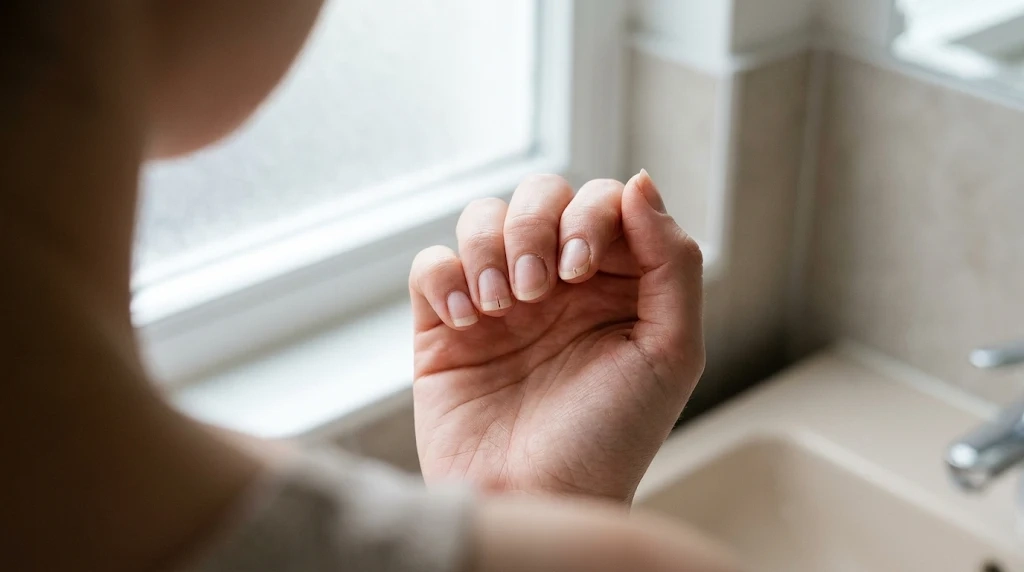
Begin by looking at the shape and location of the damage rather than focusing on whether your nails feel weak.
The following comparison can help you identify the most noticeable symptom.
| Feature | Dry Nails | Brittle Nails | Peeling Nails |
|---|---|---|---|
| Main symptom | Dullness or roughness | Easy cracking or breaking | Layer separation |
| Appearance | Rough or less glossy | Split, cracked, or uneven | Thin layers lifting |
| Common triggers | Dry conditions, harsh products | Repeated trauma, chemicals, aging | Wet work, aggressive manicures |
| Main care priority | Moisturize and protect | Reduce breakage and trauma | Protect layers as they grow out |
Remember: These are descriptive differences, not separate medical diagnoses. If your nails are both peeling and breaking, you may have overlapping forms of nail fragility.
Why Do Nails Become Dry, Brittle, or Peeling?
Your fingernails are made primarily of keratin, a structural protein arranged in compact layers. Their strength also depends on how these layers connect and on the nail plate’s natural composition.
When repeated exposure or damage affects these structures, your nails may become more fragile.
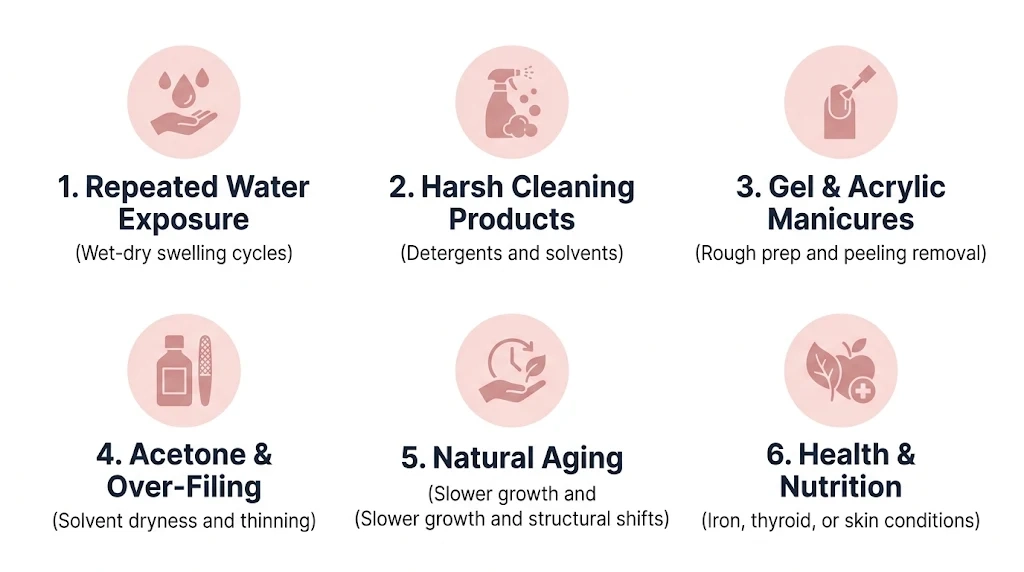
1. Repeated Water Exposure
Washing dishes, cleaning, swimming, and frequent handwashing expose your nails to repeated cycles of moisture.
Nails absorb some water and then lose it as they dry. Repeated expansion and contraction can contribute to splitting and peeling.
This is especially relevant if you wash your hands many times throughout the day or regularly handle wet materials.
2. Harsh Cleaning Products
Dish detergents, household cleaners, and certain solvents can irritate the surrounding skin and contribute to nail dryness or damage.
If your nails feel increasingly fragile after cleaning, direct chemical exposure may be part of the problem.
Protective gloves are often more useful than repeatedly applying extra nail treatments afterward.
3. Frequent Gel or Acrylic Manicures
Gel polish and acrylic enhancements don’t automatically damage every natural nail. However, rough preparation and improper removal can remove or weaken surface layers.
Peeling off gel polish is particularly problematic because the attached product may pull away part of the natural nail plate.
Repeated aggressive buffing also makes nails thinner and more vulnerable to everyday friction.
4. Nail Polish Remover and Excessive Filing
Frequent use of strong solvents may worsen dryness, especially when paired with repeated manicure changes.
Similarly, coarse files and excessive buffing can create damage that develops into cracks or peeling layers.
A gentler approach involves controlled filing, fewer unnecessary polish changes, and avoiding pressure on already fragile nails.
5. Aging and Natural Nail Changes
Nails may become more brittle as you get older. Changes in growth, nail structure, and everyday exposure can make breakage more noticeable.
This doesn’t mean brittle nails are inevitable or that every change is caused by aging.
Protective habits can still reduce preventable damage.
6. Medical Conditions or Nutritional Deficiencies
Most cases of brittle nails are associated with ordinary external factors. Occasionally, persistent nail changes relate to conditions such as iron deficiency, thyroid disorders, psoriasis, or fungal infections.
These problems usually require more than cosmetic nail care.
Important
Don’t assume brittle or peeling nails automatically mean you have a vitamin deficiency. If the changes are persistent, sudden, or accompanied by other symptoms, consult a healthcare professional before taking supplements.
Can Dry Nails Turn Into Brittle or Peeling Nails?
Yes, these symptoms can develop together, although the relationship isn’t always a simple progression from dryness to peeling.
When nail plates experience repeated environmental stress, they may become more vulnerable to cracking and layer separation.
For example, your nails might initially appear rough after frequent cleaning. Over time, repeated wetting, detergents, and mechanical stress can contribute to splitting.
Another person may develop peeling nails after aggressively removing gel polish, even without previously noticing dryness.
This difference matters because the best treatment targets the underlying habit rather than just the visible symptom.
Moisturizing may improve comfort and conditioning, but it cannot permanently reconnect nail layers that have already separated.
What Is the Best Way to Care for Dry Nails?
If your nails mainly feel rough or look dull, begin with moisture management and protection.
Apply Hand Cream After Washing
Choose a fragrance-free moisturizer containing ingredients such as glycerin or petrolatum.
Massage it across your fingertips, nail surfaces, and surrounding skin. Don’t stop at your palms.
Applying moisturizer after washing is especially helpful because frequent cleansing can leave the nail area feeling dry.
Use Cuticle Oil Consistently
A lightweight cuticle oil can help condition the skin around your nails and improve the feel of dry nail surfaces.
Jojoba-based oils are convenient for daily use because they’re generally easy to spread without requiring a large amount.
Apply a small drop around each nail, massage gently, and repeat when needed.
If you’re unsure whether to choose an oil or another moisturizer, our guide to how nail oil helps dry nails explains what these products can realistically accomplish.
Protect Very Dry Cuticles Overnight
For particularly dry skin around your nails, apply a small amount of plain petroleum jelly over your moisturizer before bed.
This creates a protective barrier that helps limit moisture loss from the surrounding skin.
You don’t need an expensive overnight nail mask to begin improving your basic care routine.
What Should You Do If Your Nails Keep Breaking?
Brittle nails benefit from a combination of gentle grooming, protection, and consistent conditioning.
Keep Your Nails Comfortably Short
Long nails experience greater leverage during everyday activities, making fragile tips more likely to catch or break.
Trim your nails to a manageable length and smooth sharp corners.
A softly rounded or squoval shape is often practical when you’re trying to reduce snagging.
File Without Excessive Pressure
Use a fine-grit file or smooth glass file to gently shape the free edge.
Avoid repeatedly filing the top surface of your nails, because removing nail material may make an already fragile plate thinner.
Use light, controlled strokes and stop when the edge feels smooth.
For more detailed grooming instructions, follow our guide to filing and trimming brittle nails safely.
Wear Gloves During Wet Chores
Protective gloves reduce direct exposure to dishwater, detergents, and household cleaning products.
Choose comfortable gloves that fit properly. Cotton-lined options may help if your hands become sweaty inside ordinary rubber gloves.
Remove the gloves after cleaning and dry your hands gently.
Avoid Using Nails as Tools
Opening cans, scraping stickers, and lifting packaging can create small cracks that turn into larger breaks.
Use appropriate tools instead, particularly when your nails are already fragile.
How Can You Stop Peeling Nails From Getting Worse?
Once a nail layer has separated, the goal is to protect it while new nail gradually grows in.
Trying to glue every peeling layer back together or aggressively buffing the surface won’t restore the nail’s original structure.
Don’t Pull Away Loose Layers
Picking at peeling tips may remove additional healthy nail material.
Instead, gently shorten the affected edge when possible, then smooth any snag with a fine file.
Reduce Aggressive Manicure Treatments
If your nails began peeling after gel, dip powder, or acrylic removal, avoid repeating the same damaging removal technique.
Give the nail plate time to grow while maintaining gentle care.
Consider professional removal when products are difficult to remove safely at home.
Condition the Nail Area Daily
Apply hand cream regularly and use cuticle oil if your nail area feels dry.
These products won’t reattach separated keratin layers, but they can help keep surrounding skin comfortable and support a gentler care routine.
Protect Peeling Tips From Snags
Keep peeling nails short enough that loose edges aren’t repeatedly catching on hair, clothing, or towels.
If a nail is deeply split, painful, bleeding, or separating from the nail bed, seek professional medical advice instead of attempting a cosmetic repair.
Which Nail Care Products Are Actually Useful?
You don’t need a collection of expensive treatments to begin protecting your nails.
Start with a few products that address moisture, friction, and routine grooming.
Disclosure: Some links below are Amazon affiliate search links. As an Amazon Associate, we earn from qualifying purchases.
Recommended Product
Fragrance-Free Moisturizing Hand Cream
A simple cream containing moisturizing or barrier-supporting ingredients is useful for dry nails, cuticles, and fingertips.
As an Amazon Associate, we earn from qualifying purchases.
Recommended Product
Jojoba Cuticle Oil
A lightweight jojoba-based oil is a practical option for conditioning dry nail surfaces and surrounding skin.
As an Amazon Associate, we earn from qualifying purchases.
Recommended Product
Fine-Grit Glass Nail File
A smooth glass file can help you remove rough edges with controlled movements rather than aggressive filing.
As an Amazon Associate, we earn from qualifying purchases.
Recommended Product
Cotton-Lined Cleaning Gloves
Comfortable protective gloves help reduce repeated contact with water and cleaning chemicals during household chores.
As an Amazon Associate, we earn from qualifying purchases.
What Daily Routine Helps Protect All Three Nail Types?
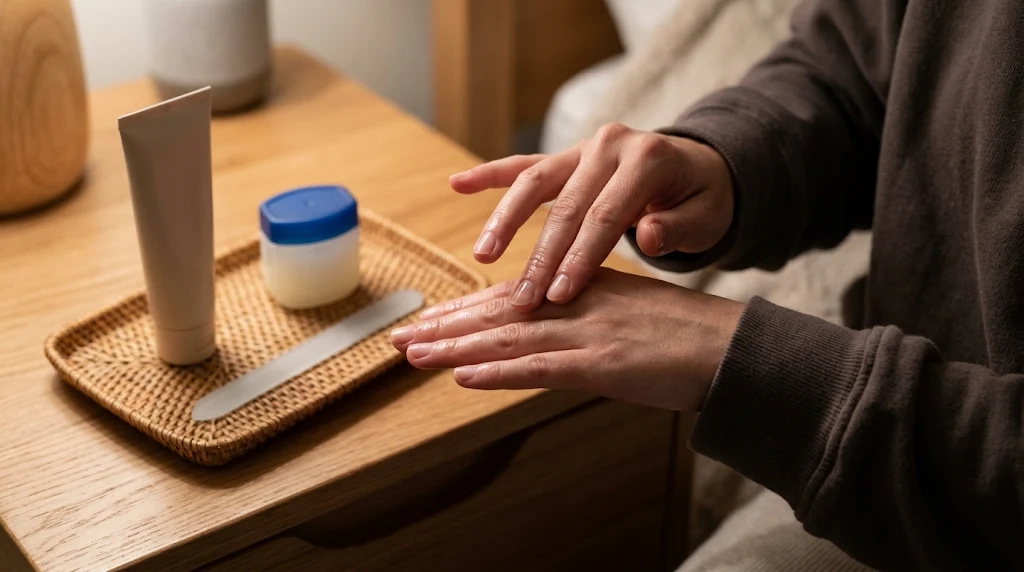
A consistent routine is usually more useful than constantly switching between nail treatments.
Here’s a manageable approach you can adapt to your lifestyle.
Morning: Moisturize and Check Your Nails
- Apply fragrance-free hand cream after washing.
- Check for rough tips before they catch on fabric.
- Keep your nails at a comfortable length.
- Use protective gloves when cleaning.
During the Day: Prevent Repeated Damage
- Reapply moisturizer when your hands feel dry.
- Avoid picking at lifting polish or peeling nail layers.
- Keep cleaning chemicals away from bare hands.
- Use tools rather than your fingernails to open objects.
Evening: Condition and Protect
- Wash your hands gently and pat them dry.
- Massage a little cuticle oil around each nail.
- Apply hand cream to your fingertips and nail surfaces.
- Use a thin layer of petroleum jelly on very dry areas if needed.
If you prefer a simple weekly maintenance schedule, our beginner-friendly nail care routine offers another practical starting point.
What Should You Do and Avoid With Fragile Nails?
Do
- Moisturize your nails and cuticles.
- Keep nails comfortably short.
- Use gentle filing techniques.
- Wear gloves for wet chores.
- Allow damaged nail to grow out.
Don’t
- Peel gel polish off your nails.
- Over-buff fragile surfaces.
- Pull away peeling nail layers.
- Use nails to scrape objects.
- Take supplements without a reason.
How Long Does It Take for Damaged Nails to Improve?
The answer depends on whether you’re managing surface dryness or waiting for physically damaged nail to grow out.
Dry cuticles may feel more comfortable soon after moisturizing, sometimes within the same day.
However, a nail that has cracked or peeled cannot repair itself in the same way living skin can.
Healthy new nail grows from the nail matrix beneath the base of your nail and gradually moves forward.
Fingernails generally grow around 3 millimeters per month, although individual growth rates vary.
Replacing an entire fingernail typically takes approximately four to six months.
If your nails are peeling near the tips, keeping them short and protected can reduce additional damage while the affected portion grows outward.
Pro Tip
Take a clear photograph of your natural nails once every four weeks under similar lighting. Comparing monthly photos can help you notice changes in breakage, peeling, and new growth without expecting overnight results.
When Should You See a Dermatologist About Nail Changes?
Many mild nail problems improve with better protection and gentler nail care. However, some changes deserve medical attention.
Arrange an assessment if you notice:
- Persistent splitting that doesn’t improve with careful grooming.
- Pain, swelling, redness, or discharge around a nail.
- Nail lifting or separation from the nail bed.
- Unexplained thickening or significant discoloration.
- New or changing dark streaks in a nail.
- Sudden changes affecting several nails.
- Nail changes accompanied by unexplained fatigue or other symptoms.
A dermatologist can help distinguish cosmetic damage from infection, inflammatory nail conditions, and possible medical causes.
Seek prompt assessment for a new or changing dark nail streak, especially when pigment extends into the surrounding skin.
Don’t conceal unexplained or painful nail changes beneath artificial enhancements while waiting for them to improve.
Frequently Asked Questions About Dry, Brittle, and Peeling Nails
Q: Are dry nails the same as brittle nails?
A: No. Dry nails mainly describe roughness or reduced moisture, while brittle nails are prone to breaking and splitting. Dryness may contribute to brittleness, but the two symptoms aren’t identical.
Q: Why do my nails peel but not break?
A: Peeling occurs when thin layers of the nail plate separate, usually at the tips. Repeated water exposure, manicure damage, or friction can contribute even when the rest of the nail doesn’t break completely.
Q: Can cuticle oil repair peeling nails?
A: Cuticle oil can condition dry nail surfaces and surrounding skin, but it cannot permanently reconnect layers that have already peeled apart. Gentle grooming and protection help while damaged sections grow out.
Q: Do brittle nails mean you need biotin?
A: Not necessarily. Evidence supporting routine biotin supplements for brittle nails is limited, and high doses can interfere with certain laboratory tests. Ask a healthcare professional before using supplements to treat nail changes.
Q: Should you stop wearing nail polish if your nails are peeling?
A: Taking a break from frequent polish changes and aggressive removal may help reduce additional damage. You don’t necessarily need to avoid every regular polish, but you should avoid covering painful or unexplained nail problems.
Dry Nails vs Brittle or Peeling Nails: What Matters Most?
Dry nails tend to look rough or dull, brittle nails break or split easily, and peeling nails develop visible layers that separate at the tips.
Although these symptoms overlap, identifying your main problem helps you choose a more useful routine. Start with moisturizing, gentle filing, protective gloves, and avoiding unnecessary manicure damage.
Healthy nail care is about protecting the nail you have while new growth gradually replaces damaged sections. Save this guide to your Pinterest nail care board so you can revisit these tips whenever your nails need extra attention.

Hi, I’m Jessica, the creator behind Unique Lash & Nails Katy.
I created this website for anyone who loves beautiful nails as much as I do. Here, I share trendy nail designs, seasonal manicure ideas, easy nail care tips, honest product recommendations, and step-by-step guides to help you create salon-worthy nails at home. Whether you’re looking for everyday inspiration or your next favorite nail trend, I hope you’ll find something you love.