How to Protect Your Nails: 10 Easy Daily Habits
Quick Answer
To protect your nails, keep them clean and comfortably short, moisturize your cuticles daily, wear gloves when cleaning, and file rough edges before they snag. Avoid using your nails as tools or peeling off gel and acrylic products. Consistent gentle care protects the nail you have while healthier growth gradually replaces damaged areas.
Time Needed
5–10 minutes daily
Difficulty
Beginner
Items Needed
5 basic supplies
Result Lasts
With ongoing care
Your nails might look perfect after a manicure, only to start peeling, bending, or breaking a few days later. Everyday activities can put more stress on natural nails than you realize.
The good news? Protecting your nails doesn’t require an expensive routine or giving up your favorite nail designs. A few small changes can make your nails easier to maintain.
Here’s how to prevent avoidable damage at home, during daily chores, and whenever you get a manicure.


What Damages Your Nails the Most?
Before changing your nail care routine, it helps to understand what you’re protecting your nails against.
Your nail plate consists mainly of hardened keratin. Unlike living skin, its damaged layers can’t heal back together after splitting or aggressive filing.
Instead, damaged areas gradually grow outward as new nail forms at the base.
Some common causes of nail damage include:
- Frequent water exposure: Repeated soaking and drying can contribute to splitting and peeling, especially if your nails are already brittle.
- Household cleaning chemicals: Detergents and solvents can irritate surrounding skin and increase dryness.
- Improper manicure removal: Peeling off attached gel, dip, or acrylic products can remove surface layers from natural nails.
- Physical pressure: Opening cans, scraping labels, or prying objects with your nails can create cracks.
- Excessive filing: Aggressive buffing gradually removes nail thickness.
- Cuticle damage: Cutting or picking at protective tissue can irritate the skin and create opportunities for infection.
Understanding these risks makes it much easier to choose effective protection instead of relying on random nail treatments.
For a broader everyday routine, explore our guide on the best nail care routine for healthy nails.
What Do You Need to Protect Your Nails?
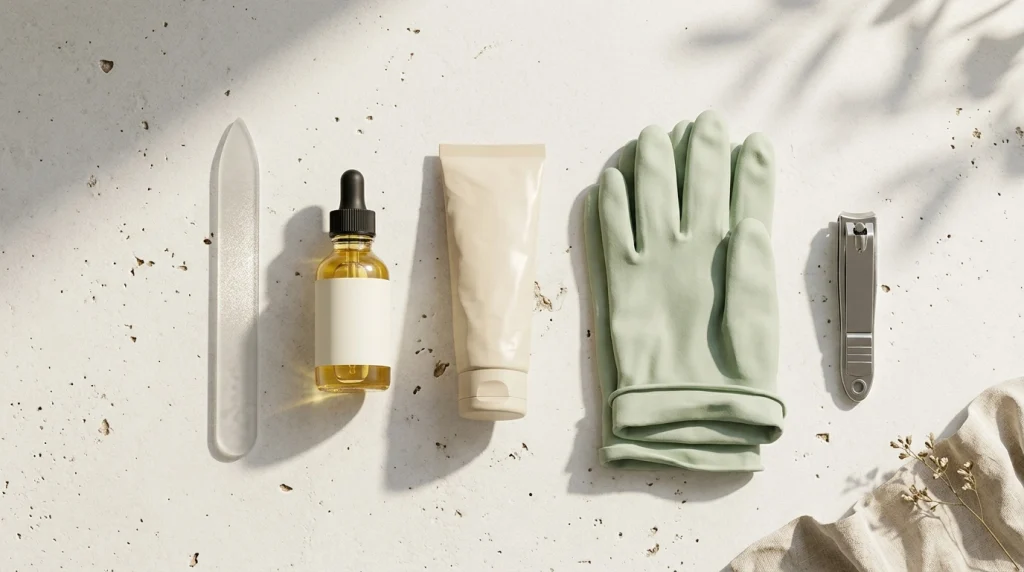
You don’t need a drawer full of products. Five basic supplies cover most everyday nail protection needs.
- Fine-grit or glass nail file: Smooths small snags without aggressive filing.
- Cuticle oil: Helps condition dry nail folds and surrounding skin.
- Fragrance-free hand cream: Moisturizes your hands, nails, and cuticles after washing.
- Protective cleaning gloves: Reduce direct contact with water and household cleaning products.
- Nail clippers: Keep longer nails at a manageable length before accidental breaks happen.
Optional supplies include petroleum jelly for particularly dry skin and a base coat for protecting against polish staining.
If you’re building a small kit, a glass nail file is a practical place to start.
How Can You Protect Your Nails Every Day?
These ten habits help reduce unnecessary stress on your natural nails. Start with the ones that address the damage you experience most often.
1. Keep Your Nails at a Manageable Length
Long nails can look elegant, but extra length creates more leverage when a nail catches on clothing, furniture, or another object.
Trim your nails whenever they begin interfering with daily activities. If they already peel or split, keeping the free edge short temporarily reduces opportunities for further breakage.
Choose a rounded or softly squared shape with smooth corners. Sharp corners may catch more easily, particularly when your nails are fragile.
Common mistake: Cutting nails extremely short in an attempt to prevent breaking. Avoid cutting into attached skin or causing discomfort.
2. Moisturize Your Nails and Cuticles Daily
Dry cuticles can become rough, cracked, and uncomfortable. Regular moisturizing helps maintain the skin barrier around your nails.
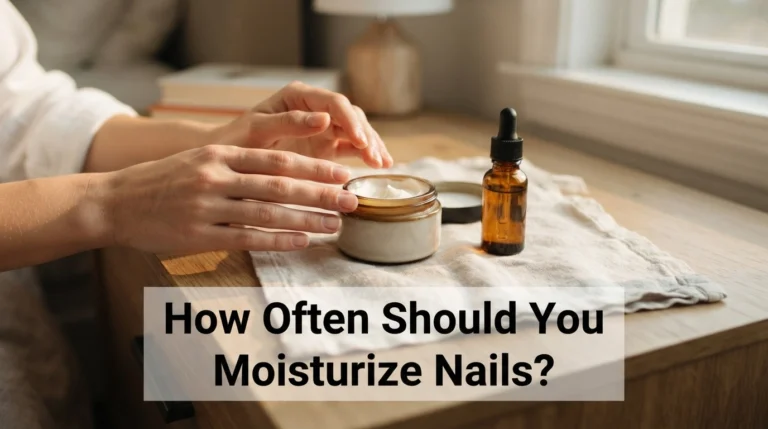
Apply a small drop of jojoba-based cuticle oil around each nail and massage gently. Follow with hand cream, especially after washing your hands.
For particularly dry skin, apply a thin layer of petroleum jelly before bed to help limit moisture loss overnight.
Common mistake: Applying oil once and expecting permanent results. Moisturizing works best as a consistent habit.
Pro Tip
Keep a small cuticle oil pen beside your hand cream. Apply both after your evening handwashing routine so you don’t have to remember an entirely separate nail care step.
3. Wear Gloves When Washing Dishes or Cleaning
One of the easiest ways to protect your nails is to reduce unnecessary exposure to prolonged moisture and cleaning chemicals.
Wear properly fitted gloves while washing dishes, cleaning bathrooms, or handling detergents.
For longer cleaning sessions, breathable cotton liners may help if moisture collects inside your gloves. Remove wet gloves promptly and dry your hands afterward.
Common mistake: Wearing damp gloves for long periods. Trapped moisture can irritate skin and make your protective routine less comfortable.
4. Stop Using Your Nails as Tools
Using your fingernails to open soda cans, scrape stickers, or pry apart packaging places concentrated pressure on their free edges.
That pressure can produce small cracks that eventually become bigger splits.
Use a spoon handle or another appropriate tool to lift can tabs. Reach for a scraper when removing labels and use your fingertips rather than nail tips for everyday tasks.
Common mistake: Assuming strong nails can’t break from mechanical pressure. Even healthy nails can split when force is applied at the wrong angle.
5. File Rough Edges Before They Become Breaks
A tiny snag might seem harmless until it catches on your sweater or hair.
When you notice a rough edge, smooth it with a fine-grit nail file using light, controlled strokes.
Follow your nail’s existing shape and avoid filing deeply into the sides, where removing too much material can make the edge more vulnerable.
Common mistake: Repeatedly filing the entire nail when only one small section needs smoothing.
6. Avoid Aggressive Cuticle Cutting
Your cuticle helps seal the space between your nail plate and surrounding skin. Damaging that protective area can increase irritation and infection risk.
Instead of cutting healthy cuticle tissue, moisturize it regularly. If you develop a hangnail, carefully trim only the loose piece of skin using clean clippers.
Never pull a hangnail or dig underneath the skin around your nails.
Common mistake: Cutting deeper to create a cleaner manicure appearance. This can leave sensitive tissue exposed.
7. Remove Nail Polish Without Peeling
Picking off regular polish or peeling away attached gel can damage the upper layers of your natural nail plate.
Remove traditional nail polish with an appropriate remover and soft cotton pad instead of scraping it away.
For gel, dip, and artificial enhancements, follow the correct removal method for the product. Some systems need professional removal.
If you’re unsure which product is on your nails, ask your nail technician before attempting removal.
Common mistake: Pulling away a lifting gel corner because it looks almost detached. The remaining attached section may still be strongly bonded to your natural nail.
8. Choose Gentle Manicure Preparation
You can enjoy polished nails without repeatedly thinning the natural nail surface.
Before applying polish, gently clean and dry your nails. Avoid aggressive buffing just to make the nail plate completely smooth.
A suitable base coat can help reduce staining from pigmented traditional nail polish and improve how evenly your manicure applies.
For gel services, proper product compatibility, lamp use, and removal technique are particularly important.
Common mistake: Filing down visible nail ridges until they disappear. Excessive filing removes nail material rather than fixing the underlying reason for the ridges.
9. Protect Your Nails During Everyday Activities
Gardening, moving furniture, exercising, and handling heavy objects can all expose your nails to accidental impact.
Wear suitable work gloves for gardening and rough tasks. Keep nail length practical for activities that involve gripping equipment or repeated hand pressure.
When typing or using your phone, try using your fingertips instead of repeatedly striking hard surfaces with long nail tips.
Common mistake: Keeping excessively long nails despite repeated painful snags. Adjusting your length can be more effective than adding more nail hardener.
10. Give Damaged Nails Time to Grow Out
If your nails become thin, rough, or peeling after a manicure, adding another enhancement immediately may make it harder to monitor their condition.
Consider keeping them short and focusing on moisture and protection while the affected areas grow outward.
Don’t expect a cream or oil to permanently rebuild nail layers that have already separated. These products help with conditioning, while new nail growth gradually replaces existing damage.
Our guide on how to repair a damaged nail at home safely explains what you can manage yourself and when professional care is needed.
How Do You Protect Your Nails When Wearing Gel or Acrylics?
You don’t need to abandon gel polish, acrylic extensions, or nail art to practice safer nail care. The goal is to minimize unnecessary trauma during application, wear, maintenance, and removal.
Before Your Manicure
- Choose a nail salon that follows proper cleaning and disinfection practices.
- Tell your technician if you have thin, painful, or damaged nails.
- Avoid applying enhancements over suspicious discoloration, broken skin, or signs of infection.
- Ask that natural nail filing remain as gentle as the product system allows.
While Wearing Extensions
Keep the underside of longer nails clean and dry, and avoid using extensions to pry or lift objects.
If an enhancement lifts, have it assessed and removed or corrected properly. Don’t glue down a separated area without checking the natural nail beneath it.
Watch for itching, redness, swelling, or a rash around gel and acrylic products, which can indicate irritation or an allergy.
During Removal
Different nail products require different removal methods. Soak-off gel may be removable with acetone, while hard gel and some extensions generally require careful professional filing.
Never forcefully scrape off product that remains firmly attached.
Warning
Don’t cover painful, swollen, bleeding, or noticeably discolored nails with another manicure. Seek medical evaluation for pus, worsening redness, significant nail lifting, or a new unexplained dark streak. These changes aren’t problems to fix with cosmetic nail products.
What Are the Biggest Nail Care Do’s and Don’ts?
Do
- Moisturize after handwashing.
- Wear gloves during wet cleaning.
- File small snags promptly.
- Keep your nail tools clean.
- Remove enhancements correctly.
Don’t
- Peel off attached gel polish.
- Bite nails or pull hangnails.
- Use nails to open packaging.
- Over-buff thin nail plates.
- Cover suspicious nail changes.
How Long Does It Take to See Healthier Nails?
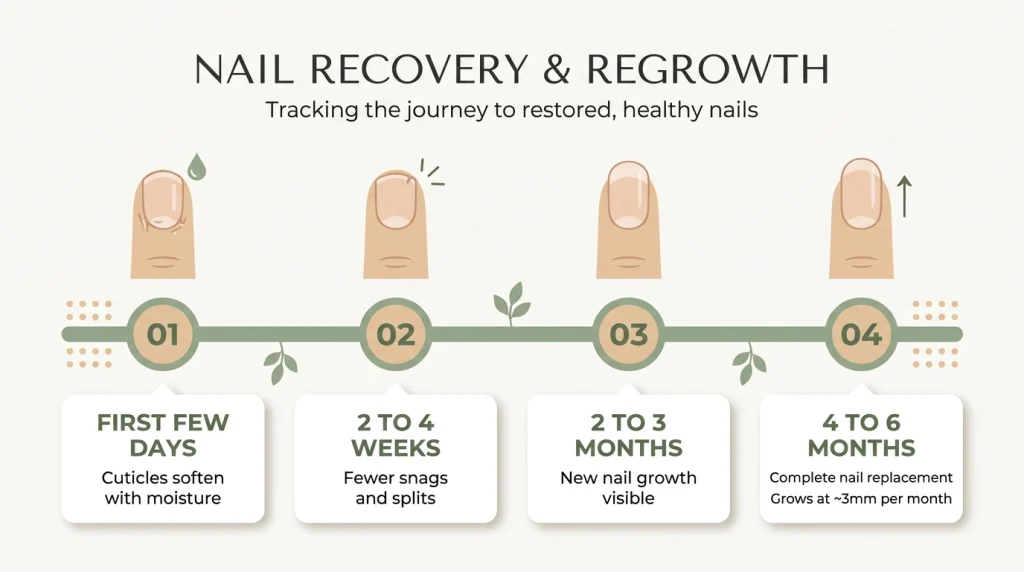
Protection starts immediately, but visible nail recovery takes longer because your existing nail plate must grow out.
Fingernails typically grow around 3 millimeters per month, although the rate varies with age, health, and individual factors. A complete fingernail replacement commonly takes approximately four to six months.
- First few days: Regular moisturizing may help dry cuticles feel softer and more comfortable.
- After two to four weeks: You may notice fewer fresh snags if you’ve reduced repeated stress and kept the edges smooth.
- After two to three months: Newer nail growth becomes more visible, although damaged tips may still remain.
- After four to six months: Much of a fingernail may have grown out, depending on the original damage location and your individual growth rate.
These are general expectations, not guaranteed treatment results. If your nails continue worsening despite gentle care, consider asking a dermatologist about other possible causes.
You can also follow our simple routine for making nails healthy again if you’re recovering from frequent breakage or manicure damage.
Which Products Actually Help Protect Your Nails?
The most useful products are often the least complicated. Choose supplies that address a specific problem rather than buying multiple treatments with overlapping promises.
Recommended Product
Jojoba-Based Cuticle Oil
A practical option for conditioning dry cuticles and nail folds. Choose a fragrance-free formula if your skin is sensitive.
As an Amazon Associate, we earn from qualifying purchases.
Recommended Product
Reusable Household Cleaning Gloves
Useful for limiting nail exposure to dishwater, detergents, and cleaning chemicals. Pick a comfortable fit that lets you grip objects securely.
As an Amazon Associate, we earn from qualifying purchases.
Recommended Product
Fragrance-Free Hand Cream
A glycerin- or petrolatum-containing moisturizer helps support the skin barrier around your nails, especially after frequent washing.
As an Amazon Associate, we earn from qualifying purchases.
What Small Changes Make the Biggest Difference?
You don’t need to perform all ten protective steps every morning. Instead, build a repeatable routine around your existing habits.
After Washing Your Hands
Dry your hands gently and apply moisturizer over your nails and cuticles. This is especially helpful if frequent washing leaves your skin feeling tight.
Before Household Chores
Put on cleaning gloves before handling detergents or spending extended periods in water. Keep a dedicated pair near the kitchen sink so they’re easy to use.
Before Bed
Check for rough nail edges, apply cuticle oil, and use hand cream. This brief routine can help you catch small problems before they become inconvenient breaks.
Pro Tip
If one nail repeatedly breaks in the same place, check whether it catches during a particular activity, such as opening drawers, typing, or working with tools. Changing that repeated contact may help more than applying additional nail treatments.
If you’re unsure which products deserve space in your routine, see our article on the healthiest things to put on your nails.
Frequently Asked Questions About Protecting Your Nails
Q: How can I protect my nails from breaking?
A: Keep your nails at a comfortable length, smooth rough edges, moisturize regularly, and wear gloves during cleaning. Avoid using your nails to pry or scrape objects because repeated pressure increases breakage risk.
Q: Does nail polish protect natural nails?
A: Traditional nail polish creates a temporary coating that may reduce minor surface wear, but it doesn’t permanently strengthen the nail plate. Gentle preparation and removal remain important.
Q: Can cuticle oil prevent nail damage?
A: Cuticle oil helps condition dry skin around your nails and may make brittle nail surfaces feel less dry. It cannot prevent every break or permanently repair already separated nail layers.
Q: Should I stop wearing gel nails to protect my natural nails?
A: Not necessarily. Proper application and removal help minimize damage, but already thin, painful, or peeling nails may benefit from a break. Stop using products that cause itching, swelling, or other signs of irritation.
Q: How do I protect my nails while washing dishes?
A: Wear properly fitted waterproof household gloves, avoid leaving your hands in water unnecessarily, and dry your hands afterward. Apply hand cream to replace moisture lost through repeated washing.
What’s the Best Way to Keep Your Nails Protected?
Learning how to protect your nails comes down to consistent, gentle habits. Keep your nails smooth, moisturize daily, shield them from prolonged water and chemicals, and never forcefully remove attached manicure products.
You don’t need perfect nails overnight. Focus on preventing new damage while healthy growth gradually replaces older, weakened areas.
Save this guide on Pinterest so these simple nail protection tips are ready whenever your nails need extra care.

Hi, I’m Jessica, the creator behind Unique Lash & Nails Katy.
I created this website for anyone who loves beautiful nails as much as I do. Here, I share trendy nail designs, seasonal manicure ideas, easy nail care tips, honest product recommendations, and step-by-step guides to help you create salon-worthy nails at home. Whether you’re looking for everyday inspiration or your next favorite nail trend, I hope you’ll find something you love.