What Makes Nails Grow? Simple, Real Answers
Quick Answer
Your nails grow from the matrix, a small area of living cells hidden under the skin at the base of each nail. Those cells make keratin, a tough protein, and then harden into the nail plate you see. Growth depends mainly on your age, circulation, hormones, overall health, and how well you protect the new nail from breaking. Most fingernails grow about 3 millimetres a month, while toenails grow more slowly, at roughly 1 millimetre a month. You cannot force that factory to work overnight, yet you can give it steady fuel, gentle care, and fewer reasons to snap.
Have you ever wondered why one hand seems to outgrow the other, or why your nails stall just when you finally want length? Your nail matrix is working every day, even when the change looks invisible. Small daily habits decide whether that new growth survives long enough to become length you can actually see.
Inside this guide, you will learn exactly how nail growth works, which factors truly move the needle, and which popular tricks waste your time. You will also get a simple routine that protects your length without turning your bathroom shelf into a science lab.


How Does Nail Growth Actually Work?
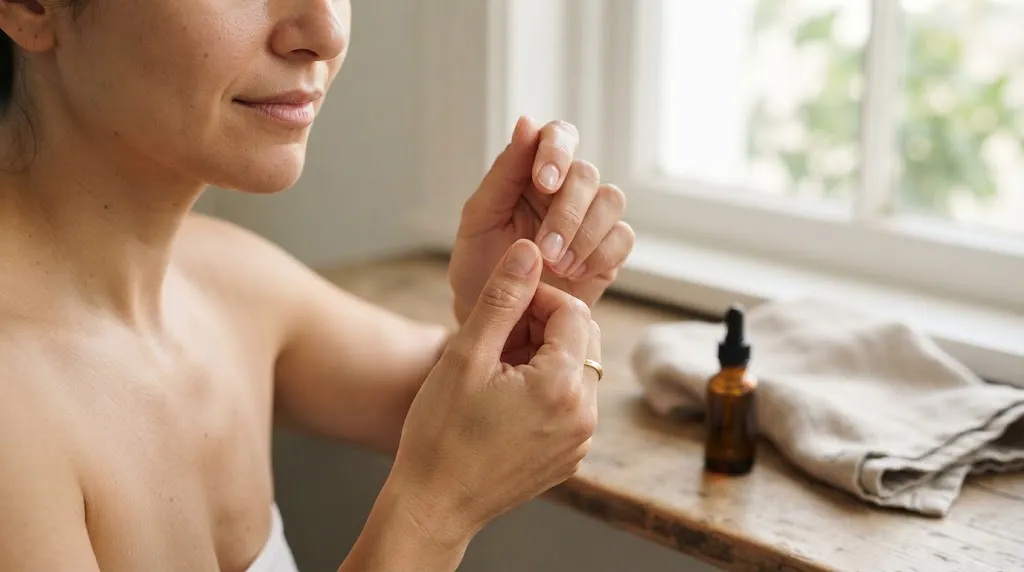
Picture your nail as a slow conveyor belt. New cells form in the matrix, push older cells forward, and flatten into hard keratin as they travel toward your fingertip. That journey explains why a dent near your cuticle today may not reach your free edge for weeks. Damage at the base can therefore show up long after you have forgotten the cause.
Your nail plate itself is dead tissue, much like the visible part of your hair. Because of that, no oil or cream can make the plate itself grow from the outside. What those products can do is keep the plate flexible, seal in moisture, and protect the living skin and matrix area around it. Healthy surroundings matter because a dry, cracked cuticle area leaves your new nail more exposed to snagging and splitting.
Blood flow plays a quiet but powerful role in this process. Your matrix needs oxygen and nutrients delivered through tiny blood vessels, which is why warm hands, gentle movement, and good general circulation support steady growth. Pressing, picking, or cutting your cuticles aggressively can irritate that delicate zone, so a gentle approach protects far more than it costs you in neatness.
What Really Controls How Fast Your Nails Grow?
Several factors work together, and most of them are not things you can switch on in a weekend. Understanding them helps you set realistic expectations instead of chasing a miracle product.
Your age and natural rhythm
Children and younger adults often grow nails faster than older adults because cell turnover tends to slow with age. That shift is normal, not a sign that you have done something wrong. Your goal after your twenties is usually steady maintenance, not matching the growth rate you remember from your teens.
Your dominant hand and daily use
Many people notice faster growth on their dominant hand, possibly because that hand gets more blood flow through frequent movement. Typing, cooking, and everyday hand use keep circulation moving, although rough use can cancel out that advantage by breaking the nail before it gains length. Gentle, frequent movement helps you more than heavy, repeated impact.
Hormones and seasons
Hormonal shifts during pregnancy, for example, can speed growth for some people, while other hormonal changes may slow it down. Warmer months also tend to bring slightly faster growth, likely because circulation improves in warmer weather. You cannot control the calendar, but you can protect your nails through cold, dry months when they become more brittle.
Your overall health and diet
Your body treats nail growth as a lower priority than your heart, brain, and major organs. When you are run down, recovering from illness, or eating very little protein, your nails may show it first through slower growth, ridges, or breakage. A varied diet with enough protein, iron-rich foods, and colourful vegetables gives your matrix the raw materials it needs. Supplements only help when you actually have a gap in your diet, so check with a clinician before adding one for your nails alone.
Your nail habits
Repeated peeling, harsh removal, and constant exposure to water can weaken the plate and make growth look slower, even when your matrix is working normally. Think of it this way: your nails may be growing at a steady pace, yet breaking at the same pace, so your length never changes. Protecting the free edge often creates more visible progress than any growth-boosting claim.
Can You Speed Up Nail Growth?
Honestly, you cannot double your growth rate with a single product. You can, however, remove the obstacles that keep cutting your progress short. That distinction matters because it keeps you from spending money on promises that biology cannot keep.
Focus first on keeping your nails hydrated and flexible. Dry nails snap, while slightly flexible nails bend and survive everyday bumps. Apply cuticle oil or a rich hand cream daily, especially after washing your hands, because soap and water strip natural oils from your nails and surrounding skin.
Keep your length realistic for your lifestyle. A slightly shorter, well-shaped nail that stays intact will look longer within a month than a very long nail that keeps breaking at the corners. File in one direction with a gentle file, round sharp corners just enough to prevent snagging, and avoid using your nails as tools to open cans, scrape labels, or pry things apart.
Give your nails regular breaks from heavy polish and harsh removal when you can. A short polish-free stretch lets you check their true condition, moisturise the plate, and avoid the peeling that often follows aggressive removal. If you love colour, choose gentler removal methods and avoid peeling polish off, since peeling lifts thin layers from your nail plate along with it.
How Long Will It Take to See Longer Nails?
Most people need six to eight weeks to notice a clear difference, because fingernails grow only a few millimetres each month. A full fingernail can take around six months to replace itself from matrix to free edge, while a toenail may take closer to a year. Those timelines explain why patience matters more than any quick fix.
Take a photo of your nails on day one, then again after four weeks, using the same lighting and hand position. Daily mirror checks make growth almost impossible to see, whereas a side-by-side photo reveals the change your eyes miss. Mark your calendar for a monthly check-in instead of judging your progress every morning.
Expect small setbacks along the way. One broken nail does not mean your routine has failed, and it does not mean you should start over with a completely new set of products. Trim the broken nail to a comfortable length, keep the others protected, and let steady care bring them back into balance.
What Helps Your Nails Grow Stronger, Not Just Longer?
Length without strength rarely lasts, so your routine should protect the plate while your matrix does its work. Start with moisture, because hydrated nails flex instead of cracking under pressure. Massage a drop of jojoba cuticle oil around each nail at night, then follow with hand cream to seal that moisture in while you sleep.
Water deserves special attention in your routine. Short washes are fine, yet long soaks can swell the nail plate and then leave it dry and brittle as it contracts again. Wear gloves for washing dishes and cleaning, and dry your hands thoroughly afterwards before applying cream. For a closer look at this habit, read about whether hot water can damage your nails and how temperature changes your nail care.
Gentle shaping also protects your growth. A glass file smooths the edge without the rough tearing that some coarse emery boards can cause, and filing in one direction reduces micro-splits at the tip. Keep your file in your bag for quick fixes, because a tiny snag caught early rarely turns into a full break later.
Do This, Not That: Daily Habits for Visible Growth
Do
- +Oil your cuticles daily, especially after handwashing.
- +Wear gloves for dishes, cleaning, and gardening.
- +File gently in one direction and smooth snags early.
- +Keep a realistic length that survives your daily routine.
Don’t
- −Peel polish, bite nails, or pick at your cuticles.
- −Use your nails as tools for opening or scraping.
- −Soak your hands for long periods without moisturising after.
- −Cut your cuticles aggressively or push them back roughly.
Polish breaks can fit naturally into this routine, especially if your nails feel thin after removal. During a break, you can still keep your nails looking polished and cared for with gentle buffing and shine. Learn how to shine nails without polish so your break feels like a treat rather than a sacrifice.
Some readers also wonder whether going polish-free actually helps in the long run. A short break gives you a clearer view of ridges, peeling, and dryness, and it removes one source of chemical exposure while your nails recover. Explore whether nails are healthier without nail polish before deciding how often you want those breaks.
Pro Tips You Won’t Hear Everywhere
Pro Tip
Apply oil to the skin under your free edge as well as around your cuticle. That underside dries out easily, and keeping it supple helps prevent the peeling that starts at the tip and travels backwards.
Shape your nails to match how you actually live, not just the shape you love on Pinterest. Oval and rounded shapes distribute pressure more evenly than sharp square corners, which catch on fabric and break more easily. A soft oval often keeps more length for people who type all day or work with their hands.
Protect your nails at night with a simple habit. Slather on hand cream before bed, then let it absorb while you sleep, when your hands are not being washed every hour. Night-time moisture works quietly for eight hours, which makes it one of the easiest wins in your whole routine.
Consider a gentler manicure style when your nails need recovery time. A Japanese manicure focuses on buffing, nourishment, and a natural shine rather than heavy layers of product. Read about what a Japanese manicure without polish involves if you want a polished look while your nails rest.
Warning
Sudden nail changes deserve attention, not a cover-up. Dark streaks, persistent swelling, pain around the nail, or nails that lift away from the bed should be checked by a clinician promptly, especially if only one nail is affected.
Editorial Picks That Support Your Routine
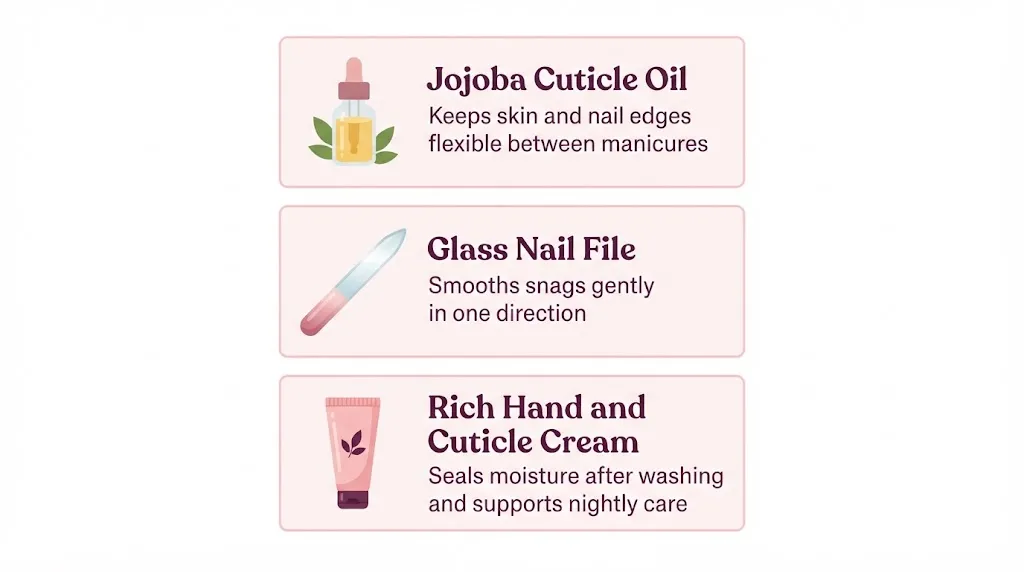
Products cannot grow your nails for you, yet the right tools make gentle care much easier to stick with. Each pick below is an editorial pick for this guide, chosen because it fits the routine above, not because of a lab test or a measured growth result.
Editorial Pick
Jojoba Cuticle Oil
A light oil like this absorbs easily around your cuticles and helps keep the skin and nail edge flexible between manicures.
As an Amazon Associate, we earn from qualifying purchases.
Editorial Pick
Glass Nail File
A fine glass file lets you smooth snags gently in one direction, which helps you avoid the rough edges that catch and split.
As an Amazon Associate, we earn from qualifying purchases.
Editorial Pick
Rich Hand and Cuticle Cream
A rich cream seals in moisture after washing and gives your hands a simple nightly treatment while your nails recover.
As an Amazon Associate, we earn from qualifying purchases.
When you do wear polish, product choice still matters for keeping length. Harsh formulas and rough removal can undo weeks of careful growth in a single evening, so gentler options protect your progress. If you want help choosing, check what the safest nail polish brand options look like and compare their ingredients with your own sensitivities.
Frequently Asked Questions About Nail Growth
Q: How fast do fingernails normally grow?
A: Most fingernails grow about 3 millimetres a month, although your age, health, and season can shift that pace slightly. Toenails grow much more slowly, at roughly 1 millimetre a month.
Q: Does cuticle oil make nails grow faster?
A: Cuticle oil does not speed up your matrix, yet it helps your new growth survive by keeping nails flexible and less likely to split. That protection often creates more visible length over time.
Q: Why do my nails break before they get long?
A: Breakage usually means your growth is being cancelled out at the tip through dryness, peeling, rough filing, or using nails as tools. Shorten your goal length slightly, moisturise daily, and file snags early.
Q: Do vitamins help nails grow?
A: Vitamins help most when your diet is missing something your body needs, especially protein or iron. Eating a varied diet usually matters more than adding a supplement for nails alone.
Q: Why does one hand grow faster than the other?
A: Your dominant hand often grows slightly faster, possibly because frequent movement improves blood flow to those nails. Small differences between hands are normal and rarely signal a problem.
Your Next Step for Longer, Stronger Nails
Your nails are already growing, even on days when progress feels invisible. Protect that growth with daily moisture, gentle filing, gloves for wet work, and a length your lifestyle can actually keep. Save this guide on Pinterest, take your day-one photo, and check back in four weeks to see how far steady care has taken you.

Hi, I’m Jessica, the creator behind Unique Lash & Nails Katy.
I created this website for anyone who loves beautiful nails as much as I do. Here, I share trendy nail designs, seasonal manicure ideas, easy nail care tips, honest product recommendations, and step-by-step guides to help you create salon-worthy nails at home. Whether you’re looking for everyday inspiration or your next favorite nail trend, I hope you’ll find something you love.