How to Grow Nails Faster: 9 Easy, Healthy Habits
Quick Answer
To grow nails faster—or, more realistically, keep more of the length your nails naturally grow—moisturize your nails and cuticles daily, wear gloves for wet chores, file away snags, and avoid peeling off manicures. Eat enough protein and a varied diet, and don’t rely on unproven growth hacks. Fingernails usually grow about 3 millimeters per month, so consistent protection matters more than overnight tricks.
If your nails seem to stop growing the moment they reach your fingertips, they may actually be growing just fine. The problem is often that the tips split or snap before you can enjoy the length.
Learning how to grow nails faster starts with understanding what you can change. You can’t force healthy nails to grow an inch in a week, but you can give new growth a better chance of surviving. Here’s a simple plan that fits into real life.


How Fast Do Fingernails Actually Grow?

Most fingernails grow roughly 3 millimeters per month, or about one-tenth of a millimeter per day. Growth varies with age, general health, individual nails, and other factors. A full fingernail may take six months or longer to replace itself.
That means gaining around 3 millimeters of new nail in four weeks is a reasonable ballpark, not a promise. If you lose 2 millimeters to splitting every month, the visible result can feel like zero growth. Preventing those breaks is the practical secret to longer nails.
Here’s a realistic way to think about your timeline:
- After 7 days: Your nail edges and cuticles may look neater and feel less dry, but visible new length will be small.
- After 2–4 weeks: You may notice a narrow band of new growth near the base, especially if you have polish on your nails.
- After 6–8 weeks: A few millimeters of additional length may become noticeable if you avoid chips and splits.
- After several months: Older damaged portions gradually move toward the tips and can be trimmed away.
Take a photo of your bare nails at the beginning and another in four weeks, using the same lighting and finger position. It is much easier to spot gradual changes in photographs than by checking your nails every morning.
What Helps Your Nails Grow Longer Without Breaking?
Think of nail care as two separate jobs: supporting normal nail formation at the base and keeping the existing nail plate intact at the tip. These nine habits focus on both, without expensive promises.
1. Apply Cuticle Oil Every Day
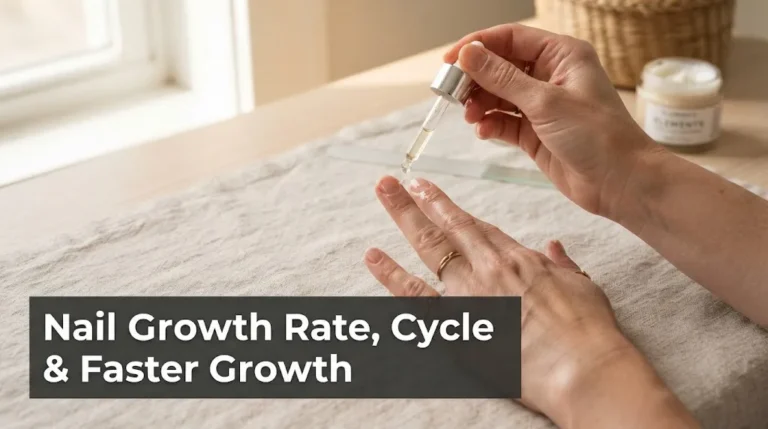
A small drop of cuticle oil is one of the easiest additions to your routine. Try a jojoba-based oil, or a simple fragrance-free nail oil that feels comfortable on your skin. Massage it over the nail plate, around the sidewalls, and along the cuticle area.
Oil won’t switch your nail matrix into high-speed growth mode. Its benefit is conditioning dry nails and nearby skin, which may help brittle edges feel less prone to catching and cracking. Use it after handwashing when practical and before bed. If you’re deciding between formulas, see this guide to the best oils for weak, damaged, or brittle nails.
Best for: Dry cuticles, rough nail edges, and people who wash their hands frequently. Limitation: Oil cannot permanently repair a deep split or make your nail grow dramatically faster.
2. Moisturize After Handwashing
Every time you wash your hands, water and cleansers can leave the skin around your nails feeling tight. Keep a fragrance-free hand cream near the sink and rub it across your fingertips, nails, and nail folds—not just your palms.
Look for straightforward moisturizing ingredients such as glycerin or petrolatum. At night, a thin layer of petroleum jelly over particularly dry areas can reduce moisture loss. This approach is inexpensive and easy to repeat.
Best for: Nails exposed to frequent soaps or sanitizers. Limitation: Moisturizer improves dryness; it does not fuse separated nail layers back together.
3. Wear Gloves When Washing Dishes or Cleaning
Repeated wetting and drying can make nails more vulnerable to peeling and splitting. Detergents and cleaning products add another source of irritation. Wear properly fitting household gloves during dishwashing, scrubbing, and other extended wet work.
Choose reusable gloves with a comfortable lining, or wear thin cotton liners if your hands sweat inside them. Dry your hands after the chore, then apply cream. Avoid leaving damp gloves on for long periods.
Best for: Anyone whose nails soften after cleaning or break during household work. Limitation: Gloves prevent avoidable exposure but cannot correct a medical cause of brittle nails.
4. Keep Your Nails Shorter Until They Get Stronger
If your nails break at the same length repeatedly, grow them in stages. Start with an even, short length and a soft oval or squoval shape. Smooth sharp corners with a fine-grit file so they don’t catch on clothing or hair.
A long, thin tip works like a little lever: the farther it extends, the easier it is to bend or snag. Keeping the free edge modest while damaged sections grow out gives you a sturdier starting point. You can gradually add length when the edges stop splitting.
Best for: Frequent corner breaks and thin nail tips. Limitation: Filing doesn’t speed growth; it reduces the amount you lose.
5. Stop Using Your Nails as Tools
Prying open a soda tab, scraping off stickers, or picking at tight packaging puts direct stress on the free edge. Those small impacts can create tiny cracks that become a major break later.
Use the side of a fingertip, a coin, or an actual tool instead. If you have a habit of tapping or picking your nails against hard surfaces, pay attention to when it happens and keep your hands occupied another way.
Best for: Anyone whose nails chip suddenly despite a good moisturizing routine. Limitation: This habit protects existing length rather than changing biological growth.
6. Remove Polish and Enhancements Gently
Peeling off gel, dip powder, press-ons, or regular polish can pull away superficial nail layers. Over-filing or forceful scraping may leave the nail plate thin and flexible, making it harder to maintain length.
Follow the removal instructions for the specific product. Don’t pry off resistant enhancements. If removal involves soaking, protect surrounding skin and avoid more scraping than necessary. When your nails already feel sore or severely thinned, consider a professional removal and a gentler manicure schedule.
If you’ve already damaged your nails, this simple nail recovery routine explains how to protect them while the affected portions grow out.
Best for: Gel, acrylic, dip, and press-on wearers. Limitation: A damaged nail plate needs time to grow out; no remover or serum can instantly restore it.
7. Eat Enough Protein and a Balanced Diet
Your nail plate is primarily made of keratin, a protein produced by cells in the nail matrix. Your body needs adequate overall nutrition to support normal tissue growth. Include protein-containing foods you enjoy, such as eggs, fish, beans, tofu, yogurt, or lean meat, alongside vegetables, fruit, and whole grains.
Low iron and certain other nutritional problems can affect nails, but brittle nails alone do not prove you have a deficiency. Don’t start iron or high-dose supplements just because your manicure keeps breaking. If you’re concerned about restrictive eating, unexplained fatigue, or persistent nail changes, ask a healthcare professional whether testing is appropriate.
Best for: Supporting normal nail formation and general health. Limitation: Eating extra protein above your needs has not been shown to supercharge healthy nail growth.
8. Leave Your Cuticles Intact
It’s tempting to trim every little piece of skin for a perfectly clean manicure, but the cuticle area helps protect the region where your nail grows. Cutting or aggressively pushing the cuticles can cause irritation and increase the risk of infection.
Instead, gently moisturize the nail folds. Clip only a clearly loose hangnail with clean tools rather than pulling it. If the surrounding skin becomes swollen, painful, hot, or produces pus, seek medical care.
Best for: People who get sore cuticles or pick at hangnails. Limitation: Avoiding cuticle trauma protects the area but doesn’t guarantee faster growth.
9. Build a Routine You Can Actually Maintain
The most useful nail product is often the one you’ll use consistently. A pen beside your desk, gloves under the kitchen sink, and a file in your bag make healthy habits much easier to maintain.
Choose a realistic goal, such as going four weeks without peeling your polish or picking at your cuticles. Focus on what you can control, rather than measuring your nails every day.
Consistent care gives growing nails the best chance of staying intact. For more ideas, explore these nail health and strengthening habits.
Best for: Anyone who starts nail-care routines but has trouble maintaining them. Limitation: Results will vary with your nail condition, habits, and overall health.
What Is the Best Daily Routine for Growing Natural Nails?
You don’t need an elaborate manicure routine to maintain longer nails. A few minutes of care throughout the day can help reduce the damage that makes nails look as though they aren’t growing.
Morning: Protect Before the Day Starts
- Rub a small amount of hand cream across your hands, nails, and cuticles.
- Check for rough corners and gently smooth any obvious snags.
- Put on gloves before dishwashing or prolonged cleaning.
During the Day: Prevent Small Breaks
- Reapply hand cream after washing when your skin feels dry.
- Use a tool—not your nail tips—to open packages and scrape labels.
- Apply a small amount of cuticle oil if your nail folds feel tight or flaky.
At Night: Keep Conditioning Simple
- Massage one drop of nail oil across each nail area.
- Apply a thicker hand cream or a little petroleum jelly to very dry fingertips.
- Leave cracked or peeling edges alone instead of picking at them.
Once a Week: Maintain Your Shape
Wash and dry your hands, inspect your bare nails when possible, and gently file uneven tips. Clean your tools and look for lifting polish or tiny cracks. You don’t need to buff away natural ridges or repeatedly trim healthy cuticles.
Pro Tip
Keep a tiny nail file in the bag you use most. Smoothing a snag when it first appears can save you from a bigger tear later, especially if you’re growing your nails past the fingertips.
What Should You Do—and Avoid—When Growing Your Nails?
Do
- Moisturize nails and cuticles regularly.
- Wear gloves for wet chores.
- File snags before they tear.
- Eat a varied, adequate diet.
- Check progress every few weeks.
Don’t
- Peel off gel or artificial nails.
- Cut living cuticle tissue.
- Use nails to pry things open.
- Expect an inch of growth in days.
- Take high-dose biotin without advice.
Which Nail Products Are Actually Worth Buying?
Skip shopping for ten miracle growth serums. If your goal is to preserve length, three practical categories cover most needs. Product links below are Amazon searches, so you can compare ingredients and current listings rather than depending on one specific item.
Recommended Product
Jojoba Cuticle Oil Pen
A portable pen makes it easy to condition dry cuticles after handwashing or before bed. Choose a formula you can tolerate and will use regularly.
As an Amazon Associate, we earn from qualifying purchases.
Recommended Product
Fine-Grip Glass Nail File
A quality fine-grit file helps you smooth tiny snags with light strokes before they catch and tear.
As an Amazon Associate, we earn from qualifying purchases.
Recommended Product
Reusable Household Cleaning Gloves
Comfortable gloves protect your nails from repeated soaking and detergents during the chores that can leave tips peeling.
Browse Cleaning Gloves on Amazon
As an Amazon Associate, we earn from qualifying purchases.
Do Home Remedies or Supplements Make Nails Grow Faster?
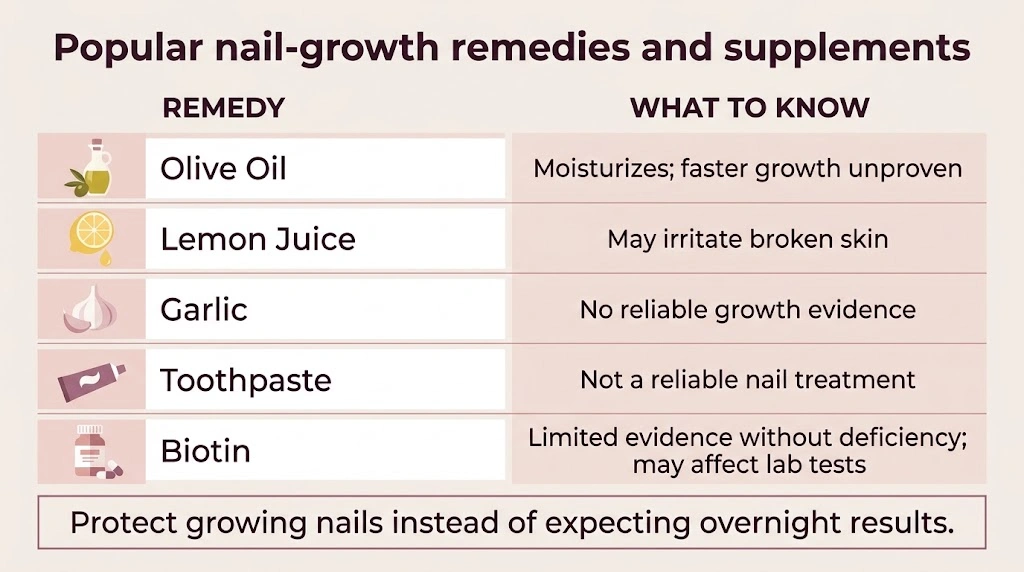
You’ve probably seen videos recommending garlic rubs, lemon soaks, olive oil, toothpaste, or gelatin for rapid nail growth. These ideas can be appealing because most ingredients are already in your kitchen. Unfortunately, there’s no good evidence that these tricks can dramatically speed the growth of healthy fingernails.
Olive oil may soften dry skin and make cuticles look smoother, but that is different from accelerating nail formation. Lemon juice can irritate broken skin. Toothpaste and garlic are not reliable nail treatments and may cause irritation, so there is little reason to use them for a growth routine.
Biotin deserves particular caution. Although it’s commonly marketed for hair and nails, evidence that supplements improve nail growth in people without a deficiency is limited. High doses can also interfere with important laboratory tests. If you suspect a deficiency, speak with a healthcare professional rather than guessing at a supplement dose.
When to Get Your Nails Checked
See a dermatologist or healthcare professional if your nails suddenly stop growing, several nails change unexpectedly, or you notice persistent pain, swelling, separation, thickening, unexplained dark streaks, or signs of infection. Those problems need more than cosmetic nail care.
What Expert Tricks Help You Keep More Nail Length?
Grow in small stages. Aim for a smooth free edge before trying longer almond or square shapes. This gives weak nails a chance to survive everyday bumps.
Watch for your breakage trigger. If the same nail always tears after cleaning or styling your hair, change that activity first. One prevented break can matter more than several extra products.
Don’t confuse hardness with strength. A very rigid nail can still crack when bent. Moisture, flexibility, and gentle grooming are useful goals; an aggressive hardener is not automatically better.
Use a progress photo, not a daily ruler. Small variations in filing and viewing angle can make day-to-day measurements misleading. Compare your nails at consistent intervals, such as every four weeks.
Frequently Asked Questions About Growing Nails Faster
Q: Can you grow nails faster in one week?
A: You can improve how your nails look in a week by moisturizing and smoothing rough edges, but new nail growth will still be small. Most fingernails grow only about 0.7 millimeters in seven days on average.
Q: Does cuticle oil make nails grow faster?
A: Cuticle oil is useful for conditioning dry nails and nearby skin, but it isn’t proven to increase the biological rate of nail growth. It can help you care for the length you already have.
Q: Does Vaseline help nails grow?
A: Petroleum jelly helps reduce moisture loss around dry nails and cuticles. It doesn’t directly stimulate faster nail growth, but it can be a useful part of a simple nighttime care routine.
Q: Should you take biotin to grow nails faster?
A: Not routinely. Evidence of benefit is limited when you don’t have a deficiency, and high-dose biotin can interfere with lab results. Ask a healthcare professional before taking it for nail problems.
Q: Why do my nails grow but never get longer?
A: Your tips may be breaking or peeling as quickly as new nail grows from the base. Keep them shorter temporarily, moisturize regularly, and reduce wet work and manicure trauma so you retain more length.
Ready to Grow Longer, Healthier-Looking Nails?
The best answer to how to grow nails faster is usually to protect the growth your body already produces. Start with daily moisture, gloves for cleaning, gentle filing, and less picking or peeling. Small habits add up when you give them time.
Save this guide to Pinterest so you can revisit your nail-growth routine and compare your progress in a few weeks.

Hi, I’m Jessica, the creator behind Unique Lash & Nails Katy.
I created this website for anyone who loves beautiful nails as much as I do. Here, I share trendy nail designs, seasonal manicure ideas, easy nail care tips, honest product recommendations, and step-by-step guides to help you create salon-worthy nails at home. Whether you’re looking for everyday inspiration or your next favorite nail trend, I hope you’ll find something you love.