How to Protect Your Nails in Summer: 9 Easy Tips
Quick Answer
To protect nails in summer, apply broad-spectrum SPF 30+ sunscreen to your hands, moisturize your nails and cuticles after swimming, and gently dry your fingertips after water exposure. Keep nails neatly filed, avoid peeling gel polish, and use gloves for chores. A few consistent daily habits help prevent splitting, peeling, and damaged summer manicures.
Time needed
5 minutes daily
Difficulty
Beginner
Items needed
4–6 basics
Result lasts
With consistent care
Summer is made for bright pedicures, beach photos, and days by the pool. But if your nails start peeling after swimming or your favorite manicure chips halfway through vacation, the season can feel much less glamorous.
The good news? You don’t have to avoid the water or give up your favorite nail art. This guide shows you exactly how to protect nails in summer with a quick routine that fits into busy mornings, pool days, and weekend trips.


Why Do Your Nails Need Extra Attention in Summer?
Summer isn’t automatically bad for your nails. The challenge comes from the way your routine changes. Swimming, frequent handwashing, outdoor activities, sunscreen, sand, and extra manicure touch-ups all introduce opportunities for dryness or physical damage.
Your nail plate absorbs water and changes slightly as it becomes wet and dries again. Repeated long soaking sessions can aggravate peeling in nails that are already fragile. Pool chemicals and frequent cleansing may also leave the surrounding skin feeling dry, especially if you skip moisturizer afterward.
Sunlight is another reason to protect your hands. The skin around your nails can burn and accumulate UV damage just like skin elsewhere. Ordinary colored polish isn’t a substitute for sunscreen on your fingers or hands. If you use a UV or LED lamp for gel nails, consider additional precautions for the exposed skin.
Finally, summer activities create extra friction: hauling luggage, digging through beach bags, opening drink cans, and playing sports can catch a long nail edge. Your best strategy is simple: protect the skin, reduce excessive wet-dry cycles, and prevent avoidable snags.
What Do You Need for a Summer Nail Care Kit?
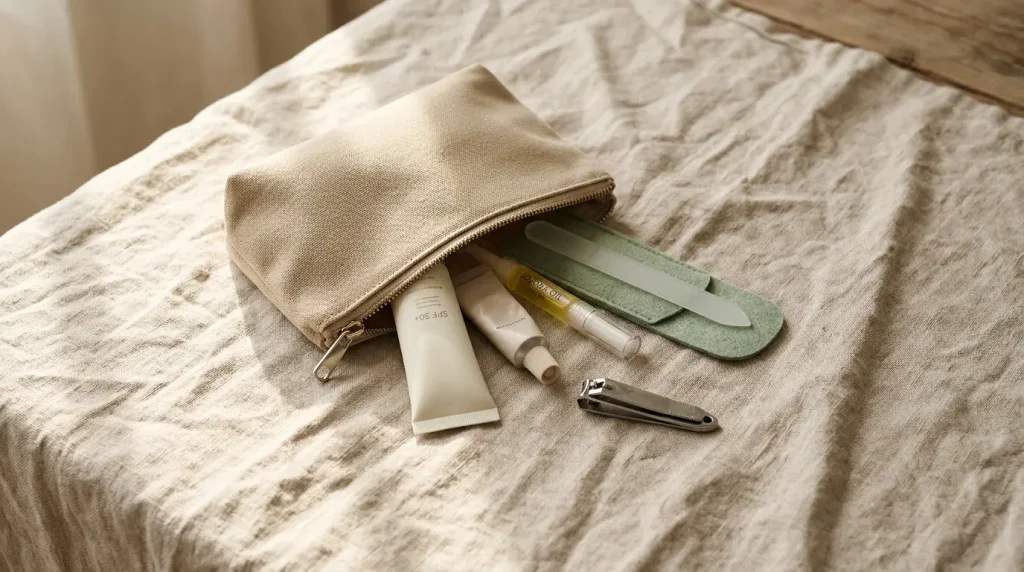
Pack a small pouch rather than a full salon’s worth of products. The essentials below handle most everyday summer situations:
- Broad-spectrum SPF 30+ sunscreen: Protects the exposed skin on your hands and around your nails.
- Fragrance-free hand cream: Replenishes moisture after handwashing and swimming.
- Cuticle oil or a simple ointment: Helps soften dry skin around the nail edge.
- Fine-grit or glass nail file: Smooths snags before they become painful tears.
- Gentle nail clippers: Keeps nails at a practical length for outdoor activities.
- Optional base coat and top coat: Useful if you’re maintaining a regular-polish manicure.
For a carry-on-friendly routine, choose a small tube of hand cream, a compact file, and a leak-resistant oil pen. A jojoba cuticle oil pen is convenient because you can apply a tiny amount without spilling a bottle in your beach bag.
How to Protect Nails in Summer: 9 Simple Steps
Step 1: Apply Sunscreen to Your Hands Before Going Outside
Cover the backs of your hands, fingers, and the skin around each nail with broad-spectrum SPF 30 or higher sunscreen. Apply before outdoor exposure and reapply about every two hours when outside, and after swimming, sweating, or towel-drying, following your product’s label.
Common mistake: Applying sunscreen to your arms but forgetting your hands. Your fingers stay exposed while you carry bags, hold drinks, and take photos.
Step 2: Keep Nails Clean, Short Enough, and Smooth
File small rough edges with light strokes and choose a nail length that suits your activities. Short oval or softly rounded nails can be easier to manage if you’re playing beach volleyball, packing luggage, or swimming often.
Common mistake: Leaving a tiny split untouched because it’s barely visible. That edge can snag on a towel and turn into a deeper break.
Step 3: Dry Your Fingertips After Swimming
After leaving the pool or ocean, rinse your hands with clean water when available and gently pat them dry, including around the fingertips. You don’t need to scrub your nails or dig underneath them. Just remove obvious residue and avoid leaving your hands wet for long periods.
Common mistake: Using a rough towel to scrape underneath the nail. Forceful cleaning may irritate the skin or disturb the attachment beneath the nail.
Step 4: Moisturize After Every Extended Water Session
Once your hands are clean and dry, massage a small amount of hand cream into your fingers, nails, and surrounding skin. Give extra attention to the cuticle area if it feels tight after swimming or repeated washing. Use a fragrance-free product if your skin is easily irritated.
Common mistake: Waiting until your hands visibly crack. Consistent moisturizing is easier than trying to manage severely dry skin at the end of a vacation.
Step 5: Add Cuticle Oil When Your Nail Edges Feel Dry
Massage a drop of oil around each cuticle after your hands are dry, especially before bed. Oils and ointments help reduce moisture loss from the surrounding skin; they don’t magically repair a cracked nail plate, but they can make the area feel more comfortable.
Common mistake: Flooding the nail with oil immediately before painting it. Residue on the nail surface can interfere with regular polish adhesion.
Step 6: Protect Your Manicure Without Overdoing Top Coat
If you wear regular nail polish, start with a suitable base coat, use thin color layers, and finish with a compatible top coat. Refresh only when the manufacturer’s directions call for it or when your finish needs a small touch-up. Clean and completely dry nails are essential before repainting.
Common mistake: Painting thick layers over chipped or lifting polish. Added bulk often looks uneven and doesn’t correct the loose layer underneath.
Step 7: Wear Gloves for Summer Cleaning and Gardening
Use properly fitting protective gloves for dishwashing, patio cleaning, and gardening. Keep hands dry inside the gloves when possible, and remove them afterward to wash, dry, and moisturize. Gloves reduce direct contact with detergents and abrasive materials.
Common mistake: Wearing damp gloves for extended periods. Trapped moisture and friction may irritate the skin around your nails.
Step 8: Avoid Picking Gel, Acrylic, or Lifting Polish
If you notice a lifting corner on a gel manicure, don’t peel it away. Pulling off enhancement products can remove superficial nail layers too. Arrange appropriate removal rather than scraping, pulling, or forcing the coating off at home.
Common mistake: Treating a loose gel edge as a quick peel-off fix. That habit can leave the natural nail thin and rough long after vacation.
Step 9: Check Your Nails Every Evening
Spend one minute looking for rough edges, trapped dirt, uncomfortable cuticles, or lifting products. Smooth a minor snag, moisturize dry areas, and leave healthy cuticle tissue intact. If you find a painful tear or signs of infection, don’t cover it with another manicure.
Common mistake: Ignoring discomfort because the polish still looks pretty. Pain, swelling, and unusual changes deserve more attention than the manicure design.
What Should You Do Before and After Swimming?
Before swimming, make sure you don’t have a painful broken nail or visibly lifting enhancement that could trap moisture. Keep your nails at a manageable length and apply water-resistant broad-spectrum sunscreen to exposed skin. Remember that no sunscreen is truly waterproof; reapplication still matters.
After swimming, rinse your hands, dry them gently, and moisturize. If your fingers feel unusually dry, massage a small amount of cuticle oil around the nails later in the day. This routine is useful for both chlorinated pools and saltwater trips, although the exact effect of water exposure varies from person to person.
Don’t assume every white patch or peeling edge comes from chlorine. Repeated wetting, friction, polish removal, and other nail conditions may all play a role. If a nail repeatedly separates from its bed, changes color significantly, or becomes painful, have it assessed rather than experimenting with stronger products.
Warning
If the skin around your nail becomes increasingly red, swollen, warm, or painful, or produces pus, seek medical care. A suspected infection should not be hidden beneath polish, gel, or an artificial nail.
Can the Sun or UV Nail Lamps Damage Your Hands?
Yes, ultraviolet radiation can damage exposed skin. For outdoor days, protect the backs of your hands with sunscreen and consider shade or protective clothing. Don’t rely on nail polish to protect the skin surrounding your nails.
If you’re getting a gel manicure cured under a UV or LED nail lamp, consider applying broad-spectrum sunscreen to the exposed skin beforehand or using UV-protective fingerless gloves. Follow the gel manufacturer’s curing directions and avoid applying uncured gel to your skin, which can increase the risk of allergic reactions.
Some people assume a lamp labeled “LED” emits no UV. Many gel-curing LED lamps use ultraviolet wavelengths, so the label alone doesn’t eliminate the need for sensible skin precautions. If you develop itching, blisters, or a rash around a gel manicure, discontinue the product and seek professional advice.
Which Summer Nail Styles Are Easiest to Maintain?
You can absolutely wear bold colors in summer. The key is choosing a style that matches your plans rather than expecting a delicate, extra-long manicure to survive every beach activity.
Short natural nails with regular polish
This is a practical choice if you swim often or prefer easy at-home touch-ups. You can remove and reapply regular polish gently without specialized soaking or scraping. A soft oval shape reduces sharp corners that may catch on clothing.
Short gel manicures
Gel can be convenient when you want a longer-wearing glossy finish. However, it requires proper application and removal, and lifting should be handled promptly. If you know you’ll be far from a salon for weeks, think about your removal plan before booking the manicure.
Simple designs with a forgiving grow-out
Sheer pink, milky nude, soft peach, and subtle French tips can make new growth less noticeable. Choose these for longer vacations when you don’t want to pack multiple polish shades. For a broader maintenance routine, see our simple nail care routine for healthy nails.
What Are the Biggest Summer Nail Care Do’s and Don’ts?
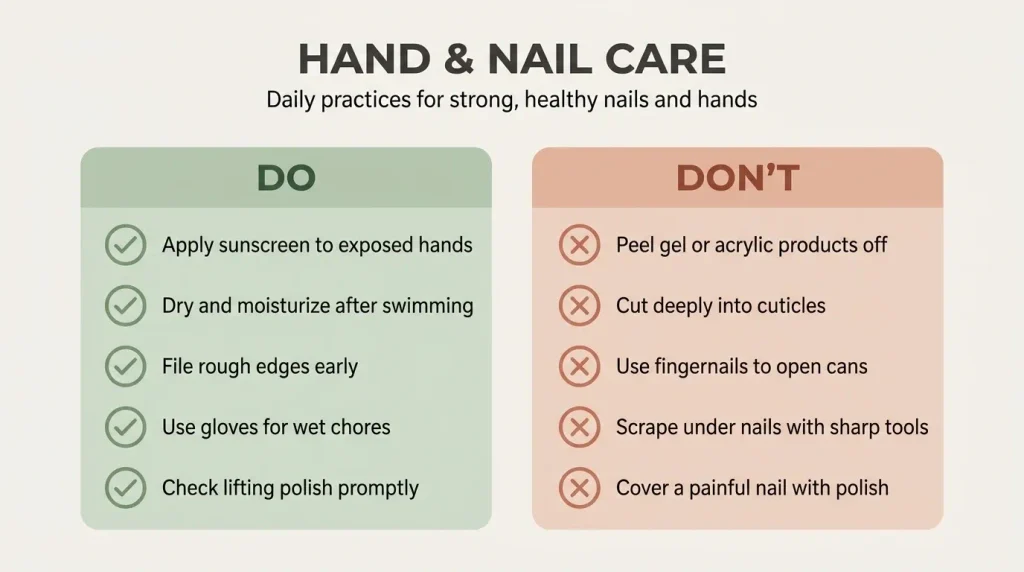
Do
- Apply sunscreen to exposed hands.
- Dry and moisturize after swimming.
- File rough edges early.
- Use gloves for wet chores.
- Check lifting polish promptly.
Don’t
- Peel gel or acrylic products off.
- Cut deeply into cuticles.
- Use fingernails to open cans.
- Scrape under nails with sharp tools.
- Cover a painful nail with polish.
Which Summer Nail Products Are Worth Buying?
You don’t need expensive seasonal nail products. Prioritize sunscreen, moisturizer, a nail file, and one cuticle product. Add manicure supplies only if you wear polish regularly.
Recommended Product
Broad-Spectrum SPF 30+ Hand Sunscreen
Look for a water-resistant formula for swimming days and reapply as directed to protect your exposed hands.
As an Amazon Associate, we earn from qualifying purchases.
Recommended Product
Fragrance-Free Moisturizing Hand Cream
A non-irritating cream is useful after swimming or handwashing when the skin surrounding your nails feels tight.
As an Amazon Associate, we earn from qualifying purchases.
Recommended Product
Glass Nail File for Travel
A compact file helps you smooth little snags before they develop into larger splits during outdoor activities.
As an Amazon Associate, we earn from qualifying purchases.
How Can You Maintain Healthy Nails Throughout a Summer Vacation?
Make your routine automatic by attaching it to things you’re already doing. In the morning, use sunscreen on your hands before heading out. After swimming, rinse, dry, and apply cream. At night, examine your nail edges and massage cuticle oil around dry areas.
That entire routine can take about five minutes of active care per day, excluding sunscreen reapplication. Give yourself a little longer once a week to trim nails, reshape rough edges, or refresh regular polish. You can build on this with our daily nail care habits.
If you already have weak or peeling nails, consider keeping them short until the damaged parts grow forward. New nail growth takes months to replace a significant damaged section, so focus on protecting new growth rather than expecting a treatment to fuse old splits back together. Our guide to helping damaged nails recover explains the gentler approach.
Pro Tip
Keep your mini nail file in a protective case rather than loose beside keys in your beach bag. Put hand cream beside your after-swim towel so moisturizing becomes a natural part of getting dry.
Frequently Asked Questions About Summer Nail Protection
Q: Does chlorine make your nails brittle?
Repeated pool exposure and wet-dry cycles can contribute to dryness and peeling, particularly if your nails are already fragile. Rinse, dry, and moisturize after swimming rather than assuming chlorine alone causes every nail problem.
Q: Should you put sunscreen on your fingernails?
Apply sunscreen to the exposed skin on your hands, fingers, and around your nails. Focus on protecting your skin rather than treating polish as a replacement for sun protection.
Q: Is gel or regular polish better for a beach vacation?
Regular polish is easier to touch up or remove yourself. Gel may wear longer, but it needs careful removal and can be troublesome if it lifts while you’re traveling. Choose based on your trip and maintenance options.
Q: How often should you use cuticle oil in summer?
Once daily is a convenient starting point, with additional light application when the surrounding skin feels dry. You can also use a gentle hand cream or ointment; the aim is comfort and consistent moisture.
Q: Can you fix a peeling nail in one day?
You can smooth a minor snag and protect it from further damage, but separated nail layers don’t instantly knit back together. Keep the nail protected while healthier growth gradually replaces the affected area.
Keep Your Summer Nails Beautiful With a Simple Routine
The best way to protect nails in summer isn’t an elaborate treatment. It’s sunscreen for your hands, moisture after swimming, gentle nail maintenance, and careful manicure removal. Keep these habits consistent, and you’ll have fewer avoidable snags while enjoying your favorite seasonal looks.
Save this summer nail care guide to Pinterest so your easy beach-day nail routine is ready whenever you need it.

Hi, I’m Jessica, the creator behind Unique Lash & Nails Katy.
I created this website for anyone who loves beautiful nails as much as I do. Here, I share trendy nail designs, seasonal manicure ideas, easy nail care tips, honest product recommendations, and step-by-step guides to help you create salon-worthy nails at home. Whether you’re looking for everyday inspiration or your next favorite nail trend, I hope you’ll find something you love.