How Acrylic Nails Affect Nail Strength: Smart Care
Quick Answer
Acrylic nails can make your manicure feel stronger while leaving the natural nail underneath thinner and more fragile. Most damage comes from excessive filing, repeated maintenance, impacts, and forceful removal—not simply from wearing a finished acrylic layer. Gentle application, careful professional removal, moisturizing, and time for damaged nail to grow out help protect your natural nails.
Acrylics can turn short nails into a gorgeous, glossy set overnight. So why do your own nails sometimes feel paper-thin when the extensions come off?
Understanding how acrylic nails affect nail strength helps you separate normal post-manicure changes from damage that deserves attention. Here’s what really happens beneath the polish—and what you can do before your next appointment.


Do Acrylic Nails Actually Make Your Natural Nails Stronger?
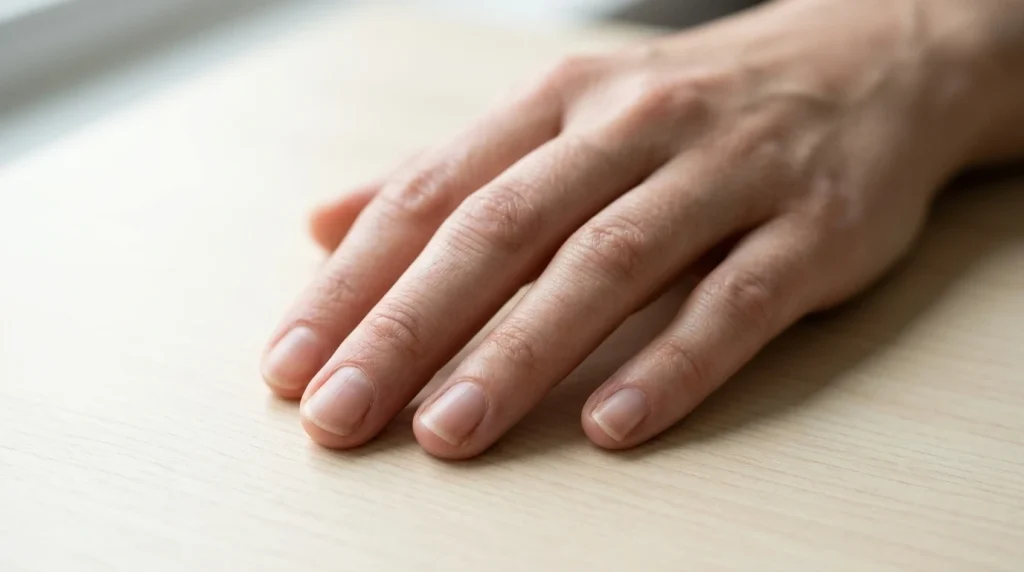
No. Acrylics add a hard protective-looking layer, but they don’t strengthen the natural nail plate itself. The extension is made from a liquid-and-powder system that hardens into a firm structure over your nail. That structure can make your fingertips feel less bendy and help you wear lengths that your bare nails might not support comfortably.
Your natural nail, however, is still the keratin plate underneath. Once the artificial layer comes off, it won’t have gained extra thickness or healthier keratin from being covered. If the surface was filed down during preparation or removal, it may actually be thinner than before.
Why Can Acrylic Nails Leave Your Nails Thin or Brittle?
There isn’t just one cause. Several parts of the manicure process can contribute, and the biggest risk often comes from repeated or overly aggressive handling of the natural nail.
1. Filing removes some of your natural nail’s surface
Before acrylic is applied, a technician lightly prepares the nail so the product can adhere. When that preparation becomes heavy buffing or drilling, layers of the nail plate can be removed. Less nail material means less resistance to bending, splitting, and everyday wear.
2. Removal can pull away more nail layers
Acrylic removal may involve reducing the product thickness and using acetone to soften suitable acrylic material. Acetone can dry the nail and surrounding skin, but prying, popping, or peeling off a still-adhered enhancement is often more damaging. It can tear away superficial nail layers or even injure the nail bed.
3. Long, rigid extensions increase leverage
Natural nails have some flexibility. Acrylic enhancements are considerably stiffer, so a long extension caught on a zipper, drawer, or handbag can act like a lever. The pressure may crack the acrylic, injure the nail underneath, or lift the nail plate away from the nail bed.
4. Repeated fills can compound small injuries
As your nail grows, a gap appears near the cuticle. Acrylic sets commonly need professional maintenance around every two to three weeks, depending on growth and condition. Fills are not automatically harmful, but unnecessary drilling into the natural nail at every visit can accumulate damage.
Lifting product is another issue. If a gap traps moisture and debris, the space may make infection more likely. Avoid sealing obvious lifting with household glue or hiding it under fresh product.
5. Irritation or allergy can affect the surrounding skin
Some people react to ingredients in acrylic systems, including uncured acrylates. Itchy, red, swollen, peeling, or blistered skin is not a normal sign that a manicure is “working.” Repeated exposure after an allergy develops may worsen the reaction.
Warning
Never pull off an acrylic nail that’s firmly attached, especially after a painful impact. If your nail is bleeding, significantly lifted, severely painful, or surrounded by swelling, seek medical assessment rather than covering it with another enhancement.
What Are the Signs That Acrylics Have Weakened Your Nails?
Inspect your natural nails after safe removal and before considering another set. Surface changes can be subtle, especially when you’re used to seeing them covered with color.
- Thin, bendy nails: The free edge folds more easily than it used to, sometimes after excessive filing.
- Peeling layers: Small sheets separate at the tips, particularly after picking or rough removal.
- Rough white patches: The surface looks uneven or chalky after an enhancement has been stripped away.
- Frequent edge breaks: Nails split before they reach your preferred natural length.
- Tenderness: The nail feels sensitive to pressure, which can mean more than ordinary dryness.
- Lifting or discoloration: A gap under the nail, unusual greenish or yellowish areas, or persistent dark changes need closer attention.
Not every white spot or split proves acrylic caused it. Water exposure, previous injury, skin conditions, and other nail disorders can look similar. Pain, worsening color changes, or visible separation warrant assessment instead of a guess.
Can You Wear Acrylic Nails Without Ruining Your Natural Nails?
Yes, many people enjoy occasional acrylic sets without significant problems. The goal is to lower the avoidable risks rather than pretend that every technique is equally gentle. Your starting nail condition matters: already brittle, damaged, or infected-looking nails shouldn’t be hidden beneath a fresh set.
Choose a technician who protects the natural nail
Ask how your technician prepares the surface, handles lifting, and removes products. A careful professional works on the enhancement rather than repeatedly grinding down your nail plate. Clean, properly disinfected tools and a tidy workspace matter just as much as beautiful nail art.
Tell your technician immediately if a drill feels hot, filing hurts, or the product touches irritated skin. An appointment should not require you to tolerate pain to get a smooth finish.
Keep your extension length realistic
Long coffin or stiletto nails look amazing in photos, but length adds leverage when you knock your hand against something. If your lifestyle is hands-on, try shorter almond, oval, or softly squared acrylics. You can still enjoy intricate designs without making every daily task a stress test.
Don’t ignore a lifting enhancement
Schedule professional attention when acrylic starts separating rather than picking at the edge. Between visits, keep your hands clean and dry, avoid digging under the gap, and never trap moisture with a quick glue fix. If you see discoloration or irritation, skip the fill until the nail has been evaluated.
Make space for your natural nails when needed
There is no magic number of days everyone must spend without acrylics. But if your bare nails are clearly thin, sore, or peeling, take a break long enough to allow comfortable, healthier new growth. Covering damaged nails immediately can make it harder to monitor changes.
For a gentle baseline between sets, follow a simple nail care routine for healthy nails instead of constantly adding more treatments.
How Can You Help Weak Nails Recover After Acrylics?
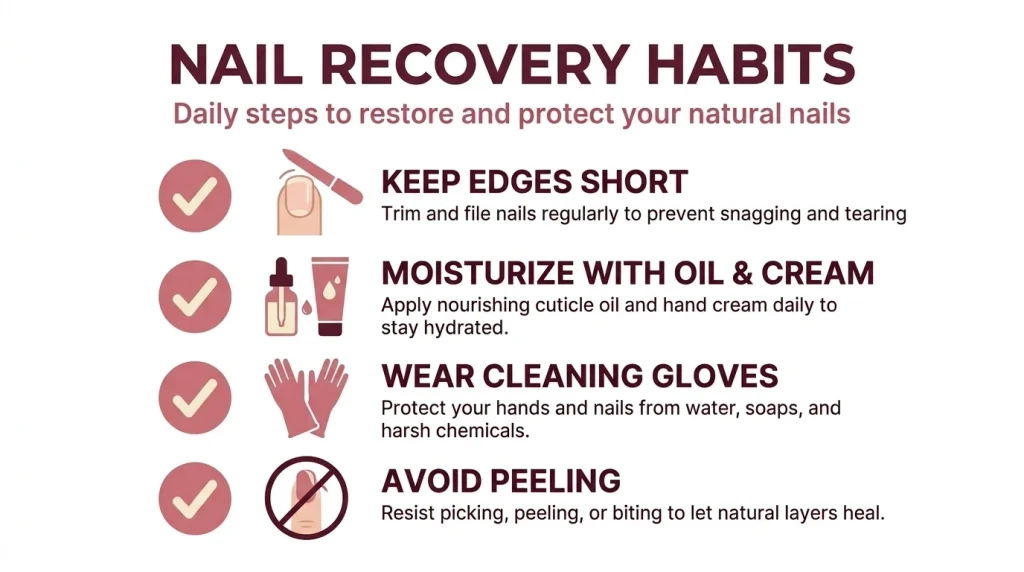
Recovery is less about finding a miracle repair product and more about protecting the nail you have while a healthier one grows in. Start with these habits, even if your damaged nails look too short for your usual manicure.
Keep the free edges short and smooth
Trim only what you can comfortably cut, then gently smooth snags with a fine file. Short nails are less likely to catch and tear while they’re thin. Avoid repeatedly buffing the top surface to make it look perfect; that can remove even more material.
Moisturize the nails and surrounding skin
After washing, rub fragrance-free hand cream over your nails and fingertips. Add a little cuticle oil or petroleum jelly when the skin around your nail folds feels dry. Moisturizer won’t glue peeled nail layers back together, but it can reduce dryness and improve comfort.
If you’re unsure which formulas are useful, the guide to the healthiest things to put on your nails explains why simple moisturizing often beats complicated treatments.
Wear gloves for prolonged wet chores
Repeated soaking and drying can make fragile nails more likely to split. Wear reusable gloves for dishes and cleaning, especially when detergents are involved. After the job, dry your hands and moisturize rather than leaving damp gloves on for hours.
Avoid the peel-and-reapply cycle
If leftover polish or enhancement begins lifting, don’t pick it off while watching a show or scrolling Pinterest. Every peel can tug at the plate. Arrange gentle removal, then decide whether your nails are ready for another manicure based on how they actually look and feel.
Skip aggressive home remedies
Lemon juice, repeated acetone baths, abrasive buffers, and extremely hard coatings aren’t shortcuts to new nail growth. A protective polish may suit some painless, superficially weak nails, but heavy hardeners can make certain nails too stiff and prone to breaking. Stop any treatment that stings or irritates your skin.
If your nails need more than basic care, this guide to safely caring for a damaged nail at home offers practical next steps without harsh DIY fixes.
How Long Does It Take for Nail Strength to Return?
Minor dryness may feel better within days or weeks, but a thinned nail plate has to grow out. Fingernails typically grow roughly 2.5–3 millimeters per month. Replacing most or all of a damaged fingernail commonly takes around four to six months, sometimes longer.
Your progress won’t look identical from tip to cuticle. The older, damaged section stays at the free edge until you trim it away. Healthier-looking nail usually appears first near the base, provided the growth area hasn’t been injured and the damaging habit has stopped.
Pro Tip
Take a clear photo of your bare nails once a month in the same lighting. Look for a smoother band near the cuticle, not a dramatic change at the tip. That makes gradual grow-out easier to track without obsessively checking every day.
Are Gel, Press-On, or Natural Nails Better for Strength?
Traditional polish on natural nails
Best for: Giving fragile nails a lower-maintenance option while they grow. Regular polish adds color without a long rigid extension. You can remove it gently and inspect the nail underneath. It won’t repair a damaged plate, but it generally needs less intensive preparation.
Short, removable press-on nails
Best for: An occasional special-event look when your nails are otherwise healthy. Press-ons can avoid heavy salon filing, but adhesives may irritate skin and pulling them off can still strip nail layers. They are not a good solution for sore, separating, or infected-looking nails.
Soak-off gel polish
Best for: Someone who wants a durable manicure without a long acrylic extension. Soak-off gel is often more flexible, but it can still cause peeling, brittleness, allergy, or removal damage. Proper curing and gentle removal matter; an LED lamp also produces UV light, despite its name.
Dip powder and other hard enhancements
Best for: Healthy nails when applied hygienically and removed correctly. Dip powder also uses acrylic-based materials, so it isn’t automatically a damage-free alternative. Thick coatings and aggressive removal can create similar problems to traditional acrylic sets.
If you want more natural length over time, these tips for keeping natural nails long and strong can help you build a routine that doesn’t rely on extensions.
Which Products Are Worth Using After Acrylic Removal?
Recommended Product
Simple Jojoba Cuticle Oil
A portable oil makes it easier to condition dry nail folds every night, especially after frequent handwashing.
Shop Jojoba Cuticle Oil on Amazon
As an Amazon Associate, we earn from qualifying purchases.
Recommended Product
Fine Glass Nail File
Use a gentle file to smooth tiny snags before they become bigger tears, without buffing down the nail surface.
Shop Glass Nail Files on Amazon
As an Amazon Associate, we earn from qualifying purchases.
For the rest of your routine, try a fragrance-free hand cream to moisturize after washing and reusable household cleaning gloves to protect your hands during wet chores. Those two everyday habits are often more useful than buying several different nail hardeners.
What Should You Do and Avoid With Acrylic Nails?
Do
- Choose gentle preparation and trained removal.
- Keep extensions practical for your daily routine.
- Moisturize hands and nail folds regularly.
- Get lifting or discomfort checked promptly.
Don’t
- Peel, pry, or bite off acrylics.
- Allow painful drilling on the natural nail.
- Cut away healthy protective cuticles.
- Cover swelling, discoloration, or separation.
What Are the Most Useful Pro Tips Before Your Next Set?
- Ask about removal before application. A technician’s removal plan tells you more about nail safety than the color selection does. Ask whether they’ll minimize scraping and protect your natural plate.
- Photograph your bare nails between sets. If the same nails become progressively thinner or more tender, consider reducing enhancement use instead of normalizing the change.
- Keep cuticles intact. Neat-looking polish doesn’t require cutting the living protective skin around your nail. Moisturize dry edges rather than removing them aggressively.
- Choose strength over extreme length. A beautiful short acrylic set can reduce accidental catching compared with dramatic long extensions, especially during busy workdays.
When Should You See a Dermatologist About Nail Damage?
Book a medical evaluation if you have persistent or increasing pain, redness, warmth, swelling, pus, a nail that is separating from the bed, or unusual discoloration. A new dark stripe or pigment spreading onto the surrounding skin also needs prompt professional assessment. Nail allergies may show up as itching, blisters, or a rash around the fingers or even on the eyelids.
Don’t apply more acrylic, gel, or opaque polish to hide an unexplained change. A dermatologist can help distinguish ordinary manicure-related thinning from infection, contact allergy, injury, or another nail condition.
Frequently Asked Questions About Acrylic Nails and Strength
Q: Do acrylic nails permanently weaken natural nails?
A: Usually, surface thinning improves as fresh nail grows out after damage stops. Serious injury to the nail growth area can cause longer-lasting changes, so persistent deformity or pain should be checked.
Q: Why are my nails so soft after taking acrylics off?
A: Preparation or removal may have thinned the natural plate, while solvents can increase dryness. Keep your nails short, moisturize, and avoid further filing while healthy nail grows forward.
Q: Does taking a break from acrylic nails make nails stronger?
A: A break reduces repeated filing and removal while damaged nail grows out. Your nails don’t need to breathe, but uncovered time helps you monitor their condition and prevent new trauma.
Q: Are short acrylic nails less damaging than long acrylic nails?
A: Shorter lengths create less leverage when you catch or bump a nail. They’re still only as nail-friendly as their application, maintenance, and removal methods.
Q: Can cuticle oil repair acrylic nail damage?
A: Cuticle oil can reduce dryness around your nails, but it can’t replace nail layers already filed away. Use it for comfort and maintenance while the damaged area gradually grows out.
Can You Love Acrylics and Still Protect Your Nails?
Absolutely—but remember that an acrylic set’s hardness isn’t the same as natural nail strength. Choose gentle salon techniques, avoid forceful removal, and give thinning nails time to grow out before another set.
Save this guide to your Pinterest nail-care board so your next gorgeous manicure starts with healthier habits.

Hi, I’m Jessica, the creator behind Unique Lash & Nails Katy.
I created this website for anyone who loves beautiful nails as much as I do. Here, I share trendy nail designs, seasonal manicure ideas, easy nail care tips, honest product recommendations, and step-by-step guides to help you create salon-worthy nails at home. Whether you’re looking for everyday inspiration or your next favorite nail trend, I hope you’ll find something you love.