How Gel Polish Affects Nail Strength: Protect Your Nails
Quick Answer
Gel polish doesn’t make your natural nail stronger. Its cured coating can make nails feel firmer while you’re wearing it, but aggressive buffing, peeling, scraping, and repeated removal can leave the nail plate thinner, drier, and more likely to split. Gentle preparation, correct removal, moisturizing, and breaks when damage appears help protect your nail strength.
That glossy gel manicure might last two weeks, but what happens to your nails underneath? If your bare nails feel bendy or look flaky after removal, it’s natural to wonder whether gel polish is the problem. The answer is more useful than a simple yes or no: the application and removal routine often matters as much as the coating itself.
Here’s how gel polish affects nail strength, which changes deserve attention, and what you can do to enjoy nail color without ignoring your natural nails.


Does Gel Polish Actually Strengthen or Weaken Your Nails?
Gel polish forms a firm, flexible layer on top of your natural nail after it’s cured under a compatible lamp. That shell can temporarily reduce bending and protect the free edge from some everyday snags. It’s why a fresh manicure may make your nails feel unusually sturdy when you’re typing or opening a bag.
But feeling stronger isn’t the same as becoming stronger. The nail plate underneath is made mostly of keratin. Gel doesn’t rebuild damaged layers of keratin, correct an underlying nail problem, or make new nail grow stronger. When the coating comes off, the condition of your original nail plate becomes visible again.
Gentle preparation and removal may leave little noticeable change. Repeated filing or peeling can remove upper nail layers. Dermatologists recognize brittleness, peeling, and cracking as possible problems with gel manicures.
Think of gel as a temporary protective jacket, not a nail-strengthening treatment. Protect the natural nail so the next manicure doesn’t hide damage from the last one.
Why Can Nails Feel Thin or Weak After Gel Polish?
1. Excessive buffing removes part of the nail surface
Some surface preparation helps gel adhere, but aggressive filing can thin the natural nail plate. If your nails feel hot, tender, or unusually flexible during preparation, speak up immediately. A nail technician should not need to grind away healthy nail just to make polish stick.
Repeated buffing is especially troublesome when you get a new set every few weeks. The same section of nail may be worked on more than once before it has grown out. That damage cannot be polished back into place.
2. Peeling off gel can pull keratin layers with it
When gel lifts at an edge, it’s tempting to grab the loose corner. Resist that urge. The coating may still be attached firmly to parts of your nail, and pulling it off can take thin surface layers along with it. The result is often a rough white patch or a bendy spot that wasn’t visible before.
Don’t use nails, tweezers, or metal tools to pry up stubborn product.
3. Repeated acetone exposure can leave nails and skin dry
Soak-off gel typically needs acetone for removal. Acetone works well on suitable products, but it also removes surface oils and can dry the surrounding skin. Dry nails may feel rigid, catch on fabrics, or split more easily, particularly if they’re already thin from filing.
Acetone is not automatically the enemy. A controlled soak is usually gentler than forcefully scraping off gel that hasn’t softened. The important difference is using enough time for the product to release without exposing your whole hands unnecessarily.
4. Repeated manicures can hide developing problems
Fresh color makes it difficult to notice changes underneath. If you immediately reapply gel after every removal, you may miss early peeling, separation from the nail bed, or irritated skin around the cuticle. You can compare that pattern with our guide to whether nails are healthier without nail polish.
Other issues can occur too. Uncured gel ingredients may trigger an allergy in some people, while picking or cutting the protective cuticle area increases irritation and infection risk. These aren’t signs that your nails need a stronger lamp or thicker polish; they mean the routine needs to change.
What Are the Signs Your Nails Have Been Damaged by Gel?
Check your nails in bright, natural light after the manicure has been fully removed. You don’t need a magnifying mirror. Look for changes that weren’t present before your gel appointments:
- Peeling layers: The free edge flakes apart or looks like tiny sheets are lifting from the surface.
- Unusual flexibility: Nails bend more readily during ordinary tasks, especially where the plate was filed thin.
- Rough, chalky patches: White or uneven areas appear after picking, scraping, or over-filing.
- Frequent splitting: Small snags turn into cracks before your nails reach their usual length.
- Dry surrounding skin: Cuticles and sidewalls feel tight, flaky, or uncomfortable after removal.
These changes suggest stress, but other nail and skin conditions can cause similar symptoms. Our guide to signs of unhealthy nails can help you recognize which changes warrant a closer look.
Warning
Stop applying gel and seek medical advice if you develop significant pain, swelling, blisters, a persistent itchy rash, nail lifting, green discoloration, or a new dark streak. Don’t cover unexplained changes with another manicure.
How Can You Protect Nail Strength Before and During Gel Manicures?
You don’t have to give up every gel manicure to be thoughtful about nail health. A few specific requests can make your next appointment gentler:
- Ask for minimal surface preparation. Your technician should remove shine gently, not visibly thin the plate. Skip aggressive drills on the natural nail.
- Keep cuticles intact. The cuticle area helps seal out germs. Don’t allow cutting or forceful pushing that causes pain or bleeding.
- Choose a product suited to your nails. Soft soak-off gel and hard gel aren’t removed the same way. Ask what product is being applied and how it will come off.
- Keep gel off your skin. Proper application should avoid flooding the cuticle or sidewalls. Repeated contact with uncured product may raise the risk of sensitization.
- Use a compatible curing lamp. Follow the gel manufacturer’s curing instructions; under-cured gel isn’t a safe shortcut to a faster manicure.
- Protect your hands from UV exposure. Wear dark, opaque fingerless manicure gloves or apply broad-spectrum, water-resistant SPF 30+ sunscreen to exposed skin before curing.
Many salons advertise LED nail lamps as an alternative to older UV lamps. LED curing units can shorten exposure time, but they still emit ultraviolet radiation. A typical gel manicure’s skin-cancer risk appears low based on current evidence; protecting exposed skin is still a sensible precaution, especially if you get gel regularly.
Pro Tip
Before your appointment, ask one simple question: “Will this specific gel soak off with acetone, or will it need filing for removal?” Knowing that answer in advance helps you avoid a surprise aggressive removal session.
What’s the Gentlest Way to Remove Gel Polish?
Removal is where many otherwise beautiful manicures go wrong. If you’re unsure which type of gel you’re wearing, book a professional removal rather than experimenting. Hard gel and some builder products do not dissolve like ordinary soak-off gel.
For a product confirmed to be soak-off gel, the gentler approach is straightforward:
- Protect the surrounding skin. Apply a little petroleum jelly around, but not directly over, the polish to reduce acetone contact with dry skin.
- Use acetone-soaked cotton on the nail. Place a small piece of cotton over each polished nail and hold it in place with foil or a suitable removal wrap. Avoid dipping your entire hand into acetone.
- Allow approximately 10–15 minutes. Follow product-specific directions, then check whether the coating has softened. Don’t force it just because a timer has ended.
- Stop if the gel resists. If it doesn’t release gently, have a qualified nail professional assess it. Never dig into the natural nail with a metal scraper.
- Wash and moisturize afterward. Pat dry, apply a rich hand cream or petroleum jelly, and leave the nail surface alone rather than buffing it perfectly smooth.
Coarse files and drills can remove nail layers quickly. Don’t file white marks away; those areas may already be thin.
Can You Restore Nail Strength After Gel Damage?
Yes, your nails can often look and feel healthier as new nail grows, provided the source of damage stops. The key limitation is that the visible nail plate is not living tissue: a split or thinned section can’t regenerate in place. It gradually moves toward the tip as fresh nail grows from the matrix.
Start by keeping nails short enough that the flexible ends don’t snag. Smooth rough edges with a fine file and avoid buffing the top surface. Every time you wash your hands, follow with a fragrance-free moisturizer. Before bed, massage a little cuticle oil around the nails, then seal in moisture with hand cream or petroleum jelly.
Use gloves for dishwashing and cleaning. Frequent wetting, drying, and detergent contact can make an already fragile nail more likely to split. A simple routine works better than swapping between harsh hardeners and new gel overlays. Our simple nail care routine shows how to make those habits manageable.
Don’t expect nail oils to glue peeling layers together or a strengthening polish to rebuild lost keratin. Moisturizing helps reduce dryness and improves comfort while the damaged portion grows out. If a hardening product makes the nail overly rigid, it may crack rather than flex.
How Long Does It Take for Nails to Feel Strong Again?
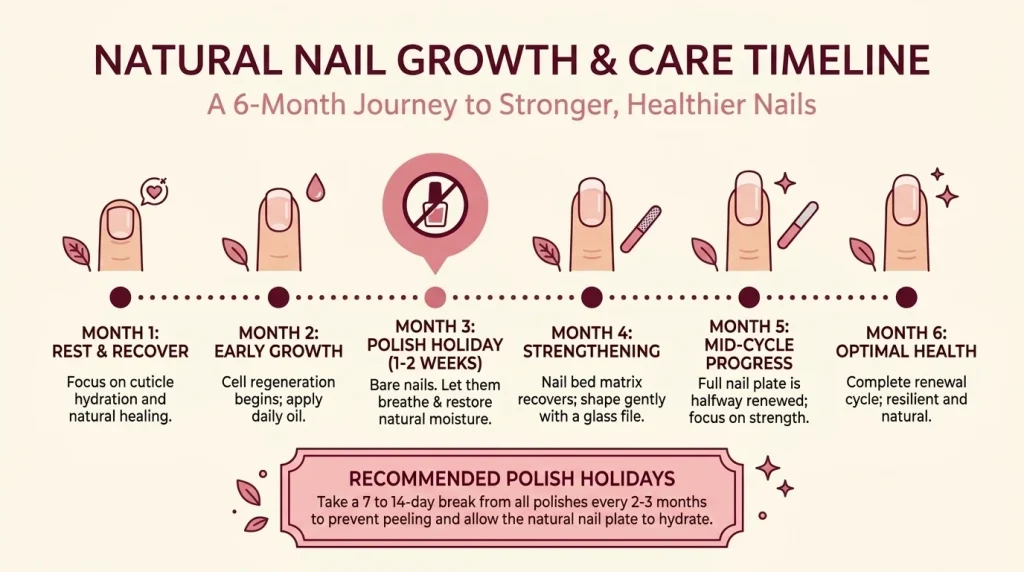
After an ordinary gel removal, surrounding dryness may feel better within days of consistent moisturizing. Mild surface damage often looks less noticeable over the next several weeks as you protect the edge and new nail emerges. Deeper thinning takes longer because the affected nail must grow out.
Fingernails grow roughly 3 millimeters per month on average, although individual growth rates vary. Replacing an entire fingernail generally takes around four to six months. That’s why a two-week break can reduce repeated chemical and mechanical stress, but cannot replace a severely thinned plate in two weeks.
The American Academy of Dermatology suggests trying a polish holiday of one to two weeks or longer between gel manicures. If your nails are actively peeling or tender, extend the break and let the condition of your new growth guide your decision. Don’t restart gel simply because you’ve reached a calendar date.
Watch the narrow strip emerging near the cuticle. If it’s smooth and comfortable while the older damage advances toward the free edge, you’re generally moving in the right direction. Learn more gentle habits in our guide to caring for nails naturally.
Which Products Are Actually Useful for Gel Nail Aftercare?
You don’t need an expensive repair kit. Start with a few tools that protect the nail plate rather than promising instant growth. The following links are shopping-search options, not claims that a particular listing has been tested or independently verified.
Recommended Product
Jojoba Cuticle Oil Pen
A portable oil pen makes it easier to moisturize dry nail folds daily without getting oil everywhere.
As an Amazon Associate, we earn from qualifying purchases.
Recommended Product
Fine-Grit Glass Nail File
A fine file helps tidy fragile edges with controlled pressure, so small snags are less likely to become tears.
As an Amazon Associate, we earn from qualifying purchases.
If you remove confirmed soak-off gel at home, gel polish acetone remover wraps can help keep cotton in contact with the nail instead of soaking your fingertips. For salon appointments, consider UV-protective fingerless manicure gloves to cover the skin exposed to curing light.
If you’re comparing moisturizer options, see our guide to Vaseline versus cuticle oil. They work differently, and you may find both useful.
What Should You Do—and Avoid—Between Gel Manicures?
Do
- Inspect bare nails after every removal.
- Moisturize nails and surrounding skin daily.
- Keep weak edges short and smooth.
- Wear gloves for wet cleaning tasks.
Don’t
- Peel or pry off lifting gel.
- Buff thin nails to remove every ridge.
- Cut cuticles or ignore sore skin.
- Hide unexplained nail changes under polish.
When Should You See a Dermatologist?
Sometimes a weak nail isn’t simply manicure wear and tear. Arrange an assessment if a nail is painful, swollen, detached, thickening, changing color without explanation, or developing a persistent rash around it. An allergy to gel ingredients can affect the skin around your fingertips and sometimes other areas that your hands touch.
If multiple nails remain fragile despite stopping gel and protecting them, a clinician can check for other possible causes. Don’t try to treat a suspected infection or allergy by adding another coating. Professional advice is especially important before returning to a product that previously caused itching, blisters, or swelling.
Frequently Asked Questions About Gel Polish and Nail Strength
Q: Does gel polish make your nails permanently weak?
A: Not usually. Many surface problems improve as healthy nail grows out once damaging habits stop. However, serious injury to the nail matrix or an untreated nail condition can cause longer-lasting problems, so persistent changes should be assessed.
Q: Why are my nails bendy after removing gel?
A: The rigid gel coating is gone, so your natural flexibility is noticeable again. If bending is much worse than before, excessive filing or damage from peeling and scraping may have thinned the nail plate.
Q: How often should you take a break from gel nails?
A: There’s no perfect schedule for everyone. Dermatologists suggest a break of one to two weeks or longer between gel manicures. If your nails peel, crack, or feel sore, keep them bare longer and assess their condition before another application.
Q: Is regular nail polish better than gel for weak nails?
A: Often, yes. Regular polish doesn’t require curing under a UV-emitting lamp and is generally easier to remove without prolonged soaking or filing. If your nails are actively damaged, a polish-free period may be the gentler option.
Q: Can cuticle oil make nails stronger after gel?
A: Cuticle oil can make dry nails and surrounding skin feel more comfortable, but it doesn’t restore nail layers that have been filed or peeled away. Use it regularly while healthy new nail grows, and protect fragile edges from further trauma.
The Bottom Line: Beautiful Gel Nails Start With Healthy Nail Habits
Gel polish can give you a glossy, long-lasting manicure, but the coating shouldn’t come at the cost of your natural nail plate. Gentle prep, correct removal, UV protection, and daily moisture matter far more than another bottle promising instant strength.
Save this guide to Pinterest before your next gel appointment, so you can enjoy your manicure and know what to watch for when it’s time to take it off.

Hi, I’m Jessica, the creator behind Unique Lash & Nails Katy.
I created this website for anyone who loves beautiful nails as much as I do. Here, I share trendy nail designs, seasonal manicure ideas, easy nail care tips, honest product recommendations, and step-by-step guides to help you create salon-worthy nails at home. Whether you’re looking for everyday inspiration or your next favorite nail trend, I hope you’ll find something you love.