Cuticle vs Nail Fold: Know the Difference Easily
Quick Answer
Your cuticle is the thin, dead skin film stuck to your nail plate at its base, while your nail fold is the living skin that frames your nail on three sides. You can gently soften and push back dead cuticle film, but you should not cut into your living nail fold. Keeping that distinction clear protects your nail matrix, lowers your infection risk, and helps your manicures look neat for longer.
Here is a surprising fact that changes how you will look at your next manicure: the puffy skin most people call their cuticle is usually not their cuticle at all. That raised rim is your proximal nail fold, and it is living skin with nerves and blood supply. In this guide, you will learn exactly where each part sits, how each part behaves, and how to care for both without causing soreness or peeling.


What Is Your Cuticle, Really?
Your cuticle is a thin layer of dead skin that clings to your nail plate just beyond the skin at your nail base. It forms from tissue shed by the underside of your proximal nail fold, and then it travels outward slowly as your nail grows. Because it is dead tissue, it has no feeling of its own, which explains why a gentle push usually feels like nothing at all.
Look closely at your bare nail in good light, and you may see this film as a pale, slightly ragged edge where your skin meets your nail. When it dries out, it can look white, lift at the edges, and catch on fabric or hair. That ragged look tempts many people to tear or bite it, yet tearing pulls on nearby living skin and can start a painful hangnail.
Your cuticle still has a useful job, even though it is dead. It helps seal the small gap between your nail plate and the skin behind it, so water, polish, and everyday debris have a harder time sneaking underneath. Once you remove too much of that seal, your nail base becomes more exposed, and your manicure may chip sooner around the edges.
For most people, the safest approach is to soften this film and nudge it back rather than cutting it away aggressively. Warm water, a drop of oil, and a soft pusher give you control without turning a simple tidy-up into a sore spot. If you notice only a small amount of loose, dead film, you can leave it alone entirely and simply moisturise the area.
What Is Your Nail Fold, Exactly?
Your nail fold is the living skin that surrounds your nail plate, and it works more like a protective frame than a layer of polish-ready skin. The proximal nail fold sits at your nail base and overlaps the top of your nail, while your two lateral nail folds run down each side. Together, these three folds guard the delicate structures underneath your nail.
Under your proximal fold sits your nail matrix, which is the growth centre that makes new nail cells. Because that area is so important, your fold acts as a cushion and a barrier against bumps, pressure, and germs. You can feel this protection yourself when you press the rim lightly: it gives a little, springs back, and feels warm because it is supplied with blood.
Your lateral folds have a different daily job. They guide your nail as it grows forward and keep its edges supported, so your nail does not dig into the surrounding skin. When these side folds become swollen, tight, or cut, even a normally growing nail can feel tender, which is one reason ingrown nails hurt so much.
Unlike your cuticle, your nail fold should stay where it is. You do not need to push it far back, flatten it, or trim it to make your nails look longer. Forcing it back can bruise the matrix underneath, change how your nail grows for a while, and open a route for infection. A healthy fold looks smooth, sits close to your nail, and moves naturally when you bend your finger.
Cuticle vs Nail Fold at a Glance
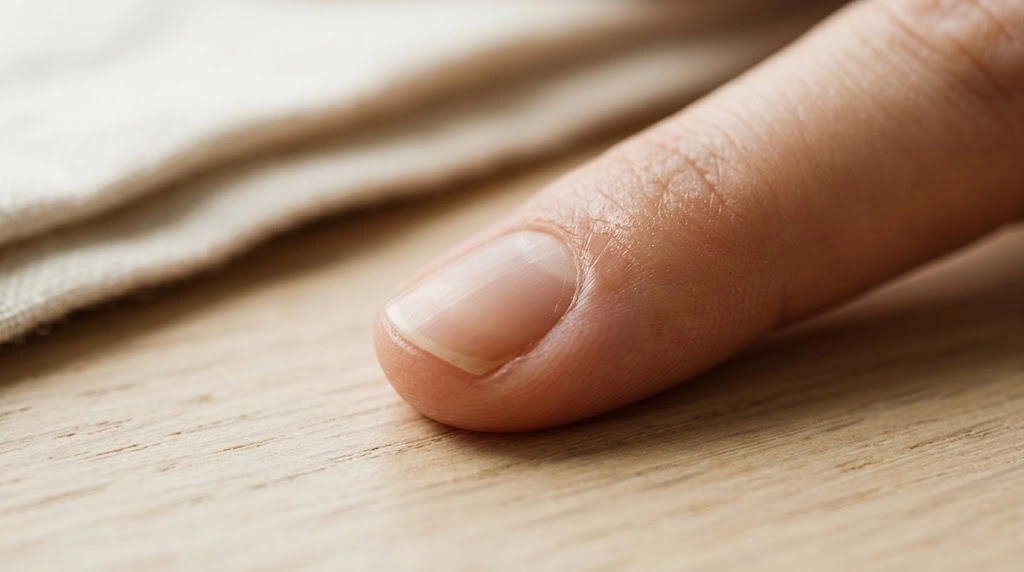
Use this quick comparison whenever you feel unsure during a manicure. It gives you the key difference in one look, and then you can return to the care steps below with more confidence.
| Feature | Your cuticle | Your nail fold |
|---|---|---|
| What it is | Thin, dead skin film on your nail plate | Living skin framing your nail |
| Where it sits | On your nail, just past your nail base | Around your nail base and both sides |
| Main job | Helps seal the gap at your nail base | Protects your matrix and guides growth |
| Safe handling | Soften and gently push back dead film | Moisturise and leave in place |
| Risk if cut | Soreness if you cut into living skin nearby | Pain, swelling, and infection risk |
Notice how the two parts work as a team rather than as rivals. Your cuticle seals the surface, while your fold protects the growth centre beneath it. When you care for both gently, you support that teamwork instead of breaking the seal your nails depend on.
Why Do So Many People Mix Them Up?
Confusion starts because both parts sit in the same small area at your nail base, and they overlap in a way that is hard to see without close inspection. From a normal viewing distance, the skin rim and the thin film beneath it blend into one pale border. Salons and product labels add to the muddle by using the word cuticle for almost everything around your nail base.
Another reason is the word eponychium, which many guides use loosely. Strictly speaking, your eponychium is the visible living skin at your nail base, which forms part of your proximal nail fold. Because salons often call that skin your cuticle, you may hear advice to push back or cut your cuticle when the speaker really means the fold. Following that advice literally can lead you to trim living skin by mistake.
Product names can mislead you in the same way. A bottle labelled cuticle oil usually nourishes both your dead cuticle film and your living fold, because oil spreads easily across the whole area. That does not make the two parts identical, but it does mean your care routine can support both at once. Once you know the difference, you can use the same oil more carefully and stop before you reach for a sharp tool.
How Can You Tell Which One You Are Looking At?
Start with clean, bare nails and good daylight, because polish hides the boundary between film and skin. Look at your nail base and find the soft rim that rises slightly above your nail plate. That rim is your proximal nail fold, and you can usually see tiny skin texture and colour in it.
Next, look for a thinner, more translucent layer lying flat on your nail itself. That layer is your cuticle film, and it may look dry, flaky, or slightly lifted where it has separated from your nail. If you run a soft orangewood stick very lightly over it after soaking, dead film moves easily, while living fold skin resists and feels tender when pressed too firmly.
Check the sides of your nails too, because those walls are lateral nail folds rather than cuticle. They should feel smooth and even, without a sharp edge digging inward. When you spot a loose strip at the side, pause before pulling it, since that strip may still be attached to living skin and can tear into a hangnail.
Colour and feeling give you extra clues. Dead cuticle film looks pale and feels dry, while your living fold looks closer to your normal skin tone and feels warm and flexible. If an area hurts when you touch it, treat it as living tissue and leave it alone, even when it looks untidy.
How Should You Care for Each One Differently?
Begin with a short soak in comfortably warm water for two to three minutes, because softened skin is easier to manage and less likely to tear. Keep the water warm rather than hot, since very hot water can dry out your nails and surrounding skin over time. You can read more about that drying effect in this guide to whether hot water can damage your nails.
After soaking, pat your hands dry and massage a small drop of cuticle oil around each nail base and along the sides. Oil softens dead film, keeps your fold flexible, and gives your pusher a smoother glide. Use a soft wooden or silicone pusher at a low angle, and move with short, gentle strokes away from your nail base rather than digging underneath your fold.
For your nail fold itself, moisturising matters more than pushing. Apply a rich hand cream or a little extra oil to the rim and sides, especially after washing dishes, using sanitiser, or spending time in cold air. Wearing gloves for cleaning and gardening also protects your folds from repeated wetting, chemicals, and small knocks.
When you want a polished look without heavy cuticle work, a gentle routine can still give you a clean result. A low-key approach like a Japanese manicure without polish focuses on buffing and nourishment rather than aggressive trimming, which suits sensitive folds well. If you enjoy bare nails, you can also follow the gentle steps for how to shine nails without polish after your cuticle film is soft and tidy.
Trim only a loose piece of dead film that is already lifting and clearly separate from living skin, and use clean, sharp nippers for that tiny snip alone. Stop immediately if you see blood, feel a sting, or realise you are cutting into the rim itself. At that point, clean the area gently, apply a little oil or plain moisturiser, and let it heal without further pushing.
Warning
Never cut into your living nail fold to make your nail bed look longer. That skin protects your matrix, and a cut can let germs in, trigger swelling, and leave you with a sore, red rim for days. If you have diabetes, poor circulation, or a condition that affects healing, skip at-home trimming and ask a nail professional or clinician for guidance first.
What Signs Mean You Should Pause and Get Help?
Most mild dryness settles with oil, gentle pushing, and a few days without picking. Watch for a different pattern, though, when redness spreads, warmth increases, or throbbing pain appears around your nail. Those changes suggest irritation or infection in your fold, and continuing to push or trim will usually make them worse.
Stop home care and seek professional advice promptly if you see pus, a rapidly swelling rim, a fever, or a red streak spreading away from your finger. Seek advice promptly too if a new dark stripe appears under your nail, your nail starts lifting, or soreness does not improve within a few days. You do not need to diagnose the cause yourself, and early advice protects both your nail and your fingertip.
Do
- +Soften your cuticle film with warm water and oil first.
- +Push dead film gently, at a low angle.
- +Moisturise your folds daily, especially in winter.
Don’t
- −Cut into your living nail fold.
- −Bite or tear a hangnail.
- −Dig a metal tool under your fold.
Pro Tips for a Neater, Calmer Nail Base
Pro Tip
Apply oil last thing at night, because your hands stay still while you sleep and the oil has hours to soften dead film. By morning, your nail base usually looks smoother without any extra pushing.
Push your cuticle film only after a shower, when warmth and steam have already softened it. Dry pushing creates more lifting and ragged edges, so waiting for that soft moment saves you a second tidy-up later. Keep a soft pusher in your bathroom rather than a sharp metal one, since a gentler tool makes it harder to injure your fold by accident.
Give your nails an occasional polish break if your folds look irritated or your cuticle film keeps peeling. A short break lets you see the true condition of your nail base, moisturise it properly, and avoid sealing irritation under colour. You can learn more about that recovery idea in this guide to whether nails are healthier without nail polish.
Products That Help Without Overdoing It
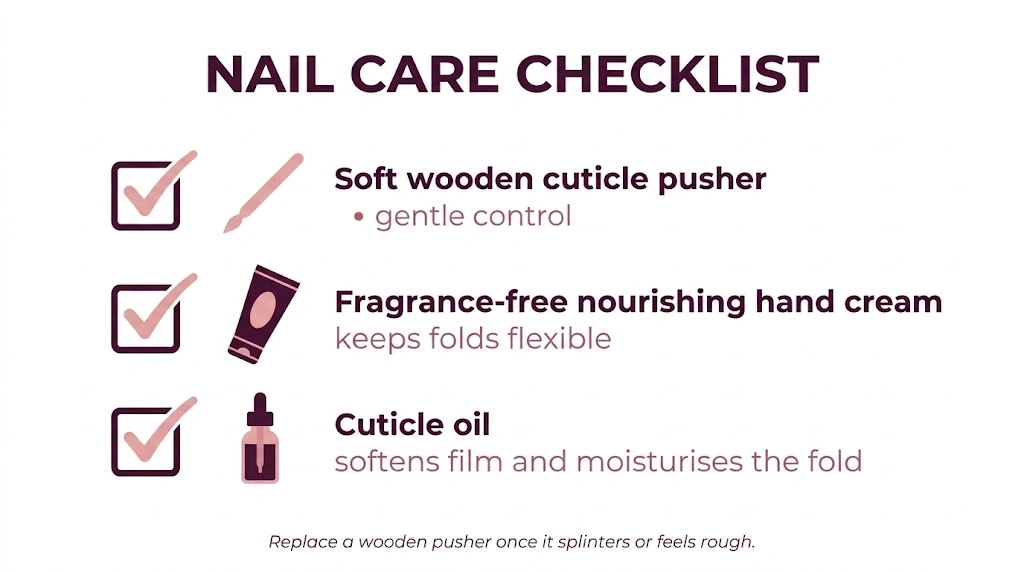
You do not need a large kit to care for this area well. A soft wooden cuticle pusher gives you gentle control, while a plain, fragrance-free nourishing hand cream keeps your folds flexible between manicures. Choose tools you can clean easily, and replace a wooden pusher once it splinters or feels rough.
Recommended Product
Cuticle Oil for Daily Nail Base Care
Editorial pick for gentle daily care
A simple oil helps you soften dead cuticle film and moisturise your living nail fold in one quick step, without needing a sharp tool.
As an Amazon Associate, we earn from qualifying purchases.
Frequently Asked Questions
Q: Is your cuticle the same as your eponychium?
A: No, your cuticle is dead film on your nail plate, while your eponychium is living skin at your nail base. Salon language often blurs the two, so check whether you are looking at flat film or a raised skin rim.
Q: Should you cut your cuticles?
A: Cutting is rarely necessary, and gentle pushing after soaking usually gives you a neater result. Trim only a clearly loose piece of dead film, and stop if you feel pain or see blood.
Q: Should you push back your nail fold?
A: No, your nail fold should stay in place to protect your matrix. You can moisturise it and keep it clean, but pushing it far back can cause bruising and soreness.
Q: Why is the skin around your nail sore after a manicure?
A: Soreness often means your living fold was pushed too hard, nicked, or dried out during prep. Let it rest, keep it moisturised, and seek advice if redness or swelling worsens.
Q: Does your cuticle grow back after removal?
A: Yes, new cuticle film forms continuously and moves outward as your nail grows. Regular oil and gentle pushing usually keep it tidy without repeated cutting.
Your Simple Takeaway
Think of your cuticle as the thin film you can tidy, and your nail fold as the living frame you should protect. When you soften one and leave the other alone, you get a cleaner nail base with far less soreness. Save this guide on Pinterest for your next manicure, so you can check the difference before you reach for any tool.

Hi, I’m Jessica, the creator behind Unique Lash & Nails Katy.
I created this website for anyone who loves beautiful nails as much as I do. Here, I share trendy nail designs, seasonal manicure ideas, easy nail care tips, honest product recommendations, and step-by-step guides to help you create salon-worthy nails at home. Whether you’re looking for everyday inspiration or your next favorite nail trend, I hope you’ll find something you love.