Can a Damaged Nail Regrow? What to Expect and How to Help It Heal
Quick Answer
Yes, a damaged nail can usually regrow as long as the nail matrix—the tissue that produces new nail—is still able to function. A completely lost fingernail commonly needs about four to six months to replace itself, while a toenail may need around a year or longer. Severe injury to the nail matrix can cause permanent ridges, splitting, abnormal growth, or occasionally prevent normal regrowth.
Seeing a nail split, lift, turn dark, peel thin, or fall off can make you wonder whether it will ever look normal again. The encouraging part is that the visible nail isn’t the only part involved in recovery.
New nail is continuously produced underneath the skin at the base of your nail, which means many damaged areas can gradually move toward the tip and be trimmed away. What matters most is where the damage happened and how deeply the nail-producing tissue was injured.
Here’s what you can realistically expect while a damaged nail grows back, plus the simple habits that can protect the new growth.


Can a Damaged Nail Really Grow Back Normally?
In many cases, yes. Your visible nail plate is made from hardened keratin, so a cracked or thinned section of nail doesn’t repair itself in the same way that a cut in your skin heals. Instead, your body produces new nail at the base and gradually pushes the damaged section forward.
This is why an old ridge, bruise, peeling area, or rough patch may appear to “move” toward the tip over time. The damaged portion hasn’t transformed into healthy nail. Healthier nail has grown behind it and pushed it outward.
The most important structure for regrowth is the nail matrix. It sits underneath the skin near the base of your nail and creates most of the nail plate. If the matrix remains intact after an injury, there is a good chance your nail will continue growing.
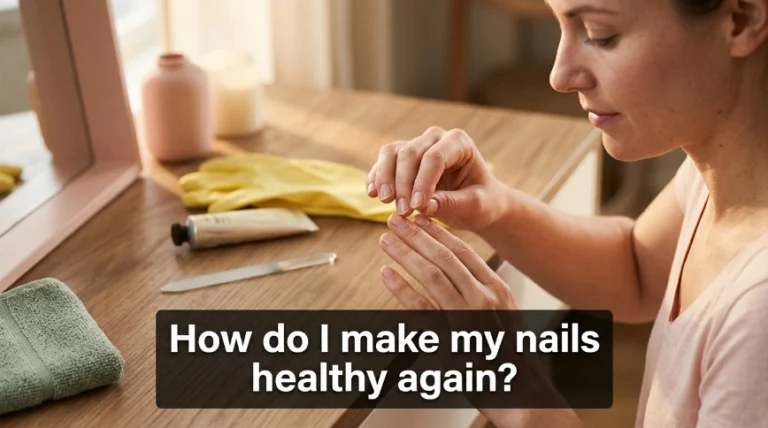
If you’re trying to restore nails after repeated cosmetic damage rather than a single accident, our guide on how to make your nails healthy again explains how to build a simple recovery routine while the damaged sections grow out.
What Types of Nail Damage Usually Grow Out?
Not every damaged nail has the same outlook. Minor surface damage is very different from a deep crush injury at the base of the nail.
Peeling or Thin Nails After Gel, Dip, or Acrylic Removal
If your nails look rough, flaky, or unusually thin after an enhancement is removed, the damaged surface can usually grow out. The nail plate that has already been filed or peeled away cannot instantly become thick again, which is why repeated buffing or another aggressive removal session can prolong the problem.
Keep the nail comfortably short and avoid peeling off any remaining product. This reduces leverage at the weak tip, so a small split is less likely to travel farther down the nail.
If repeated manicures are part of the problem, see whether taking a break from nail polish can help before applying another enhancement.
A Cracked or Broken Nail
A break affecting only the free edge normally disappears as the nail grows and you trim it shorter. Deeper cracks need more care because catching the split on clothing or hair can pull it farther into attached nail tissue and cause pain.
Don’t try to tear away a section that is still attached to your skin. Smooth only loose rough edges and protect the nail from additional impact.
A Bruised Nail
A hard impact can cause blood to collect underneath the nail plate, creating red, purple, brown, or black discoloration. If the underlying injury is uncomplicated, that discolored area may gradually travel toward the tip as the nail grows.
A very painful bruise, a large collection of blood, or a severe crush injury deserves medical evaluation because damage beneath the nail can be more extensive than the color alone suggests.
A Nail That Has Partially or Completely Fallen Off
A nail can often grow back even after the visible nail plate is lost. The replacement starts from the matrix at the base, so the process takes months rather than weeks.
The exposed nail bed needs protection while it heals because additional trauma or infection can complicate recovery. Don’t glue an artificial nail directly over an open or recently injured nail bed simply to hide its appearance.
When Might a Damaged Nail Not Regrow Normally?
The biggest concern is significant damage to the nail matrix. Because the matrix produces the nail plate, deep cuts, crushing injuries, burns, or scar tissue in this area can change the way the future nail forms.
A nail may still grow after matrix damage but develop a permanent ridge, groove, split, thickness change, or altered shape. The severity depends on exactly which part of the growth tissue was injured.
Warning
A deep injury near the cuticle or base of the nail can affect the matrix underneath even when the visible damage looks small. If the base was deeply cut, crushed, or badly torn, have it assessed rather than assuming the nail will simply grow out.
Repeated trauma can also interfere with healthy-looking growth. Biting, picking, aggressive filing, constantly peeling gel, or wearing shoes that repeatedly press against a toenail can continue damaging the area faster than it can recover.
How Long Does a Damaged Nail Take to Regrow?
 Save
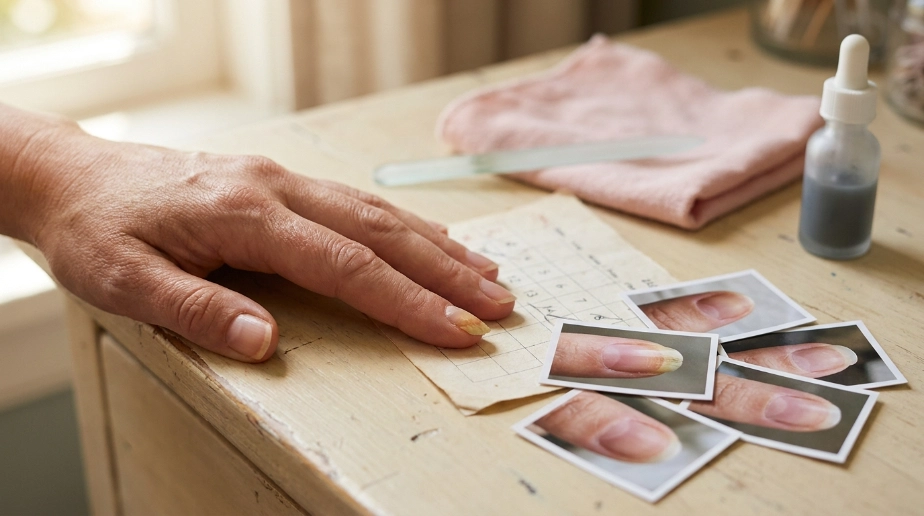
SaveNail growth is slow, which is why patience matters more than most “rapid repair” treatments.
- Fingernail: A completely lost fingernail commonly takes about four to six months to grow back.
- Toenail: A lost toenail may take around 12 months to replace itself, and some toenails require even longer.
- Small damaged area: A chip, ridge, peeling patch, or bruise near the tip may disappear much sooner because it has less distance to travel before you can trim it away.
The exact timeline depends on the nail involved, the location of the damage, the severity of the injury, repeated trauma, and your individual growth rate. That means comparing your nail with someone else’s after two weeks usually isn’t useful.
Pro Tip
Take a clear photo of your bare nail every three to four weeks. Look at the area closest to your cuticle rather than the damaged tip. A new smooth band appearing at the base makes slow progress much easier to notice.
What Does Healthy Nail Regrowth Look Like?
One of the easiest signs of progress is a smoother area emerging close to the cuticle while the older damage gradually moves outward.
For example, if a bruise began near the middle of your fingernail, you may notice normal-colored nail developing behind it. Over the following months, the dark patch should appear closer and closer to the free edge until it can finally be trimmed away.
After a more significant injury, the first replacement nail may not look perfect. Temporary grooves or irregular texture can appear because the growth area was disturbed during healing.
The important question is whether the new growth is gradually improving. Persistent or worsening changes are more concerning than a temporary ridge that keeps moving toward the tip.
If you’re unsure whether a change looks normal, compare it with the examples discussed in our guide to signs of unhealthy nails.
What Can You Do to Help a Damaged Nail Regrow?
 Save
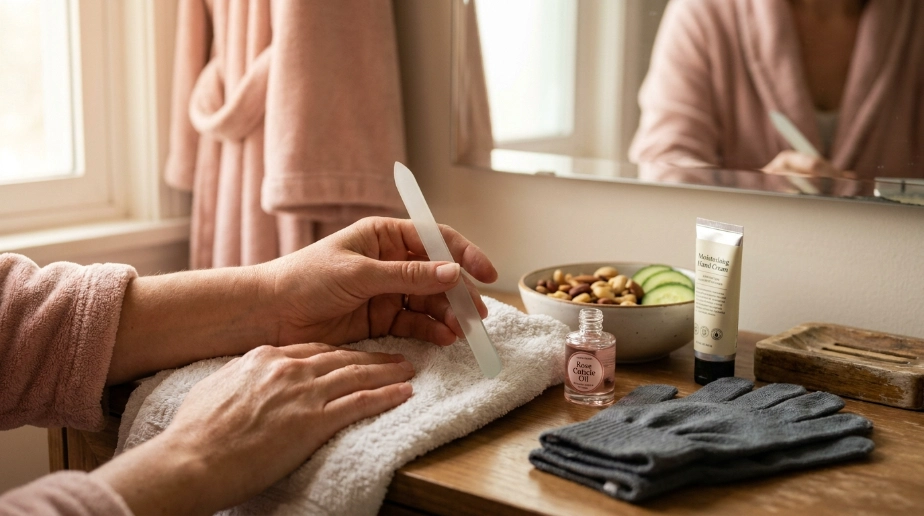
SaveYou can’t force damaged nail plate to rebuild itself overnight, but you can protect the new nail being produced underneath.
Keep the Damaged Nail Short
A long damaged nail has more leverage when it catches on clothes, bedding, bags, or hair. Shortening it reduces that pulling force, which is why maintaining a practical length can prevent one weak area from becoming a deeper tear.
Use a clean nail clipper when trimming is appropriate, then gently smooth rough edges with a fine file rather than aggressively sawing at the nail.
Recommended Product
Fine Glass Nail File
★★★★☆ Useful for gentle shaping
A fine glass file gives you more control when smoothing small snags, so you don’t have to aggressively shorten an already fragile nail.
As an Amazon Associate, we earn from qualifying purchases.
Moisturize the Nail and Surrounding Skin
Repeated washing, remover exposure, and household chemicals can leave the nail and surrounding skin dry. Regular moisturizer helps reduce that dry, brittle feeling, which makes the nail less likely to crack from ordinary bending and impact.
Massage a small amount around the nail and cuticle after handwashing and before bed. A simple routine you actually repeat is more useful than applying a complicated treatment once every few weeks.
If you already have petroleum jelly at home, our guide to using Vaseline for nails and cuticles explains where it fits into a moisture-focused routine.
Recommended Product
Jojoba Cuticle Oil
★★★★☆ Easy daily moisture support
Cuticle oil won’t magically speed up nail growth, but it makes frequent moisturizing convenient while fragile nail grows forward.
As an Amazon Associate, we earn from qualifying purchases.
Protect Your Nail From Water, Chemicals, and Impact
Long periods of wet work followed by drying can make fragile nails more prone to bending and splitting. Household detergents can also dry the skin surrounding an already sensitive nail.
Wear gloves for dishwashing and wet cleaning, and avoid using your nails to scrape labels, open containers, or pry objects apart.
Recommended Product
Reusable Household Cleaning Gloves
★★★★☆ Practical protection for wet work
Gloves reduce repeated exposure to water and cleaning products, which is useful when you’re trying to stop fragile nails from becoming even drier.
As an Amazon Associate, we earn from qualifying purchases.
Stop Repeating the Damage
Growth treatments can’t compensate for repeatedly peeling gel, over-buffing the natural plate, biting the nail, or picking around the cuticle. Removing the source of trauma matters because the new nail needs a chance to emerge without being damaged again.
You don’t necessarily have to stop manicures forever. Focus on gentler preparation and removal, and follow a basic nail care routine between manicures.
Support Normal Growth With a Balanced Diet
Your body needs adequate protein, vitamins, minerals, and energy to produce normal tissue, including nails. That doesn’t mean a supplement can repair a nail that was physically crushed or filed thin.
If you eat a varied diet, don’t assume that taking large doses of a “nail growth” supplement will make an injured nail grow back immediately. Persistent brittle nails or unexplained nail changes are a better reason to discuss your overall health with a qualified healthcare professional.
What Should You Do—and Avoid—While Your Nail Regrows?
Do
- +Keep fragile nails comfortably short and smooth.
- +Moisturize the nail and surrounding skin regularly.
- +Protect an injured nail from repeated impact and wet work.
Don’t
- −Peel off gel, dip, acrylic, or attached pieces of natural nail.
- −Over-buff the surface to make damaged nail look smoother.
- −Cover a painful, infected-looking, or unexplained nail change just to hide it.
How Can You Tell If the Nail Matrix Was Damaged?
You usually can’t confirm matrix damage just by looking at the nail immediately after an accident because much of the matrix sits underneath the skin.
A deep cut or significant crush injury at the base of the nail raises more concern than a small chip at the tip. Later, repeated splitting or a ridge that continually begins in the same place may suggest that the growth tissue was affected.
However, one imperfect replacement nail doesn’t automatically mean the damage is permanent. The growth area can be temporarily disrupted after trauma, so the appearance may improve as later sections of nail form.
If the nail remains significantly distorted, repeatedly separates, or doesn’t seem to be producing normal new growth, a dermatologist can examine the nail unit and determine whether scarring or another condition is involved.
When Should You See a Doctor for a Damaged Nail?
 Save
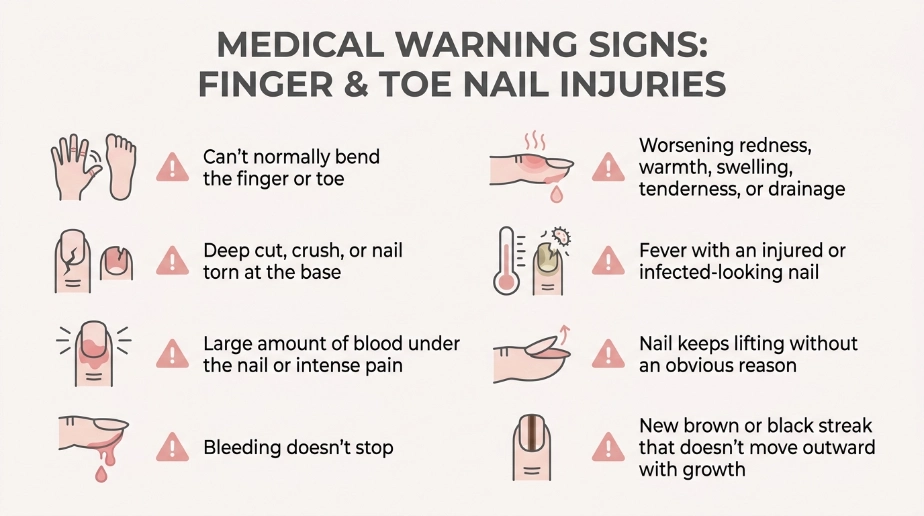
SaveMinor chips and small superficial injuries can often be protected at home, but more serious nail trauma needs medical attention because a fracture, deep nail-bed injury, or infection can be hidden underneath the nail plate.
Arrange prompt medical care if:
- You can’t normally bend the injured finger or toe.
- The nail was deeply cut, crushed, torn away at the base, or severely damaged.
- A large area beneath the nail has filled with blood or the pain is intense.
- Bleeding doesn’t stop with reasonable pressure.
- Redness, warmth, swelling, tenderness, or drainage is getting worse.
- You develop a fever along with an injured or infected-looking nail.
- The nail keeps lifting away from the nail bed without an obvious reason.
- A new brown or black streak appears and doesn’t clearly move outward with nail growth.
Don’t drill or burn a hole through a bruised nail yourself to release pressure. That type of treatment should be performed appropriately when a clinician determines it is needed.
Warning
Don’t assume every dark nail is simply bruised. An unexplained or changing dark streak, especially one that isn’t moving toward the tip as the nail grows, should be evaluated by a healthcare professional.
Frequently Asked Questions About Damaged Nail Regrowth
Q: Will a nail grow back if it completely falls off?
A: Usually, yes, if the nail-producing matrix remains functional. A completely lost fingernail commonly needs about four to six months to replace itself, while a toenail can require around a year or longer.
Q: Can a damaged nail bed heal?
A: Minor nail-bed injuries can heal, although deeper cuts or crushing injuries may need medical treatment. Protecting the area matters because the nail plate grows over and attaches to the nail bed as recovery progresses.
Q: Can nail matrix damage be permanent?
A: Yes. Severe matrix injury can create scar tissue that changes future nail growth, causing persistent ridges, splitting, thickness changes, or an abnormal shape. A dermatologist can assess ongoing deformity after a significant injury.
Q: Does cuticle oil make a damaged nail grow faster?
A: Cuticle oil mainly moisturizes the nail and surrounding skin rather than dramatically accelerating growth. Its practical benefit is reducing dryness while the damaged area naturally grows toward the tip.
Q: Can nails damaged by gel or acrylic grow back healthy?
A: Often, yes. Surface thinning and peeling caused by aggressive filing or removal generally improve as new nail grows forward. Stop peeling products off, reduce unnecessary buffing, moisturize regularly, and give the damaged section enough time to grow out.
So, Can Your Damaged Nail Regrow?
For most everyday nail damage, the answer is encouraging: your nail can usually grow back as healthier nail replaces the injured portion. The process is slow, and the old damaged section has to grow forward rather than magically repair itself.
Protect the nail, moisturize consistently, avoid repeating the original damage, and watch the new growth at the base. If the injury was deep, unusually painful, infected-looking, or the nail continues growing abnormally, get it checked rather than covering the problem.
Save this guide on Pinterest so you can compare your nail’s progress as the damaged area gradually grows out.

Hi, I’m Jessica, the creator behind Unique Lash & Nails Katy.
I created this website for anyone who loves beautiful nails as much as I do. Here, I share trendy nail designs, seasonal manicure ideas, easy nail care tips, honest product recommendations, and step-by-step guides to help you create salon-worthy nails at home. Whether you’re looking for everyday inspiration or your next favorite nail trend, I hope you’ll find something you love.