How to Remove Blackness From Your Nails Fast and Safely
Quick Answer
If the blackness is a surface stain, soak your nails in warm soapy water, scrub gently with a soft nail brush, and treat any remaining stain with a short baking-soda paste application. Darkness beneath the nail cannot be scrubbed away. A new stripe, unexplained black spot, severe pain, thickened nail, or color that does not grow outward needs professional evaluation.
Time needed
10–15 minutes
Difficulty
Beginner
Items needed
4 basic items
Result lasts
Until the next stain
You may be able to clean blackness from your nails in minutes—but only when the color is sitting on the nail’s surface. Ink, hair dye, dark polish, soil, spices, and grime often respond to gentle cleaning.
A bruise, fungal infection, or pigment produced beneath the nail is different. Scrubbing cannot remove it and may leave the nail thinner, sore, and easier to infect. This guide helps you tell the difference before you reach for a home remedy.


Can You Actually Remove the Blackness at Home?
Start by washing your hands and looking at the nail under bright light. Surface staining often appears uneven, affects areas that touched a colored substance, and may fade when you wipe it with polish remover. It can involve several nails at once.
Color beneath the nail plate usually looks as if it is trapped under glass. It will not transfer to a cotton pad. Depending on the cause, it may appear as a spot, bruise, narrow stripe, or discoloration spreading through a thickened nail.
- Likely surface stain: You recently handled hair dye, ink, soil, dark polish, paint, or strongly colored food.
- Possible bruise: The color appeared after a blow, pinching injury, tight shoes, running, or repeated pressure.
- Possible fungal change: The nail is also thick, crumbly, brittle, distorted, or lifting.
- Needs medical evaluation: A new brown or black stripe appeared without a clear cause, especially on one nail.
Warning
Do not bleach, drill, cut into, or puncture a dark nail. Arrange a medical examination if the mark has no known cause, changes in width or color, reaches the surrounding skin, does not move toward the tip as the nail grows, or comes with splitting, lifting, swelling, pus, or strong pain.
If you have diabetes, poor circulation, reduced sensation, or a weakened immune system, ask a healthcare professional about a dark or injured nail before treating it yourself. Small wounds around the nail can become more serious in these situations.
What Do You Need to Clean Surface Stains?
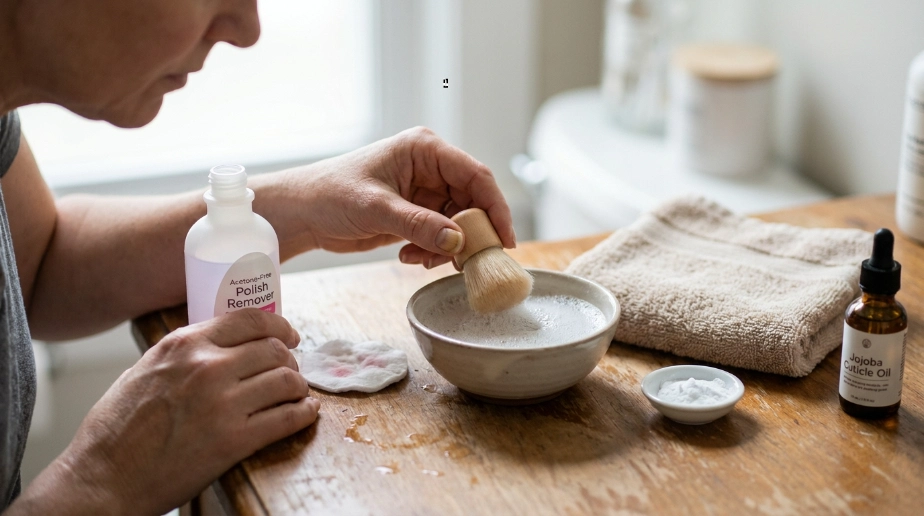
You do not need a harsh whitening kit. Gather a small bowl, mild hand soap, a soft nail brush, baking soda, clean cotton pads, and hand cream or cuticle oil. Keep an acetone-free polish remover nearby if nail polish or pigment transfer may be responsible.
- A bowl of comfortably warm water
- Mild liquid hand soap
- A soft nail-cleaning brush
- Baking soda for stubborn external stains
- Cotton pads and acetone-free remover, if needed
- A plain moisturizer or jojoba cuticle oil
Before cleaning, remove rings and inspect the skin for cuts. Skip baking soda and polish remover if your fingertips are cracked, inflamed, or sore. Soap and water are the gentlest starting point.
How Do You Remove Black Surface Stains Step by Step?
 Save
Save
1
Remove Polish and Check the Nail
Wet a cotton pad with acetone-free remover and hold it against the nail for 10 seconds. Wipe from the cuticle toward the tip. Use a fresh area of the pad for each pass so you do not spread dark pigment back over the nail.
Common mistake: Scrubbing dry polish aggressively creates friction and can leave the nail surface rough without removing pigment trapped in deeper polish layers.
2
Soak the Nails Gently
Add a few drops of mild soap to warm water. Soak your fingertips for five minutes to soften grime around the free edge and sidewalls. The water should feel comfortable, not hot.
Common mistake: Soaking for 20 minutes or longer makes the nail plate swell with water, which can encourage peeling as it dries.
3
Brush From Base to Tip
Move the soft brush lightly over the nail plate and beneath the visible free edge for 20 to 30 seconds. Rinse, inspect, and repeat once if grime is still coming away. Clean beneath the nail only where the brush reaches without force.
Common mistake: Digging under the nail with scissors, a metal tool, or a pointed stick can separate the nail from its bed and introduce bacteria.
4
Lift the Remaining Surface Stain
Mix one teaspoon of baking soda with enough water to create a soft paste. Spread it over the stained surface, wait no longer than two minutes, and massage very lightly with a fingertip. Rinse thoroughly and stop if you feel burning or irritation.
Common mistake: Using a stiff brush with baking soda turns a mild abrasive into an aggressive scrub that can thin and dull the nail plate.
5
Dry and Restore Moisture
Pat your hands dry, paying attention to the sidewalls and beneath the tips. Massage a drop of oil or a small amount of hand cream around each nail. Moisturizing helps offset the drying effect of soap, remover, and baking soda.
Common mistake: Reapplying polish immediately can trap moisture. Give your bare nails at least 30 minutes to dry first.
Pro Tip
Photograph the nail in natural light after cleaning. Take another photo two to four weeks later. A bruise should gradually move toward the tip with nail growth; an unexplained mark that stays near the cuticle or changes deserves medical attention.
Which Remedy Fits the Cause of Your Dark Nails?
 Save
SaveDark Nail Polish Stains
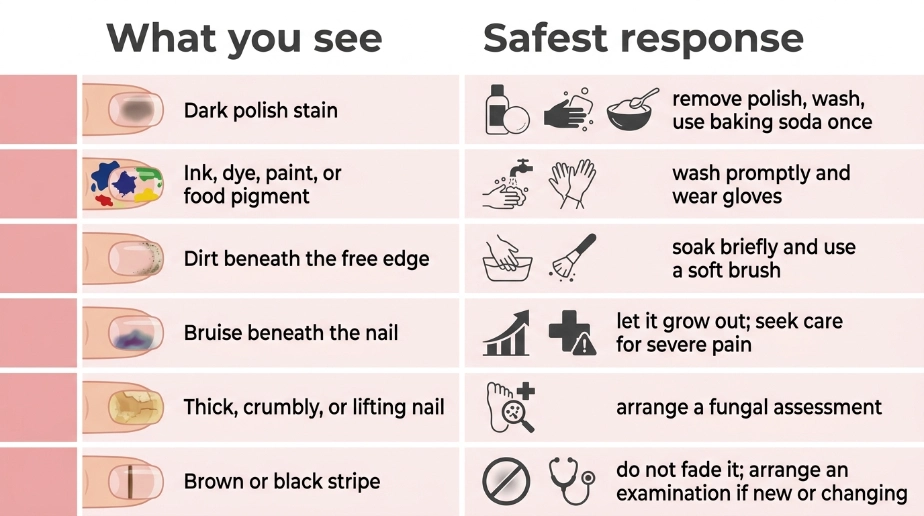
Black, navy, burgundy, and green polish can leave pigment behind, especially when you skip base coat. Remove every trace of polish, wash your nails, and use the short baking-soda treatment once. A deeper stain may have to grow out rather than disappear in one cleaning session.
Do not repeatedly buff the color away. Buffing removes layers of nail along with pigment, leaving the surface thin and flexible. Next time, apply one thin layer of clear base coat and allow it to dry before adding dark color.
Ink, Hair Dye, Paint, or Food Pigment
Fresh surface stains respond best to prompt washing. Use warm soapy water first, followed by acetone-free remover only if the substance is compatible with cosmetic remover. Wear protective nitrile gloves when handling dye or strong pigments again.
Avoid mixing household cleaners. Bleach, ammonia, and other chemicals can irritate your skin, damage the nail plate, and create dangerous fumes when combined.
Dirt Beneath the Free Edge
Trim the nail straight across if it has grown long enough to trap debris. Soak briefly, then use your soft brush. You can learn more about safe cleaning technique in this guide to deep-cleaning your nails.
Do not scrape toward the cuticle beneath an attached nail. That protected seal helps keep irritants and organisms away from the nail bed.
A Bruise Beneath the Nail
A black, purple, or deep red patch after an injury is often trapped blood. You cannot wash it away. Minor, comfortable bruises generally move toward the tip as the nail grows, although a fingernail can take months and a toenail considerably longer to replace itself.
Seek prompt care if pressure causes severe throbbing, the injury involved a deep cut or crushing force, the finger or toe looks bent, or most of the nail is dark. A clinician can decide whether drainage or an X-ray is necessary. Never heat a needle, drill the nail, or try to release the blood yourself.
A Thick, Crumbly, or Lifting Nail
Black, brown, yellow, or white discoloration alongside thickening and crumbling can occur with nail fungus. Home cleaning may improve the appearance of loose debris, but it will not cure an infection inside or beneath the nail.
A clinician may examine a clipping because injury, psoriasis, and fungal infection can look similar. Proper treatment depends on the cause. If damage is also present, review these tips for helping a damaged nail regrow without causing further trauma.
A Brown or Black Stripe
A dark vertical stripe can have benign causes, including normal pigmentation, but you should not attempt to fade it with a home remedy. Arrange an examination if it is new, changing, becoming wider, irregular in color, limited to one nail, or extending onto the cuticle or nearby skin.
Covering the stripe with opaque polish makes changes harder to monitor. Leave it visible until a qualified healthcare professional has assessed it.
How Fast Will the Blackness Disappear?
The timeline depends entirely on where the color is located:
- Loose dirt or fresh external pigment: Often improves during one 10-minute cleaning session.
- Dark polish staining: May lighten immediately but can require days or weeks of nail growth to disappear fully.
- Minor bruise: Must grow outward with the nail and can remain visible for months.
- Fungal discoloration: Usually needs diagnosis and sustained treatment; visible clearing depends on healthy new nail growth.
- Natural or medically caused pigmentation: Will not respond predictably to cosmetic cleaning.
If a suspected surface stain does not change at all after one gentle cleaning attempt, stop scrubbing. Treat it as discoloration within or beneath the nail until you know otherwise.
What Should You Do—and Avoid—While the Nail Recovers?
Do
- +Keep the nail clean, dry, and neatly trimmed.
- +Wear roomy shoes if a toenail is bruised.
- +Track unexplained color with dated photos.
Don’t
- −Use chlorine bleach, toilet cleaner, or undiluted peroxide.
- −Pick beneath the nail or cut attached tissue.
- −Cover a changing mark and forget about it.
Follow a simple nail-care routine while the nail grows. Gentle daily care is more useful than repeating abrasive whitening treatments.
Why Didn’t the Home Remedy Work?
The color did not fade at all
The pigment may be inside or beneath the nail rather than on its surface. Stop cleaning and monitor its position. Arrange an examination if you cannot connect it to a clear injury or harmless source.
The nail looks white, chalky, or rough after scrubbing
You may have dehydrated or abraded the surface. Rinse it, apply moisturizer, and avoid remover, baking soda, and buffing for at least several days. Use gloves during wet chores.
The darkness keeps returning
Look for repeated contact with dye, soil, dark polish, or dirty tools. If the discoloration develops without external exposure, professional diagnosis is safer than stronger cleaning.
The nail is getting thicker or lifting
Do not glue or press it down. Keep it protected from snagging and book an assessment, since infection, injury, and inflammatory nail conditions require different treatment.
How Can You Prevent Black Nail Stains?
- Use base coat under dark polish. It creates a barrier between concentrated pigment and the porous nail surface.
- Wear gloves around dyes and soil. Prevention is easier than removing pigment once it enters dry surface layers.
- Choose shoes with toe room. Repeated impact against the front of a shoe can bruise toenails even without one memorable injury.
- Keep personal tools personal. Do not share clippers, files, or footwear when fungal infection may be present.
- Dry hands and feet well. Persistent dampness creates an environment in which fungi can thrive.
- Clean gently and regularly. The advice in this guide to cleaning nails at home can help you avoid compacted debris without scraping.
Recommended Product
Soft-Bristle Nail Cleaning Brush
★★★★☆ Popular style on Amazon
A soft brush loosens surface grime without the sharp edge and concentrated pressure of a metal manicure tool.
As an Amazon Associate, we earn from qualifying purchases.
Frequently Asked Questions About Black Nails
Q: Can lemon juice remove blackness from nails?
A: Lemon juice may slightly alter some surface stains, but it can sting cracked skin and increase irritation. Mild soap followed by a brief baking-soda paste is a more controlled approach. Neither method removes pigment beneath the nail.
Q: Can toothpaste whiten a dark nail?
A: Toothpaste contains abrasives designed for teeth, not nails. It may lift a light surface mark, but forceful rubbing can roughen the nail. It will not treat a bruise, fungus, or pigment stripe.
Q: Does a black nail always mean fungus?
A: No. External stains, bruising, natural pigmentation, medications, inflammatory conditions, and other causes can darken a nail. Fungus is more likely when discoloration occurs with thickening, crumbling, distortion, or lifting.
Q: How do you know whether a black nail is a bruise?
A: A bruise often follows an injury, tight footwear, or repeated impact and should gradually move toward the tip as the nail grows. Unexplained color that remains near the base, widens, or changes should be examined.
Q: When should you see a doctor about a black nail?
A: Seek care for severe pain, pus, warmth, swelling, a major injury, or an unexplained dark mark. A new or widening stripe, color on the nearby skin, nail splitting, or pigment that does not grow outward also needs evaluation.
What Is the Safest Next Step?
Clean a genuine surface stain once with soap, a soft brush, and—if needed—a brief baking-soda treatment. If the color sits beneath the nail or does not respond, stronger scrubbing is not the answer; identifying the cause is.
Save this guide to Pinterest so you have the safe cleaning steps and warning signs ready the next time a nail suddenly looks dark.

Hi, I’m Jessica, the creator behind Unique Lash & Nails Katy.
I created this website for anyone who loves beautiful nails as much as I do. Here, I share trendy nail designs, seasonal manicure ideas, easy nail care tips, honest product recommendations, and step-by-step guides to help you create salon-worthy nails at home. Whether you’re looking for everyday inspiration or your next favorite nail trend, I hope you’ll find something you love.