The Real Routine Behind Healthy, Strong Nails
Quick Answer
Healthy nails come from consistent habits, not one product. Moisturize your cuticles daily, eat enough protein and biotin-rich foods, protect your hands from harsh chemicals and water, keep polish breaks between manicures, and trim instead of ripping. Do this for a few months and you’ll see smoother, stronger, less brittle nails.
Your nails aren’t just decoration — they’re a pretty accurate readout of what your body’s getting and what you’re putting them through. If yours peel, split, or just look tired no matter how many top coats you try, the fix usually isn’t a fancier polish. It’s a handful of small habits, repeated consistently, that most people skip without realizing it.
Here’s the full routine, broken down into what actually works, how long it takes to see a difference, and which habits are quietly wrecking your progress.


The Habits That Actually Build Healthy Nails
 Save
SaveThere’s no single trick here — healthy nails come from a few things working together. Skip one and the others can only do so much.
1. Moisturize the cuticle, not just the nail
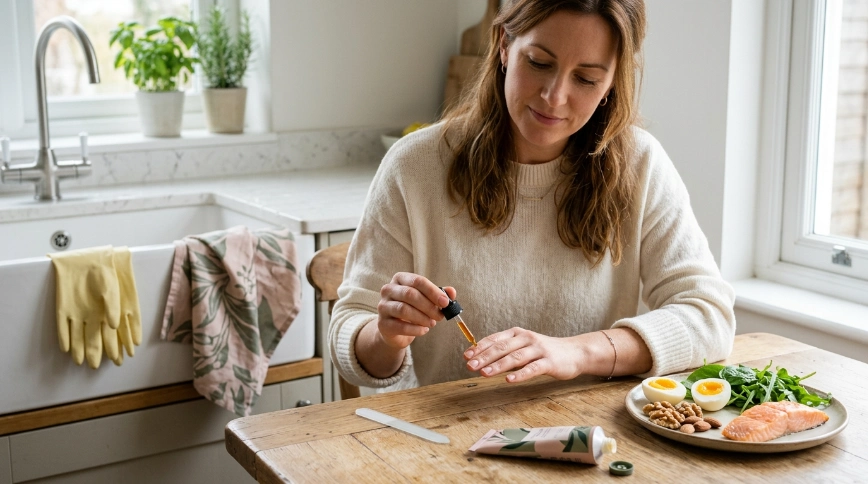
Your cuticle is the seal that protects the nail matrix underneath — the part that actually produces new nail growth. When it’s dry and cracked, that seal breaks down, and everything you grow afterward comes in weaker. Massage a cuticle oil (jojoba, vitamin E, or a dedicated cuticle formula) into the base of each nail every night. It takes fifteen seconds per hand and it’s the single habit with the biggest payoff.
2. Feed your nails from the inside
Nails are made of keratin, and keratin needs protein, biotin, zinc, and iron to build properly. If you’re not getting enough of these, no topical treatment will compensate. You don’t need supplements right away — start with foods that support nail growth like eggs, salmon, nuts, and leafy greens before reaching for a bottle.
3. Protect your hands from water and chemicals
Constant wet-to-dry cycling — dishes, cleaning, hand sanitizer — strips the natural oils that hold your nail layers together, which is exactly why nails get brittle and start to peel in thin layers. Wear gloves for dishes and cleaning, and reapply hand cream every time you wash your hands. This one habit alone prevents most of the splitting people blame on “weak nails.”
4. Give your nails breaks between manicures
Gel and acrylic aren’t the enemy, but back-to-back applications with no rest period are. Removal (especially soaking off gel) thins the nail plate every time. Aim for at least a week of bare nails between manicures so the plate has a chance to rebuild before you stress it again.
5. File and trim — don’t rip or bite
Tearing a hangnail or biting a rough edge doesn’t just hurt — it can tear the nail plate below the surface line, which is what causes those slow-growing splits that take months to grow out. Keep a glass file in your bag and smooth rough spots the moment you notice them, before your hands decide to “fix” it for you.
If your nails are already damaged from months of neglect or harsh manicures, this routine works alongside a plan for repairing weak, damaged nails — the daily habits above are what keep them strong once you’ve gotten them back to baseline.
How Long Does It Take to See Healthier Nails?
Fingernails grow about 3mm a month, which means a full nail replaces itself roughly every 4 to 6 months. That’s your real timeline — you’ll notice less peeling and fewer snags within 3 to 4 weeks of consistent care, but a nail that’s completely free of old damage takes a full growth cycle. Toenails grow slower, closer to 12 to 18 months for a full replacement, so be patient with those.
Do
- +Apply cuticle oil every night, not just before a manicure
- +Wear gloves for dishes, cleaning, and gardening
- +File in one direction to avoid splitting the tip
- +Give nails a bare week between gel or acrylic sets
Don’t
- −Use metal cuticle pushers aggressively or cut live cuticle skin
- −Peel off gel or acrylic — always soak it off
- −Use nail polish remover with acetone more than twice a week
- −Ignore a small split — it grows out faster if you file it smooth right away
Pro Tips Most Guides Skip
Pro Tip
Apply hand cream right after washing your hands, while the skin is still slightly damp. It locks in moisture instead of sitting on top of dry skin, and it reaches the cuticle far better than applying it hours later.
Pro Tip
Rotate your polish colors and skip base coat with formaldehyde or toluene listed in the ingredients. These “hardening” formulas actually dehydrate the nail plate over time, which is the opposite of what you want.
Pro Tip
Keep your nails a touch shorter during the colder months. Cold weather already dries out skin and nails, and longer nails have more surface area to catch and chip.
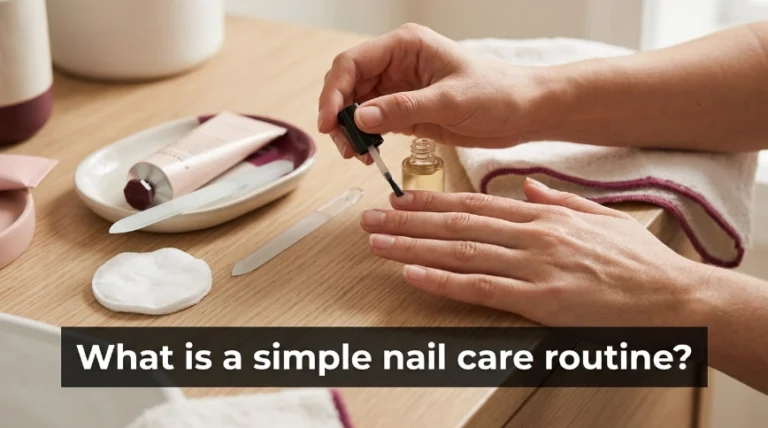
If you want to go a step further, look into what a proper nail care routine looks like beyond the daily basics — things like weekly treatments and occasional buffing that speed up results without overdoing it.
Products That Genuinely Help
 Save
SaveRecommended Product
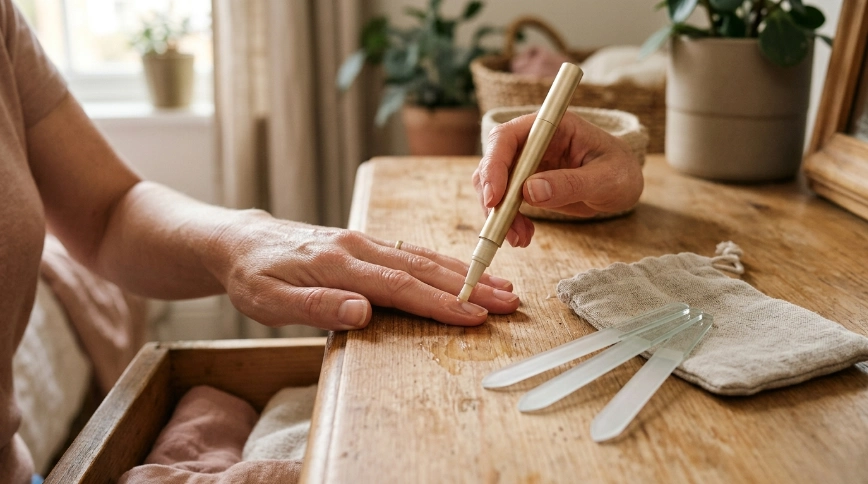
Cuticle Oil Pen with Jojoba and Vitamin E
★★★★☆ Highly rated on Amazon
A twist pen is easier to use daily than a bottle with a brush, which means you’re actually more likely to keep up the habit that matters most.
As an Amazon Associate, we earn from qualifying purchases.
Recommended Product
Glass Nail File Set
★★★★☆ Highly rated on Amazon
Glass files seal the nail edge as you file instead of tearing it like cardboard emery boards do, which cuts down on those tiny splits that turn into bigger breaks.
As an Amazon Associate, we earn from qualifying purchases.
FAQ
Q: How often should I moisturize my nails?
A: Once a day is enough for most people — nightly works best since you won’t wash it off right away. If your hands are in water often, add a second application in the morning.
Q: Do biotin supplements actually work for nails?
A: They can help if you’re actually deficient, but most people get enough from food. Try adjusting your diet first, and only add a supplement if you’re still not seeing improvement after a few months.
Q: Are gel manicures bad for nail health?
A: Gel itself isn’t the problem — improper removal is. Soaking off gently and taking breaks between sets keeps gel manicures from thinning your nails over time.
Q: Is it normal for nails to have ridges?
A: Fine vertical ridges are common and usually just come with age. Deep horizontal ridges or sudden changes in texture are worth mentioning to a doctor since they can point to something else going on.
The Bottom Line
Healthy nails aren’t about finding the one magic product — they’re built from small, boring habits done consistently: oil every night, gloves for wet work, real breaks between manicures, and a diet that actually feeds keratin production. Stick with it for one full growth cycle and you’ll see the difference for yourself. Save this guide to Pinterest so you’ve got the full routine handy whenever you need a refresher.

Hi, I’m Jessica, the creator behind Unique Lash & Nails Katy.
I created this website for anyone who loves beautiful nails as much as I do. Here, I share trendy nail designs, seasonal manicure ideas, easy nail care tips, honest product recommendations, and step-by-step guides to help you create salon-worthy nails at home. Whether you’re looking for everyday inspiration or your next favorite nail trend, I hope you’ll find something you love.