How to Strengthen Nails After Gel Polish: Easy Recovery
Quick Answer
To strengthen nails after gel polish, keep them short, apply cuticle oil daily, moisturize after washing your hands, and protect them from excessive water and cleaning products. Take a break from gel manicures for at least one to two weeks, or longer if your nails remain damaged. Avoid peeling, scraping, and aggressive buffing. Damaged nail layers cannot be instantly rebuilt, but consistent care helps prevent additional breakage while healthier nails grow out.
You finally remove your gorgeous gel manicure, only to discover that your natural nails look thin, peel at the tips, or bend more easily than before. It’s frustrating, especially when you love having beautiful nails.
The good news? Most mild cosmetic nail damage can improve with gentle care and time. You don’t need an expensive recovery kit or a complicated ten-step treatment.
Here’s how to strengthen nails after gel polish with a realistic recovery routine, effective moisturizing habits, and simple ways to protect your nails as they grow.


Why Do Your Nails Feel Weak After Gel Polish?
Gel polish creates a durable, glossy coating, but the application and removal process can put stress on your natural nails. If your nails suddenly feel paper-thin after removal, the problem may involve several factors rather than the gel color alone.
1. Peeling Gel Can Remove Nail Layers
Your visible nail plate consists of compact layers of keratin. When you pull away gel polish before it has properly released, some of those layers may come off with the product.
This leaves an uneven surface that bends or splits more easily. Repeating the process can make the damage increasingly noticeable.
2. Aggressive Filing Can Thin Your Nails
Buffing the nail surface helps certain manicure products adhere, but excessive filing removes natural nail material.
If a nail technician or home manicure tool repeatedly files the same area, your nails may become noticeably thinner. Once that material is removed, a topical product cannot immediately restore its original thickness.
3. Acetone Can Cause Dryness
Acetone is commonly used to dissolve soak-off gel polish. Although it works effectively when used correctly, prolonged or repeated exposure can dry the nail plate and surrounding skin.
Dry nails may feel rigid, rough, or prone to splitting. Moisturizing after removal helps reduce that dryness.
4. Repeated Manicures Leave Little Recovery Time
Getting gel manicures back-to-back can mean repeated filing, soaking, and removal before previously damaged sections have grown out.
If you’re unsure whether gel removal is the only cause of your breakage, explore these common causes of weak nails to identify other habits that may be contributing.
How Can You Strengthen Nails After Gel Polish?
The most effective recovery plan combines several habits rather than relying on one nail treatment. The goal is to protect your current nails, reduce dryness, and give healthy new nail the best chance to grow without additional damage.
1. Give Your Nails a Break From Gel Polish
Best for: Nails that feel thin, sensitive, brittle, or rough after gel removal.
Start with a polish-free period of one to two weeks, as recommended by dermatologists for recovery between gel manicures. If your nails remain fragile, extend the break rather than immediately applying another gel set.
During this time, keep your nails clean, moisturized, and protected. Leaving them uncovered also makes it easier to notice new discoloration, lifting, or splitting.
Benefit: You avoid another round of potentially damaging gel preparation and removal.
Limitation: A short break won’t reverse an already thinned nail plate. Damaged portions still need to grow out.
For more guidance, see whether nails are healthier without nail polish and how to make a polish break useful.
2. Apply Cuticle Oil Every Day
Best for: Dry, peeling nails and rough skin around the cuticles.
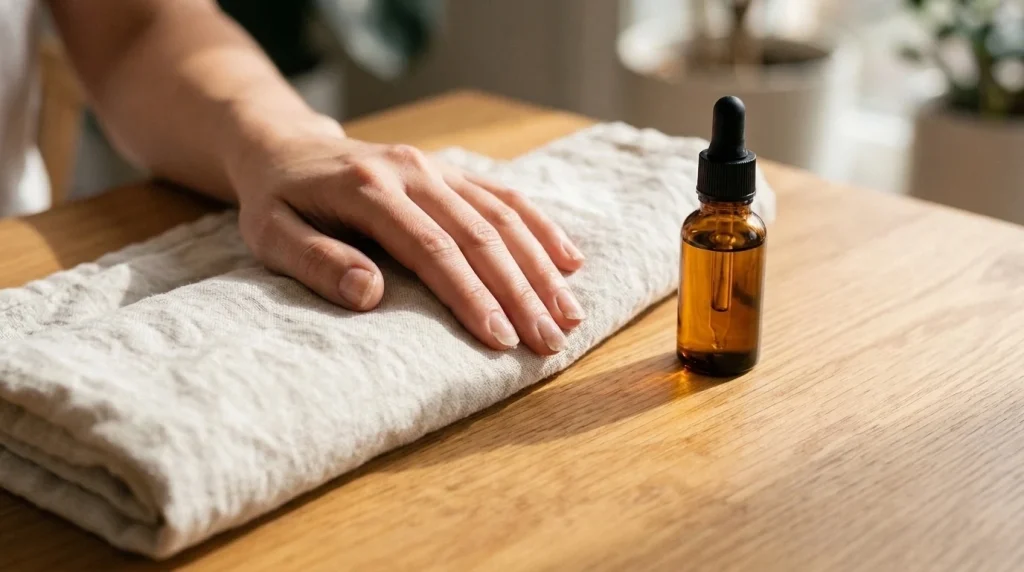
Cuticle oil is one of the easiest products to include in your nail recovery routine. Jojoba-based oil is a convenient choice because it spreads easily and conditions dry skin without requiring a lengthy treatment.
Apply a small drop around each nail once or twice daily. Massage it into the nail surface, sidewalls, and cuticle area for approximately 20 seconds.
If your nails feel especially dry after handwashing, an additional application may help.
Benefit: Regular conditioning reduces dryness and can make brittle nails feel more flexible.
Limitation: Oil cannot permanently reconnect layers that have already separated or restore material lost through filing.
You can compare jojoba, mineral oil, and other options in this guide to the best oils for weak and damaged nails.
3. Keep Your Nails Short While They Recover
Best for: Nails that bend, catch on clothing, or split whenever they grow longer.
Long nails experience more leverage during everyday activities. When your nail plate is already thin, even opening a container or accidentally hitting a hard surface can cause a crack.
Trim your nails close to the fingertips, leaving a comfortable amount of free edge. Use a fine glass nail file to smooth rough corners and choose a short, softly rounded shape.
File with light, controlled strokes and avoid repeatedly thinning the top surface.
Benefit: Shorter nails are less likely to snag, bend, and tear while damaged sections grow out.
Limitation: Shortening doesn’t change the underlying thickness, but it protects the nail you still have.
4. Moisturize Your Nails After Every Handwash
Best for: Nails exposed to frequent washing, sanitizers, or dry indoor air.
Hand cream isn’t just for your skin. A rich, fragrance-free cream can also help condition your nail surface and surrounding folds.
After washing your hands, dry them gently and massage moisturizer over your fingertips. Pay attention to the edges of your nails, where dryness and peeling often become noticeable.
At bedtime, apply a small amount of petroleum jelly over your nails and cuticle area to help reduce moisture loss overnight.
Benefit: Regular moisturizing helps limit dryness-related brittleness and improves the comfort of irritated-looking nail folds.
Limitation: Cream alone won’t stop breakage if you’re continuing to peel gel or aggressively file the nail surface.
5. Protect Your Nails From Excess Water and Chemicals
Best for: Anyone whose nails repeatedly become soft after cleaning, bathing, or household chores.
Your nails absorb water and then lose it as they dry. Repeated exposure can contribute to changes in flexibility and make peeling or splitting worse.
Wear protective gloves when washing dishes, cleaning bathrooms, or handling household detergents. If your hands become sweaty inside the gloves, remove them afterward and dry your skin thoroughly.
Also avoid using your fingernails as tools to scrape labels, open packages, or pry objects apart.
Benefit: You reduce mechanical stress and unnecessary wet-dry cycles.
Limitation: Gloves prevent additional exposure but don’t instantly repair existing damage.
6. Be Careful With Nail Strengtheners
Best for: People considering a cosmetic protective coating after their nails have recovered enough to tolerate polish.
Nail strengtheners and hardeners may temporarily make nails feel firmer or add a protective cosmetic layer. However, a harder nail isn’t always a healthier nail.
Some strengthening formulas produce a very rigid finish, which may increase snapping instead of allowing the nail to flex naturally.
If you want to try one, select a product intended for your nail condition, follow its instructions, and stop if it causes discomfort or increased splitting. Avoid applying treatments over painful, lifting, or visibly infected nails.
Benefit: A suitable coating may provide temporary protection against minor everyday wear.
Limitation: Strengthening polish cannot permanently rebuild a damaged nail plate.
7. Support Healthy Nail Growth With Balanced Nutrition
Best for: Long-term nail maintenance, especially when your diet has been limited or inconsistent.
Your body needs adequate protein and nutrients to produce new nail cells. A balanced diet containing protein-rich foods, vegetables, whole grains, and appropriate sources of iron and zinc supports normal nail growth.
Try including eggs, beans, fish, dairy foods, lentils, or other protein sources in your regular meals.
Don’t automatically start high-dose biotin supplements because your nails are peeling. Nail changes alone cannot identify a nutrient deficiency, and biotin can interfere with certain medical laboratory tests.
Benefit: Good nutrition supports the growth of new nail material.
Limitation: Eating well won’t undo physical damage caused by peeling off gel polish.
What Should Your Daily Nail Recovery Routine Look Like?
You don’t need to spend an hour on nail care. A simple routine that fits your schedule is easier to maintain than an occasional intensive treatment.
Morning: 2 Minutes
- Check for rough edges and gently file any snags.
- Massage a small amount of cuticle oil around each nail.
- Apply hand cream before starting your day.
During the Day: 1 Minute as Needed
- Reapply moisturizer after handwashing.
- Wear gloves for prolonged wet or chemical-heavy chores.
- Avoid picking, biting, or scraping your nails.
Before Bed: 3 Minutes
- Apply cuticle oil and massage it into your fingertips.
- Add a rich hand cream or thin layer of petroleum jelly.
- Check for new cracks without pulling off loose nail layers.
Consistency is more important than using expensive products. For long-term maintenance, follow a simple daily nail care routine once your nails are recovering comfortably.
How Long Does It Take for Nails to Recover After Gel Polish?
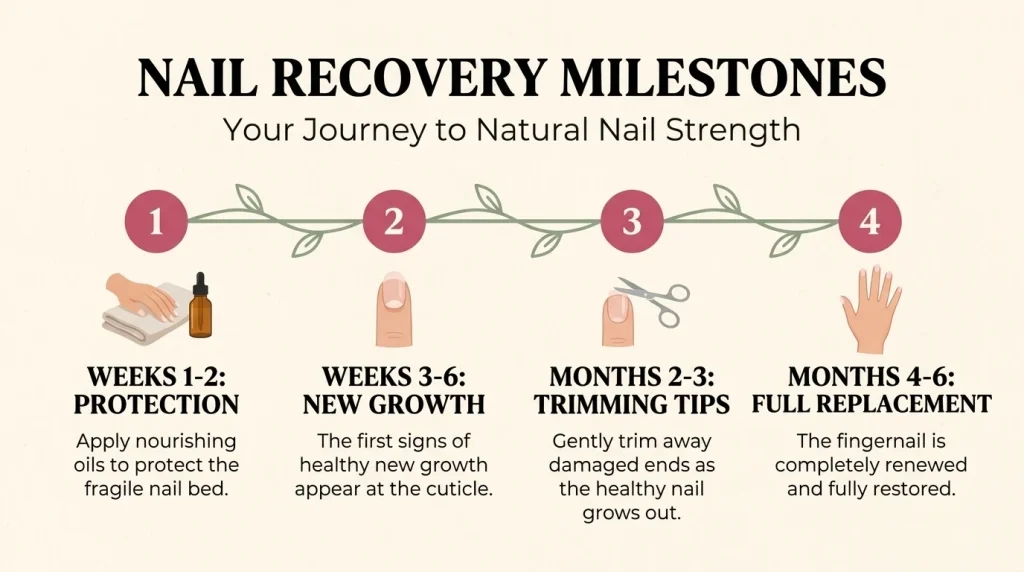
Your recovery timeline depends on how much nail material was damaged, how frequently you wore gel polish, and whether you’ve stopped the habits contributing to breakage.
Fingernails typically grow around 3 millimeters per month. Replacing most or all of a damaged fingernail can take approximately six months, sometimes longer.
First 1–2 Weeks: Focus on Protection
Your cuticles may feel less dry with regular moisturizer, and short, smoothly filed nails may snag less frequently. However, the nail plate won’t suddenly become thicker.
Weeks 3–6: Watch for New Growth
Look closely at the narrow band of nail appearing near your cuticle. If the underlying nail-producing tissue is healthy, newer growth may look smoother than the damaged section farther toward the tip.
Months 2–3: Gradually Trim Damaged Tips
As new nail grows forward, you can trim away older peeling or over-filed areas. Protecting your nails remains important because the remaining damaged length may still split.
Months 4–6 and Beyond: Expect Gradual Replacement
Many fingernails will have replaced much of their previous length during this period. More extensive damage or nail-growth problems can take longer and may require medical evaluation.
Pro Tip
Take a photograph of your bare nails every two weeks using similar lighting. Compare the newest growth near your cuticles rather than expecting damaged tips to transform overnight.
What Should You Do and Avoid While Your Nails Recover?
Do
- Keep fragile nails short.
- Apply cuticle oil regularly.
- Moisturize after handwashing.
- Wear gloves during cleaning.
- Allow damaged nails to grow out.
- Use a gentle nail file.
Don’t
- Peel or rip off gel polish.
- Buff thin nails aggressively.
- Cut or force back cuticles.
- Use nails to open objects.
- Cover painful or infected nails.
- Expect overnight nail repair.
Which Products Are Worth Using After Gel Polish?
Choose products that solve a specific problem. For most people, three basics are enough: a conditioning oil, moisturizer, and gentle file.
Recommended Product
CND SolarOil Nail & Cuticle Care
This conditioning oil is convenient for regular nail and cuticle moisturizing. It is particularly useful when the skin around your nails feels dry after gel removal.
As an Amazon Associate, we earn from qualifying purchases.
Recommended Product
Professional Glass Nail File
A fine glass file helps smooth snagging edges without the aggressive surface buffing that can make already-thin nails worse. Use gentle pressure on dry nails.
As an Amazon Associate, we earn from qualifying purchases.
Recommended Product
CeraVe Moisturizing Cream
A fragrance-free moisturizing cream is a practical option for dry hands and nail folds. Apply it after washing and before bed to help maintain skin hydration.
As an Amazon Associate, we earn from qualifying purchases.
When Should You Worry About Nail Damage After Gel Polish?
Warning
Severe pain, swelling, pus, increasing redness, or warmth around the nail needs prompt medical attention. Nail lifting, persistent green or yellow discoloration, a new dark streak, or widespread unexplained nail changes should also be assessed by a healthcare professional. Do not hide these problems under another gel manicure.
Mild dryness and peeling after gel removal are different from symptoms of infection, allergy, or nail-bed injury.
If you develop itching, burning, or a rash around your fingertips after a gel manicure, stop using the suspected product and seek medical advice. Certain gel ingredients can trigger allergic contact dermatitis.
For help recognizing changes that deserve attention, review these signs of unhealthy nails. Remember that photographs and online descriptions cannot provide a medical diagnosis.
What Extra Habits Help Protect Your Nails After Gel Removal?
Moisturize Before Your Nails Feel Extremely Dry
Keep a small hand cream near your sink or desk. Applying it immediately after drying your hands makes moisturizing easier to remember than waiting until your cuticles begin cracking.
Avoid Buffing Away Every Surface Imperfection
Ridges and rough patches can be tempting to smooth with a buffer. However, removing additional nail material may make already-thin nails more fragile. Let damaged surface areas gradually grow forward instead.
Ask About Gentle Removal Before Booking Another Gel Set
When you return to gel polish, explain that your nails previously became thin after removal. Ask whether the product is soak-off gel and how the technician plans to remove it without excessive scraping or filing.
Proper removal matters just as much as the manicure itself. Never force off material that remains firmly attached.
Don’t Rush Back to Long Extensions
Long enhancements place extra leverage on the natural nail. If your nails are still bending, splitting, or uncomfortable, wait until they are healthier rather than using extensions to hide the problem.
Frequently Asked Questions
Q: Can damaged nails become strong again after gel polish?
A: Often, yes. Mild cosmetic damage can improve as you prevent further trauma and healthier nail grows from the base. However, a nail section that has already been filed thin must grow out rather than being instantly repaired by oil or polish.
Q: How long should I leave my nails bare after gel polish?
A: One to two weeks is a reasonable starting point between gel manicures. If your nails remain thin, peeling, or sensitive, continue avoiding gel until they improve. Significant nail plate damage may require several months to grow out.
Q: Does cuticle oil actually strengthen nails after gel polish?
A: Cuticle oil helps condition dry nails and surrounding skin, which may reduce dryness-related brittleness. It cannot replace missing keratin layers or permanently fuse peeling sections together. Combine it with shorter nails and gentle protection.
Q: Should I use a nail hardener immediately after removing gel?
A: Not necessarily. If your nails are very thin, sore, or peeling, start with moisturizing and protection. Some hardeners make nails excessively rigid, which can increase breakage. Use any strengthening treatment according to its directions and avoid covering suspicious nail changes.
Q: Can I get gel nails again after my nails recover?
A: You may be able to return to occasional gel manicures once your nails are healthy and comfortable. Choose gentle preparation and removal, avoid peeling the polish, and allow recovery time between applications. Repeated reactions or damage are reasons to consider regular polish instead.
What’s the Best Way to Get Stronger Nails After Gel Polish?
The best approach is simple: protect your nails, moisturize consistently, and avoid repeating the manicure habits that weakened them. Cuticle oil and hand cream can improve dryness, while short nails and gentle filing help prevent additional breakage.
Most importantly, give your nails time. Healthy new growth gradually replaces damaged sections, and long-term habits matter more than any miracle strengthening product.
Save this guide to your Pinterest nail care board so you can return to the routine whenever your natural nails need some extra care after gel polish.

Hi, I’m Jessica, the creator behind Unique Lash & Nails Katy.
I created this website for anyone who loves beautiful nails as much as I do. Here, I share trendy nail designs, seasonal manicure ideas, easy nail care tips, honest product recommendations, and step-by-step guides to help you create salon-worthy nails at home. Whether you’re looking for everyday inspiration or your next favorite nail trend, I hope you’ll find something you love.