How to Strengthen Soft Nails Naturally: 7 Gentle Habits for Less Breakage
Quick Answer
To strengthen soft nails, keep them short, file the edges gently, protect your hands from long water exposure, and avoid peeling off gel or acrylic products. Moisturize dry nails and surrounding skin, but don’t keep already waterlogged nails soaking in oil or water. Choose flexible protection over harsh hardeners and allow several months for damaged nail to grow out.
If your nails bend every time you reach for something, even a cute short manicure can feel impossible. The good news is that you don’t need a cabinet full of miracle treatments to protect them.
You’ll get a practical plan for preventing tears, choosing useful products, and recognizing changes that need medical attention.


Are Your Nails Too Soft—or Just Naturally Flexible?
Healthy natural nails aren’t supposed to feel like rock. A little flexibility helps the nail handle everyday movement. The concern is when your nails fold easily, split along the free edge, or tear before they reach your fingertip.
Check nails when fully dry, not after a shower. If they firm up after drying, water may be involved. If they remain unusually bendy for weeks, consider recent manicures or filing habits.
Soft, thin nails can overlap with brittle nails, but they aren’t identical. A very dry nail may snap rather than fold, while an over-filed nail may flex because some of its protective layers were removed. Our guide to what healthy nail flexibility feels like can help you recognize that balance.
What Makes Nails Soft and Easy to Bend?
Most everyday causes come down to repeated exposure or physical damage. Your nail plate is made of layers of keratin. Once those layers are scraped away or lifted, a bottle of polish can’t rebuild the lost material.
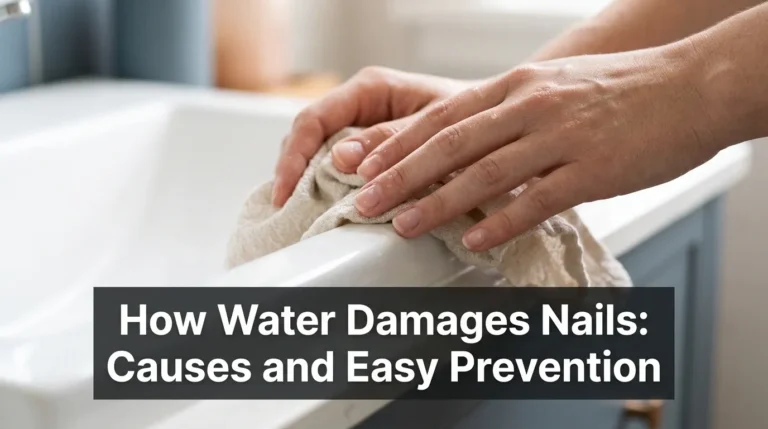
- Too much water: Repeated soaking and drying can stress the nail plate and encourage splitting. Frequent dishwashing or cleaning makes this more likely.
- Aggressive manicure prep: Buffing the entire surface or filing off gel can thin the nail, leaving it noticeably bendier.
- Peeling off enhancements: Pulling off gel, press-ons, or acrylics can remove surface layers with the product.
- Mechanical pressure: Long tips catch on clothes, keys, and drawers, making a flexible nail more likely to tear.
- Individual differences or health factors: Nail thickness varies naturally. Sometimes persistent changes relate to skin disease, nutritional deficiencies, medication, or another medical condition.
Don’t assume soft nails mean a vitamin deficiency. First, consider changes to your manicure, cleaning, remover, or picking habits.
Which Methods Actually Help Strengthen Soft Nails?
1. Keep Your Nails Short While the Weak Tips Grow Out
Best for: Nails that bend at the tips, snag on clothing, or tear whenever you try to grow length.
Trim the free edge so only a small amount extends beyond your fingertip. Use clean clippers and finish with a fine-grit or glass file, making smooth strokes without dragging the file across the top of the nail. A short oval or softly rounded square spreads pressure more evenly than very long, pointed tips.
Why it helps: Less nail length means less leverage when you accidentally bump or catch the tip. It won’t change the composition of the nail overnight, but it can stop preventable breaks while new nail grows.
Trade-off: You may need to postpone long designs, but short nails look polished with a sheer tint or micro-French tip.
If your current file is rough or leaves jagged edges, consider a fine glass nail file; it offers control without encouraging you to over-file.
2. Limit Long Water Exposure Rather Than Soaking More
Best for: Nails that feel floppy after showers, dishwashing, or cleaning.
Wear protective gloves when doing dishes, cleaning bathrooms, or handling detergents. Choose a pair that fits comfortably, and add cotton liners if your hands get sweaty inside them. After wet work, dry your hands gently—including around the nail folds—then apply hand cream if your skin feels dry.
Why it helps: Nails absorb water. Repeated swelling and drying can leave the layers more vulnerable to peeling and splitting. Shortening those wet-to-dry cycles can be more useful than adding another treatment.
Trade-off: Damp gloves can irritate skin. Remove them between tasks and let them dry. Consider cotton-lined cleaning gloves.
3. Moisturize Dry Nail Edges Without Overdoing It
Best for: Soft nails with rough, peeling ends or dry, tight skin around the cuticles.
Massage a little fragrance-free cream into your fingertips, nail edges, and cuticle area after handwashing and at bedtime. If you prefer oil, a small amount of jojoba-based cuticle oil can make the surrounding skin feel more comfortable. Petroleum jelly over dry skin at night is another inexpensive option.
Why it helps: Keeping the surface and surrounding skin conditioned may reduce dryness-related splitting and hangnails. Oil and cream are supportive care; neither repairs a layer that’s already been peeled away.
Trade-off: Oil won’t thicken a thin nail. If wet work is the main problem, reduce water exposure rather than soaking in oils or baths.
For a wider routine, see how to care for your nails properly between manicures.
4. Stop Buffing the Nail Surface to Make It Look Smooth
Best for: Nails that became flexible after gel removal, dip powder, or repeated salon appointments.
Skip buffing the top of a thin nail plate. Even a fine buffer removes some material, so using it repeatedly to erase ridges can leave the nail thinner. Instead, gently smooth only a snagged free edge and let superficial roughness grow out.
Why it helps: The missing layers don’t glue themselves back together. Avoiding more filing protects the thickness you still have while the nail matrix produces new nail.
Trade-off: Your nail surface might not look perfectly glossy right away. If you want a neat appearance, use a sheer regular polish only when your nails are not painful, lifting, or irritated—and remove it gently.
5. Choose Gentle Manicures Instead of Extra-Hard Coatings
Best for: Anyone who wants to wear color while keeping soft nails manageable.
You can wear regular nail polish if it doesn’t irritate you. A thin, formaldehyde-free base coat and light color may give the nail some temporary surface protection, but they won’t reverse structural damage. Follow the product instructions and avoid changing colors every day, because repeated remover exposure can dry the nail.
Why it helps: A simple manicure may protect the free edge from minor friction while you avoid the aggressive prep and removal sometimes involved with enhancements.
Trade-off: Any coating can chip, and even gentle polish still requires removal. If a product makes your nails feel unusually rigid, painful, or more likely to snap, stop using it. Be especially cautious with formaldehyde-containing hardeners and products marketed as making nails extremely hard.
Think of polish as an optional cosmetic layer, not the foundation of stronger nail growth. If a bare-nail recovery period sounds better, that’s completely reasonable.
6. Remove Gel, Dip, and Press-Ons Without Pulling
Best for: Nails that got soft and bendy after a few back-to-back manicures.
Never lift the corner of gel or dip powder and peel the rest away. That satisfying sheet can carry natural nail layers with it. Follow the removal directions for the specific system, or have a trained nail technician remove it without aggressively filing the natural plate.
For press-ons, use the manufacturer’s adhesive-specific removal method; some glues and adhesive tabs require different approaches. Don’t force a nail off just because it has started to loosen. If removal causes pain, stop.
Why it helps: Preventing additional surface trauma gives fresh growth the best chance to remain intact. Shortening the nails after removal also reduces stress on newly exposed, flexible tips.
Trade-off: Gentle removal takes longer than picking, but prevents avoidable damage.
Warning
If a nail is lifting from the nail bed, painful, swollen, green or darkly discolored, or surrounded by an irritated rash, don’t seal it beneath gel, glue, or acrylic. Covering a problem can delay diagnosis and sometimes make irritation worse.
7. Support Nail Growth With Normal Meals, Not Miracle Supplements
Best for: People who want to support healthy new growth instead of depending entirely on cosmetic products.
Eat a varied diet with enough protein and foods that provide iron, zinc, and other essential nutrients. Eggs, beans, fish, tofu, nuts, and leafy vegetables can all contribute to balanced meals. You don’t need a special “nail growth diet” if you’re already eating adequately.
Why it helps: New nail is produced by living tissue at the nail matrix. A genuine nutritional deficiency can affect growth, but a supplement won’t necessarily improve nails when your intake is already sufficient.
Trade-off: Diet changes aren’t an instant treatment, and supplements can have risks. High-dose biotin has limited evidence for most people and can interfere with certain laboratory tests, including important heart-related tests. Ask a healthcare professional before starting it, especially if your nail change is sudden or accompanied by fatigue or other symptoms.
How Long Does It Take for Soft Nails to Become Stronger?
You may prevent some tearing immediately by shortening your nails and wearing gloves. That is protection, not the same thing as rebuilding a damaged nail plate.
Expect to judge your habits over several weeks rather than days. Look for fewer new splits, less snagging, and a smoother band of fresh nail growing from the base. Fingernails commonly grow about 2–3 millimeters a month, and replacing most or all of a damaged fingernail often takes around four to six months. Individual growth rates vary.
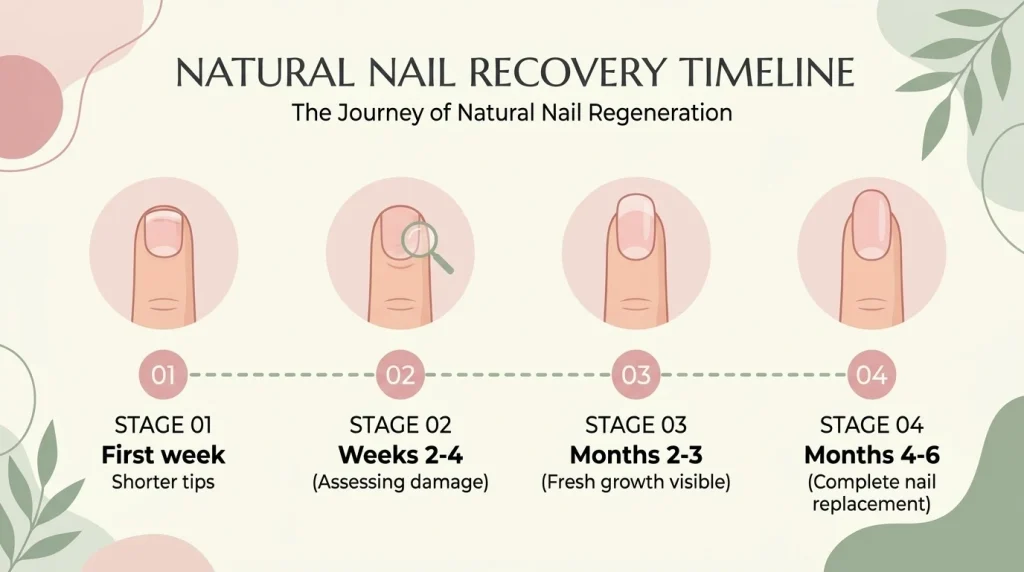
- First week: Shorter nails and less contact with detergents may reduce accidental tearing.
- Weeks two to four: You can assess whether the routine is preventing fresh damage; existing thin areas may still bend.
- Months two to three: New nail may be easier to distinguish from older, damaged sections.
- Months four to six: Much of the old plate may have grown out, depending on your nail length and growth rate.
If your nails were damaged after enhancements, use this nail recovery routine as a companion while they grow. No oil can instantly restore over-filed nail thickness.
What Should Your Daily Soft-Nail Routine Look Like?
Keep your plan short enough to follow even on busy mornings. A routine only works when it fits into your real life.
- Morning: Check for snags, smooth only the rough free edge, and apply hand cream where skin feels dry.
- During the day: Wear gloves for wet chores and choose a tool—not your thumbnail—to open packaging or scrape labels.
- After handwashing: Dry your hands and moisturize dry nail folds; skip lengthy nail soaks.
- Evening: Apply a small amount of cream or cuticle oil to dry areas and check whether your manicure is lifting.
- Once a week: Inspect bare nails when practical, adjust the length, and make note of any new splits or color changes.
Change one habit at a time. Try gloves for a week, then improve how you remove polish so you can see what helps.
What Should You Do—and Avoid—With Soft Nails?
Do
- Keep vulnerable tips comfortably short.
- Use gloves for washing and cleaning.
- Moisturize dry nails and surrounding skin.
- File snags gently with a fine file.
- Give damaged areas time to grow out.
Don’t
- Peel off gel, dip, or press-ons.
- Buff away layers to hide ridges.
- Keep nails soaking for long periods.
- Cut away healthy cuticle tissue.
- Rely on rigid hardeners or random supplements.
Which Nail-Care Products Are Worth Buying?
Start with products that solve a clear problem. You don’t need a “growth system” with six bottles. A useful soft-nail kit is a gentle file, protective gloves, and a basic moisturizer. Add oil only if you like the feel and will use it consistently.
Recommended Product Type
Jojoba-Based Cuticle Oil
A small drop can condition dry nail folds and make bedtime nail care easier; it is not a cure for an over-filed nail plate.
As an Amazon Associate, we earn from qualifying purchases.
Recommended Product Type
Fragrance-Free Hand Cream
A simple cream is useful after washing hands and before bed, especially when your cuticles and fingertips are dry or irritated.
As an Amazon Associate, we earn from qualifying purchases.
What Small Changes Make the Biggest Difference?
Pro Tip: Check One Bare Nail
If you regularly wear color, inspect at least one nail before repainting. That quick look can reveal lifting, new discoloration, or peeling that polish would hide.
Pro Tip: Change the Job, Not Just the Polish
If your dominant-hand nails keep tearing, notice when it happens. Using a key, spoon, or proper opening tool instead of a nail often prevents more breaks than another cosmetic coat.
Pro Tip: Take Monthly Photos
Photograph your bare nails in similar lighting once a month. It’s easier to notice healthy new growth—and avoid buying unnecessary treatments—when you can compare actual changes.
When Should You Get Soft Nails Checked?
If your nails have always been somewhat flexible, look normal, and don’t hurt, gentle care may be all you need. However, a sudden or unexplained change in nail texture deserves attention, especially when several nails are involved.
Arrange a medical assessment if softness persists despite reducing trauma, or if you see new dark streaks, unusual discoloration, lifting, swelling, bleeding, significant pain, or a change in nail shape. These signs have different possible causes, and nail photos or an online checklist can’t identify them reliably.
You can compare other changes in our guide to signs of unhealthy nails, but don’t delay care for a worrying symptom just to try another strengthening polish.
Frequently Asked Questions About Soft Nails
Q: Can naturally soft nails become hard?
A: Natural nail thickness varies, and extremely hard nails aren’t the goal. You can reduce preventable bending and tearing through short lengths, gentle care, and less water or manicure damage.
Q: Does cuticle oil strengthen soft nails?
A: Cuticle oil helps condition dry nail edges and surrounding skin, but it won’t rebuild missing layers or fix every cause of softness. Use it as part of gentle care, not as a stand-alone treatment.
Q: Are nail hardeners good for bendy nails?
A: Some coatings offer temporary protection, but very rigid formulas can make nails prone to snapping. Avoid formaldehyde-containing hardeners and prioritize reducing damage before adding treatments.
Q: Why are my nails soft after gel polish?
A: Prep filing, removal, or picking can thin the natural plate and make it feel flexible. Keep the nails short, stop additional surface buffing, and let the damaged portion grow out.
Q: How can I strengthen soft nails overnight?
A: You can’t regrow missing nail layers overnight. You can reduce tomorrow’s breakage by trimming snags, keeping nails short, wearing gloves, and avoiding peeling or picking.
Give Your Nails Protection, Not Punishment
The best way to strengthen soft nails is to prevent fresh damage while new nail grows: protect them from water, keep the tips manageable, and skip aggressive products or removal. Save this guide to your Pinterest nail-care board so your simple routine is easy to revisit.

Hi, I’m Jessica, the creator behind Unique Lash & Nails Katy.
I created this website for anyone who loves beautiful nails as much as I do. Here, I share trendy nail designs, seasonal manicure ideas, easy nail care tips, honest product recommendations, and step-by-step guides to help you create salon-worthy nails at home. Whether you’re looking for everyday inspiration or your next favorite nail trend, I hope you’ll find something you love.