What to Eat for Stronger, Healthier Nails: 12 Best Foods
Quick Answer
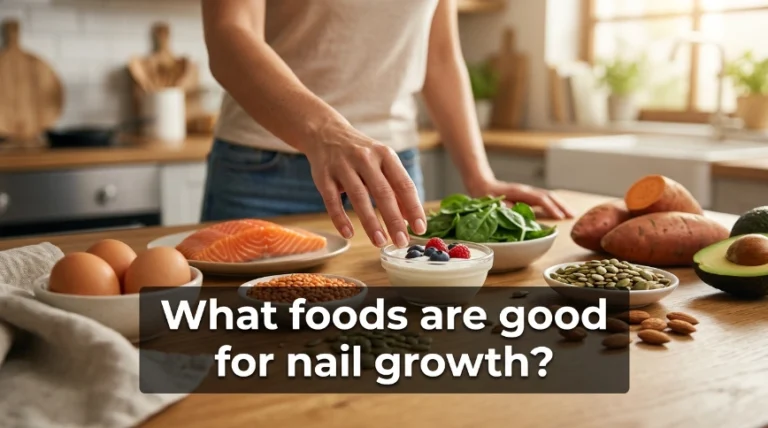
For stronger, healthier nails, build each meal around protein and regularly eat iron-rich foods, zinc sources, colorful produce, and omega-3 fats. Eggs, fish, beans, lentils, yogurt, tofu, nuts, seeds, leafy greens, berries, and citrus all help supply the materials your body uses to grow nails. Food supports new growth gradually; it cannot instantly repair the nail plate you already see.
Your nails are made mostly of keratin, a tough protein, so their appearance can reflect both daily wear and the nutrients available while they grow. If your meals have become irregular or restrictive, improving the overall pattern matters more than chasing one so-called nail superfood. Here’s a practical way to eat for nail strength without turning every meal into a nutrition project.
What nutrients do your nails need most?
Your body doesn’t send nutrients to your nails first. It prioritizes essential organs, which means consistently inadequate intake may eventually show up as slow growth, fragility, or changes in appearance. That doesn’t mean every ridge or split is caused by food. Water exposure, harsh removers, trauma, skin conditions, illness, and normal aging can also affect nails.
The best nail-supportive diet provides enough total energy plus protein, iron, zinc, essential fats, and a range of vitamins. You don’t need to count every micronutrient. A varied plate with a dependable protein source, whole grains or starchy vegetables, produce, and healthy fat covers far more ground than a single supplement.
Which protein-rich foods help nails grow?
 Save
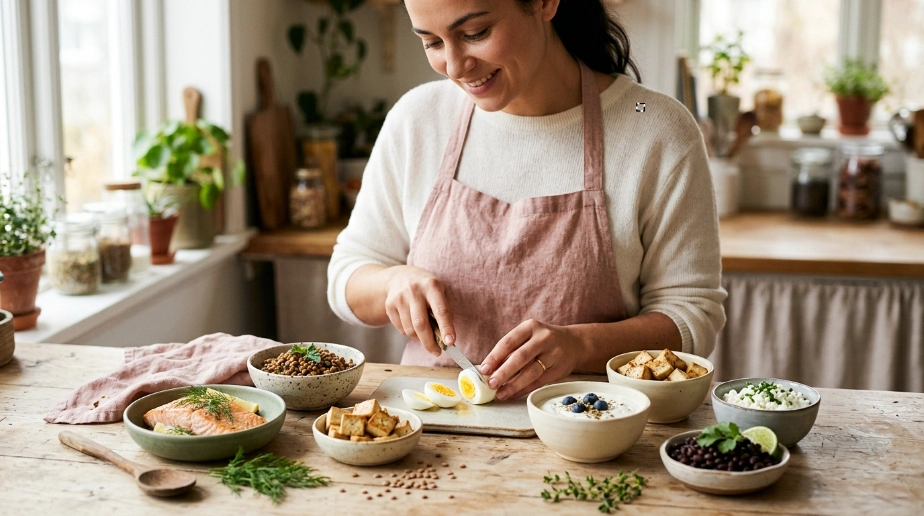
SaveBecause keratin is protein, your body needs amino acids from food to make new nail cells. Include a clear protein source at breakfast, lunch, and dinner instead of saving most of it for one meal.
Eggs
Eggs provide complete protein and several B vitamins. They’re also easy to use: add a boiled egg to toast, fold vegetables into an omelet, or keep cooked eggs ready for a quick snack. Eating the whole egg gives you nutrients from both the white and yolk.
Fish, chicken, and lean meat
Salmon, sardines, chicken, turkey, and lean beef deliver concentrated protein. Beef also supplies readily absorbed heme iron and zinc, while oily fish contributes omega-3 fats. You don’t need meat at every meal; rotating these choices with plant proteins creates variety.
Greek yogurt and cottage cheese
Plain Greek yogurt and cottage cheese make protein easier to add when you don’t want to cook. Pair yogurt with berries and pumpkin seeds, or spread cottage cheese on whole-grain toast. If you avoid dairy, choose a fortified soy yogurt with meaningful protein rather than a low-protein coconut alternative.
Beans, lentils, tofu, and tempeh
Plant proteins can fully support nail growth when you eat enough and vary your sources. Lentils and beans bring protein, iron, fiber, and folate in one inexpensive food. Tofu and tempeh work in stir-fries, bowls, curries, and sandwiches.
What should you eat for iron and zinc?
Iron helps your blood carry oxygen, and zinc supports normal cell growth and protein production. Low iron can be associated with brittle nails, but nail changes alone cannot diagnose a deficiency. Women with heavy periods, people who eat little or no meat, pregnant people, and frequent blood donors may have a higher risk of low iron.
Useful iron foods include lean beef, clams, chicken, lentils, beans, tofu, spinach, and iron-fortified cereals. Plant-based iron is absorbed less efficiently than iron from meat. Pair beans, lentils, tofu, or leafy greens with vitamin C foods such as bell peppers, strawberries, oranges, kiwi, or tomatoes to improve absorption.
For zinc, rotate oysters or other shellfish, beef, chicken, dairy, beans, pumpkin seeds, cashews, and fortified cereals. Soaking dried beans before cooking and choosing fermented soy foods such as tempeh may help reduce phytates, compounds that can limit mineral absorption.
Pro Tip
Add chopped red bell pepper or a squeeze of lemon to a lentil bowl. You’ll get plant iron and vitamin C in the same meal, which is more useful than eating the iron source alone.
Which healthy fats support flexible-looking nails?
Fat doesn’t directly glue a split nail back together, but adequate dietary fat supports skin health and helps your body absorb fat-soluble vitamins. Omega-3-rich foods also contribute to an overall balanced eating pattern.
Choose salmon, sardines, trout, chia seeds, ground flaxseed, walnuts, and hemp hearts regularly. Try salmon twice a week, stir ground flax into oatmeal, or sprinkle walnuts over yogurt. Ground flax is easier to digest than whole seeds, which often pass through without being broken down.
Olive oil, avocado, nuts, and nut butter add helpful unsaturated fats and make meals more satisfying. If the nail surface and surrounding skin also feel dry, combine better meals with external protection. This guide to moisturizing and hydrating nails naturally explains the topical side of the routine.
Which fruits and vegetables are best for nail health?
No fruit or vegetable grows nails overnight. Their value comes from vitamin C, folate, carotenoids, and other compounds that support normal tissue function and complement protein- and mineral-rich foods.
- Red peppers, oranges, kiwi, and strawberries: These are rich in vitamin C, which your body needs to make collagen and which helps absorb plant iron.
- Spinach, kale, and broccoli: Leafy greens supply folate and vitamin C, with varying amounts of iron.
- Sweet potatoes, carrots, and squash: Their beta-carotene can be converted to vitamin A, which supports normal cell growth.
- Berries and tomatoes: They add vitamin C and make breakfasts, snacks, and grain bowls more colorful and varied.
A simple target is to eat at least two different colors of produce at lunch and dinner. This approach naturally broadens your nutrient intake without forcing you to memorize a vitamin chart.
Do biotin-rich foods make nails stronger?
Biotin helps your body metabolize nutrients, and true deficiency can affect hair, skin, and nails. However, deficiency is uncommon in people eating a mixed diet. Eggs, salmon, sunflower seeds, almonds, peanuts, sweet potatoes, and legumes provide biotin naturally alongside other useful nutrients.
Biotin supplements are often marketed for brittle nails, but the evidence for routine use in people without deficiency is limited. High-dose biotin can also interfere with some laboratory tests, including certain thyroid and heart-related tests. Tell your clinician about any supplement before bloodwork, and don’t assume a high dose is harmless simply because it’s sold for beauty.
Warning
Don’t start iron, zinc, or high-dose biotin because your nails look weak. Too much iron or zinc can be harmful, and biotin can distort lab results. Ask a clinician whether symptoms and blood tests support supplementation.
What does a nail-friendly day of eating look like?
You don’t need a special “nail diet.” Use this flexible day as a formula, then swap foods based on your taste, budget, and dietary needs.
- Breakfast: Two eggs with whole-grain toast, spinach, and sliced strawberries. Vegetarian option: tofu scramble with peppers and toast.
- Lunch: A lentil and quinoa bowl with roasted vegetables, pumpkin seeds, olive oil, and lemon dressing. Add chicken or tuna if you want more protein.
- Snack: Plain Greek yogurt with walnuts and berries. Dairy-free option: fortified soy yogurt with ground flaxseed.
- Dinner: Baked salmon, sweet potato, and broccoli. Plant-based option: tempeh with brown rice, broccoli, and sesame-lime sauce.
- Hydration: Drink regularly according to thirst, activity, climate, pregnancy, and medical needs. More water than your body requires won’t make nails grow faster.
If you’re busy, focus on repeatable building blocks: boiled eggs, canned salmon or beans, frozen vegetables, microwaveable brown rice, fruit, yogurt, and nuts. Consistency beats an elaborate meal plan you follow for three days.
How long does food take to improve your nails?
Fingernails grow slowly—roughly a few millimeters per month—so food changes affect new nail growing from the base, not the older free edge. You may notice less breakage or a healthier-looking band near the cuticle after several weeks, but replacing an entire fingernail commonly takes around four to six months. Toenails grow even more slowly and may take a year or longer to replace fully.
Take one clear photo every four weeks in similar lighting rather than checking daily. Also note whether you’ve reduced soaking, picking, gel removal, or cleaning without gloves. Those changes can improve breakage independently of diet.
What should you do—and avoid—for better results?
Do
- +Eat protein at every main meal.
- +Pair plant iron with vitamin C.
- +Judge progress over months, not days.
Don’t
- −Replace meals with beauty gummies.
- −Cut whole food groups without a plan.
- −Ignore sudden color or shape changes.
How can you protect the nail growth your diet supports?
 Save
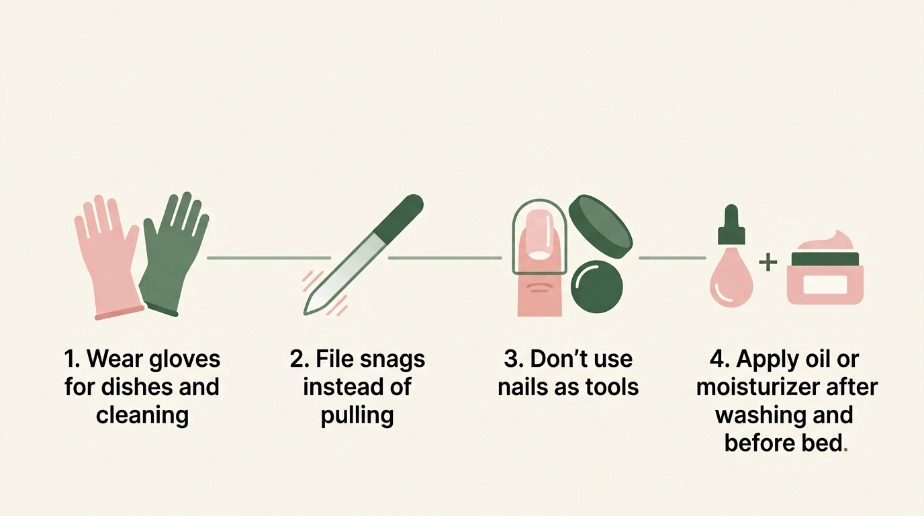
SaveNutrition supplies raw materials, but your daily habits determine how much mechanical and chemical stress the nail plate faces. Wear gloves for dishwashing and cleaning. File snags promptly instead of pulling them. Avoid using nails as tools, and take breaks from repeated scraping or aggressive removal.
Apply oil or a thick moisturizer after handwashing and before bed. If you’re deciding what to use, compare the options in this guide to the best oils for weak, damaged, or brittle nails. You can also review Vaseline versus cuticle oil to match the product to dryness around your nails.
Pro Tip
Keep cuticle oil beside the soap you use most. Applying it immediately after your last evening handwash ties the habit to an existing cue, so you’re more likely to continue long enough to see a difference.
Are any nail supplements worth buying?
A supplement makes sense when it corrects a confirmed gap or when a qualified clinician recommends it for your circumstances. It shouldn’t substitute for adequate meals. If your diet is limited by allergies, vegan eating, pregnancy, gastrointestinal disease, medication, or low appetite, a registered dietitian can help you cover likely gaps safely.
Useful Kitchen Staple
Ground Flaxseed
Ground flaxseed is an easy whole-food source of plant omega-3 fat and fiber that mixes into oatmeal, yogurt, or smoothies.
As an Amazon Associate, we earn from qualifying purchases.
Useful Kitchen Staple
Unsalted Pumpkin Seeds
Pumpkin seeds add zinc, iron, protein, and crunch to salads or yogurt without requiring any cooking.
As an Amazon Associate, we earn from qualifying purchases.
If you want a topical companion to better eating, a simple jojoba-based cuticle oil is more directly relevant than an unneeded vitamin megadose. The guide to the healthiest things to put on your nails can help you choose a gentle option.
When should nail changes be checked by a professional?
Book a medical appointment if a nail change appears suddenly, affects only one nail, becomes painful, separates from the nail bed, develops a new dark streak, or comes with swelling or drainage. Persistent spoon-shaped nails, marked brittleness, fatigue, shortness of breath, dizziness, or hair loss also deserve medical attention because a clinician may need to check for anemia, thyroid problems, infection, skin disease, medication effects, or another cause.
Don’t try to diagnose a deficiency from a photo or nail symptom alone. A dermatologist can assess the nail itself, while your primary-care clinician can review your diet, health history, and appropriate laboratory testing.
Frequently asked questions about food and nail strength
Q: What is the best food for stronger nails?
A: There isn’t one best food. Eggs are a convenient choice because they provide complete protein and biotin, but your nails benefit most from a varied pattern that also includes iron, zinc, produce, and healthy fats.
Q: Can drinking more water stop brittle nails?
A: Correcting dehydration supports your overall health, but extra water won’t repair brittle nails by itself. Repeated wetting and drying can actually worsen splitting, so moisturize after washing and wear gloves for prolonged water exposure.
Q: Are eggs good for nail growth?
A: Yes, eggs contribute complete protein and biotin, both used in normal growth processes. They’re helpful as part of a balanced diet, but eating more eggs cannot overcome iron deficiency, nail trauma, or a medical condition.
Q: What should a vegetarian eat for healthy nails?
A: Build meals with lentils, beans, tofu, tempeh, eggs or dairy if included, whole grains, nuts, and seeds. Pair plant iron with vitamin C, and ask a clinician whether you need testing or help covering vitamin B12, iron, zinc, or other nutrients.
Q: How quickly can diet fix weak nails?
A: Expect gradual change in new growth over weeks to months, not overnight repair. A full fingernail generally needs about four to six months to grow out, and improvement depends on whether nutrition was part of the original problem.
Your simple plan for stronger, healthier nails
Start with one repeatable change: add protein to breakfast, pair plant iron with vitamin C, or prepare two omega-3-rich meals each week. Keep that pattern steady while protecting and moisturizing your nails. Save this guide to your Pinterest nail-care board so your meal ideas are easy to find when you plan groceries.

Hi, I’m Jessica, the creator behind Unique Lash & Nails Katy.
I created this website for anyone who loves beautiful nails as much as I do. Here, I share trendy nail designs, seasonal manicure ideas, easy nail care tips, honest product recommendations, and step-by-step guides to help you create salon-worthy nails at home. Whether you’re looking for everyday inspiration or your next favorite nail trend, I hope you’ll find something you love.