What Kills Bacteria Under Your Nails? The Safest Cleaning Methods
Quick Answer
For everyday hygiene, plain soap, clean running water, and thorough rubbing beneath your nail edges are the best way to remove bacteria and other germs. An alcohol-based hand sanitizer containing at least 60% alcohol can inactivate many germs when your hands aren’t visibly dirty, but it can’t physically remove dirt trapped beneath your nails. You don’t need bleach, strong disinfectants, or harsh DIY mixtures.
Your fingernails may look clean from above while tiny particles of dirt and microorganisms are sitting beneath the free edges. Longer nails give that debris even more space to collect.
The good news is that keeping the area clean doesn’t require salon chemicals or aggressive disinfecting. The safest approach is also one of the simplest: good handwashing, attention to the underside of your nails, and sensible nail maintenance.
Here’s what actually works, what doesn’t, and how to clean your nails without irritating the delicate skin underneath them.
Why Do Bacteria Collect Under Your Fingernails?
The narrow space between your fingertip and the free edge of your nail naturally traps material throughout the day. Soil, food residue, makeup, dead skin, and other particles can become lodged there when you touch surfaces or work with your hands.
Bacteria and other microorganisms can travel with that material. Longer fingernails may collect more dirt and germs simply because they provide a larger protected area underneath the nail.
Your hands also touch your face, food, phone, door handles, bathroom surfaces, pets, keyboards, and dozens of other objects every day. That’s why nail hygiene should be considered part of normal handwashing rather than something you only think about during a manicure.
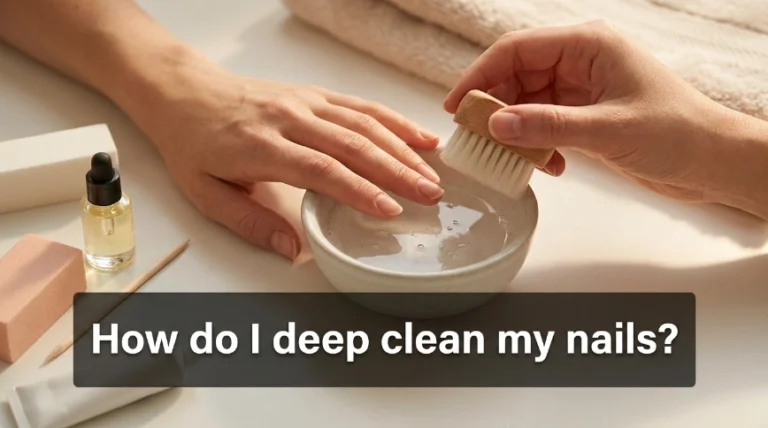
If you regularly notice visible grime beneath your nails, follow this step-by-step guide to cleaning nails at home for a deeper but still gentle cleaning routine.
What Actually Kills or Removes Bacteria Under Your Nails?
 Save
SaveThere’s an important difference between killing bacteria and removing bacteria.
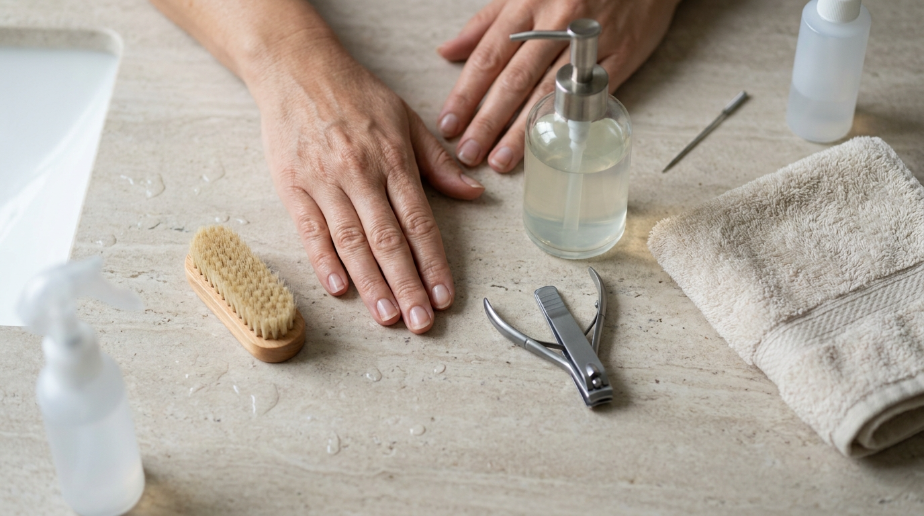
Plain soap isn’t primarily useful because it sterilizes your skin. Soap helps loosen oils, dirt, and microorganisms so friction and running water can carry them away. That’s exactly what you want when debris is hiding underneath your nails.
Alcohol-based hand sanitizer works differently. Alcohol can inactivate many microorganisms directly, which makes sanitizer useful when you’re away from a sink and your hands aren’t visibly dirty.
For the area underneath your nails, however, sanitizer has an obvious limitation: the product must actually reach the contaminated surface. Dirt packed beneath a long nail can prevent complete contact.
That’s why your everyday priority should be:
- Soap to loosen oils and debris.
- Friction to physically dislodge material around and beneath your nails.
- Running water to rinse loosened germs away.
- Thorough drying so your hands aren’t left damp.
- Alcohol-based sanitizer when soap and water aren’t available and your hands aren’t visibly dirty.
Is Plain Soap Enough to Clean Under Your Nails?
For normal everyday hand hygiene, yes. You don’t need soap labeled “antibacterial” just because you’re worried about bacteria underneath your fingernails.
The technique matters more than choosing an aggressively marketed cleanser. When you wash, don’t concentrate only on your palms. Work the lather over your fingertips, around your nail folds, between your fingers, and beneath the accessible free edge of each nail.
Scrub for at least 20 seconds before rinsing thoroughly.
If there’s visible debris underneath longer nails, a clean, soft nail brush can help. The goal is to loosen the dirt rather than scrape the skin beneath your nail.
Pro Tip
Keep a separate soft nail brush near your sink. If you have to search through your manicure kit every time your nails get dirty, you’re far less likely to clean beneath them consistently.
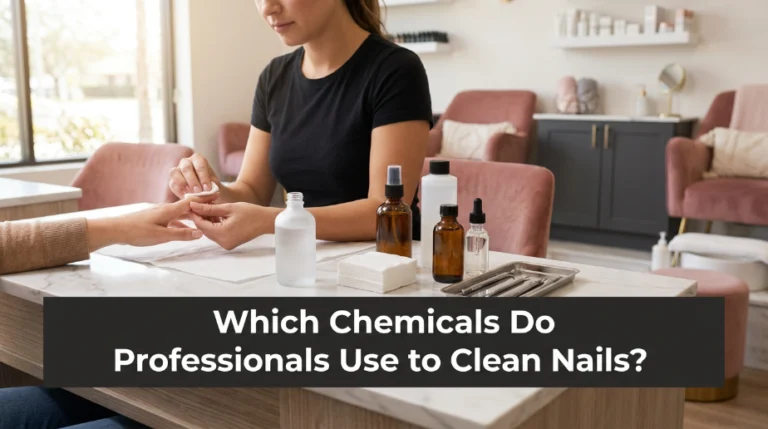
If you’re also wondering which liquids are appropriate for different nail-care jobs, see this guide to the best liquids for cleaning nails.
Does Hand Sanitizer Kill Bacteria Under Your Nails?
An alcohol-based hand sanitizer containing at least 60% alcohol can inactivate many germs on your hands when soap and water aren’t available.
It works best when your hands aren’t visibly dirty or greasy. Apply enough product to cover your hands and rub it across your palms, fingertips, between your fingers, around your nails, and other accessible surfaces until your hands feel dry.
But don’t assume sanitizer magically penetrates compacted debris underneath long nails. If you’ve been gardening, cooking, handling messy materials, or can actually see dirt beneath the nail, wash with soap and running water instead.
Think of sanitizer as your backup for relatively clean hands, not as a substitute for removing visible debris.
Warning
Don’t pour concentrated household disinfectants underneath your fingernails. Products designed for countertops, bathrooms, or laundry are not automatically safe for your skin or the sensitive tissue beneath your nail plate.
What’s the Safest Way to Clean Bacteria From Under Your Nails?
You don’t need a complicated disinfection routine. For normal daily cleaning, use these steps:
- Wet your hands with clean running water. Warm or cold water is fine.
- Apply plain hand soap. Build a good lather over your entire hands.
- Pay attention to your fingertips. Rub around each nail and beneath the free edge instead of cleaning only your palms.
- Use a soft nail brush when necessary. Gently brush visible debris away while your hands are soapy.
- Continue washing for at least 20 seconds.
- Rinse thoroughly under clean running water.
- Dry your hands and nails completely. Use a clean towel or allow them to air-dry.
Keep the pressure gentle. The skin underneath your nail isn’t meant to be aggressively scraped or dug into.
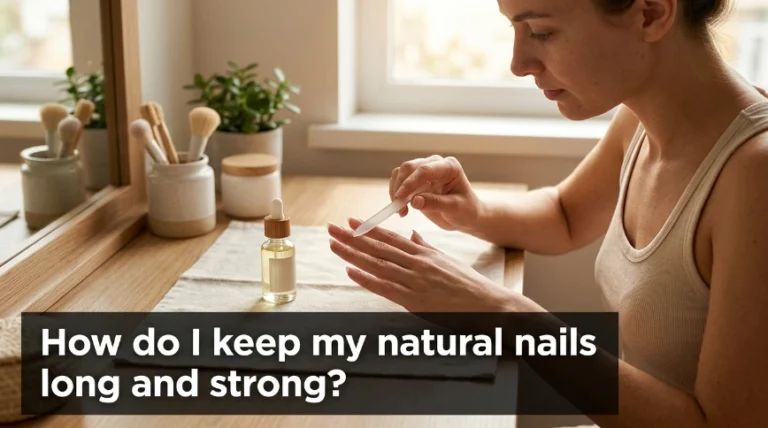
You can make this basic cleaning habit part of a larger routine using this guide on how to properly care for your nails.
What Should You Never Use to “Disinfect” Under Your Nails?
Seeing dirt underneath your nails can make stronger chemicals seem more effective, but stronger isn’t automatically safer or more appropriate.
Bleach
Household bleach isn’t a routine hand or nail cleanser. Don’t soak your fingertips in it or push it underneath your nails. It can irritate your skin and isn’t necessary for normal personal hygiene.
Household Surface Disinfectant
A cleaner that disinfects a kitchen counter is formulated for surfaces, not your nail folds or the sensitive skin underneath your nails. Follow its label and don’t improvise by using it as hand sanitizer.
Acetone
Acetone is useful for dissolving certain nail products, but that doesn’t make it your everyday nail disinfectant. Frequent unnecessary exposure can leave your surrounding skin and nail plate feeling very dry.
Sharp Metal Tools
A needle, pin, scissors tip, or other sharp object can remove visible dirt, but it can also injure the skin beneath the nail. That damage defeats the purpose of trying to maintain healthy, hygienic nails.
Random DIY Mixtures
Vinegar, baking soda, lemon juice, essential oils, and other internet remedies shouldn’t replace standard handwashing or an appropriately formulated hand sanitizer. If your goal is ordinary hygiene, there’s no need to turn your fingertips into a chemistry experiment.
Do Long Nails Carry More Bacteria?
Long nails have more space beneath their free edges, so they can collect more dirt and microorganisms than shorter nails. That doesn’t mean you have to give up the nail length you love, but it does mean your cleaning technique deserves extra attention.
When washing longer nails, make sure soap and water reach underneath the tips. A soft nail brush can be especially useful after gardening, food preparation, crafts, makeup application, or other activities that leave visible residue behind.
Regular trimming also makes hygiene easier. You don’t need to cut your nails extremely short; the goal is simply to keep them at a length you can clean thoroughly without digging underneath them.
What About Acrylic, Gel, and Artificial Nails?
Artificial nails and extensions can make cleaning more challenging because the underside may be longer and harder to access. Dirt can also become trapped around lifting areas if an enhancement begins separating from the natural nail.
Don’t push a sharp tool into a lifted pocket to clean it. If an enhancement is lifting significantly, proper removal or professional maintenance is safer than repeatedly digging underneath it.
Keep your nail tools clean as well. Clippers, files, brushes, and reusable manicure tools can transfer debris from one nail to another if they’re never cleaned.
Pro Tip
Check the underside of long or artificial nails in bright light after washing. Visible residue tells you immediately which areas your normal handwashing technique is missing.
How Can You Tell If It’s More Than Normal Bacteria?
Finding some dirt underneath your fingernails isn’t the same thing as having a nail infection.
Pay more attention when you develop a persistent change such as:
- Pain or tenderness around the nail.
- Noticeable swelling around the nail fold.
- Redness that keeps getting worse.
- Drainage or pus.
- A nail that begins lifting away from the nail bed.
- Unexplained thickening, crumbling, or major discoloration.
- A change that continues rather than growing out or improving.
Those symptoms shouldn’t simply be scrubbed harder or covered with nail polish. Persistent or painful nail changes can have several causes, and the correct treatment depends on what’s actually happening.
You can compare what you’re noticing with this guide to common signs of unhealthy nails, but seek professional medical advice when a nail problem is painful, worsening, spreading, or isn’t improving.
What Should You Do—and Avoid—to Keep Your Nails Hygienic?
SaveDo
- +Wash beneath accessible nail edges with soap and water.
- +Clean your nail tools and nail brush regularly.
- +Keep nails at a length you can clean properly.
Don’t
- −Dig underneath nails with pins or sharp metal tools.
- −Use household bleach or surface disinfectants on your fingertips.
- −Assume hand sanitizer removes visible dirt underneath nails.
What Small Habits Keep Bacteria From Building Up?
Good nail hygiene is easier when you prevent heavy buildup instead of trying to deep-clean your nails once a week.
Wash your hands after using the bathroom, handling garbage, working with soil, touching animals or animal waste, coughing or sneezing into your hands, and before preparing or eating food.
If you bite your nails, reducing the habit also helps because nail biting repeatedly brings the fingertips and mouth into contact. Avoid chewing hangnails as well. Clip them carefully with clean tools instead.
Leave healthy cuticles intact. Your cuticle and surrounding nail fold help protect the area where your nail grows, so aggressively cutting away healthy tissue isn’t part of better hygiene.
Pro Tip
Wash underneath your nails immediately after messy activities instead of waiting until debris dries and becomes packed beneath the free edge. Fresh residue is usually much easier to remove gently.
Frequently Asked Questions About Bacteria Under Nails
Q: Does soap actually kill bacteria under your nails?
A: Plain soap mainly helps loosen oil, dirt, and microorganisms so rubbing and running water can remove them. That’s why thorough washing underneath your nail edges is more important than looking for an aggressively antibacterial soap.
Q: Does alcohol kill bacteria underneath fingernails?
A: Alcohol-based hand sanitizer containing at least 60% alcohol can inactivate many germs it contacts. It works less reliably on visibly dirty hands, so wash with soap and water when debris is trapped underneath your nails.
Q: Should I use antibacterial soap under my nails?
A: For routine home handwashing, plain soap and water are sufficient. Your washing technique, friction, and attention to the underside of your nails matter more than choosing soap simply because the label says “antibacterial.”
Q: Can I use hydrogen peroxide under my nails?
A: You don’t need hydrogen peroxide for ordinary nail hygiene. Soap, running water, and gentle cleaning are simpler and less likely to irritate the skin beneath and around your nails.
Q: How often should I clean underneath my fingernails?
A: Give the underside of your nails attention during normal handwashing, especially whenever they’re visibly dirty and after activities such as gardening, food preparation, or handling messy materials. You don’t need an aggressive deep-clean every day.
So, What Really Gets Rid of Bacteria Under Your Nails?
You don’t need the strongest chemical you can find. For everyday nail hygiene, your best combination is plain soap, clean running water, friction, and attention to the underside of your nail edges. Use an alcohol-based hand sanitizer when soap and water aren’t available and your hands aren’t visibly dirty.
Keep your nails clean, maintain your tools, avoid digging beneath the nail plate, and take persistent pain, swelling, drainage, or major nail changes seriously. Save this guide to Pinterest so you’ll have the safe nail-cleaning routine ready whenever you need it.

Hi, I’m Jessica, the creator behind Unique Lash & Nails Katy.
I created this website for anyone who loves beautiful nails as much as I do. Here, I share trendy nail designs, seasonal manicure ideas, easy nail care tips, honest product recommendations, and step-by-step guides to help you create salon-worthy nails at home. Whether you’re looking for everyday inspiration or your next favorite nail trend, I hope you’ll find something you love.