What Are Signs of Unhealthy Nails? 12 Changes You Should Know
Quick Answer
Signs of unhealthy nails can include persistent yellowing or unusual discoloration, thickening, crumbling, deep horizontal grooves, pitting, lifting from the nail bed, unusual curvature, pain, swelling, or a new dark streak. One minor change doesn’t automatically mean something is wrong, but a change that is new, unexplained, worsening, painful, or affecting several nails deserves closer attention.
Your nails don’t need to look perfectly smooth, pink, and flawless to be healthy. Normal nails vary naturally in color, thickness, shape, and the visibility of their half-moons. Tiny white marks, fine vertical ridges, or temporary staining after dark polish can also happen without indicating disease.
What matters more is a new or persistent change from what’s normal for you. Changes in color, texture, thickness, attachment, or the skin around your nails can sometimes reflect repeated manicure damage, infection, a skin condition, or another health issue.


What do healthy nails normally look like?
 Save
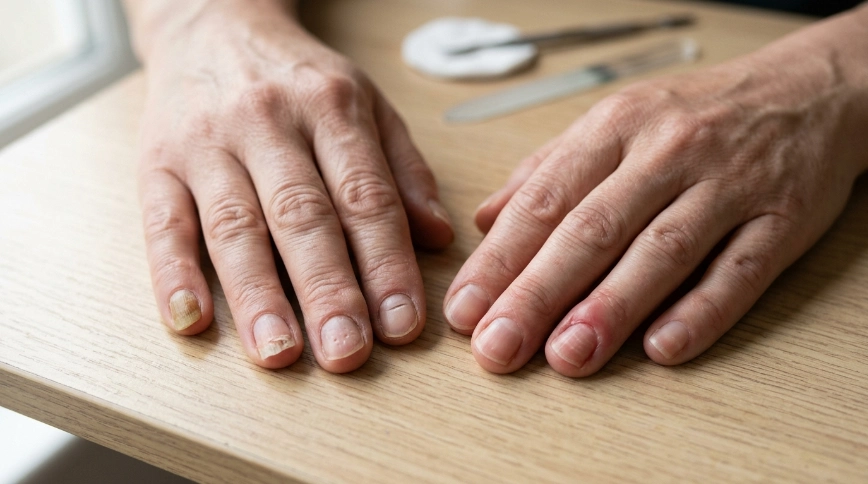
SaveHealthy fingernails are generally attached firmly to the nail bed, grow without significant pain, and have a relatively consistent surface and thickness. Your natural nail color can vary significantly with your skin tone, so “healthy nails must be pink” isn’t a useful rule for everyone.
You may also have fine lengthwise ridges, especially as you get older. A few small white spots can develop after minor trauma to the nail matrix, such as bumping your finger or aggressive manicure work. Neither automatically means you have a vitamin deficiency.
 Save
Savemynailzest@gmail.comEdit Profile
The better question is: Has something noticeably changed? If your nails suddenly become different in color, texture, shape, strength, or growth pattern, look at the change rather than comparing your nails with perfectly edited manicure photos.
What are the most common signs of unhealthy nails?
1. Your nails suddenly change color
A new color change is one of the easiest nail abnormalities to notice. Nails affected by fungal infection, for example, can become yellow, white, brown, or another color and may gradually thicken or crumble.
Color changes aren’t specific enough to diagnose a condition by themselves. Polish staining, trauma, medications, smoking, infections, and several medical conditions can all affect nail color, which is why persistent unexplained discoloration should be assessed in context.
Warning
Don’t repeatedly cover unexplained discoloration with opaque polish just because you dislike how it looks. Seeing the bare nail makes it easier to notice whether the color is growing out, spreading, or changing.
2. One nail develops a new brown or black streak
Dark lines can have harmless causes, including normal pigmentation and injury. However, a new or changing brown or black band in a nail—especially one that becomes wider, darker, irregular, or is accompanied by pigmentation on the surrounding skin—should be checked by a dermatologist.
Melanoma can occasionally develop beneath or around a nail, so this is one nail change you shouldn’t try to diagnose from photos online.
3. Your nails become unusually thick
A nail that’s getting noticeably thicker can be difficult to trim and may become yellowish, distorted, or crumbly. Fungal nail infections commonly cause this combination, particularly in toenails, although thick nails can have other causes too.
If you have one thick toenail after years of pressure from tight shoes, the explanation may be mechanical. If the change keeps worsening, spreads to other nails, or includes debris and crumbling beneath the nail, professional evaluation is useful.
4. Your nails constantly split, peel, or break
Repeated splitting and peeling often come from everyday damage rather than disease. Frequent handwashing, prolonged water exposure, cleaning chemicals, acetone, picking off gel, and repeated removal of artificial nails can leave the nail plate dry and fragile.
Artificial nail treatments can also make natural nails feel thinner, brittle, and dry, particularly when enhancements are peeled or aggressively filed away.
If you enjoy manicures, you don’t have to stop wearing polish forever. Once your nails feel comfortable and stable, simpler looks such as these minimalist nail ideas can give you a polished appearance without needing elaborate length or heavy decoration.
5. You see tiny pits or dents across the surface
Nail pitting looks like clusters of pinprick-sized depressions in the nail plate. Repeated pitting can occur with inflammatory conditions including psoriasis and some other skin or autoimmune conditions.
Don’t confuse one dent caused by trauma with widespread pitting that keeps appearing as your nail grows. If several nails develop pits or you also have persistent skin or scalp symptoms, mention both to your healthcare professional.
6. Deep horizontal grooves cross your nails
A deep groove running from side to side is different from the subtle vertical lines many people have. Horizontal depressions, often called Beau’s lines, happen when nail growth is temporarily interrupted.
They can appear after significant illness, injury to the nail matrix, or other stresses on nail growth. Because fingernails grow slowly, the groove may become noticeable weeks after the triggering event.
7. Your nail starts lifting away from the nail bed
When part of the nail separates from the skin underneath, the detached area often looks white or opaque because air has moved beneath the nail plate. This separation is called onycholysis.
Possible triggers include trauma, psoriasis, fungal infection, irritants, and repeated manicure damage. Avoid digging beneath the lifted nail or trying to glue it back down. The separated portion generally needs to grow forward while the cause is addressed.
8. Your nails crumble or develop debris underneath
Crumbling edges, thickening, discoloration, and buildup beneath a nail are classic features dermatologists look for when evaluating possible nail fungus.
Because psoriasis and trauma can sometimes resemble fungus, don’t assume that every crumbly nail needs an over-the-counter antifungal product. A clinician can test the nail when the diagnosis isn’t obvious.
9. The skin around your nail is red, swollen, or painful
Your nail plate isn’t the only area to inspect. Redness, warmth, tenderness, swelling, or drainage around the nail fold can point to inflammation or infection.
This often happens after biting, picking, pulling hangnails, cutting cuticles aggressively, or damaging the skin during a manicure.
Warning
Seek medical care if redness or swelling is getting worse, pus appears, pain is significant, or redness begins spreading beyond the nail area. People with diabetes or poor circulation should be particularly cautious about nail and foot infections.
10. Your nails become unusually curved or clubbed
Clubbing is more than simply having naturally curved nails. The fingertips enlarge and the nails become increasingly rounded and curved over them.
True clubbing can be associated with underlying medical conditions and isn’t something a manicure can correct. A new change in the shape of your fingertips and nails should be evaluated medically.
11. Your nails develop a spoon-like shape
Some nails become thin and concave enough to look scooped out, rather than gently convex. This is sometimes called spooning or koilonychia.
It can have several causes and may sometimes be associated with iron deficiency. Instead of starting high-dose iron supplements based on your nails alone, ask a healthcare professional whether testing is appropriate.
12. Your nails change along with pain or other symptoms
A cosmetic change becomes more important when it’s accompanied by pain, swelling, weakness, unusual fatigue, skin changes, or other new symptoms. Your nails can provide clues, but they can’t diagnose the cause.
If your only concern is how your manicure looks after your nails have returned to normal, a sheer style can make imperfections less noticeable. You can explore these French tip nail ideas for a low-coverage look that still lets you see much of your natural nail.
Which nail changes are often harmless?
 Save
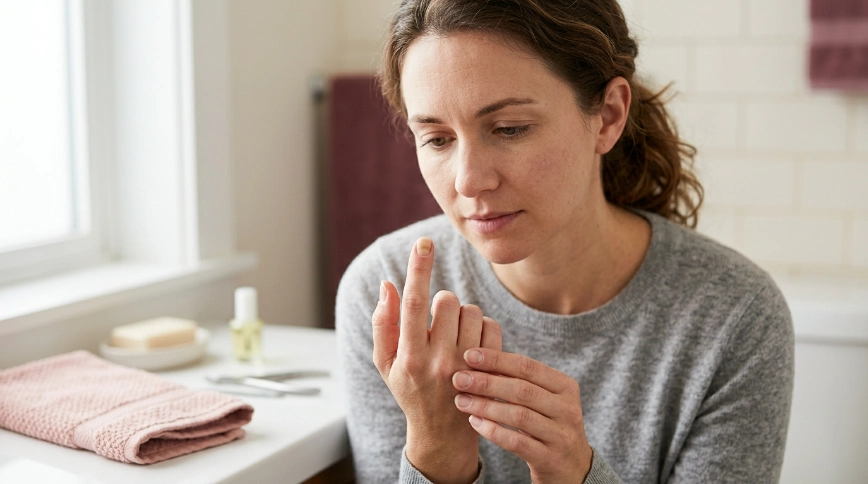
SaveNot every unusual-looking nail is unhealthy. That’s important because social media often turns perfectly normal variations into supposed “deficiency signs.”
- Fine vertical ridges: These become more common with age and aren’t automatically a warning sign.
- Small white spots: They commonly follow minor trauma to the nail rather than indicating a calcium deficiency.
- Temporary polish staining: Highly pigmented shades can leave yellow or orange staining that gradually grows out.
- Uneven lunulae: The white half-moons at the base of your nails aren’t equally visible on every finger or every person.
- A bruise after an obvious injury: Trapped blood beneath the nail can create a dark mark after you hit or crush your finger.
The key difference is usually the story behind the change. A mark that appears immediately after an injury is different from an unexplained stripe that develops without trauma.
Why can nails become unhealthy?
Your nail plate is made of hardened keratin, but the living structures that produce and support it can be affected by trauma, moisture, chemicals, infections, skin disorders, medications, nutrition, and systemic illness.
Some of the most common everyday causes are surprisingly simple:
- Repeated wetting and drying of your hands
- Cleaning without gloves
- Picking or biting your nails
- Cutting or damaging the cuticle
- Peeling gel polish or artificial nails off
- Over-filing the natural nail plate
- Wearing shoes that repeatedly press against toenails
- Fungal or bacterial infection
- Inflammatory skin conditions such as psoriasis
If you regularly paint your nails, choosing polish based on finish and removal method can make your routine easier. Our guide to wedding-friendly nail polish options includes traditional and no-lamp formulas if you’re comparing manicure systems.
How can you protect weak or damaged nails while they grow?
 Save
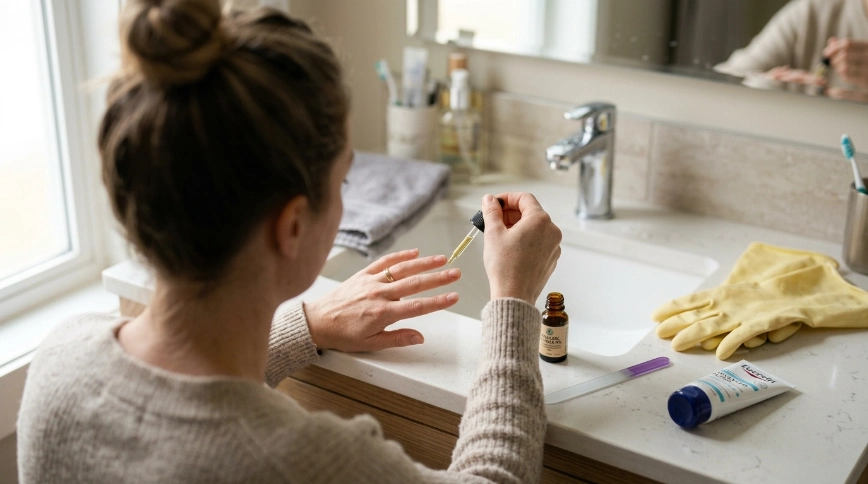
SaveYou can’t instantly repair nail plate that has already peeled or been filed thin. Instead, protect it while healthier nail grows from the matrix.
Do
- +Keep nails comfortably short while damaged areas grow out.
- +Moisturize your nails and cuticles after handwashing.
- +Wear gloves for dishes and household cleaning.
Don’t
- −Peel gel, dip powder, or artificial nails off.
- −Saw aggressively back and forth with a coarse file.
- −Cut live cuticle tissue simply to make the nail look cleaner.
Pro Tip
Moisturize immediately after washing your hands rather than waiting until your cuticles feel dry. Replacing lost surface moisture repeatedly throughout the day is more practical than applying a large amount once at night.
Which nail-care products can help protect dry, brittle nails?
Products can’t treat an undiagnosed nail disease, but a simple moisturizing and filing routine can reduce everyday mechanical damage while your nails grow.
Recommended Product
Cuticle Oil for Dry Nails
A basic cuticle oil is useful when frequent washing and polish removal leave the skin around your nails dry and rough.
As an Amazon Associate, we earn from qualifying purchases.
Recommended Product
Glass Nail File
A fine glass file gives you controlled shaping and can be easier to use gently on peeling or fragile free edges than a very coarse emery board.
As an Amazon Associate, we earn from qualifying purchases.
Recommended Product
Fragrance-Free Hand and Nail Moisturizer
A rich hand cream is practical if water exposure leaves both your cuticles and surrounding skin tight or dry.
As an Amazon Associate, we earn from qualifying purchases.
When should you see a doctor about unhealthy-looking nails?
 Save
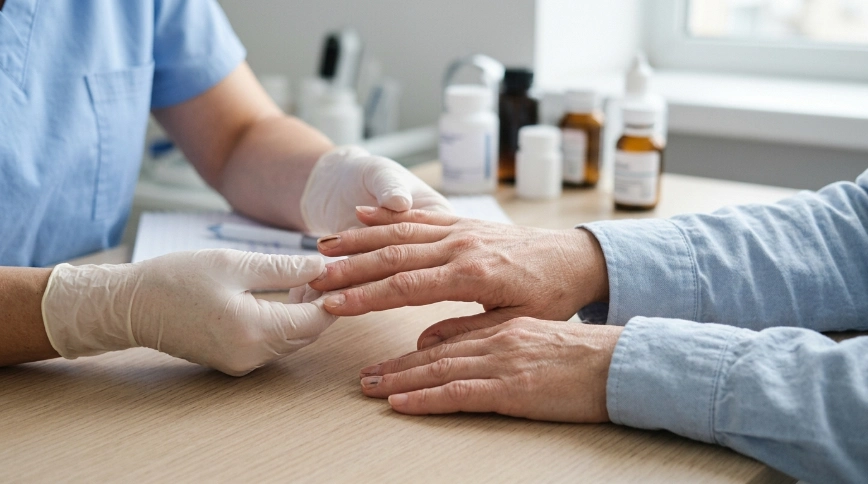
SaveYou don’t need a medical appointment for every chipped tip or polish stain. Consider seeing a dermatologist, primary-care clinician, or podiatrist when a nail change is persistent, unexplained, painful, or getting worse.
Arrange an evaluation if you notice:
- A new or changing brown or black stripe without an obvious injury
- Dark pigment spreading onto the skin beside the nail
- Increasing redness, warmth, swelling, drainage, or severe tenderness
- A nail repeatedly lifting from the nail bed
- Persistent thickening, discoloration, crumbling, or debris beneath a nail
- Deep grooves, pitting, or major shape changes affecting several nails
- New clubbing or enlargement of the fingertips
- Nail changes accompanied by other unexplained physical symptoms
If you have diabetes, reduced circulation, or another condition that makes foot wounds more concerning, don’t ignore a painful or infected-looking toenail.
Once your toenails are healthy and comfortable again, you can browse these easy toenail ideas for simple cosmetic inspiration.
Frequently asked questions about unhealthy nails
Q: What color are unhealthy nails?
A: There isn’t one unhealthy nail color. Persistent yellow, brown, greenish, unusually pale, bluish, or dark discoloration can have many causes. What matters most is whether the change is new, unexplained, persistent, or accompanied by changes in thickness, texture, pain, or surrounding skin.
Q: Do ridges mean your nails are unhealthy?
A: Not necessarily. Fine vertical ridges are common, especially with age. Deep horizontal grooves or a sudden major texture change deserve more attention because they can reflect an interruption in nail growth.
Q: Are white spots on nails a vitamin deficiency?
A: Small isolated white spots are commonly related to minor nail trauma and aren’t reliable evidence of a calcium or vitamin deficiency. Extensive or unusual whitening should be interpreted along with your other symptoms by a healthcare professional.
Q: Can nail polish make your nails look unhealthy?
A: Yes. Dark pigments can temporarily stain the nail, and repeated removal or peeling off gel can leave nails dry, thin, or rough. A cosmetic cause is more likely when the timing clearly follows your manicure routine and improves as fresh nail grows.
Q: Can you tell your overall health from your fingernails?
A: Your nails can provide clues, but they can’t diagnose your overall health. Many nail abnormalities have several possible causes, so blood tests, examination, medical history, or nail testing may be needed before anyone can identify the reason.
The bottom line
The clearest signs of unhealthy nails are new, persistent changes in color, texture, thickness, shape, attachment, or comfort. Peeling after gel removal may simply need gentle care and time, while an unexplained dark streak, significant swelling, clubbing, or steadily worsening nail distortion needs professional attention.
Keep an eye on what’s normal for your own nails rather than chasing a perfect manicure standard. Save this guide on Pinterest so you have a quick nail-health checklist the next time something looks different.

Hi, I’m Jessica, the creator behind Unique Lash & Nails Katy.
I created this website for anyone who loves beautiful nails as much as I do. Here, I share trendy nail designs, seasonal manicure ideas, easy nail care tips, honest product recommendations, and step-by-step guides to help you create salon-worthy nails at home. Whether you’re looking for everyday inspiration or your next favorite nail trend, I hope you’ll find something you love.