What Is the Best Nail Care Routine? Simple Steps for Healthy Nails
Quick Answer
The best nail care routine is simple: keep your nails clean and dry, moisturize your hands and cuticles every day, file rough edges gently, protect your hands from excessive water and chemicals, and avoid picking or using your nails as tools. Trim and reshape them every one to two weeks, and use gentle prep and removal methods whenever you wear polish, gel, or artificial nails.
You don’t need a twelve-step manicure routine to have beautiful nails. In fact, doing too much can sometimes create more peeling, dryness, and breakage than doing too little.
The best nail care routine is one you can repeat without damaging your natural nails. Think of it as a combination of daily moisture, weekly maintenance, smart protection, and gentler manicure habits.
Here’s exactly how to build that routine.


What Does the Best Nail Care Routine Actually Look Like?
A balanced routine takes care of both the nail plate and the skin surrounding it. Your nails may look hard, but repeated water exposure, harsh removal, picking, aggressive filing, and dryness can still leave them feeling weak or rough.
You don’t need to manicure your nails every day. Most of your routine should be preventative.
- Every day: moisturize and protect your hands.
- Once or twice a week: check for rough edges, hangnails, dryness, or lifting polish.
- Every one to two weeks: trim and reshape as needed.
- Whenever you polish: prep gently, use thin coats, and remove the manicure without peeling or scraping.
This approach is easier to maintain than constantly buffing, trimming, soaking, or changing products.
What Should You Do for Your Nails Every Day?
Your daily routine can take less than two minutes.
Moisturize after washing your hands
Apply hand cream after washing, especially when your hands feel tight or dry. Massage a small amount over your fingertips and around each nail instead of stopping at your knuckles.
This is especially helpful in winter, in air-conditioned spaces, or if you wash your hands frequently.
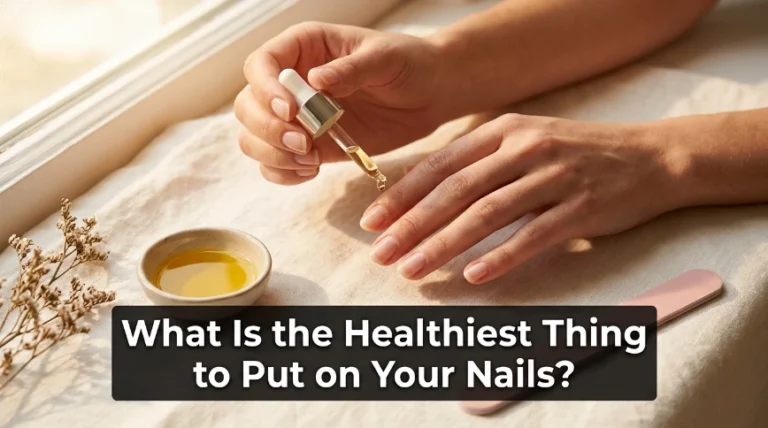
Add cuticle oil once or twice a day
Place a small drop of oil around each cuticle and massage it in. You don’t need to flood the nail.
A simple jojoba cuticle oil works well because it’s easy to apply consistently.
Keep one beside your bed or on your desk. You’re much more likely to use it when it’s visible.
Keep your nails clean and reasonably dry
Normal handwashing is obviously fine. The bigger problem is prolonged wet work such as washing dishes, scrubbing bathrooms, or cleaning for long periods.
Wear household gloves during those jobs. This also creates a barrier between your skin and cleaning products.
Stop using your nails as tools
Opening cans, scraping labels, separating key rings, and prying open packaging can put sudden pressure on the free edge of the nail.
Use an actual tool instead. It’s one of the easiest ways to prevent chips and splits.
What Should You Do Once or Twice a Week?
Give your nails a quick inspection rather than automatically filing or buffing them.
Look for:
- snagged edges
- small splits
- dry skin around the nail
- hangnails
- lifting or chipped polish
- areas you’ve been picking or biting
If everything looks fine, leave it alone.
If you notice a rough edge, smooth only that area instead of filing every nail simply because it’s “nail care day.”
A glass nail file is useful for routine shaping because it gives you good control over small adjustments.
Pro Tip
Keep a small file in your bag. Smoothing a tiny snag as soon as you notice it can stop you from picking at it until a much larger piece breaks.
How Should You Trim and File Your Nails?
For most people, trimming every one to two weeks is plenty. Your exact timing depends on how quickly your nails grow and the length you prefer.
Use clean, sharp clippers or nail scissors. Trim across the nail, then soften the corners slightly with a file if needed.
Don’t cut extremely close to the skin just to make the manicure last longer. Keeping a little free edge can make the nail more comfortable and easier to shape.
When filing, use controlled strokes instead of aggressively sawing back and forth. You’re trying to smooth the edge, not remove large amounts of nail as quickly as possible.
If you prefer a practical length, these short wedding nail ideas also show how polished shorter nails can look without relying on dramatic length.
What Is the Right Way to Care for Your Cuticles?
Your cuticle area doesn’t need aggressive treatment to look neat.
Moisturize it regularly and remove only loose pieces of dead skin that are clearly hanging away from the nail. Avoid cutting deeply around the base of the nail or repeatedly removing healthy cuticle tissue.
If you get a hangnail, don’t pull it with your teeth or fingers. Wash your hands, use clean nail clippers or small manicure scissors, and carefully snip only the loose piece.
Warning
Avoid digging, cutting deeply, or creating tiny wounds around the cuticle area. Damaged skin around the nail can become irritated and gives germs an easier route into the surrounding tissue.
What Is the Best Routine Before Applying Nail Polish?
A good manicure starts with clean nails, but that doesn’t mean you need aggressive filing or buffing.
- Remove old polish completely.
- Wash and dry your hands.
- Shape any uneven edges.
- Make sure the nail surface is dry.
- Apply a thin base coat.
- Add two thin coats of color rather than one heavy coat.
- Finish with a thin top coat.
Thin layers usually look smoother and are easier to control.
If you like timeless designs, you can use this basic prep before trying one of these French tip nail ideas.
For magnetic polish fans, the same gentle preparation works before creating a cat-eye manicure.
Pro Tip
Don’t apply a heavy layer of cuticle oil immediately before regular polish. Moisturize earlier, then make sure the nail plate is clean and dry before you start painting.
How Should You Remove Polish Without Wrecking Your Nails?
The most important rule is simple: don’t peel it off.
Peeling regular polish, gel, dip, or artificial enhancements can pull at the surface of your natural nail along with the coating.
For regular polish, use polish remover and cotton pads. Afterward, wash your hands and apply moisturizer or cuticle oil.
Gel and artificial enhancements require more careful removal. Follow the removal instructions for the exact product or have them professionally removed rather than scraping, prying, or forcefully lifting them.
If you frequently wear extensions, you may also want to compare your options with these acrylic wedding nail ideas before deciding how much length and maintenance you actually want.
Should You Buff Your Nails?
Buffing can make ridges look smoother temporarily, but more isn’t better.
Your nail plate has limited thickness. Repeated heavy buffing removes material from the surface, so aggressive buffing can leave nails feeling thin and flexible.
If you choose to buff, use a fine buffer and light pressure. Concentrate on obvious roughness rather than trying to polish the entire nail until it becomes extremely shiny.
If your nails already feel thin, bend easily, peel, or have recently had enhancements removed, skip the buffer for now.
How Should You Adjust the Routine for Weak or Peeling Nails?
If your nails keep splitting or peeling, simplify your routine first.
Keep them slightly shorter, moisturize consistently, smooth snags immediately, wear gloves for wet work, and avoid frequent aggressive removal or buffing.
You may be tempted to keep adding hardeners, treatments, oils, masks, and supplements at the same time. That makes it difficult to know what’s helping.
Start with protection and moisture. Give your nails time to grow, then evaluate whether you actually need another product.
What About Gel, Dip, or Acrylic Manicures?
You can still enjoy long-lasting manicures, but the application and removal process matters.
Don’t pick off lifting gel or acrylic. Avoid repeatedly filing the natural nail more than necessary. If the skin around your manicure starts burning, itching, swelling, or developing a rash, stop using the product and get professional advice.
When getting salon services, choose a salon that uses clean tools and good hygiene practices.
The goal isn’t to avoid every nail enhancement forever. It’s to prevent a cycle where damaged nails are continuously covered with another set before the underlying problem has been addressed.
What Are the Biggest Nail Care Do’s and Don’ts?
Do
- +Moisturize your nails and surrounding skin daily.
- +Wear gloves during long cleaning and dishwashing sessions.
- +File small snags before they turn into larger breaks.
Don’t
- −Rip off hangnails, gel polish, or lifting enhancements.
- −Use your nails to pry, scrape, or open objects.
- −Over-buff or aggressively remove cuticle tissue.
Which Products Are Actually Worth Having?
You don’t need an overflowing manicure drawer. A few basics cover most routines.
Recommended Product
Jojoba Cuticle Oil
★★★★☆ Easy everyday nail-care staple
A small bottle is useful for keeping the skin around your nails comfortable and making daily moisturizing easy to remember.
As an Amazon Associate, we earn from qualifying purchases.
Recommended Product
Glass Nail File
★★★★☆ Useful for regular shaping
A glass file gives you precise control when you only need to smooth one rough edge instead of dramatically shortening the nail.
As an Amazon Associate, we earn from qualifying purchases.
Recommended Product
Base Coat and Top Coat Set
★★★★☆ Handy for regular polish users
A simple base-and-top-coat pair gives you the essentials for a smoother, more finished home manicure without buying an entire system.
As an Amazon Associate, we earn from qualifying purchases.
What Are the Best Nail Care Tips Most People Skip?
1. Fix small problems immediately
A rough corner is easier to file today than repair after half the nail tears tomorrow. Keep a file somewhere easy to reach.
2. Protect your dominant hand more carefully
Your dominant hand usually does more opening, typing, cleaning, gripping, and scraping. If one hand constantly chips first, daily habits may be the reason.
3. Treat removal as part of the manicure
A gorgeous manicure followed by ten minutes of peeling and scraping isn’t gentle nail care. Plan how you’re going to remove a product before you apply it.
4. Keep your routine boring when your nails are stressed
When nails feel dry or thin, simplify. Shorter length, moisturizer, cuticle oil, gloves, gentle filing, and time are more useful than constantly experimenting with new treatments.
When Should You Get a Nail Change Checked?
Cosmetic routines can help with everyday grooming, but they aren’t a substitute for medical care.
Consider speaking with a dermatologist or other qualified healthcare professional if you develop a persistent change in nail color, shape, thickness, texture, or attachment to the nail bed.
You should also get professional advice for ongoing pain, swelling, redness, drainage, or a new dark streak that doesn’t have an obvious explanation.
Covering an unexplained nail problem with polish or artificial nails can make it harder to monitor what’s happening underneath.
Frequently Asked Questions About Nail Care Routines
Q: How often should I do a full nail care routine?
A: Do basic moisture and protection every day, then inspect and shape your nails once a week or whenever needed. A full trim every one to two weeks is enough for many people.
Q: Should I use cuticle oil every day?
A: You can use cuticle oil daily, especially if the skin around your nails gets dry. One small drop per nail is usually enough, followed by a quick massage around the nail.
Q: Is it better to keep weak nails short?
A: Usually, a shorter length is easier to protect while nails are splitting or peeling because there’s less free edge available to bend, catch, or break. You can grow them longer gradually once they feel easier to maintain.
Q: Do I need to buff my nails every week?
A: No. Weekly buffing isn’t necessary for healthy-looking nails. Buff only when you have a specific reason, use light pressure, and avoid repeatedly thinning the nail surface.
Q: What is the most important step in a nail care routine?
A: Consistent protection matters more than any single beauty product. Keep nails moisturized, avoid unnecessary trauma, smooth snags early, and remove manicures gently instead of peeling or scraping them off.
The Bottom Line
The best nail care routine isn’t the longest one. Keep your nails clean, moisturized, protected, gently shaped, and free from unnecessary picking, scraping, and over-buffing.
Stick with those habits consistently, then add polish, gel, or nail art in ways that don’t undo the care you’ve already put in. Save this guide to Pinterest so your simple nail routine is always easy to find.

Hi, I’m Jessica, the creator behind Unique Lash & Nails Katy.
I created this website for anyone who loves beautiful nails as much as I do. Here, I share trendy nail designs, seasonal manicure ideas, easy nail care tips, honest product recommendations, and step-by-step guides to help you create salon-worthy nails at home. Whether you’re looking for everyday inspiration or your next favorite nail trend, I hope you’ll find something you love.