Does Nail Oil Help Dry Nails? What Actually Works
Quick Answer
Yes, nail oil can help dry nails feel more conditioned and keep rough cuticles softer. A light oil such as jojoba can reduce moisture loss from the nail area, especially when you apply it regularly. For very dry nails, pair the oil with a fragrance-free hand cream or a thin layer of petroleum jelly. Oil cannot repair a nail that has already split, and persistent changes may need a dermatologist’s assessment.
Dry nails can look dull, feel rough, and peel right when you’re trying to grow them long enough for your next manicure. A tiny bottle of nail oil sounds like the easy answer, but does it really do anything beyond making your fingertips shiny?
It can help, provided you know what oil does, what it doesn’t do, and how to use it alongside the habits that protect your nails. Here’s how to tell whether nail oil belongs in your routine.


Why Do Your Nails Get Dry in the First Place?
Your nail plate is made primarily of compact keratin cells. Although it feels solid, its water content can change with your environment and daily routine. Repeated wetting and drying, harsh cleaners, frequent polish removal, and dry indoor air can all make nails more prone to roughness and splitting.
That explains a frustrating pattern: your nails may feel soft after a long shower but look flaky by the end of the day. Water exposure isn’t the same as lasting hydration. When nails repeatedly swell and dry, their layers can become easier to separate, particularly if the edges are already damaged.
The skin bordering your nails has its own challenges. Frequent handwashing, alcohol-based sanitizers, fragranced products, and cold weather can leave the nail folds feeling tight. Once that skin becomes flaky, it’s tempting to pick at it, which can create more irritation.
Sometimes dryness isn’t the whole story. Psoriasis, eczema, fungal infections, trauma, and certain health conditions can also change the appearance of nails. That’s why nail oil should be treated as supportive care, not as a diagnosis or cure.
What Are the Signs That Your Nails Need More Moisture?

You don’t have to wait for a dramatic break to notice that your nail area needs gentler care. Look for a few everyday clues:
- Rough, dull-looking nail surfaces: your nails lack the smooth appearance they usually have.
- Peeling free edges: thin layers lift at the tips, especially after wet work or polish removal.
- Flaky cuticles and nail folds: the surrounding skin feels tight or catches on clothing.
- Small snags or splits: nail corners catch more easily because the tips are fragile.
- Dryness after manicures: the nail area feels uncomfortable after repeated remover use.
These signs are not proof that dehydration is the only cause. If you notice swelling, pain, a new dark streak, a nail lifting away from the skin, or a persistent color or shape change, seek medical advice rather than trying another oil.
How Does Nail Oil Actually Help Dry Nails?
Nail oil works mainly as a conditioning product. It spreads over the nail plate and surrounding skin, leaving a thin emollient layer that makes rough areas feel smoother and helps slow moisture loss. Regular use is more useful than applying a large amount once a week.
The visible benefit is often clearest around your cuticles. When the surrounding skin stays comfortable and supple, you’re less tempted to pull at dry edges. Oil can also make the nail surface look less chalky for a while, although a glossy finish alone doesn’t prove your nail has become stronger.
Some oils may interact differently with the nail plate depending on their composition, but there isn’t good evidence that one fashionable ingredient permanently rebuilds a damaged nail. Think of nail oil as one part of a moisture-maintenance routine, not a treatment that glues separated nail layers together.
Can Nail Oil Stop Peeling or Breaking?
It may help reduce dryness-related fragility when you use it with a moisturizer and protect your hands from repeated soaking. However, once a nail tip is already split, the layers won’t fuse back into healthy nail tissue. Keep the damaged edge short and smooth while it grows out.
If peeling continues despite consistent care, take a closer look at your manicure habits. Scraping off gel, excessive buffing, and aggressive polish removal can damage the nail plate even when you’re diligent with oil.
Does Nail Oil Make Nails Grow Faster?
No reliable evidence shows that rubbing cosmetic oil on your nails meaningfully speeds up their biological growth rate. Nails grow from the nail matrix under the skin, not from the exposed tips you’re coating.
What oil can do is support a gentler routine that may help you retain length by reducing avoidable dryness and snagging. A nail that breaks less often can look longer over time without actually growing faster.
Which Nail Oil Is Best for Dry Nails?
The best oil is usually one you’ll use consistently without irritation. You don’t need a luxury blend, a strong scent, or a complicated ingredient list. Start with a small amount, especially if your skin reacts easily to fragrances.
Jojoba Oil: A Practical Everyday Choice
Jojoba oil has a light texture that spreads easily across the nail and cuticle area. It’s a convenient option if you want to use oil after washing your hands or while relaxing in the evening without leaving a thick coating.
Best for: everyday dryness, rough-looking cuticles, and people who dislike heavy creams during the day. How to use: massage a tiny drop around each nail for 20 to 30 seconds. Trade-off: you may still need a richer cream if your hands are very dry.
Mineral Oil: A Simple, Budget-Friendly Option
Mineral oil is a useful emollient that can help soften and protect dry skin around your nails. A plain, fragrance-free formula avoids some of the extra ingredients found in scented manicure blends.
Best for: basic conditioning on a budget. How to use: smooth on a very thin layer after hand cream or normal washing. Trade-off: some formulas feel slick, so use less than you think you need.
Squalane or Fragrance-Free Cuticle Blends: Lightweight Alternatives
Squalane and simple fragrance-free cuticle oils are worth considering if rich products make your fingertips feel greasy. Look for a short ingredient list and a dropper or brush that lets you apply only a little at a time.
Best for: daytime touch-ups and sensitive preferences. How to use: apply to clean nails, then massage around the sidewalls. Trade-off: a lightweight finish may not feel protective enough for severely chapped skin.
For a closer comparison of ingredients and textures, see our guide to the best oils for weak, damaged, or brittle nails.
Is Nail Oil Better Than Hand Cream or Vaseline?
Not necessarily. Each product solves a slightly different practical problem. Oil is quick to spread over cuticles and the nail plate. A cream may provide a broader mix of moisturizing ingredients, including water-binding ingredients and emollients. Petroleum jelly creates a heavier barrier that helps reduce water loss, which can be especially useful overnight.
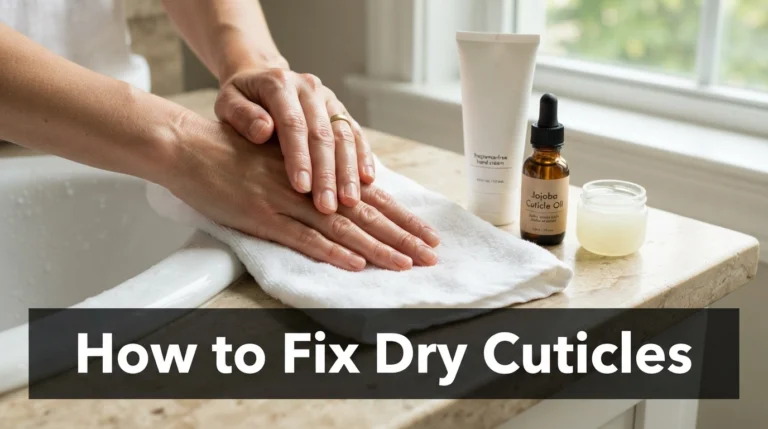
If your cuticles are mildly dry, using a light oil alone may feel sufficient. When they’re cracked-looking and your fingertips feel tight, apply a fragrance-free cream after washing, then use a little oil or petroleum jelly over especially dry spots. You don’t need all three every time.
For a side-by-side look at their textures and uses, see Vaseline vs. cuticle oil for nails. The important difference isn’t which bottle looks prettier; it’s whether the product feels comfortable enough for you to reapply.
How Should You Apply Nail Oil for the Best Results?
There’s no complicated salon ritual required. A useful application takes about a minute and works best when you link it to something you already do, such as your evening skincare routine.
- Clean your hands gently. Wash away dirt and product residue, then pat your hands dry. Avoid deliberately soaking your nails for a long time.
- Apply a small drop. Place a little oil at the base of each nail. You can add more only if the surface still feels dry.
- Massage the edges. Move the oil across the nail plate, the sidewalls, and the skin around the cuticle. Be gentle; pressure won’t make nails grow faster.
- Add cream where needed. If your hands feel tight, follow with fragrance-free hand cream, rubbing it into your nails as well as your palms.
- Protect very dry spots overnight. A rice-grain-sized dab of petroleum jelly around rough cuticles can provide a longer-lasting protective layer.
If you wear regular polish, you can still apply oil to the visible cuticle line, sidewalls, and underside of the free edge. Keep oily residue off the nail surface immediately before applying polish or gel, because it can interfere with adhesion. Follow your polish system’s preparation directions.
Pro Tip
Keep one small oil pen near your bed and one hand cream by the sink. The oil handles your nightly nail-focused routine; the cream makes it easy to moisturize immediately after washing.
How Often Should You Use Nail Oil, and When Will You Notice a Difference?
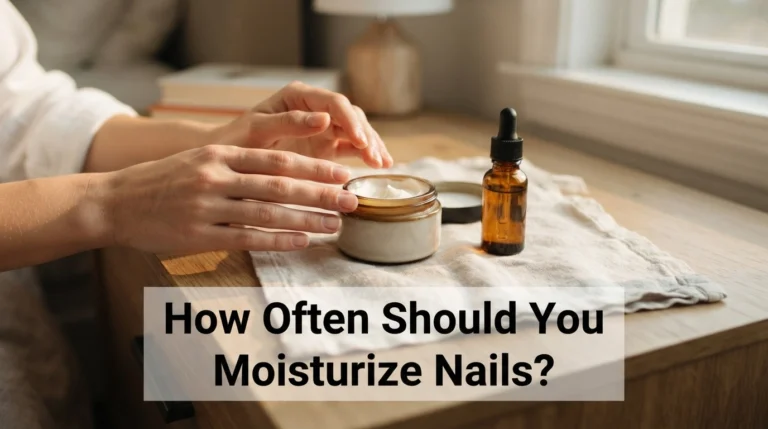
Once daily is a realistic starting point. If you wash your hands frequently or work in dry indoor air, you might prefer a small touch-up after handwashing. You don’t need to soak your fingertips in oil or keep them greasy all day.
Dry skin around your nails may feel softer soon after application. With several days of consistent care, you may notice fewer rough cuticle edges and a more comfortable nail area. The appearance of an already peeling nail tip is different: damaged nail must move forward as it grows and be trimmed away.
Fingernails generally take several months to replace themselves, so judge improvement in the new growth rather than expecting a split tip to become smooth in a few nights. If dryness keeps returning, revisit your exposure to cleaners, water, acetone-based removers, and aggressive filing.
For a complete plan around handwashing, filing, and protection, combine oil with a simple daily nail care routine. Products are most effective when they support habits that prevent repeated damage.
What Else Helps When Nail Oil Isn’t Enough?
Oil can’t compensate for every drying habit. These small adjustments make your routine more reliable, especially when you want to keep natural nails looking neat between manicures.
- Wear gloves for wet chores. Choose protective gloves for washing dishes or cleaning so your nails aren’t repeatedly exposed to water and detergents.
- Moisturize after handwashing. Rub a fragrance-free cream over your fingertips, cuticles, and nails before the skin begins to feel tight.
- File snags before they spread. Use a fine nail file to smooth a catching corner rather than peeling a loose layer off.
- Keep irritated nails out of harsh manicure cycles. Avoid scraping off enhancements, picking gel, or repeatedly buffing a thinning nail plate.
- Skip cuticle cutting. The cuticle helps protect the area where the nail grows. Cutting or forcing it back can cause injury and increase infection risk.
For extra ideas using basic products, our guide to moisturizing and hydrating nails naturally includes simple alternatives you may already have at home.
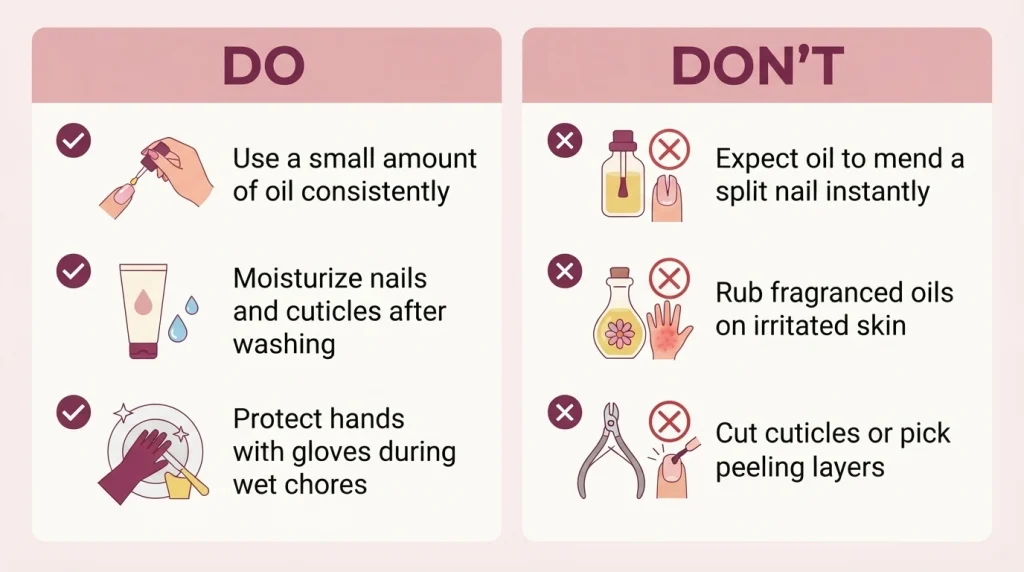
Do
- Use a small amount of oil consistently.
- Moisturize nails and cuticles after washing.
- Protect hands during wet or chemical-heavy chores.
Don’t
- Expect oil to mend a split nail instantly.
- Rub fragranced oils onto irritated or broken skin.
- Cut cuticles or pick peeling nail layers.
Which Products Are Actually Worth Buying for Dry Nails?
A useful starter kit needs only a light oil, a dependable hand moisturizer, and an optional heavier barrier for nighttime. These shopping links are ingredient-based searches, so you can compare formulas and select one that suits your skin and budget.
Recommended Product
Pure Jojoba Oil for Everyday Cuticle Care
A simple jojoba oil is a flexible first choice when you want to massage dry nail folds without buying an elaborate scented treatment.
As an Amazon Associate, we earn from qualifying purchases.
Recommended Product
Fragrance-Free Hand Cream for Nails and Cuticles
A rich, fragrance-free cream is a practical partner to nail oil when repeated washing leaves your whole fingertip dry.
As an Amazon Associate, we earn from qualifying purchases.
Recommended Product
Plain Petroleum Jelly for Overnight Protection
A small amount of plain petroleum jelly adds a protective barrier when your cuticles need more than a lightweight oil.
Browse Petroleum Jelly on Amazon
As an Amazon Associate, we earn from qualifying purchases.
When Should You Stop Using Nail Oil or Ask for Help?
Warning
Stop using a nail product if it causes burning, itching, redness, or swelling. New pain, discharge, a dark nail streak, nail lifting, or ongoing changes deserve evaluation by a healthcare professional. Don’t use oil to cover up a possible infection.
Even a product marketed as natural can cause an allergic or irritant reaction. Essential oils and added fragrance are not required for moisturizing your nails, and they may be a poor choice for sensitive skin. Test a small amount first, especially if you’ve reacted to nail products before.
If you have a nail disorder, diabetes, or impaired circulation, ask a qualified clinician about appropriate care rather than treating a persistent problem solely with a cosmetic product.
Frequently Asked Questions About Nail Oil and Dry Nails
Q: Can I put nail oil on every day?
A: Yes. Daily use is reasonable if the formula doesn’t irritate your skin. Start with one small drop per nail area, then adjust based on how dry your cuticles feel.
Q: Can I use nail oil over nail polish?
A: Yes. Massage it around the cuticle, along the sidewalls, and under the free edge. Avoid oily nail surfaces immediately before applying or repairing polish.
Q: Is coconut oil good for dry nails?
A: Coconut oil can help soften and condition the nail area, although it feels heavier than jojoba for some people. Use a tiny amount and stop if your skin becomes irritated.
Q: Will nail oil fix brittle nails overnight?
A: No. It can soften dry skin quickly, but damaged nail plate needs time to grow out. Protect your nails from excessive wet work and rough manicures while maintaining a consistent moisturizing routine.
Q: Should I apply oil or hand cream first?
A: There’s no single required order. After washing, apply your hand cream while skin is still slightly damp; then use a small amount of nail oil on the cuticle area if you want extra conditioning.
So, Does Nail Oil Help Dry Nails?
Yes, especially when dry cuticles and rough nail surfaces are your main concerns. Choose a simple oil you’ll actually use, pair it with hand cream when needed, and protect your nails from repeated water exposure and harsh removal habits. Save this guide to Pinterest so your next nail-care night starts with the steps that make a difference.

Hi, I’m Jessica, the creator behind Unique Lash & Nails Katy.
I created this website for anyone who loves beautiful nails as much as I do. Here, I share trendy nail designs, seasonal manicure ideas, easy nail care tips, honest product recommendations, and step-by-step guides to help you create salon-worthy nails at home. Whether you’re looking for everyday inspiration or your next favorite nail trend, I hope you’ll find something you love.