Does Age Affect Nail Growth? Facts & Care Tips
Quick Answer
Yes, age affects nail growth. Fingernails typically grow around 3 millimeters per month, but their growth rate gradually slows as you get older. Research suggests an average decline of roughly 0.5% per year after age 25, although your own rate may differ. Good nutrition, gentle manicures, and daily moisturizing won’t reverse aging, but they can help you keep the nail length you grow.
Have you noticed that your favorite manicure takes longer to show a grow-out gap than it used to? Or maybe your nails seem to break before they reach the length you want. Here’s the surprising part: nail growth can slow gradually with age, even when your nails are perfectly healthy.
Understanding what changes—and what doesn’t—can help you care for your natural nails without chasing unrealistic overnight-growth tricks. Let’s look at the numbers, the science, and the habits that actually make a difference.


How Much Does Nail Growth Slow Down With Age?
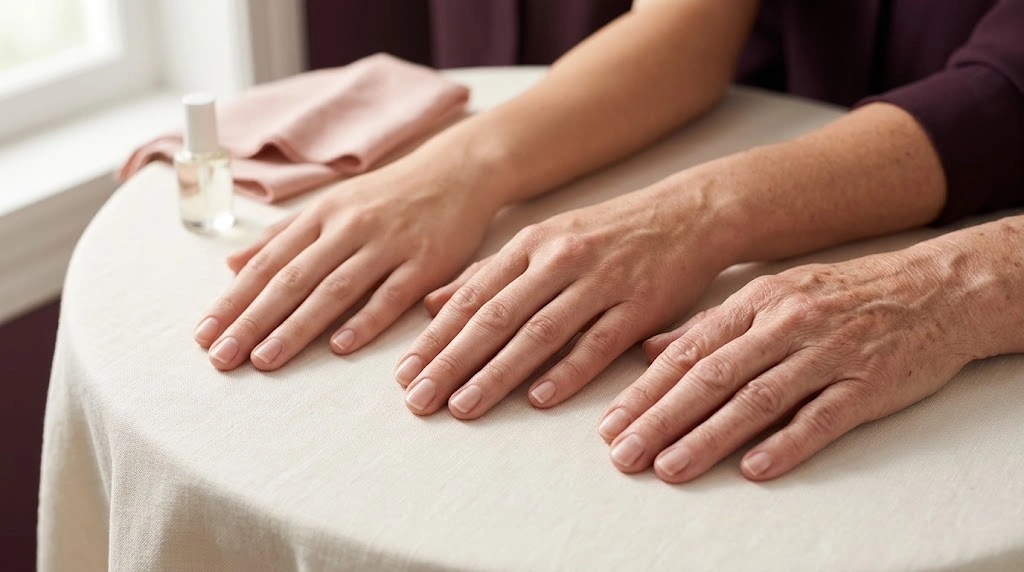
Your nails don’t suddenly stop growing when you turn 30, 40, or 50. Changes usually happen gradually, so you might not notice them unless you compare your nails over a long period. A review of research on older adults reports that fingernails grow about 3 millimeters a month on average, while toenails grow around 1 millimeter a month.
The same review describes a study of people aged 10 to 100 in which nail growth declined by approximately 0.5% per year between ages 25 and 100. That’s a population-level observation, not a rule that lets you calculate your exact growth speed by birthday. Your health, genetics, individual fingers, and nail-care habits also affect what you see.
Does nail growth change in your 20s and 30s?
In your 20s, your nails are often close to their adult growth pace. By your late 20s and 30s, any age-related slowing is usually small. You probably won’t notice a dramatic difference from one year to the next. If your nails suddenly become much weaker or grow substantially more slowly, age alone isn’t a satisfying explanation.
Manicure habits can be a bigger issue at this stage. Frequent gel removal, aggressive buffing, or picking polish off may cause your nail tips to split. That creates the impression that growth has stalled, even when new nail is still forming normally under the skin.
What happens in your 40s and 50s?
As you move through your 40s and 50s, gradual changes in nail texture and flexibility may become easier to see. Some people develop more noticeable lengthwise ridges or find their nails split at the tips. Growth can continue slowing, but there isn’t one specific birthday when everyone experiences a major change.
Hormonal changes, handwashing habits, skin dryness, medications, and health conditions may overlap with normal aging. If your nails feel drier than before, focus on protecting them from breakage rather than assuming you need an expensive growth serum.
Do nails still grow after age 60?
Absolutely. Your nails continue growing throughout later life unless an injury or medical problem disrupts the nail-producing tissue. However, they’re often slower to replace and may be more brittle, dull, or thickened than before. Toenails can become especially thick or difficult to trim, which sometimes requires professional care.
Slow growth matters because damage also takes longer to move out toward the tip. If you have a deep split or an injured nail, be patient: improvements near the base may not reach the free edge for months.
Why Does Aging Make Your Nails Grow More Slowly?
Every nail starts in its nail matrix, the living growth region beneath the skin at the base of your nail. Cells produced there gradually harden into the visible nail plate. The plate itself is made mostly of keratin and cannot speed up its own growth when you apply oil, polish, or a supplement to its surface.
Researchers haven’t identified one single reason for age-related slowing. Changes in the nail matrix, local circulation, and the surrounding tissues may all contribute. Aging can also change the nail plate’s shape, surface, and composition. In other words, slower growth is one part of a wider set of normal changes.
Your nail-producing cells may work at a different pace
New nail material depends on ongoing cell production in the matrix. Age-associated changes in nail tissue can alter that process. These changes don’t mean your matrix is unhealthy; they simply help explain why replacing a damaged nail can take longer over time.
Changes in circulation may play a role
Blood vessels supply the living tissue around the nail matrix. Researchers have suggested that age-related circulation changes could contribute to slower growth. However, the mechanism is not settled, so don’t assume that massaging your fingertips or using warming devices will reliably increase your growth rate.
Daily wear can become more noticeable
Your nails experience repeated water exposure, detergents, tapping, filing, and occasional bumps. When the free edge is more fragile, even ordinary daily wear can erase the small amount of length you’ve gained. That’s why protecting your existing nail is often more useful than trying to force the matrix to produce nail faster.
What Other Nail Changes Are Normal as You Get Older?
Growth speed isn’t the only thing that changes. Aging may also affect nail color, surface, thickness, and flexibility. Some changes are common and harmless, but not every nail change should automatically be blamed on age.
- Lengthwise ridges: Fine lines running from the cuticle toward the tip can become more visible over time. Their presence alone doesn’t necessarily mean your nails are unhealthy.
- Brittle tips: Nails may split or peel more readily, especially with repeated wetting, drying, and exposure to cleaning products.
- Less shine: The surface can appear duller or rougher than it did when you were younger.
- Changes in thickness: Some nails thicken, while others become thinner. Toenails in particular may develop greater thickness with age.
- Subtle color differences: Nails may look less translucent. However, a new dark streak, pronounced yellowing, or rapidly changing color needs proper attention.
You don’t need to buff every ridge away. Aggressive smoothing removes nail material and can make an already delicate plate more fragile. A sheer ridge-filling base coat can create a polished appearance without grinding down the surface.
Is It Aging, or Are Your Nails Breaking Before They Grow Long?
This distinction can change your entire nail-care routine. Nail growth is the production of new nail near the base. Length retention is your ability to keep that growth without the tip breaking off. You can have a normal growth rate and still struggle to grow long nails if the free edge continually splits.
One easy clue is your polish grow-out line. If a gap appears at the cuticle after a couple of weeks but the tips aren’t getting longer, your matrix is doing its job. The problem is likely length retention rather than biological growth. Our guide to how fast nails can grow in one or two weeks explains what realistic progress looks like.
Another possibility is damage from manicure removal. Peeling off gel or extensions can remove surface layers of your nail, leaving a softer edge that tears easily. If that sounds familiar, understanding common causes of nail damage can help you spot habits worth changing.
What Else Can Make Nail Growth Seem Slower?
Age is only one factor. Even younger adults can notice changes in their nails because of health, lifestyle, or repeated trauma. You should consider the full picture, particularly if the change is sudden or affects several nails at once.
Nutrition and restrictive diets
Your body needs enough energy, protein, and essential nutrients to form normal nail tissue. Significant deficiencies, including some iron-related problems, can affect nail appearance. That doesn’t mean everyone with slow-growing nails needs supplements. If you eat a reasonably varied diet, adding extra vitamins may do nothing for your growth rate.
Instead, build meals around adequate protein, vegetables, fruit, whole grains, and other nutrient-rich foods. If you suspect a deficiency because you also have fatigue, hair changes, or other symptoms, ask a clinician whether testing is appropriate rather than guessing.
Health conditions and medications
Certain illnesses, skin conditions, and medications can change nail growth, shape, or texture. Problems involving the thyroid, circulation, or nail matrix are examples worth evaluating when changes are unusual. Don’t stop a prescribed medicine because your nails look different; discuss the timing and symptoms with the person who prescribed it.
Seasonal and individual differences
Some research suggests nail growth varies across seasons, although the findings aren’t consistent. Genetics and individual biology also matter. A friend whose nails seem to grow rapidly may simply have fewer breaks or a different baseline rate. You can explore the evidence in our article on whether nails grow faster in summer.
How Can You Keep Your Nails Strong as You Age?
There isn’t a proven at-home trick that turns back the clock on nail growth. Fortunately, you don’t need one to improve how your nails look and feel. The most effective routine focuses on reducing dryness, preventing splits, and letting healthy new nail grow without repeated damage.
1. Moisturize the nails and surrounding skin every day
After washing your hands, apply a plain hand cream to the nails, cuticles, and fingertips. At bedtime, you can use a small amount of cuticle oil or petroleum jelly to help reduce dryness. Products such as jojoba cuticle oil are convenient if you prefer a lightweight finish.
Moisture supports flexibility and comfort, but it doesn’t directly increase the rate at which new nail is made. Consistency is more valuable than an elaborate routine: keep your moisturizer beside the sink or your bed so you’ll actually use it.
2. Protect your hands during wet chores
Repeated cycles of soaking and drying can contribute to splitting. Wear household gloves when you wash dishes or handle cleaning products, and dry your hands thoroughly afterward. Choose comfortable reusable cleaning gloves that allow you to grip objects without stretching the fingertips.
If sweat builds up inside your gloves, take breaks and dry your hands. The goal is to reduce prolonged exposure, not trap moisture against your skin.
3. File snags before they spread
Keep your nails at a manageable length while they’re fragile. Use a fine-grit file to smooth a snag before it catches on clothing or hair. A fine-grit glass nail file can be handy for gentle maintenance, provided you use light pressure and avoid sawing aggressively into the sides.
A short rounded or softly squared shape is often easier to maintain than long, sharply pointed tips. Choose a shape that suits your daily activities rather than one that repeatedly breaks.
4. Treat the cuticle as a protective seal
Don’t cut deeply into the living skin around the base of your nail. That area helps protect the nail-producing tissue from irritation and infection. If loose dead skin catches, handle it carefully; painful, red, or swollen skin is a reason to stop home trimming and seek advice.
For a neat manicure, gently moisturize the cuticle area and avoid forceful scraping beneath the proximal nail fold. Your nails can look tidy without aggressive cuticle removal.
5. Be gentle with polish and extensions
Nail polish is a cosmetic choice, not a nail-growth treatment. A well-applied manicure may help protect the free edge from casual snagging, but excessive filing or forceful removal can do the opposite. Never peel off gel, acrylic, or adhesive tips just because they have started lifting.
Use the appropriate removal method for your product, keep buffing minimal, and pause a service if your nails feel painful or unusually thin. If your nail has already been injured, our damaged nail regrowth guide explains why recovery depends on the condition of the matrix.
6. Skip miracle-growth promises
Be skeptical of products claiming to add several millimeters of natural nail growth in a few days. Ordinary nail growth is far slower than those promises suggest. Biotin supplements are sometimes promoted for brittle nails, but evidence of benefit in people without a deficiency is limited. High-dose biotin can also interfere with certain laboratory tests.
Instead of buying multiple growth serums, spend your effort on a dependable moisturizer, gentle filing, and protecting your hands. Those habits target the everyday causes of breakage you can actually control.
Pro Tip
Take a photo of the same fingernail every two weeks, in similar lighting and from the same angle. Look for new growth near the cuticle and whether the tips are staying intact. This helps you distinguish slow growth from repeated breakage without obsessively measuring your nails every day.
What Should You Do and Avoid for Healthy Aging Nails?
Do
- Moisturize after handwashing and before bed.
- File small snags while they’re still manageable.
- Wear gloves for wet or chemical-heavy chores.
- Pay attention to new or persistent nail changes.
Don’t
- Pick or peel off gel and acrylic products.
- Buff ridges aggressively to flatten them.
- Cut deeply into the skin around the nail.
- Assume every new discoloration is due to age.
How Long Does It Take to See New Nail Growth?
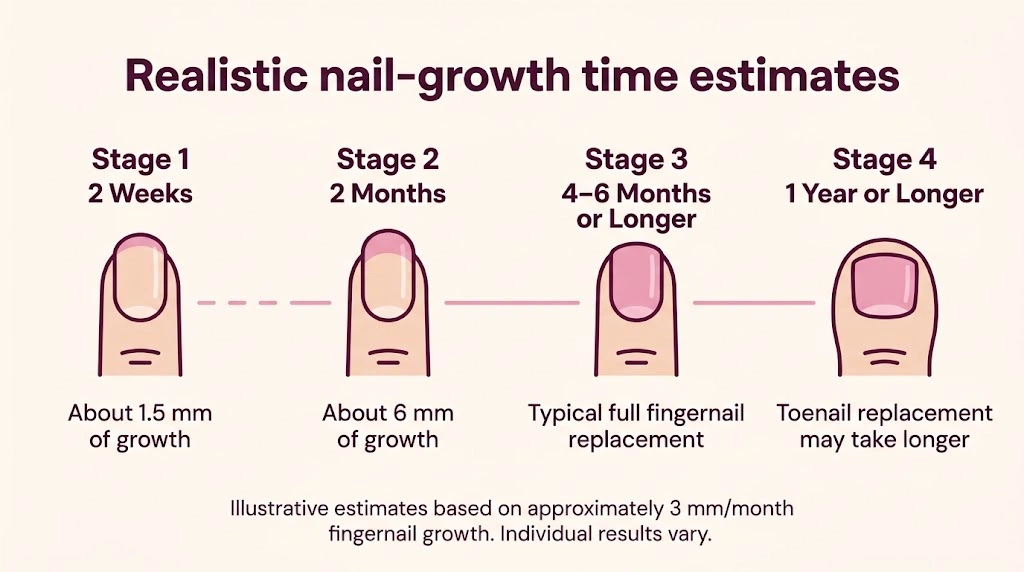
If your fingernails grow near the commonly cited average of 3 millimeters per month, you’ll produce about 1.5 millimeters in two weeks and 6 millimeters in two months. Those are rough illustrations, not guarantees. A person with slower growth may see less, while another person may see more.
Replacing the visible fingernail plate commonly takes several months, often around four to six months or longer depending on the nail and circumstances. Toenails take substantially longer, frequently a year or more. If you’re recovering from damage, changes near the base must travel all the way to the tip before the affected portion can be trimmed away.
Give your care routine enough time to work. Softer cuticles may feel better within days of regular moisturizing, but growing out a damaged area takes months. A realistic timeline makes it easier to avoid unnecessary product changes every week.
When Should You See a Dermatologist About Nail Changes?
Gradually slower growth and fine lengthwise ridges can be part of normal aging. However, sudden changes are different. A dermatologist or healthcare professional can examine the nail and determine whether infection, injury, inflammation, nutritional problems, or another condition may be involved.
When to get checked
Arrange an assessment for a new or changing dark streak, unexplained bleeding, a nail lifting away from the bed, persistent swelling or pain, marked thickening or crumbling, or a sudden change affecting multiple nails. A new dark streak—particularly one that changes or extends onto the surrounding skin—deserves prompt professional evaluation.
A clinician may recommend examining the nails, reviewing your medications and symptoms, or ordering tests when the pattern suggests something other than normal aging. Getting the right diagnosis is more useful than covering a concerning change with polish.
Frequently Asked Questions About Age and Nail Growth
Q: At what age do fingernails start growing more slowly?
A: Some research identifies a gradual average decline beginning around age 25. This isn’t a sudden change, and your individual growth rate may vary considerably.
Q: Do nails grow slower after menopause?
A: Nail dryness and brittleness may become more noticeable around midlife, but menopause alone doesn’t determine your nail-growth rate. Age, overall health, and repeated exposure to water or irritants can also contribute.
Q: Do toenails slow down more than fingernails?
A: Toenails are already much slower growing: roughly 1 millimeter per month versus around 3 millimeters for fingernails. Both can slow with age, and toenails usually need more time to replace after damage.
Q: Can vitamins make aging nails grow faster?
A: Correcting a genuine nutrient deficiency may help restore healthy nail production, but extra vitamins aren’t proven to make already healthy nails grow dramatically faster. Ask a professional before taking high-dose supplements, especially biotin.
Q: Are vertical nail ridges a sign of aging?
A: Fine vertical ridges become more common with age and can be harmless. If they’re new, severe, painful, or accompanied by other changes in color or shape, have your nails evaluated.
So, Does Age Affect Nail Growth?
Yes. Your nails generally grow more slowly as you age, but the change is gradual and doesn’t mean you can’t maintain beautiful, healthy-looking natural nails. Focus on moisturizing, preventing breaks, and recognizing changes that need medical attention rather than chasing miracle products.
Save this guide to Pinterest so you can revisit these easy nail-care habits whenever your nails need a little extra attention.

Hi, I’m Jessica, the creator behind Unique Lash & Nails Katy.
I created this website for anyone who loves beautiful nails as much as I do. Here, I share trendy nail designs, seasonal manicure ideas, easy nail care tips, honest product recommendations, and step-by-step guides to help you create salon-worthy nails at home. Whether you’re looking for everyday inspiration or your next favorite nail trend, I hope you’ll find something you love.