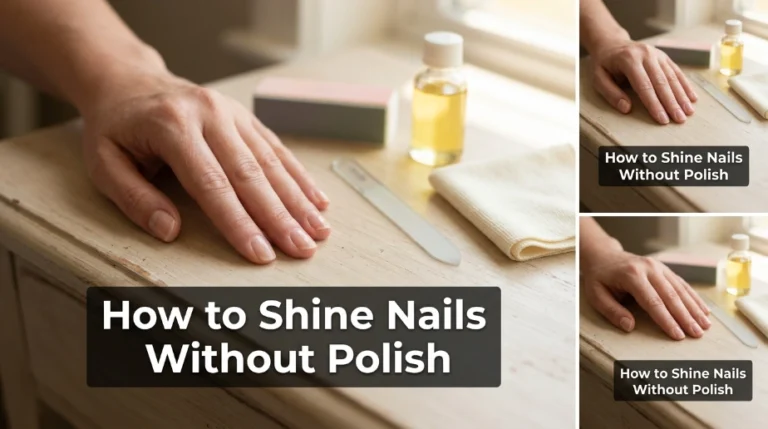
What Is a Japanese Manicure Without Polish? Natural Shine Explained
Quick Answer
A Japanese manicure without polish is a natural-nail treatment that buffs a conditioning paste and fine powder into your nail plates. Instead of covering your nails with color, gel, or lacquer, it leaves them smooth, neat, and naturally glossy. The shine usually lasts about one to two weeks, while the conditioned feel may vary with your routine.
Your nails can look freshly manicured without wearing a drop of polish. That is the appeal of a traditional Japanese manicure: the treatment works with the visible nail plate instead of hiding it under a coating.
If you have seen “Japanese manicure” and “Japanese gel manicure” used as if they mean the same thing, the terminology can feel confusing. They are different services. Here, you’ll learn what the polish-free version involves, what the glossy finish really looks like, and whether it suits your nails.


What Exactly Is a Polish-Free Japanese Manicure?
A traditional Japanese manicure is a grooming and buffing service for natural nails. Your technician shapes the free edge, tidies the cuticle area, and massages a purpose-made paste into the surface of each nail. A separate powder is then buffed over it to refine and help preserve the shine.
The exact formula depends on the system or brand. Pastes and powders may contain waxes, mineral ingredients, oils, or finely milled polishing agents. You may also see products promoted with ingredients such as keratin or silica, but you shouldn’t assume every kit contains the same blend. Check its label if allergies or ingredient preferences matter to you.
No colored lacquer, base coat, top coat, gel, acrylic, or dip powder is required. The end result is your own nail, only smoother and more reflective. Think of a healthy satin-to-gloss sheen rather than the thick, glassy dome of gel polish.
Important distinction
A traditional Japanese manicure is not Japanese gel. Japanese gel is a cured nail coating applied in layers and requires a compatible lamp; the traditional treatment uses paste, powder, and manual buffing without a curing lamp.
Why Does It Look Shiny If There Is No Polish?
The shine comes from two actions. First, controlled buffing makes tiny surface irregularities less noticeable, so light reflects more evenly. Second, the manicure paste and finishing powder leave a smooth, polished surface. Together, they create the clean glow that can look like a very sheer clear coat.
That effect is cosmetic. Your nail plate is made of compact layers of keratin, and the visible plate is not living tissue. A conditioning product can improve how it looks and feels, but it cannot permanently rebuild lost nail layers or cure a nail condition. New nail grows from the matrix beneath the skin, which is why long-term improvement depends on protecting that new growth.
If your goal is simply a glossy finish, this guide to making natural nails shine explores other easy options. The Japanese method stands out because it combines grooming, paste, powder, and deliberate buffing in one service.
Can Hot Water Damage Your Nails
 Save
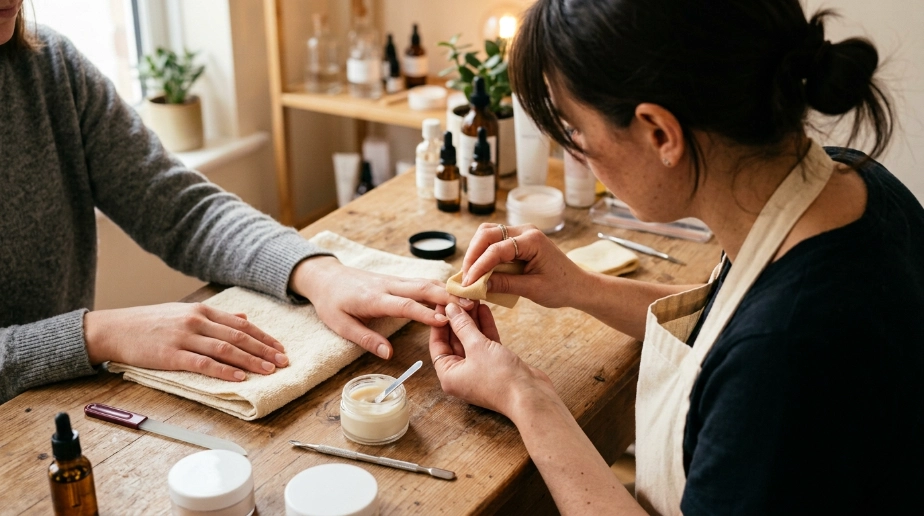
SaveA salon appointment commonly follows the sequence below, although a technician may adjust it to your nail condition. The treatment generally takes around 30 to 60 minutes.
1. Your nails are assessed and cleaned
The technician removes surface oil and checks for splits, lifting, inflammation, or unusual discoloration. Existing polish must come off so the paste can contact the natural nail. You should postpone the service if the skin is broken or a nail appears infected.
2. The length and shape are refined
Your nails are filed into a comfortable shape, usually following the natural curve. A fine file is safer for detail work than aggressive sawing with a coarse grit. If you prefer doing this stage yourself, a glass nail file for natural nails gives you controlled, smooth edges.
3. The cuticle area is tidied
Cuticles may be softened and gently pushed back. Only clearly detached dead skin should be trimmed. Cutting living skin too deeply can cause soreness and removes part of the protective seal around your nail.
4. Conditioning paste is buffed into the nail
A small amount of paste is worked across the nail plate with a dedicated buffer, often made from soft leather or chamois. The motion distributes the product and begins building an even shine. Your technician should use light pressure rather than trying to grind away ridges.
5. Finishing powder enhances the gloss
A separate powder is buffed over each nail with a clean tool. This step creates the recognizable polished sheen and helps the surface feel silky. The technician may finish with oil and a brief hand massage.
Pro Tip
Ask the technician to demonstrate pressure on one nail before completing the set. A Japanese manicure should feel gentle. Heat, tenderness, or a noticeably thinner nail means the buffing is too aggressive.
How Is It Different From Other Manicures?
Japanese manicure vs. regular manicure
A basic manicure and a Japanese manicure can both include shaping, cuticle care, and moisturizing. The difference is the finish. A regular service normally ends with base coat, colored lacquer, and top coat, while the Japanese service buffs paste and powder directly onto bare nails.
Japanese manicure vs. Japanese gel manicure
Japanese gel is still a gel enhancement, even when it uses a softer neutral shade. It is applied as a product layer and cured under a compatible LED or UV lamp. It can add structure and wear for weeks, but it also requires careful removal or maintenance. A polish-free Japanese manicure has no cured coating and no soak-off process.
Japanese manicure vs. simple nail buffing
Basic buffing uses progressively finer surfaces to smooth and shine the plate. The Japanese technique adds a specialized paste-and-powder system. Both methods can make nails glossy, and both can thin the surface when repeated too frequently or performed with excessive pressure.
Japanese manicure vs. clear polish
Clear polish sits on top of your nail as a removable film. It can chip, peel, and come off with remover. A Japanese manicure leaves no conventional polish layer, so there is nothing to flake away. The gloss gradually softens as your hands meet water, soap, and everyday friction.
What Are the Benefits of a Japanese Manicure Without Polish?
- You get a low-key, natural finish. Your nails look tidy and luminous without obvious color, which works well for conservative workplaces, minimalist styles, or a break from nail art.
- There is no drying or curing time. You can reach into your bag after the service without smudging a soft lacquer layer.
- You avoid polish chips. Because there is no painted film, you won’t see a missing patch of color at the tip.
- Removal is unnecessary. The shine fades gradually, so you don’t need acetone simply to remove the finish.
- Grooming creates an immediate visual improvement. Even length, smooth edges, neat cuticles, and reflected light make bare nails look more polished.
This option can also provide a graceful transition after you stop wearing enhancements, provided your nail plates are intact enough for gentle buffing. If they feel thin, sore, or bendy after removal, start with a protective routine for damaged and weak nails and delay surface buffing.
What Can’t This Treatment Do?
A Japanese manicure cannot make the nail plate permanently thicker. It does not medically treat fungus, psoriasis, eczema, bacterial infection, or nutritional deficiency. It also cannot erase deep ridges without removing an unsafe amount of nail.
You may hear that the paste “feeds” the nail. A more accurate expectation is that the products condition the surface and improve its appearance. The nail may feel smoother and less rough immediately afterward, but lasting strength comes from reducing repeated trauma and allowing healthy new nail to grow.
Warning
Do not buff over painful nails, open skin, separation from the nail bed, green or dark patches, or unexplained thickening. Those changes need proper assessment, and covering or thinning the surface can delay appropriate care.
Who Is a Japanese Manicure Best For?
You may enjoy it if you want groomed bare nails, dislike the feel of coatings, cannot wear colored polish at work, or want a smudge-free finish for a special event. It is also appealing when you love the “your nails, but shinier” look.
You may need a modified service if your nails are naturally thin, recently over-filed, peeling in layers, or still tender after gel or acrylic removal. Ask for shaping, cuticle care, and oil without plate buffing. Learning how to care for nails naturally will help you support the growing nail while the damaged section moves toward the tip.
The treatment is not ideal if you want added length, strong structural reinforcement, opaque color, or nail art. Those goals require a coating or enhancement rather than a surface-grooming service.
How Long Does the Shine Last?
Expect the high shine to look strongest for roughly one to two weeks. Frequent handwashing, cleaning chemicals, swimming, gardening, and friction can dull it sooner. Your nail growth also creates a small unbuffed area near the cuticle over time, although it is less obvious than regrowth under colored gel.
A professional service often takes 30 to 60 minutes. An at-home session may take longer while you learn to control the amount of product and pressure. Avoid chasing a permanent mirror finish by rebuffing every few days, because repeated abrasion can make the nail plate thinner.
Can You Do a Japanese Manicure at Home?
Yes, if your nails are healthy and you follow the instructions for one complete system. A Japanese manicure paste-and-powder kit usually gives you compatible products and separate buffers. Don’t mix tools between the paste and powder unless the manufacturer specifically tells you to.
Begin with clean, dry nails. Shape the tips, gently push back softened cuticles, and use a very small amount of paste. Buff with light, controlled strokes, then apply the finishing powder with its dedicated buffer. Stop as soon as you achieve an even sheen.
Follow the kit’s directions rather than copying a long, forceful salon demonstration online. At-home users often make the finish worse by using too much paste or pressing harder when the shine develops unevenly. A thin, uniform application and clean tools matter more than speed.
How Do You Care for Your Nails Afterward?
 Save
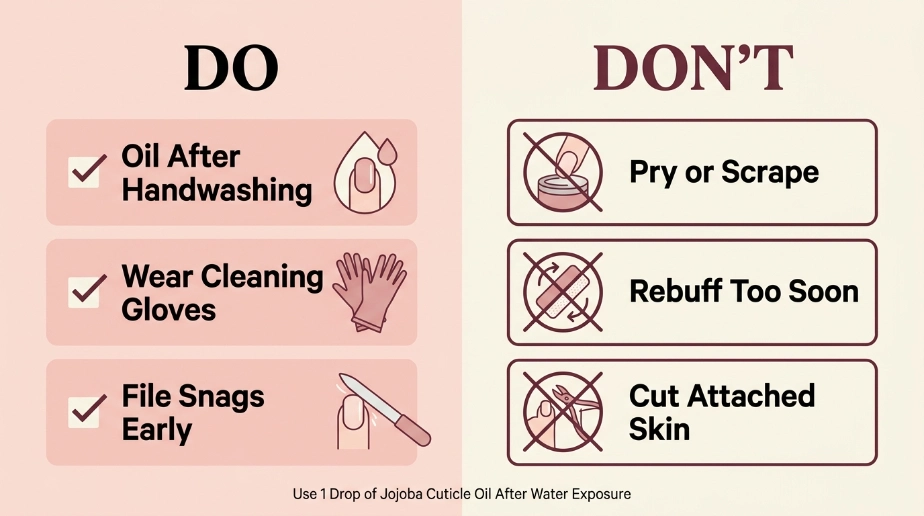
SaveDo
- +Oil the cuticle area after handwashing.
- +Wear gloves for dishes and cleaning.
- +File snags before they spread.
Don’t
- −Use your nails to pry or scrape.
- −Rebuff as soon as the shine softens.
- −Cut attached skin around the nail.
Massage one drop of jojoba-based cuticle oil around each nail, especially after water exposure. Oil will not permanently harden the plate, but regular use helps keep the surrounding skin and flexible nail edges from feeling dry and brittle.
For a simple schedule beyond the first week, use this natural nail-care routine to balance cleaning, moisturizing, filing, and protection without overworking your nails.
Frequently Asked Questions
Q: Does a Japanese manicure use any nail polish?
A: The traditional version does not use lacquer or gel polish. Its shine comes from buffing a specialized paste and finishing powder into the natural nail plate.
Q: Is a Japanese manicure good for damaged nails?
A: It can make mildly rough nails look smoother, but buffing is unsuitable for plates that are very thin, sore, or peeling. Choose gentle grooming and oil until the damaged portion has grown out.
Q: Can you apply regular polish after a Japanese manicure?
A: You can, but the smooth, conditioned surface may reduce adhesion. Clean the plate as directed by your polish system first, or enjoy the natural shine and paint your nails later.
Q: How often should you get a Japanese manicure?
A: Follow the product system and your technician’s assessment rather than rebuffing on a fixed weekly schedule. Space full buffing sessions out, especially if your nails are naturally thin.
Q: Is a Japanese manicure the same as a buff-and-shine manicure?
A: They are similar, but a traditional Japanese system pairs manual buffing with its own conditioning paste and finishing powder. A basic buff-and-shine service may use only a multi-sided buffer.
Should You Try a Japanese Manicure Without Polish?
A Japanese manicure is a strong choice when you want bare nails to look smooth, glossy, and intentionally groomed without color or a cured coating. Keep the buffing gentle, treat the shine as a temporary cosmetic finish, and protect your nails between services. Save this guide to your Pinterest nail-care board so you can compare the traditional treatment with gel before booking.

Hi, I’m Jessica, the creator behind Unique Lash & Nails Katy.
I created this website for anyone who loves beautiful nails as much as I do. Here, I share trendy nail designs, seasonal manicure ideas, easy nail care tips, honest product recommendations, and step-by-step guides to help you create salon-worthy nails at home. Whether you’re looking for everyday inspiration or your next favorite nail trend, I hope you’ll find something you love.