Is Applying 3 Coats of Nail Polish Too Much? Get a Smooth, Fast-Drying Manicure
Quick Answer
Three coats of nail polish aren’t automatically too much. Three thin color coats can give a sheer, streaky, or pale shade even coverage, as long as you let each layer set first. Three thick coats, however, can trap soft polish underneath, causing dents, bubbles, smudges, and peeling.
You’ve applied two coats, but your nail line still shows or the color looks patchy. Should you add a third coat—or stop before your manicure turns into a thick, slow-drying mess? The answer depends less on the number three and more on the polish formula, the thickness of each layer, and your drying time.
A well-applied three-coat manicure can look smooth and last just as well as a two-coat manicure. The trick is knowing when that extra layer solves a coverage problem and when it only creates one.


Is Three Coats of Nail Polish Really Too Many?
No, three coats of colored nail polish are not inherently excessive. Many sheer, jelly, milky, pastel, and neon formulas need three thin coats to reach the color shown in the bottle. A third coat may also smooth out visible streaks without making the finish look bulky.
The usual advice to apply two coats is a dependable starting point, not a strict rule. Pigmented cream polish may look complete in one or two coats, while a translucent shade is designed to build gradually. Your finished thickness matters more than your coat count.
Keep in mind that “three coats” normally means three coats of color. If you use one base coat, three color coats, and one top coat, you have five layers in total. That can still work when every layer is thin. If your brush is carrying enough polish to pool at the cuticle or sides, even two color coats may be too thick.
Warning
Don’t add a third coat to hide deep dents, lint, or polish that has already wrinkled. More wet polish traps the flaw underneath and increases drying time. Smooth the affected nail and repaint it instead.
When Does a Third Coat Make Your Manicure Better?
 Save
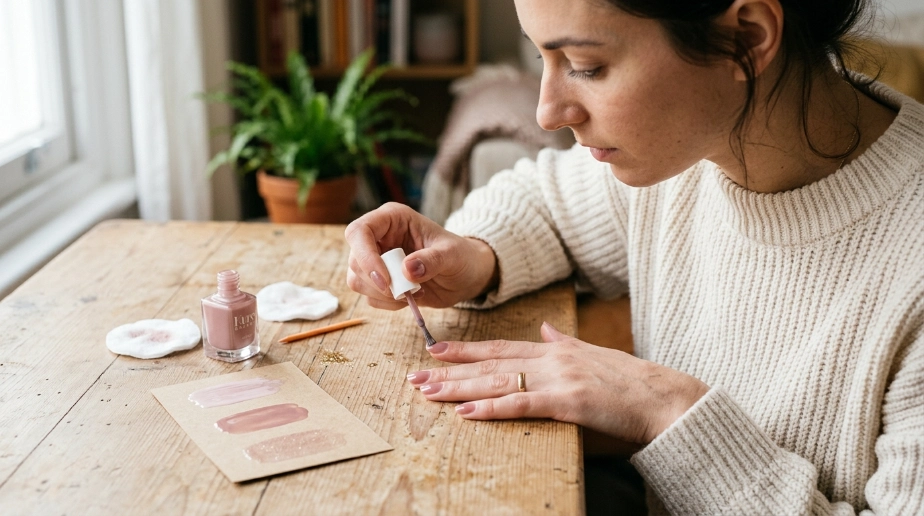
SaveA third coat earns its place when it adds evenness, depth, or the intended finish without creating obvious bulk. Before reaching for the brush again, look at your nails in bright indirect light. If the surface is smooth but the color remains uneven, another very thin coat is reasonable.
Your polish is sheer or jelly-like
Sheer and jelly polishes are made to let some light pass through. The first coat often looks like a tint, the second adds depth, and the third creates a richer glassy finish. If you want a deliberately translucent manicure, stop earlier. If you want the bottle color, three coats may be exactly right.
Your pale shade still looks streaky
White, nude, pale pink, and pastel polish can drag or leave darker lines where strokes overlap. A light third coat can level the appearance better than pressing harder with the brush. Use minimal pressure so the bristles float over the surface instead of digging into the coats below.
Your nail line is still visible
If you want an opaque result and can see the white edge of your natural nail after two coats, a third may finish the job. This is common with bright yellow, coral, and some neon colors. For neon polish, an opaque white base can sometimes provide brightness with fewer color layers.
You want more depth from shimmer or glitter
A third layer can distribute fine shimmer or glitter more evenly. With chunky glitter, however, repeatedly brushing on clear base adds unnecessary thickness. Dab the glitter where you need it with a makeup sponge or place individual pieces, then seal the texture with top coat.
When Should You Stop at Two Coats?
Skip the third coat when your color is already opaque, level, and true to the bottle. Another layer won’t improve a finished-looking manicure. It will only add solvent and extend the time before the lower layers become firm.
You should also stop if the polish is thick enough to form strings from the brush, refuses to spread, or sits in ridges. That problem comes from the formula becoming too viscous, not from insufficient coverage. Use a few drops of proper nail-polish thinner—never acetone—to restore the flow. Acetone can break down the formula and make wear less predictable.
Watch for pooling around your cuticles and sidewalls. Polish that moves toward the skin is usually too heavy. Clean the edge with a small angled brush dipped in remover rather than trying to cover it with another coat. If you frequently repaint, it may also help to understand what daily nail-polish application means for your routine.
Do
- +Use three thin coats when the shade is still visibly uneven.
- +Wipe excess polish from one side of the brush neck.
- +Cap the free edge lightly to reduce tip wear.
Don’t
- −Use a heavy third coat to force instant opacity.
- −Blow on wet polish, which can introduce moisture and bubbles.
- −Judge dryness only by touching the top surface.
How Do You Apply Three Coats Without Making Polish Thick?
Preparation and brush control make the difference. You don’t need salon-level speed, but you do need to keep each coat light and give the solvents time to evaporate.
1. Prepare a clean, dry nail plate
Remove old color, shape your nails, and gently push back the cuticle from the nail plate. Wipe each nail with isopropyl alcohol or a small amount of acetone on a lint-free pad. This removes oil that can make polish separate or peel early.
Apply one thin base coat and let it set. Base coat gives color a more even surface to grip and can reduce staining from intense pigments. If you’re taking a break between manicures, this guide to whether nails are healthier without polish can help you separate useful care from common myths.
2. Load the brush lightly
Dip the brush, then wipe one side against the bottle neck. The remaining bead should cover one nail without flooding it. Place the brush slightly above the cuticle, nudge it back without touching skin, and pull toward the tip. Finish with one stroke on each side.
Pro Tip
Think of the first coat as placement, not perfection. Trying to make the first layer opaque encourages you to overload the brush, and thick polish underneath stays soft long after the surface looks dry.
3. Let each coat set before adding the next
Wait about two to five minutes between thin color coats. Your exact time depends on temperature, airflow, and formula. The layer should lose its very wet shine and should not move when you lightly touch two polished nails together near the tips. Don’t press a fingertip into the surface.
Apply the second and third coats with a gentle floating motion. Repeatedly brushing one area can partially dissolve the previous layer and create bald patches. Three deliberate strokes are better than ten corrective strokes.
4. Seal the manicure with a compatible top coat
After the third coat has set for a few minutes, float a thin, even top coat over the nail and cap the edge. A quick-dry formula helps solvents travel upward and can protect the surface sooner, but it doesn’t instantly harden every layer. Treat your manicure gently for the next few hours.
How Long Do Three Coats of Nail Polish Take to Dry?
Three thin color coats plus base and top coat are often touch-dry in about 15 to 30 minutes, but complete hardening takes longer. Depending on the formula and application thickness, the lower layers may remain vulnerable to dents for several hours. “Touch-dry” only means the surface doesn’t transfer easily; it doesn’t mean the manicure can withstand pressure from shoes, bedding, or tight pockets.
For fewer sheet marks, finish your manicure two to three hours before bed. Cool, moving air helps solvent evaporate. Avoid strong heat from a hair dryer because heat can keep some formulas soft and can cause bubbles. Ice water may firm the surface temporarily, but it doesn’t replace evaporation through the layers.
If speed matters, choose a quick-dry nail polish top coat and apply drying drops around the cuticle after top coat. Drying products help most when your color layers are already thin.
Recommended Product
Fast-Dry Top Coat for Layered Manicures
★★★★☆ Popular choice on Amazon
A quick-dry top coat protects the surface sooner and adds gloss, which is especially useful after three thin color layers.
As an Amazon Associate, we earn from qualifying purchases.
Do Three Coats Damage Your Natural Nails?
The extra color coat itself doesn’t make a healthy nail plate thinner. The more relevant risks come from repeated aggressive removal, peeling polish off, filing the natural nail too much, or exposing irritated skin to remover. Polish can also temporarily dry the surrounding skin, especially when you use acetone frequently.
Remove the manicure gently once it chips beyond repair. Saturate a cotton pad with remover, hold it on the nail for several seconds, and wipe from cuticle to tip rather than scrubbing back and forth. For alternative removal methods and their limits, see the guide to natural, chemical-free nail-polish remover options.
After removal, apply cuticle oil and hand cream. A jojoba-based cuticle oil spreads easily around the nail folds and helps reduce the dry, tight feeling that remover can leave behind. If you notice ongoing pain, swelling, nail lifting, or unusual discoloration, stop covering the area with polish and ask a qualified medical professional or dermatologist for advice.
Why Did Three Coats Turn Bubbly, Gummy, or Wrinkled?
The polish has tiny bubbles
Let the nail dry, smooth obvious texture lightly, and add one thin top coat. Next time, roll the bottle between your palms instead of shaking it, avoid painting directly in front of a fan, and keep every color coat thin.
The surface is dry but dents underneath
Give it more undisturbed time; another coat won’t fix softness. For your next manicure, leave two to five minutes between coats and reduce the amount on the brush. A surface can skin over while solvents remain trapped below.
The polish wrinkles after top coat
Wrinkling usually means the upper layer tightened while wet polish remained underneath. If the damage is deep, remove and repaint that nail. Use thinner color layers and make sure your top coat works with regular lacquer, not only gel.
The manicure peels off in sheets
Remove loose polish safely rather than pulling it. Before repainting, keep oil and lotion off the nail plate, use a thin base coat, and avoid flooding the cuticle. Polish attached to skin lifts and can pull the rest of the manicure with it.
Which Products Help a Three-Coat Manicure Work?
 Save
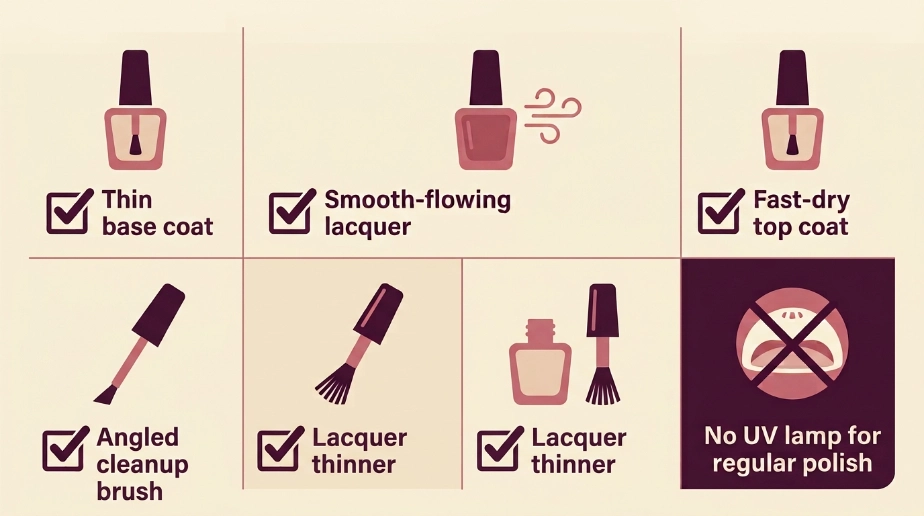
SaveYou don’t need a complicated kit. A thin gripping base coat, a polish that still flows smoothly, and a compatible fast-dry top coat cover most needs. If your lacquer has thickened with age, add a nail-polish thinner made for lacquer a few drops at a time. Roll the bottle, check the texture, and repeat only if needed.
A small cleanup brush also improves the finished look without another color layer. Dip a fine angled nail cleanup brush lightly in remover, blot the excess, and trace around the cuticle. This sharpens the outline and prevents polish on skin from lifting the manicure early.
Don’t buy a UV or LED lamp to dry ordinary lacquer. Regular polish hardens as solvents evaporate, while gel polish requires a compatible curing lamp because it uses different chemistry. Unless the bottle specifically says it is a gel system that requires curing, airflow and time are what you need.
Frequently Asked Questions About Three Coats of Nail Polish
Q: Can I apply four coats of nail polish?
A: You can apply four very thin coats of an intentionally sheer formula, but drying time and dent risk increase. If an ordinary polish still needs four coats for even color, try a more pigmented shade or an opaque base underneath.
Q: How long should I wait between three coats?
A: Wait roughly two to five minutes between thin coats of regular lacquer. Give a thicker or slow-drying formula more time, and don’t add the next layer while the previous one still moves or looks extremely wet.
Q: Does the base coat count as one of the three coats?
A: Usually, no. When people say a polish needs three coats, they mean three layers of colored polish, plus a separate base coat and top coat. Keep all five total layers thin to avoid a bulky finish.
Q: Is two thick coats better than three thin coats?
A: Three thin coats are generally easier to dry evenly than two heavy coats. Thick layers can form a dry surface while staying soft underneath, which makes smudges, wrinkles, and dents more likely.
Q: Can I add a third coat the next day?
A: Yes. Clean away surface oil with alcohol, apply a thin third color coat, and finish with top coat. The new layer may not bond as seamlessly as same-session coats, but it can refresh coverage without removing the manicure.
So, Should You Use Three Coats?
Use a third coat when two thin layers still look sheer or streaky, and skip it when your color is already smooth and opaque. Thin application and patient drying—not a rigid two-coat rule—create the best result. Save this guide to your Pinterest nail board so you can check the drying and application tips during your next manicure.

Hi, I’m Jessica, the creator behind Unique Lash & Nails Katy.
I created this website for anyone who loves beautiful nails as much as I do. Here, I share trendy nail designs, seasonal manicure ideas, easy nail care tips, honest product recommendations, and step-by-step guides to help you create salon-worthy nails at home. Whether you’re looking for everyday inspiration or your next favorite nail trend, I hope you’ll find something you love.