How to Lighten Dark Nails Naturally Without Damaging Them
Quick Answer
You can gently lighten surface-stained nails by removing polish, washing with mild soap, lightly buffing once, and using a short baking soda paste treatment. Keep your nails moisturized and allow the stained portion to grow out. Don’t try to bleach a dark line, color beneath the nail, or unexplained discoloration—those changes should be checked by a healthcare professional.
Dark nails can be frustrating, especially when the discoloration remains after you remove your polish. The good news is that staining from dark lacquer, dyes, dirt, or frequent manicures often fades with gentle care and normal nail growth.
The important first step isn’t choosing a whitening remedy. It’s working out whether the color is sitting on the nail plate or coming from beneath it. Natural treatments may improve a surface stain, but they can’t treat fungus, an injury, medication-related pigmentation, or another medical cause.
Is the Dark Color a Surface Stain or a Nail Change?
 Save
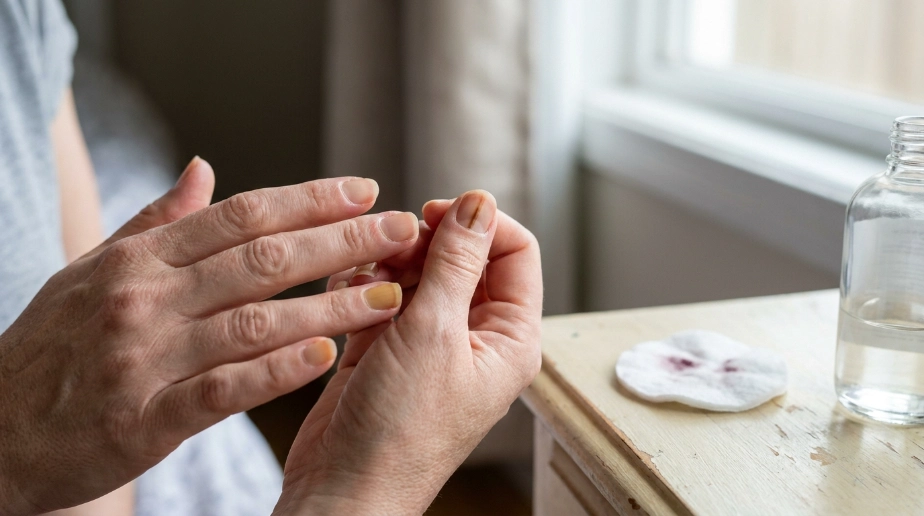
SaveRemove all polish and look at your nails in bright, natural light. A cosmetic stain usually affects several nails that were painted at the same time. It may appear yellow, orange, brown, or slightly gray, and the nail normally remains smooth and firmly attached.
Surface staining is especially likely if you recently wore deep red, burgundy, navy, green, purple, or black polish without a base coat. Highly pigmented lacquer can leave color in the upper layers of the nail plate, much like a food container holds a faint tomato-sauce stain.
Other common surface causes include hair dye, self-tanner, tobacco, gardening, spices, and cleaning products. If the color appeared after a known exposure and starts near the free edge rather than beneath the cuticle, gentle cleaning may help.
Discoloration deserves more caution when it:
- Appears as a new brown or black vertical band on one nail
- Starts at the cuticle or seems to sit beneath the nail plate
- Becomes wider, darker, or more irregular over time
- Spreads onto the skin beside the nail
- Appears with pain, bleeding, swelling, splitting, or nail lifting
- Makes the nail thick, crumbly, distorted, or unusually fragile
- Develops without a clear cause or remains after the nail grows
Warning
Don’t scrub, buff, or bleach a new dark streak. Brown or black pigmentation can be harmless, particularly when similar bands affect several nails, but a changing band on one nail can occasionally signal nail melanoma. A dermatologist should examine it promptly. Nail discoloration accompanied by thickening, crumbling, or lifting may also need testing for fungus.
When you’re unsure, take a clear photograph today and arrange a medical assessment. A photograph helps you notice changes, but it shouldn’t replace an examination.
What Naturally Lightens Stained Nails?
No home ingredient can safely change the natural color of your nail bed. What you can do is lift mild surface residue, reduce the contrast of polish stains, and protect new growth from further discoloration.
Start with the gentlest method. Your nail plate is made of compact layers of keratin. Aggressive scraping and repeated acid treatments separate those layers, leaving the nail dry, rough, and more likely to absorb pigment during your next manicure.
Method 1: Mild Soap and a Soft Nail Brush
This is the best starting point when your nails look dull from gardening, makeup, spices, self-tanner, or everyday residue. It also helps you see how much color remains before trying anything stronger.
- Remove nail polish completely.
- Wash your hands in lukewarm water with mild soap.
- Use a soft nail brush over the surface and beneath the free edge for 20 to 30 seconds.
- Rinse well and pat your hands dry.
- Apply cuticle oil or fragrance-free hand cream.
Keep the pressure light. A firm brush may make the nail look cleaner for a moment, but it can leave tiny surface scratches that collect more pigment.
Pro Tip
Clean beneath the free edge instead of digging deeply under the nail. Pushing a tool underneath can separate the nail plate from its bed, creating a pale gap where moisture and debris collect.
Method 2: A Short Baking Soda Paste Treatment
Baking soda is mildly abrasive, so it may help with superficial polish or dye residue. It doesn’t remove pigment produced beneath the nail, and more scrubbing won’t change that.
Mix one teaspoon of baking soda with just enough water to form a thin paste. Spread it over the stained nail plate, leave it for no more than two minutes, and massage very gently with a fingertip. Rinse thoroughly and moisturize.
Try this once, then wait at least a week before deciding whether to repeat it. Stop if you feel burning or notice peeling, chalkiness, or increased sensitivity. Don’t use it on cracked skin, damaged cuticles, thin nails, or a nail that’s lifting.
Method 3: One-Time Gentle Buffing
Buffing can reduce a shallow stain because it removes a tiny amount of the nail’s outermost surface. It suits a smooth, healthy nail with a faint residual tint. It doesn’t suit thin, peeling, ridged, sore, or recently gel-damaged nails.
Use the finest side of a soft nail buffer. Make only four to six light passes across each nail, moving in one direction. Stop as soon as the surface looks smoother. You aren’t trying to grind through the stain.
Warning
Frequent buffing makes the nail plate thinner. Once those layers are removed, no oil or strengthener can put them back. You must wait for new nail to grow from the base.
Method 4: Let the Stain Grow Out
Growth is the safest and most reliable answer for pigment that has soaked into the nail plate. Keep the nail trimmed, moisturize it daily, and file the stained tip as it moves forward.
This approach feels slow, but it protects your nail’s thickness. You can use a ridge-filling base coat or a sheer neutral polish to soften the appearance while you wait. Remove it periodically so you can confirm that the dark area is moving toward the tip with normal growth.
A discoloration caused by an old bruise should also move outward as the nail grows. Don’t puncture, drill, or scrape beneath the nail at home. If a recent injury causes throbbing pressure, severe pain, or a large dark area, seek medical advice because the nail bed may need professional care.
Should You Use Lemon Juice to Whiten Dark Nails?
Lemon juice is widely recommended online because its acidity can affect some surface stains. However, “natural” doesn’t automatically mean gentle. Lemon can sting broken skin, dry the nail plate, irritate your cuticles, and make sun-exposed skin more reactive.
If your nails are healthy and the surrounding skin is intact, a brief, diluted treatment is less harsh than soaking your fingertips in straight juice. Mix one part lemon juice with three parts water. Apply it only to the nail plate with a cotton swab, leave it for one minute, then wash and moisturize.
Don’t use lemon on cuts, hangnails, eczema, peeling nails, or irritated cuticles. Wash your hands well before going outdoors. For most people, mild soap or simply allowing the stain to grow out is the safer choice.
If you want a deeper look at the advantages and limits of this remedy, see whether lemon juice is good for your nails before adding it to your routine.
Which Popular Nail-Whitening Remedies Should You Avoid?
Some home treatments make nails look temporarily brighter by stripping or dehydrating their surface. That isn’t the same as restoring healthy color.
- Undiluted bleach: Household bleach can irritate your skin, eyes, and airways. It has no place in cosmetic nail care.
- Long lemon soaks: Extended acid exposure can dry the nail plate and inflame surrounding skin.
- Coarse toothpaste scrubs: Strong abrasives may leave scratches and thin the nail’s upper layers.
- Repeated peroxide treatments: Peroxide can irritate skin and make already-dry nails more brittle.
- Metal scraping tools: Scraping may damage the nail plate or separate it from the nail bed.
- Covering a suspicious change: Polish can hide progression and delay an examination.
If your nails already feel weak after gels, extensions, or repeated removal, focus on protection rather than whitening. This guide to repairing a damaged nail at home explains how to reduce further breakage while healthy nail grows in.
How Long Does It Take for Dark Nails to Lighten?
A removable surface residue may improve after one gentle cleaning. Pigment absorbed into the nail plate normally has to grow forward before you can trim it away.
Fingernails grow roughly a few millimeters each month, though the rate varies with age, health, season, injury, and the individual finger. Replacing an entire fingernail commonly takes about four to six months. Toenails grow more slowly and may take a year or longer to replace fully.
Look for a clear band of fresh nail emerging near the cuticle. Over the following weeks, the boundary between new and stained nail should move toward the tip. If discoloration stays fixed at the base, spreads, or becomes darker, stop treating it as a surface stain and arrange an examination.
You can learn more about the normal timeline in this explanation of how fast nails grow.
How Do You Prevent Dark Nail Stains from Returning?
 Save
SavePrevention works better than trying to scrub pigment out later. A thin base coat creates a barrier between your nail plate and strongly colored polish. Cover the entire nail, including the sidewalls, and let it dry before applying color.
Remove dark polish when it starts lifting rather than layering fresh lacquer over the old manicure. During removal, hold a saturated cotton pad on the nail briefly, then wipe toward the tip. Rubbing in circles can spread dissolved pigment across your cuticles and into dry surface ridges.
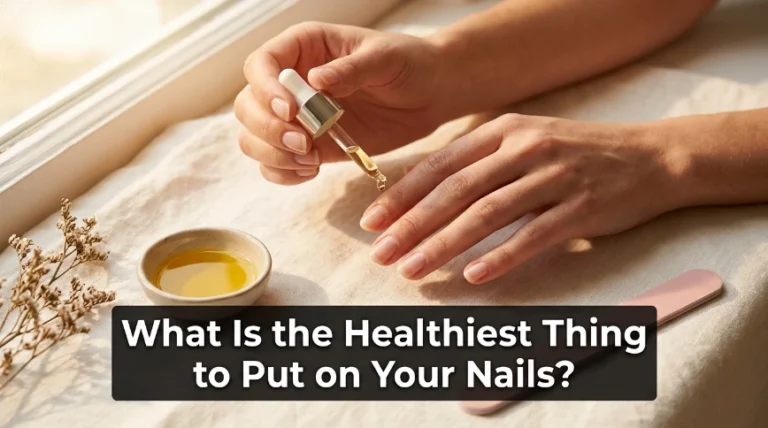
After removal, wash away residue and apply oil. Moisturized nails bend more comfortably and are less likely to develop rough, peeling areas that trap color. Olive oil can soften dry surrounding skin, although a formulated cuticle oil is usually lighter and easier to use. Here’s a closer look at whether olive oil is good for fingernails.
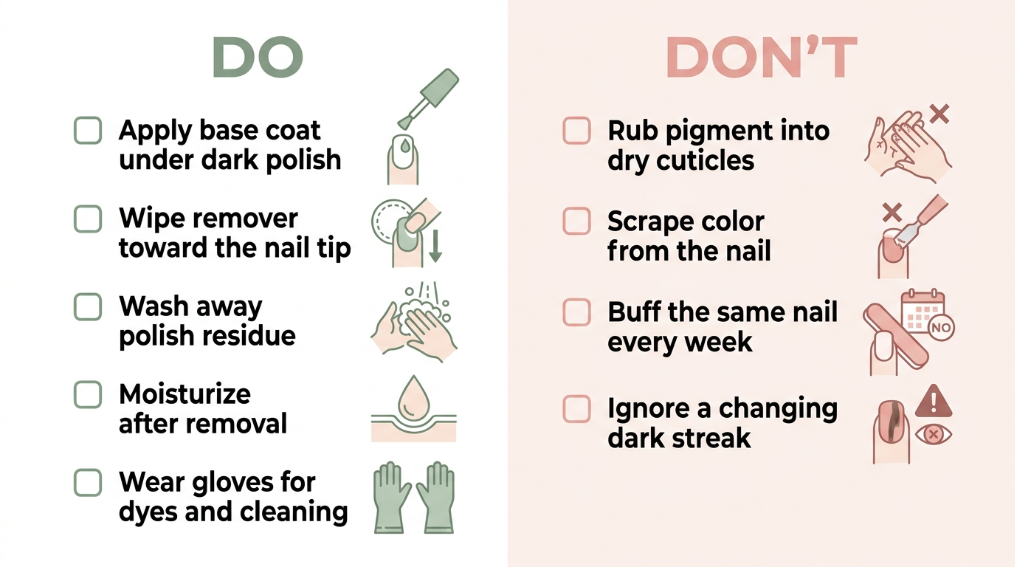
Do
- +Apply base coat under dark polish
- +Wear gloves for dyes and cleaning
- +Moisturize after every removal
Don’t
- −Scrape pigment from the nail
- −Buff the same nail every week
- −Ignore a changing dark streak
Which Products Help Protect Stained Nails?
You don’t need a shelf full of whitening products. A gentle remover, soft buffer, base coat, and moisturizing oil cover the practical basics.
Recommended Product
Stain-Blocking Nail Base Coat
A clear base coat helps keep dark lacquer pigments from settling directly into the nail plate.
As an Amazon Associate, we earn from qualifying purchases.
Recommended Product
Fine-Grit Nail Buffer Block
A fine buffer gives you better control than a coarse file when reducing a very shallow surface stain.
As an Amazon Associate, we earn from qualifying purchases.
Recommended Product
Jojoba Cuticle Oil
Daily oil won’t bleach discoloration, but it helps dry nails look smoother while the stained section grows out.
As an Amazon Associate, we earn from qualifying purchases.
How Can You Keep Your Natural Nails Looking Brighter?
Give your nails regular polish-free days so you can check their color and condition. Keep them short enough that they don’t repeatedly bend, and smooth snags with a fine file instead of tearing them.
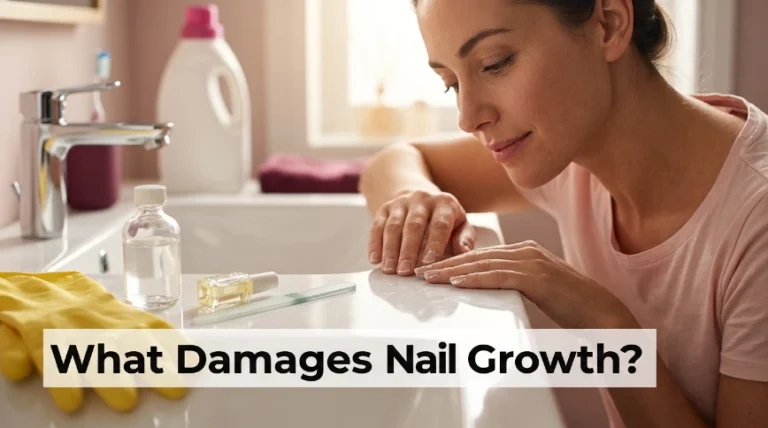
Wear gloves while cleaning, gardening, coloring hair, or handling strongly pigmented foods. Dry your hands and feet carefully because persistent moisture encourages organisms that can affect nail color and texture.
Don’t cut or push your cuticles aggressively. The cuticle forms part of the protective seal around new nail growth. Breaking that seal can lead to inflammation or infection, neither of which creates a brighter-looking manicure.
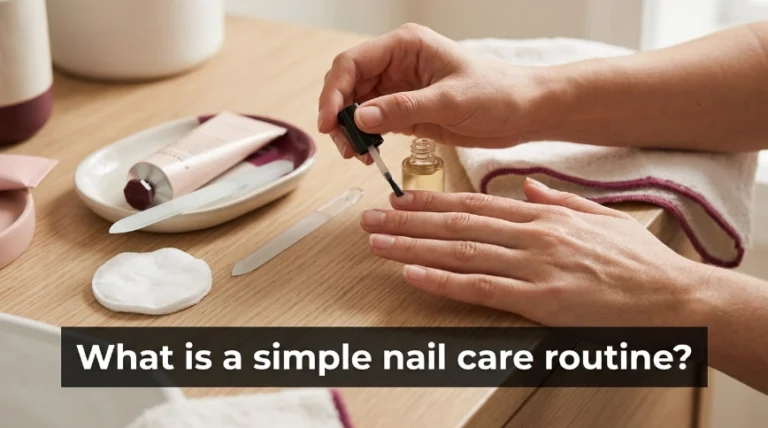
A consistent routine matters more than a harsh whitening session. This simple nail-care routine can help you protect new growth without overworking the nail plate.
Frequently Asked Questions About Dark Nails
Q: Can naturally dark nail beds be lightened?
A: You shouldn’t try to bleach the natural pigmentation beneath your nails. Normal nail-bed color varies between people and skin tones. Home care can remove surface stains, but it won’t safely change natural melanin.
Q: Why are my nails dark after removing polish?
A: Strong polish pigments can settle into the nail plate, particularly when you skip base coat or wear the color for a long time. The tint should gradually move toward the tip as your nail grows.
Q: Does baking soda whiten nails?
A: Its mild abrasiveness may reduce superficial residue, but it can’t remove pigment beneath the nail or cure an infection. Use it briefly and infrequently because repeated scrubbing can roughen the nail.
Q: Can nail fungus make nails look dark?
A: Yes. Fungal nails may become yellow, brown, white, or dark and often grow thick, crumbly, distorted, or lifted. Home whitening doesn’t treat fungus, so seek a proper diagnosis before buying treatment.
Q: When should I worry about a dark line on my nail?
A: Arrange a prompt medical assessment if a new line affects one nail, becomes wider or irregular, changes color, or extends onto the nearby skin. Also seek help for pain, bleeding, splitting, or nail lifting.
What Is the Safest Way to Get Clearer-Looking Nails?
Use gentle cleaning for removable residue, protect the nail with moisturizer and base coat, and let absorbed pigment grow out. Avoid harsh bleaching, deep scraping, and frequent buffing because damage can make discoloration more noticeable.
Most importantly, don’t treat every dark nail as a cosmetic stain. If the color comes from beneath the nail, changes over time, or appears with thickening or pain, get it examined. Save this guide to your Pinterest nail-care board so you can follow the safe steps the next time dark polish leaves a stain.

Hi, I’m Jessica, the creator behind Unique Lash & Nails Katy.
I created this website for anyone who loves beautiful nails as much as I do. Here, I share trendy nail designs, seasonal manicure ideas, easy nail care tips, honest product recommendations, and step-by-step guides to help you create salon-worthy nails at home. Whether you’re looking for everyday inspiration or your next favorite nail trend, I hope you’ll find something you love.