What Do B12 Deficiency Nails Look Like? Signs & Symptoms
Quick Answer
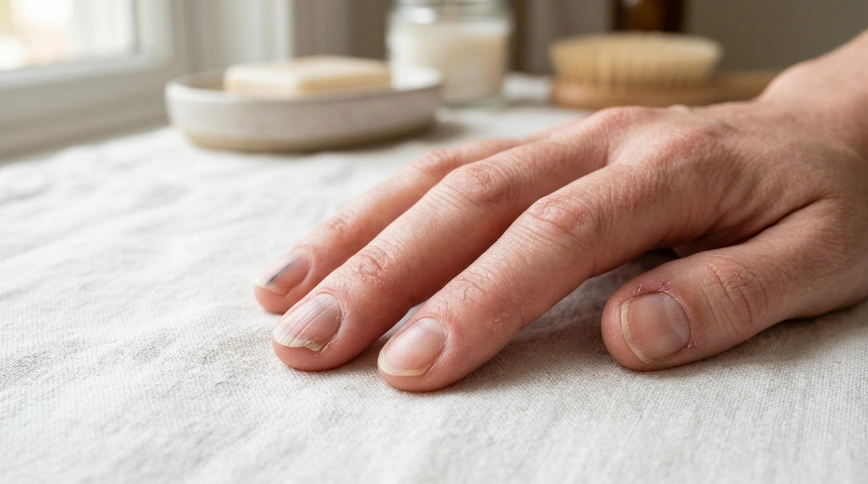
B12 deficiency nails often look dark or bluish at the base, with brittle, ridged, or curved (spoon-shaped) nail beds. You might also notice bluish-black pigmented bands running down the nail, especially in people with darker skin tones. These changes happen because low B12 disrupts how quickly your nail cells grow and pigment properly.
Your nails are quietly keeping a record of what’s happening inside your body, and B12 is one of the nutrients that shows up there first. If you’ve noticed new ridges, a strange blue-gray tint, or nails that suddenly seem more brittle than usual, you’re not imagining things. Here’s what B12-deficient nails actually look like, why it happens, and what to do next.
Why Does B12 Deficiency Affect Your Nails?
B12 plays a direct role in how your body makes red blood cells and DNA, and your nail matrix (the part under your cuticle that produces new nail) needs both to grow healthy tissue. When B12 runs low, cell division slows down and becomes irregular. That’s why deficiency doesn’t just make nails weak — it changes their color, shape, and texture in ways other deficiencies don’t.
Low B12 also reduces oxygen delivery to nail tissue since it’s needed to build healthy red blood cells. Nail cells are some of the most metabolically active in your body, so they’re especially sensitive to this kind of oxygen and nutrient shortage. That’s why nail changes can show up before other, more obvious symptoms like fatigue.
What Do B12 Deficiency Nails Actually Look Like?
 Save
SaveBluish-black pigmented bands
Dark, longitudinal streaks or a bluish-gray discoloration running from the cuticle to the tip. This is one of the more distinctive signs and shows up more often in people with medium to dark skin tones.
Spoon-shaped nails (koilonychia)
Nails that curve inward instead of lying flat, sometimes deeply enough to hold a drop of water. This is more commonly linked to iron deficiency but can appear alongside B12 deficiency too, since the two often overlap.
Brittle, splitting, or ridged nails
Vertical ridges become more pronounced, and nails start peeling or snapping even without much stress on them. You’ll notice they’re harder to grow past a certain length before they break.
Pale or grayish nail beds
Because B12 deficiency often comes with reduced oxygen in the blood, nail beds can lose their healthy pink color and take on a duller, washed-out tone.
Warning
Nail changes alone can’t confirm a B12 deficiency — several conditions cause similar symptoms. Persistent discoloration, spoon-shaped nails, or brittleness that doesn’t improve with basic care should be checked by a doctor with a simple blood test rather than self-diagnosed.
Other Signs That Often Show Up With B12-Related Nail Changes
- Fatigue or low energy that doesn’t match your sleep or activity level
- Tingling or numbness in your hands and feet
- Pale or slightly yellow-tinted skin
- A sore, smooth, or unusually red tongue
- Difficulty concentrating or occasional brain fog
If you’re noticing several of these alongside nail changes, it’s worth mentioning to your doctor rather than treating the nails as an isolated cosmetic issue. Nail symptoms are frequently one of the first visible clues before other symptoms become obvious.
Do’s and Don’ts While You Sort This Out
Do
- +Take a photo of your nails now so you can track changes over time
- +Keep nails moisturized with cuticle oil to reduce splitting while you investigate the cause
- +Mention any fatigue or tingling to your doctor, not just the nail changes
Don’t
- −Assume dark nail bands are always B12-related — a doctor should rule out other causes first
- −Start high-dose supplements on your own without a confirmed deficiency
- −Cover up discoloration with dark polish before a doctor has seen it, if you have an appointment coming up
Pro Tip
If your nail bands run parallel from cuticle to tip and appear on multiple nails at once, that pattern is more consistent with a nutritional cause. A single dark spot on one nail is more likely a bruise or something else entirely, and deserves separate attention.
Pro Tip
B12 deficiency nail changes usually improve slowly, over a few months, once levels are corrected — not overnight. Track how your nails look at your next few manicure appointments instead of expecting a quick fix.
While you wait on any test results, focus on general nail health. Learning what causes weak nails beyond nutrition can help you rule out other everyday habits that make brittleness worse. It also helps to know the broader signs of unhealthy nails so you can tell which symptoms are related and which aren’t.
Foods That Support Healthy Nail Growth
 Save
SaveDiet plays a real role here, and it’s one of the simplest things you can influence right away. Checking out what foods are good for nail growth gives you a practical starting point, since B12-rich foods like eggs, dairy, and fortified cereals support the same nail matrix cells affected by deficiency.
If your nails are already damaged from brittleness or splitting, a guide on how to repair damaged weak nails can help you rebuild strength safely while your body recovers.
Frequently Asked Questions
Q: Can B12 deficiency nails go back to normal?
A: Yes, most nail changes improve once B12 levels are restored, though it takes time. Since nails grow slowly, expect to see gradual improvement over a few months rather than an immediate change.
Q: Is nail discoloration always a sign of B12 deficiency?
A: No. Dark bands, ridges, or pale nail beds can also come from iron deficiency, thyroid issues, fungal infections, or simply skin pigmentation patterns. A blood test is the only reliable way to confirm the cause.
Q: How long does it take for nail symptoms to appear after B12 drops?
A: It varies, but since nails grow roughly 3mm a month, visible changes usually take several weeks to a couple of months of low B12 before they show up clearly.
Q: Should I stop getting manicures if I suspect a deficiency?
A: You don’t need to stop entirely, but skip harsh acrylic removal or aggressive filing until your nails are stronger, and ask your nail tech to go gentle around the cuticle area in the meantime.
The Bottom Line
Bluish-black bands, spoon-shaped curves, and unexplained brittleness are the clearest visual clues that B12 might be behind your nail changes — but they’re a starting point for a conversation with your doctor, not a diagnosis on their own. Pin this guide so you can compare your nails against these signs anytime something looks off.

Hi, I’m Jessica, the creator behind Unique Lash & Nails Katy.
I created this website for anyone who loves beautiful nails as much as I do. Here, I share trendy nail designs, seasonal manicure ideas, easy nail care tips, honest product recommendations, and step-by-step guides to help you create salon-worthy nails at home. Whether you’re looking for everyday inspiration or your next favorite nail trend, I hope you’ll find something you love.