Unhealthy Nail Color: What It Means & When to Worry
Quick Answer
An unhealthy nail color is any shade that isn’t your natural pale pink — think yellow, white, blue-purple, dark brown or black, or greenish. Most of the time it’s from polish staining, dehydration, or a fungal infection, and it clears up with a break from polish and some basic care. But blue, black, or dark streaks that show up without an injury are the ones worth getting checked by a doctor.
You catch your reflection in a shop window, glance down at your hands, and there it is — your nails look yellow, or there’s a weird bluish tint under one of them, and you can’t quite remember if that’s new. Here’s the surprising part: nail color changes are one of the most reliable early clues your body gives you, and dermatologists actually look at nail beds the way they look at skin.
You don’t need to panic. Most discoloration is harmless and reversible. But knowing which color means “give your nails a break” versus “call a doctor” makes a real difference, so let’s go through exactly what each shade is telling you.
Why Do Nails Change Color in the First Place?
Your natural nail bed gets its pink tone from the blood vessels sitting just underneath it. Anything that interrupts that — a pigment sitting on top, a fungus growing underneath, reduced blood flow, or a change somewhere else in your body — shows up as a color shift. Polish pigments (especially reds and dark shades) can seep into the porous top layer of the nail plate and stain it, which is why so many “unhealthy” colors are really just cosmetic. Fungal infections work differently: they break down keratin and leave behind a yellow or white, crumbly residue that starts at the tip and creeps backward. And some colors, like blue or black without any injury, come from what’s happening inside your body rather than on the surface.
This is also why the same color can mean two completely different things depending on where it shows up and how it started. A yellow tinge across all ten nails after a month of red polish is nothing. A single yellow, thickening nail that’s been getting worse for months is a different story — and that difference is exactly what what causes weak nails often comes down to as well.
The Color-by-Color Breakdown: What Each Shade Actually Means
 Save
SaveYellow Nails
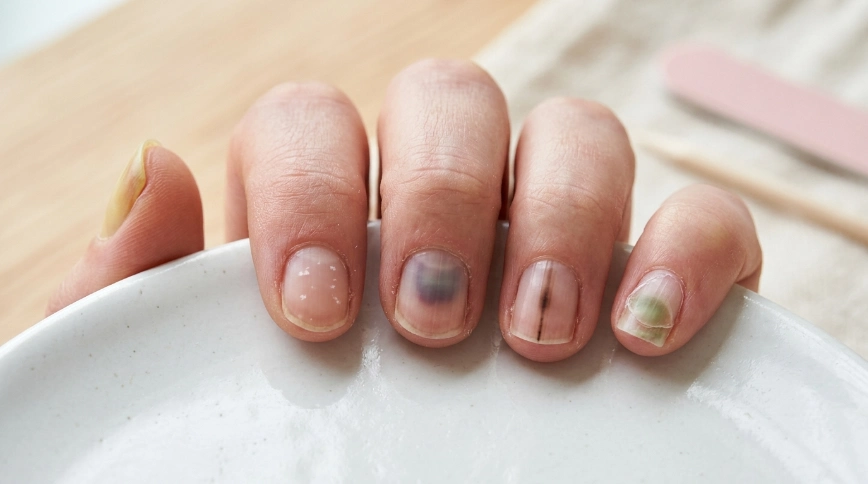
This is the most common “unhealthy” color people search for, and it’s usually one of two things. If you’ve been wearing dark or red polish for weeks without a base coat, the pigment has simply stained the nail plate — it’ll grow out within a few months. If instead the yellow is thick, crumbly, and starts at the free edge before working backward, that’s the classic look of a fungal infection, and it needs an antifungal treatment rather than just time.
Warning
Yellowing paired with a foul smell, thickening, or the nail lifting away from the skin is a sign of fungal infection, not just staining — over-the-counter polish won’t clear it, and it can spread to other nails if left untreated.
White Nails or White Spots
Small white flecks scattered across the nail are almost always from a minor knock to the nail bed weeks earlier — completely harmless, and they grow out on their own. A more uniform, chalky white across the whole nail plate is different and is more often linked to fungal infection or, less commonly, a sign your body isn’t absorbing enough protein. The key difference is spread versus spots: scattered flecks, don’t worry; a solid white sheet across the nail, worth watching.
Blue or Purple Nails
If you just slammed a finger in a door, a blue-purple nail is a bruise, plain and simple — it’ll grow out. But blue-tinted nails with no injury involved usually point to reduced oxygen in the blood, sometimes from cold exposure and circulation, sometimes from something that needs medical attention. This is one of the colors where “did something happen to cause this” really matters.
Dark Brown, Black, or a Dark Streak
A single dark streak running vertically from the cuticle to the tip of one nail — especially if it’s new and you didn’t injure that nail — is the one color change dermatologists take most seriously, because it can (rarely) be a sign of melanoma under the nail. Most of the time it turns out to be a harmless pigment band, more common in people with darker skin tones, but a new one that appears out of nowhere deserves a professional look rather than a guess.
Warning
A dark vertical streak that’s widening, has blurry edges, or is spreading into the surrounding skin is not something to wait out — get it checked by a dermatologist as soon as you can.
Green-Tinted Nails
Green nails have one very specific cause: bacteria, usually Pseudomonas, trapped between an acrylic or gel and your natural nail after moisture got underneath. It shows up as a small green patch and spreads if the nail stays sealed. The fix is removing the enhancement so air can reach the nail bed again — trapping it under more product just feeds the bacteria.
Signs Your Nail Color Change Is Something More
Beyond the individual colors, there’s a pattern worth watching for regardless of shade: does it involve just one nail or all ten? A single nail with an unusual color, shape change, or texture shift is more likely to be a localized issue (injury, fungus, or something worth a dermatologist visit). Color changes across all ten nails at once point more toward something systemic — nutrition, circulation, or a broader health factor. You can see the fuller list of what to look for in signs of unhealthy nails, since color rarely shows up completely alone — it’s often paired with ridges, brittleness, or a change in shape.
Do’s and Don’ts for Discolored Nails
Do
- +Give your nails at least a two-week polish break to see if the color is just staining
- +Always use a clear base coat before colored polish going forward
- +Take a photo now so you can track whether it’s spreading or fading over the next few weeks
Don’t
- −Cover a suspicious color with more polish to hide it — you’ll lose your only way to track changes
- −Keep gel or acrylic on if you notice a green tint forming underneath
- −Self-treat a dark streak with home remedies instead of getting it looked at
Pro Tips for Getting Your Nail Color Back to Normal
 Save
SavePro Tip
If you switch to lighter polish shades for a few weeks after removing dark polish, staining is far less noticeable while your nail plate grows out and clears itself.
Pro Tip
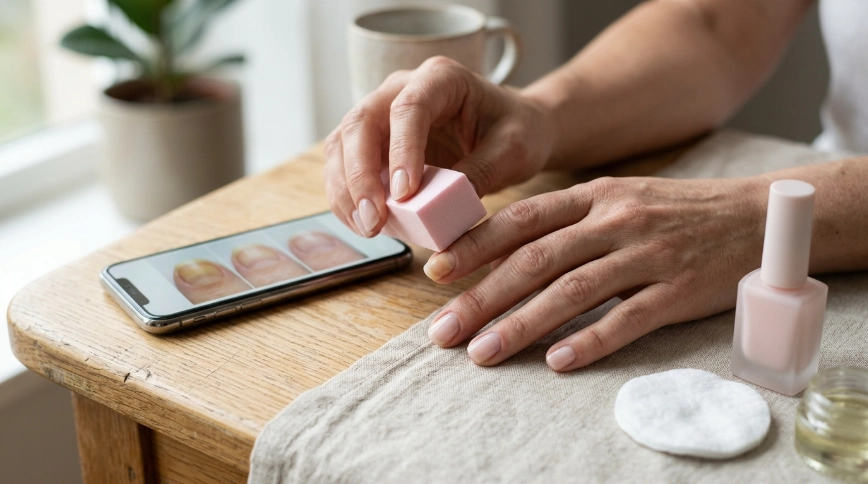
A gentle nail buffer can lift surface staining right off the top layer of the nail — just don’t overdo it, since buffing too often thins the nail plate and makes it more prone to peeling.
Pro Tip
Track the growth line, not just the color. Nails grow roughly one millimeter a week, so if discoloration is moving up and away from the cuticle with new healthy nail behind it, that’s a strong sign it’s already resolving.
Building a consistent routine helps prevent most of these color issues from coming back — you can see the full breakdown in how to take care of your nails daily.
Recommended Product
Nail Strengthener with Base Coat Barrier
★★★★☆ Highly rated on Amazon
A clear strengthening base coat creates a barrier between your nail and pigmented polish, which is the single easiest way to stop staining before it starts.
As an Amazon Associate, we earn from qualifying purchases.
Recommended Product
Gentle 4-Way Nail Buffer Block
★★★★☆ Highly rated on Amazon
A soft buffer is enough to smooth away light surface staining without thinning the nail plate the way a rough file would.
As an Amazon Associate, we earn from qualifying purchases.
Frequently Asked Questions
Q: Can dehydration cause nail discoloration?
A: It can contribute to a duller, more pale or opaque look rather than a specific color, and it often pairs with dryness and peeling around the cuticle. It’s rarely the sole cause of yellow, blue, or dark discoloration on its own.
Q: How long does it take for stained nails to grow out?
A: A full nail typically grows out in three to six months, though you’ll usually see the discolored section move up and away from the cuticle within a few weeks of stopping the cause.
Q: Should I remove gel polish if my nail looks discolored underneath?
A: Yes — removing it lets you actually see the nail bed instead of guessing through a colored layer, and it stops any trapped moisture or bacteria from being sealed in further.
Q: Is one discolored nail more concerning than all ten?
A: Generally yes. A single affected nail points toward a localized cause like injury or fungus, while all ten changing together usually points toward something systemic that’s worth mentioning to a doctor if it persists.
The Bottom Line
Most unhealthy nail colors are your body’s way of showing you the aftermath of polish, a bump, or a fungus — not a five-alarm emergency. The one habit worth building is simple: give your nails regular polish-free breaks and actually look at them while they’re bare. That’s how you’ll catch the difference between “this is just staining” and “this needs a doctor” long before it becomes a bigger problem. Save this guide to Pinterest so you’ve got the color breakdown handy next time something looks off.

Hi, I’m Jessica, the creator behind Unique Lash & Nails Katy.
I created this website for anyone who loves beautiful nails as much as I do. Here, I share trendy nail designs, seasonal manicure ideas, easy nail care tips, honest product recommendations, and step-by-step guides to help you create salon-worthy nails at home. Whether you’re looking for everyday inspiration or your next favorite nail trend, I hope you’ll find something you love.