Does Vitamin B12 Help Fingernails? What Your Nails May Be Telling You
Quick Answer
Vitamin B12 can help your fingernails if a confirmed deficiency is interfering with healthy cell production. Correcting that deficiency may allow healthier nail to grow in, but taking extra B12 won’t reliably make already well-nourished nails grow faster or become harder. Because nail changes have many causes, use a blood test—not appearance alone—to decide whether you need treatment.
You may see vitamin B12 promoted as a shortcut to longer, stronger nails. The real answer is more specific: your body needs B12 to make DNA and healthy red blood cells, but more isn’t automatically better. If your nails suddenly look weak, unusually pigmented, or slow-growing, B12 is one possibility—not a diagnosis.
This guide helps you understand the connection, spot reasons to ask for testing, and choose food or supplements safely. It also explains when your nail changes deserve medical attention instead of another beauty product.
How Does Vitamin B12 Affect Your Fingernails?
Your nail plate is made mainly of keratin. New nail cells form in the matrix beneath the skin at the base of your nail, then harden and move forward. Vitamin B12 supports DNA synthesis, so it contributes to normal cell division throughout your body. It also helps your body produce healthy red blood cells, which carry oxygen to growing tissues.
That makes B12 necessary for normal nail production, but it doesn’t make B12 a stand-alone nail-growth treatment. Your nails also depend on adequate protein, iron, zinc, folate, overall calories, circulation, and protection from repeated water and chemical exposure. One nutrient can’t compensate for every missing piece.
When you’re genuinely deficient, restoring your B12 level removes one obstacle to normal growth. When your level is already adequate, extra B12 has no proven mechanism that makes the nail matrix work beyond its normal rate. Think of it as correcting a shortage rather than adding a growth booster.
Pro Tip
Photograph your bare nails in the same lighting once a month. Because new nail grows from the base, comparing the newest few millimeters is more useful than judging the older free edge.
What Nail Changes Can Happen With B12 Deficiency?
 Save
SaveVitamin B12 deficiency has occasionally been associated with nail pigmentation, including darkened or blue-brown areas. Medical reports describe these changes, but they aren’t common enough or specific enough to diagnose deficiency. Many people with low B12 have no noticeable nail changes at all.
You might also notice slow-looking growth or fragile nails while you’re unwell or nutritionally depleted. Those signs are nonspecific. Repeated wetting, acetone exposure, picking off gel, iron deficiency, thyroid disease, skin conditions, infection, and normal aging can produce similar changes. Our guide to signs of vitamin deficiency in nails explains why nail appearance should be treated as a clue rather than proof.
- New or spreading dark pigment: B12 deficiency is one possibility, but trauma, medication, fungal infection, or a pigmented lesion may also be responsible.
- Brittleness or splitting: These commonly come from repeated water, detergents, polish removal, or physical damage and aren’t classic B12-specific signs.
- Ridges: Fine vertical ridges are often normal. Deep horizontal grooves can follow illness or a temporary interruption in nail growth.
- Pale-looking nail beds: This can occur with anemia, but color varies naturally and can’t replace a blood count.
Warning
Get a new dark streak checked promptly—especially if it appears on one nail, widens, has uneven color, or pigment extends onto nearby skin. Don’t assume it’s a vitamin problem or try to bleach it away.
Who Is More Likely to Be Low in Vitamin B12?
Your risk matters more than the appearance of your nails. B12 occurs naturally mainly in animal-derived foods, while absorption requires normal stomach acid and a protein called intrinsic factor. You may be more likely to develop a deficiency if you:
- eat a vegan diet or very little meat, fish, eggs, and dairy without reliable fortified foods or supplements;
- have pernicious anemia, which interferes with intrinsic factor;
- have had weight-loss surgery or surgery involving your stomach or small intestine;
- live with celiac disease, Crohn’s disease, or another condition that affects absorption;
- take metformin or long-term acid-suppressing medicines, which can reduce B12 absorption in some people;
- are older, because food-bound B12 can become harder to absorb.
Look beyond your nails. Low B12 can also cause fatigue, weakness, a sore or smooth tongue, numbness, pins and needles, balance problems, memory changes, and megaloblastic anemia. Neurological symptoms can occur even without obvious anemia, which is why persistent tingling or balance trouble deserves prompt care.
How Can You Know Whether B12 Is the Problem?
Start with a clinician rather than a high-dose supplement. Describe when the nail change began, which nails are affected, your diet, medications, digestive conditions, and any fatigue or nerve symptoms. A clinician may order a complete blood count and serum B12 level. If the result is borderline or doesn’t fit your symptoms, methylmalonic acid may help clarify whether your cells are short of B12.
Testing first matters for two reasons. It keeps you from overlooking a different cause, and it gives you a baseline for deciding whether treatment works. It’s also sensible to discuss iron and thyroid testing when your history or symptoms point that way; brittle nails alone don’t identify the missing nutrient.
Try not to stop prescribed medicines before testing unless the prescriber tells you to. Instead, bring a complete list of medicines and supplements to the appointment. Tell the clinician if you already started B12, including the dose and date, because recent supplementation can raise a blood result and make it harder to interpret alongside your symptoms.
A laboratory number also needs context. Different laboratories may use different reference ranges, and a result near the lower end isn’t interpreted in isolation. Your symptoms, blood count, diet, absorption risks, and follow-up markers help your clinician decide whether treatment or more testing makes sense.
Your nails are weak but your B12 result is normal
Don’t keep increasing B12. Review water and chemical exposure, manicure damage, protein and iron intake, medications, skin conditions, and thyroid symptoms. Use this practical guide to repair damaged, weak nails while you investigate the cause.
Will B12 Make Your Nails Grow Faster?
If deficiency slowed healthy tissue production, treatment may normalize growth over time. You shouldn’t expect a sudden growth spurt, though. Fingernails generally grow only a few millimeters per month, and an entire nail commonly takes about four to six months to replace itself.
Improvement appears at the base first. The old split, ridge, or discolored section doesn’t repair itself; it must grow forward and be trimmed away. A healthier strip near your cuticle after several weeks is more meaningful than a change at the tip. For realistic growth expectations, see how fast fingernails normally grow.
If you’ve treated a confirmed deficiency and see no healthier new growth after roughly three months, follow up. Your treatment may need adjustment, absorption may still be poor, or B12 may not be the main cause.
What Is the Safest Way to Get Enough B12?
Choose B12-rich foods when you can
Fish, meat, poultry, eggs, milk, and other dairy products provide B12 naturally. Fortified breakfast cereals, plant milks, and nutritional yeast can help if you eat plant-based foods, but check the label because fortification varies. Pairing B12 adequacy with enough protein and a varied diet supports the whole nail-building process. You can find more balanced ideas in this list of foods that support nail growth.
If fortified nutritional yeast fits your meals, compare labels before buying because not every brand contains B12. This B12-fortified nutritional yeast search can help you see available options, but the nutrition label—not the front-of-package claim—is what matters.
Use a supplement for a clear reason
A basic oral supplement may be useful if your diet doesn’t reliably provide B12 or your clinician confirms a deficiency. Cyanocobalamin and methylcobalamin are common forms. The best dose depends on why you’re low; supplements often contain far more than the adult daily requirement because only part of a large oral dose is absorbed.
Don’t choose solely by a dramatic dose or a “hair, skin, and nails” label. Look for a simple ingredient list and independent quality testing where available. You can compare third-party-tested vitamin B12 supplements, then confirm the form and dose with a clinician or pharmacist.
Recommended Product Type
Single-Ingredient Vitamin B12 Supplement
A single-ingredient product makes the dose easier to understand and avoids paying for a crowded nail blend you may not need; use it only when your diet, test results, or clinician indicate a reason.
As an Amazon Associate, we earn from qualifying purchases.
Follow medical treatment when absorption is impaired
Food alone may not correct a deficiency caused by pernicious anemia, gastrointestinal surgery, or significant malabsorption. A clinician may recommend high-dose oral treatment or injections, depending on the cause, severity, symptoms, and local guidance. Don’t substitute an over-the-counter gummy for prescribed treatment.
Warning
Don’t delay assessment if you have numbness, pins and needles, balance changes, unusual weakness, or confusion. Some nerve problems linked with untreated B12 deficiency can become permanent, so nail improvement shouldn’t be your first priority.
What Should You Do While Your Nails Grow Out?
Correcting nutrition addresses growth from within, while gentle care prevents the new nail from being damaged on the way out. These habits won’t treat a B12 deficiency, but they reduce breakage that can hide progress.
Do
- +Wear gloves for dishes and cleaning to limit repeated swelling and drying.
- +Massage plain cuticle oil or petroleum jelly around the nail after handwashing.
- +Keep a monthly photo and note symptoms, treatment, and new growth.
Don’t
- −Diagnose deficiency from ridges, spots, or color alone.
- −Stack multiple B12 products because the label promises faster growth.
- −Pick, peel, or aggressively buff damaged nail layers.
When Should You See a Doctor About Nail Changes?
 Save
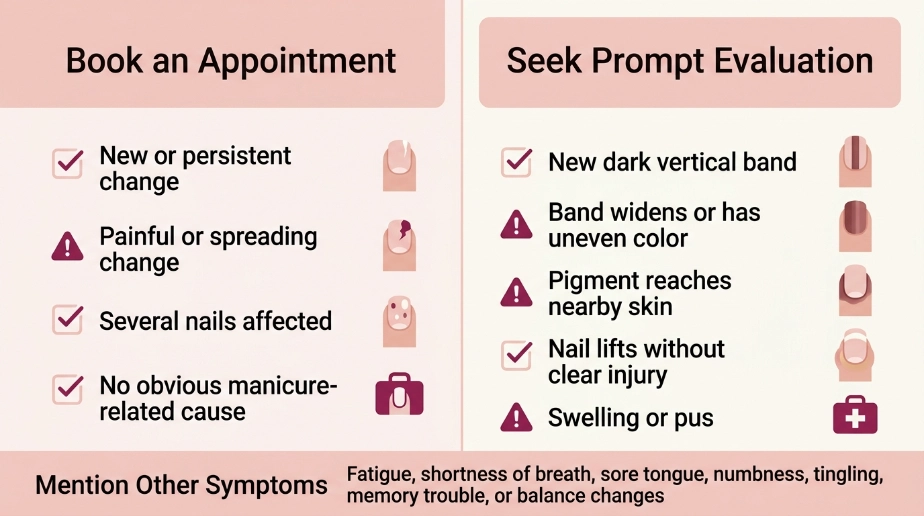
SaveBook an appointment when nail changes are new, persistent, painful, spreading, or affecting several nails without an obvious manicure-related cause. Mention systemic symptoms such as tiredness, shortness of breath, a sore tongue, numbness, tingling, memory trouble, or balance changes.
Seek prompt evaluation for a new dark vertical band, pigment spreading onto the skin around a nail, a nail lifting without clear injury, swelling or pus, or a rapidly changing shape. Those findings can have causes that need direct examination. Vitamin supplements aren’t an appropriate trial treatment for them.
If you’re pregnant, have kidney disease, take several medicines, or are being treated for a medical condition, check with your healthcare professional before starting a high-dose supplement. B12 is generally considered safe at standard recommended intakes, but the right treatment still depends on your health and the reason for taking it.
Frequently Asked Questions About B12 and Fingernails
Q: Can vitamin B12 make brittle nails stronger?
A: It may help healthier nail grow in if B12 deficiency contributes to the brittleness. If your B12 level is normal, extra supplementation isn’t a proven nail hardener; moisture, chemicals, trauma, iron status, and thyroid health may matter more.
Q: How long does B12 take to improve nails?
A: When deficiency is the cause and treatment is effective, healthier growth may become visible near the base over several weeks. Replacing a full fingernail generally takes about four to six months, so the damaged section has to grow out.
Q: Does B12 deficiency cause ridges in fingernails?
A: Ridges alone don’t reliably indicate B12 deficiency. Fine vertical lines are common, while deeper horizontal grooves can follow illness or interrupted growth. Your risk factors, other symptoms, examination, and blood tests provide better evidence.
Q: Can low B12 cause dark fingernails?
A: B12 deficiency has been associated with nail hyperpigmentation in some medical reports, but dark nails have many other causes. A new or changing dark streak—especially on one nail—needs medical assessment rather than self-treatment.
Q: Should you take B12 or biotin for nail growth?
A: Choose neither blindly. B12 treats inadequate intake or deficiency, while evidence for biotin mainly concerns a small number of people with brittle nails and is limited. High-dose biotin can also interfere with some laboratory tests, so discuss it before use.
The Bottom Line
Vitamin B12 helps your body make the cells needed for healthy nails, but a supplement is most useful when you’re actually low. Check your risk factors, test when appropriate, treat the cause, and give new nail several months to grow out. Save this guide on Pinterest so you can compare progress without falling for overnight nail-growth promises.

Hi, I’m Jessica, the creator behind Unique Lash & Nails Katy.
I created this website for anyone who loves beautiful nails as much as I do. Here, I share trendy nail designs, seasonal manicure ideas, easy nail care tips, honest product recommendations, and step-by-step guides to help you create salon-worthy nails at home. Whether you’re looking for everyday inspiration or your next favorite nail trend, I hope you’ll find something you love.