Best Way to Clean Your Nails: at Home With Natural Cleaners & Safe Liquids
Quick Answer
The best way to clean your nails at home is to wash them with mild soap and water, gently scrub beneath the free edge with a soft nail brush, rinse, and dry completely. You don’t need bleach, harsh household cleaners, or aggressive scraping. Use isopropyl alcohol only when you need to remove surface oils before a manicure, and use nail polish remover only for removing polish.
Time needed
5–10 minutes
Difficulty
Beginner
Items needed
4–6 basic items
Result lasts
Until nails get dirty again
You don’t need a salon cleanser or complicated DIY mixture to get clean, neat-looking nails. For normal everyday dirt, the simplest method is also the best: soap, clean water, gentle friction, and thorough drying.
The trick is knowing when a stronger liquid is actually useful. Alcohol, acetone, and other nail products all have specific jobs, but using them as everyday cleaners can leave your nails and surrounding skin unnecessarily dry.
Here’s exactly how to clean your nails at home, plus which natural cleaners and nail-cleaning liquids make sense for different situations.
What Do You Need to Clean Your Nails at Home?
Keep your cleaning kit simple. You probably already have most of what you need.
- Mild hand soap
- Clean running water
- A soft-bristled nail brush
- A clean hand towel
- A glass or fine-grit nail file if edges need smoothing
- Hand cream, petroleum jelly, or cuticle oil for moisture afterward
A soft nail cleaning brush is especially useful if you keep your nails long because dirt can collect underneath the free edge more easily.
Warning
Don’t use pins, needles, knife tips, metal files, or other sharp tools to dig beneath your nails. The skin under the nail is delicate, and aggressive scraping can cause tiny injuries that make the area sore and easier to irritate.
How Do You Clean Your Nails at Home Step by Step?
 Save
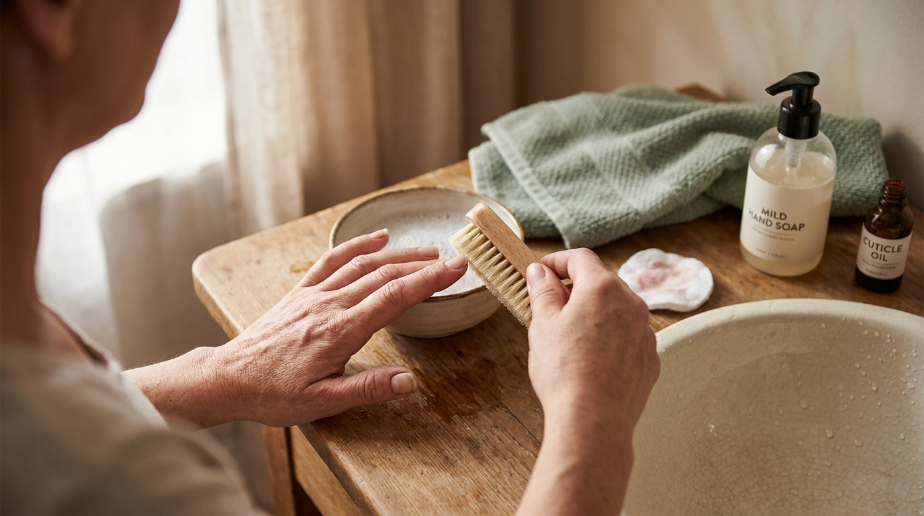
SaveThis method works for routine nail hygiene whether your nails are short, long, natural, or unpolished. If you’re wearing gel, acrylic, dip powder, or press-ons, don’t pry the enhancement away just to clean your natural nail.
1
Remove Old Regular Polish If Needed
If you’re doing a deeper manicure cleanup, remove regular nail polish first so you can see the full nail plate. Use your usual polish remover and wipe rather than scraping color away.
Common mistake: Peeling stubborn polish off with another fingernail. That can pull superficial layers from the natural nail along with the polish.
2
Wash With Soap and Water
Wet your hands with clean running water and work mild soap around your fingers, fingertips, nail folds, and beneath the free edges. Give the soap enough friction to loosen everyday oil and dirt.
Common mistake: Concentrating only on your palms. Dirt commonly hides around the fingertips and beneath longer nails, so those areas need attention too.
3
Soften Stubborn Dirt
If dirt is packed beneath longer nails, let your fingertips sit briefly in comfortably warm soapy water. A couple of minutes can soften residue so you don’t feel tempted to scrape at it.
Common mistake: Soaking for a long time because you think more water means cleaner nails. Prolonged water exposure can leave nails softer and more vulnerable to peeling or splitting.
4
Brush Under the Free Edge Gently
Run a soft, soapy nail brush beneath the tips and across the nail surface using light pressure. Let the bristles do the work instead of pushing the brush deeply underneath the nail.
Common mistake: Scrubbing until the skin underneath feels sore. Clean doesn’t need to mean aggressively scrubbed.
5
Rinse and Dry Completely
Rinse away all soap and loosened debris. Pat your hands, fingertips, and areas around the nails dry instead of leaving them damp.
Common mistake: Leaving moisture trapped around or underneath longer nails. Clean and dry is a better everyday goal than clean but constantly damp.
6
Moisturize Your Nails and Cuticles
Finish with hand cream, petroleum jelly, or a small amount of cuticle oil. Massage it around the nails and surrounding skin, especially if repeated handwashing leaves your fingertips dry.
Common mistake: Cutting the cuticle because it looks untidy. The cuticle helps protect the area where the nail grows, so cleaning shouldn’t involve removing it.
If you want a more complete manicure routine after cleaning, follow this step-by-step guide to cleaning nails at home before shaping or polishing.
What Is the Best Liquid for Cleaning Your Nails?
The best liquid depends on what you’re trying to remove. There isn’t one bottle that should be used for every nail-cleaning job.
Warm Soapy Water — Best for Everyday Cleaning
For dirt, everyday grime, food residue, and normal hygiene, soap and water should be your first choice. It’s inexpensive, readily available, and doesn’t require exposing your nails to a strong solvent.
Pair it with a soft brush when dirt is visible beneath the nail edge. You don’t need a disinfecting household cleaner on your natural nails.
Isopropyl Alcohol — Useful Before Polish
If you’re preparing bare nails for polish, gel, or nail art, an isopropyl-alcohol wipe can help remove surface oils after your hands are clean and completely dry. Use a lint-free wipe and keep the alcohol mainly on the nail plate rather than repeatedly saturating dry surrounding skin.
Alcohol is a manicure-prep product, not your everyday nail-washing replacement. If you’re mainly deciding between salon-style prep liquids, see this guide to the best liquids for cleaning and preparing nails.
Recommended Product
Lint-Free Nail Wipes for Manicure Prep
Lint-free wipes are convenient when you need to remove oil or polish residue without leaving loose cotton fibers across the nail surface.
As an Amazon Associate, we earn from qualifying purchases.
Acetone — Best Reserved for Polish Removal
Acetone is excellent at dissolving many nail coatings, but that doesn’t make it the best cleaner for bare nails. If you need to remove stubborn regular polish or follow the correct removal process for a compatible nail system, acetone can be useful because it works quickly.
For routine dirt underneath your nails, skip it. Repeated solvent exposure can leave the nail and surrounding skin feeling dry, so moisturize after removal.
Non-Acetone Polish Remover — A Gentler Removal Option
Non-acetone remover is another option for regular polish. It generally works more slowly, which means you may need extra wiping, but some people prefer it when their nails and skin already feel dry.
Remember that neither acetone nor non-acetone remover replaces normal handwashing. Their job is removing cosmetic coatings.
What Natural Cleaner Can You Use on Your Nails?
If by “natural” you mean a simple option without salon solvents, warm water and a gentle soap are still the most practical choice. Add a soft brush for the underside of the nail, then moisturize afterward.
You may see DIY recipes online involving lemon juice, vinegar, hydrogen peroxide, baking soda, toothpaste, or even bleach. Stronger isn’t automatically cleaner. Acidic, alkaline, abrasive, or oxidizing mixtures can irritate already-dry skin, sting tiny cuts, or simply do more than you need for normal nail hygiene.
Pro Tip
If your nails look dirty immediately after gardening, makeup application, cooking, or crafts, soften the residue with soap and water before reaching for a stronger product. Softening first usually means you can clean with much less pressure.
How Often Should You Clean Under Your Nails?
Clean beneath your nails as part of normal handwashing, especially when visible dirt is present or after activities that leave debris around the fingertips. Long nails deserve extra attention because there’s more space underneath the free edge for residue to collect.
A separate deep-cleaning ritual every day isn’t necessary for most people. Gentle regular hygiene is better than repeatedly soaking, scraping, or scrubbing your nails until the skin feels tender.
For a complete weekly maintenance plan beyond cleaning, this simple healthy nail-care routine explains how cleaning, filing, moisturizing, and protection fit together.
What Should You Do and Avoid When Cleaning Your Nails?
Do
- +Use mild soap and clean running water for everyday nail hygiene.
- +Clean underneath longer nails gently with a soft brush.
- +Dry well and moisturize the nails and cuticles after washing.
Don’t
- −Dig underneath your nails with pins or sharp metal objects.
- −Cut away healthy cuticle tissue during your cleaning routine.
- −Use bleach or household cleaning chemicals on your nails.
How Can You Make Home Nail Cleaning Easier?
Pro Tip
Keep a small nail brush beside the sink you use most. You’re more likely to clean gently and consistently when the right tool is already within reach.
Pro Tip
Clean the brush itself and allow it to dry between uses. A nail-cleaning tool should be clean before it touches the area under your nails.
Pro Tip
If you’re cleaning nails specifically before polish, finish all moisturizing first, wait until the product has absorbed, then remove remaining surface oil from the nail plate before applying your base coat.
Recommended Product
Cuticle Oil for After-Cleaning Moisture
A small amount of cuticle oil after cleaning helps counter the dry feeling that frequent washing or polish removal can leave around your nails.
As an Amazon Associate, we earn from qualifying purchases.
What If Your Nails Still Look Dirty After Washing?
Dirt remains under long nail tips
Soften the debris with warm soapy water, then use a soft nail brush again. Avoid switching to a pointed object just because the residue is stubborn.
Your nail plate looks stained rather than dirty
Stop scrubbing once the nail is physically clean. Pigment from dark polish and other staining can remain even after surface dirt is gone, and harder brushing won’t necessarily remove it.
Your nails feel dry after cleaning
Apply hand cream, petroleum jelly, or cuticle oil and reduce unnecessary solvent exposure. Wearing gloves during dishwashing and household cleaning can also reduce repeated water and chemical contact.
If repeated polish removal or aggressive manicure habits have already left your nails peeling or brittle, follow this guide on how to make damaged nails healthy again instead of trying to scrub them into looking smoother.
When Is a Nail Problem More Than Dirt?
 Save
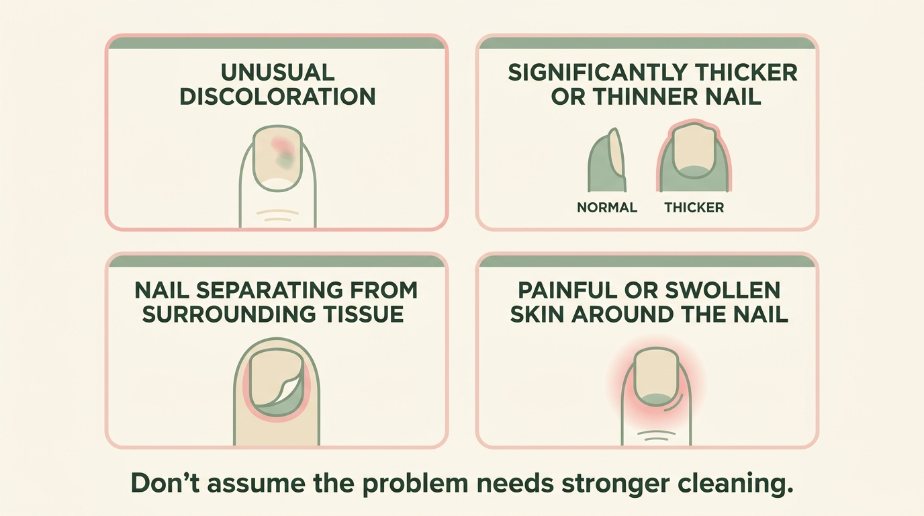
SaveCleaning should make ordinary surface debris disappear. If a nail stays unusually discolored, becomes significantly thicker or thinner, starts separating from the surrounding tissue, or the skin around it becomes painful or swollen, don’t assume the problem needs stronger cleaning.
Those changes can have causes that a home manicure can’t diagnose. Stop experimenting with harsh DIY cleaners and consider asking a healthcare professional or dermatologist if the change persists or worries you.
Recommended Product
Glass Nail File for Smoothing Clean Nail Edges
Once your nails are clean and dry, a fine glass file is useful for smoothing rough edges without turning the cleaning step into aggressive buffing.
As an Amazon Associate, we earn from qualifying purchases.
Frequently Asked Questions About Cleaning Nails at Home
Q: What is the best thing to clean under your fingernails with?
A: Mild soap, clean water, and a soft nail brush are the best starting combination for everyday dirt. Brush gently beneath the free edge instead of scraping with a sharp tool.
Q: What is the best natural way to clean your nails?
A: Warm water, gentle soap, and light brushing are enough for normal nail hygiene. You don’t need strong homemade acids, bleach, or abrasive mixtures to keep healthy nails clean.
Q: Can you use rubbing alcohol to clean your nails?
A: Isopropyl alcohol can be useful for removing surface oil from bare nails before polish, but it isn’t necessary for routine nail washing. Use it sparingly if your nails or surrounding skin are already dry.
Q: Can you use hydrogen peroxide to clean your nails?
A: You don’t need hydrogen peroxide for ordinary nail hygiene. Soap and water are the simpler choice for everyday dirt, and repeated DIY chemical treatments can irritate dry or damaged skin.
Q: How do you keep long nails clean underneath?
A: Work soap beneath the free edge whenever you wash your hands and use a soft nail brush when visible debris remains. Dry underneath and around the nail tips well afterward.
What Is the Best Home Nail-Cleaning Routine?
Keep it simple: wash with mild soap and water, gently brush underneath the free edge when necessary, rinse thoroughly, dry your nails completely, and moisturize afterward. Save alcohol for pre-manicure degreasing and nail polish remover for removing cosmetic coatings rather than turning either one into an everyday cleanser.
Clean nails shouldn’t feel scraped, sore, or stripped afterward. Gentle consistency is what keeps them looking fresh. Save this guide to your Pinterest nail-care board so you have the routine ready whenever your nails need a quick at-home refresh.

Hi, I’m Jessica, the creator behind Unique Lash & Nails Katy.
I created this website for anyone who loves beautiful nails as much as I do. Here, I share trendy nail designs, seasonal manicure ideas, easy nail care tips, honest product recommendations, and step-by-step guides to help you create salon-worthy nails at home. Whether you’re looking for everyday inspiration or your next favorite nail trend, I hope you’ll find something you love.