What to use instead of nail polish: 7 Things to Use Instead of Nail Polish
Quick Answer
Your best swaps are a nail buffer for a natural shine, cuticle oil for a healthy glow, a clear strengthener for a no-color finish, press-on nails or wraps for instant color, and tinted nail balm for a soft wash of pigment. Each one skips the harsh solvents in polish and lets your nails breathe while you take a break.
Maybe your nails are peeling from back-to-back manicures. Maybe you’re pregnant, allergic to a polish ingredient, or just tired of chipped color by day three. Whatever brought you here, you don’t have to choose between bare nails and traditional polish — you’ve got real options, and some of them look even better.
This guide walks you through seven swaps that actually work, when to reach for each one, and the mistakes that make people give up on them too soon. Some of these will fully replace polish for weeks at a time, and others are just a quick fix for a single day — you’ll know which is which by the time you’re done reading.
Best for damage
Cuticle oil
Best for color
Press-on nails
Best for speed
Petroleum jelly
Best long-term
Strengthener
Why You Might Want to Skip Traditional Polish
Regular nail polish relies on solvents like toluene and formaldehyde-releasing resins to create that hard, glossy film. Those same chemicals are what dry out your nail plate over time, which is why your nails feel thin and flaky after weeks of continuous wear. If you’ve noticed white patches, peeling layers, or a rough texture under your polish, your nails are asking for a break — and that’s exactly what these alternatives give them.
If you’re curious whether skipping polish altogether actually helps, our guide on whether nails are healthier without polish breaks down what happens to your nail plate during a polish-free stretch.
Signs Your Nails Need a Break From Polish
 Save
SaveYou don’t have to guess whether it’s time to switch things up. A few clear signs tell you your nail plate is asking for a rest:
- Peeling in visible layers, especially near the tip
- Chalky white patches that weren’t there a month ago
- Nails that bend or crease instead of staying firm
- Yellow staining that lingers even after polish comes off
- Cuticles that feel dry or tight no matter how much you moisturize
If two or more of these sound familiar, that’s your cue to try one of the alternatives below for at least a few weeks before going back to traditional polish.
The Best Alternatives to Nail Polish
1. Buffing for a Natural Shine
A four-sided buffing block smooths the ridges on your nail plate and polishes the surface until it catches light on its own — no polish required. It’s the closest thing to a natural gloss you’ll get, and it takes less than two minutes per hand.
Who it suits: Anyone who wants their nails to look intentional at work or in daily life without any color or product on them.
Pros: Free once you own the tool, zero drying time, no chemical exposure.
Cons: Over-buffing thins the nail plate, so once a week is the limit.
How long it lasts: The shine holds for two to three days before it dulls, which is normal since you’re polishing keratin, not sealing it under a film.
2. Cuticle Oil for a Healthy Glow
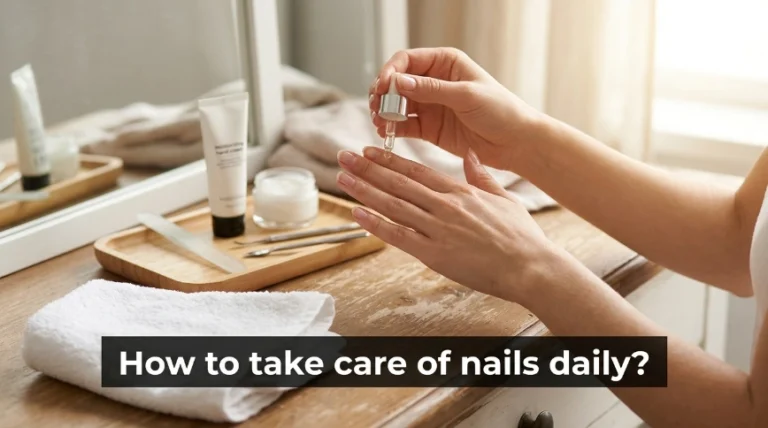
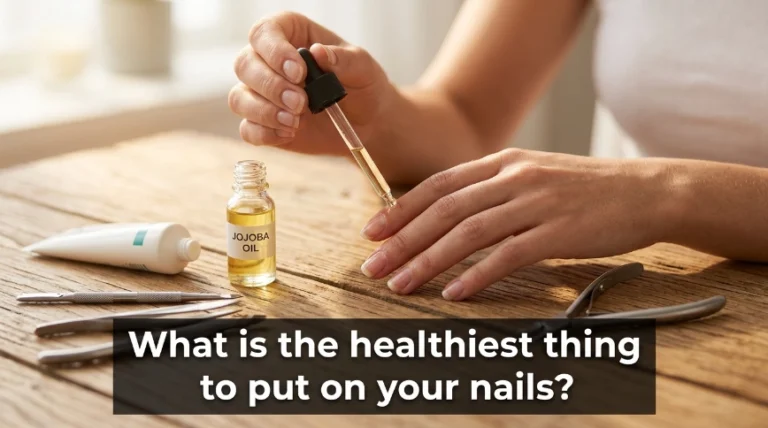
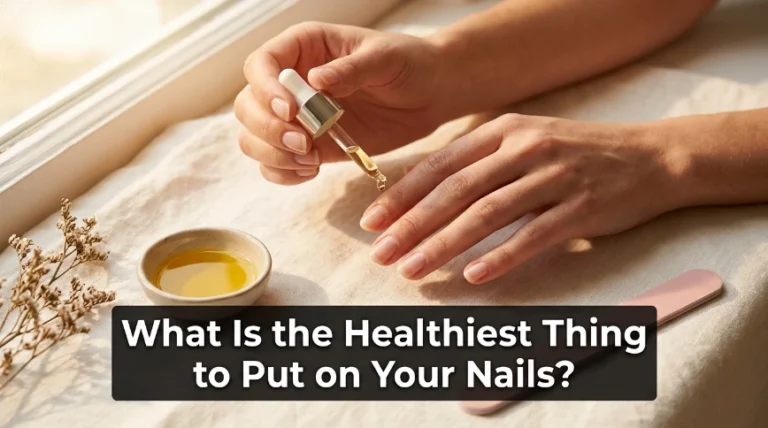
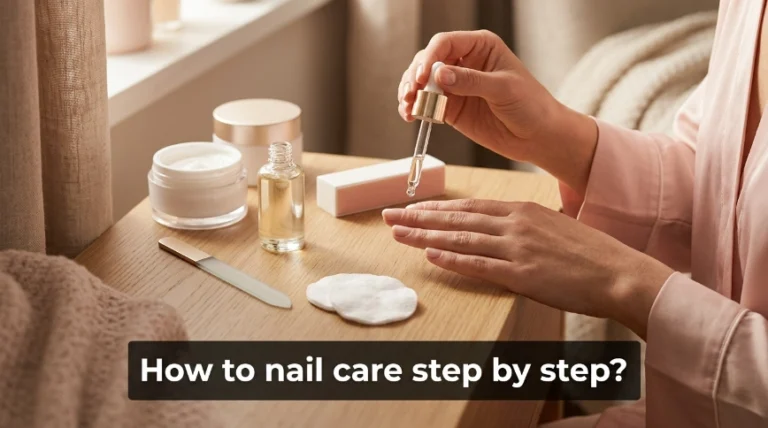
A few drops of cuticle oil massaged into your nail bed gives you a soft, healthy sheen that reads as “well cared for” rather than “bare.” Jojoba and vitamin E oils sink in fast and don’t leave a greasy residue once you rub them in fully.
Who it suits: Anyone recovering from damage or dryness who wants nails that look cared for, not just covered up.
Pros: Actively strengthens nails over time instead of just hiding them.
Cons: The shine fades within a few hours, so you’ll reapply once or twice a day.
How long it lasts: The visible glow lasts about four to six hours, but the strengthening benefit builds the more consistently you use it.
3. Clear Nail Strengthener
A clear strengthener is technically a polish, but it’s built with keratin, calcium, or nylon fibers instead of the harsh film-formers in colored lacquer. You still get a protective, glossy coat, but the formula is working to reinforce your nail rather than just decorate it.
Who it suits: Anyone whose nails split or bend easily and needs a protective layer more than a color statement.
Pros: Doubles as treatment and finish; still looks polished.
Cons: Still needs proper removal, so don’t pick at it.
How long it lasts: Most formulas hold their shine for four to five days before you’ll want to swipe on a fresh coat.
4. Press-On Nails or Nail Wraps
Modern press-ons apply with a flexible gel tab instead of harsh glue, so you get salon-level color and design without a single drop of liquid polish touching your natural nail. Peel them off whenever you’re ready, and your nail underneath is untouched.
Who it suits: Anyone who wants full color or nail art for an event without committing their natural nail to it.
Pros: Zero polish chemicals reach your nail plate; reusable if you’re gentle with removal.
Cons: Sizing takes a few tries to get right, and ill-fitting sets can trap moisture underneath.
How long it lasts: A well-fitted set stays put for one to two weeks, and you can reuse the same nails multiple times if you remove them carefully.
5. Tinted Nail Balm
Think of it as a lip tint for your nails — a waxy, semi-sheer balm that leaves a soft wash of color and a satin finish. It rubs off gradually instead of chipping in visible chunks, so it never looks like it’s failing.
Who it suits: Anyone who wants a hint of color for everyday wear without any drying or hardening formula.
Pros: No removal needed, doubles as a moisturizer.
Cons: Color is sheer, so it won’t satisfy anyone wanting a bold, opaque look.
6. Nail Stickers and Decals
Vinyl or gel-based nail stickers give you pattern and color in seconds, and most peel off cleanly without acetone. They’re a fun way to test a design before committing to it in polish or gel.
Who it suits: Anyone who wants nail art for a single event, like a party or a photoshoot.
Pros: Instant application, no dry time, huge design variety.
Cons: Edges lift faster around water and dishwashing than a true polish would.
7. A Petroleum Jelly Shine
A thin layer of petroleum jelly rubbed over your nail plate and cuticles gives you a glassy shine that lasts a few hours and locks in moisture at the same time. It’s the lowest-effort option on this list, and it’s one you probably already own.
Who it suits: Anyone who wants a quick polish-free shine before running out the door.
Pros: Costs almost nothing, moisturizes as it shines.
Cons: Smudges onto anything you touch until it fully absorbs.
For more on whether that last option genuinely helps your nail health or is just a temporary cosmetic fix, our piece on whether vaseline is good for nails lays out exactly what it does and doesn’t do.
Pro Tips for a Polish-Free Routine
 Save
SavePro Tip
Rotate cuticle oil and buffing on alternating days instead of doing both daily. Buffing removes the top layer of ridges, and doing it every single day chips away at your nail plate’s thickness faster than most people realize.
Pro Tip
If you’re switching to press-ons, size them against your natural nail before applying, not after. A tab that’s even slightly too small will pop off within hours, and one that’s too big will dig into your skin at the sides.
Pro Tip
Keep your cuticle oil in your bag, not just on your bathroom counter. The nails that look healthiest without polish are the ones getting oil touch-ups three or four times a day, not once at night.
Pro Tip
Shape your nails before you buff or oil, not after. Filing kicks up dust that settles into fresh oil and leaves a gritty film behind, so get your shape sorted first and finish with the polish-free product last.
Do’s and Don’ts While Your Nails Recover
Do
- +Keep nails trimmed short while they recover
- +Wear gloves for dishes and cleaning
- +Apply oil right after every hand wash
Don’t
- −Buff the same spot more than a few passes
- −Peel off press-ons or stickers dry
- −Skip a base layer of moisture before bed
If your nails have been through months of continuous gel or acrylic, a short recovery stretch makes a real difference. Our guide to shining natural nails naturally walks through a simple weekly routine that keeps them looking put-together the entire time.
Recommended Product
4-Way Nail Buffer Block
★★★★☆ Highly rated on Amazon
A simple four-sided block gives you the smoothing, shining, and polishing steps in one tool, which makes the natural-shine method above take under two minutes.
As an Amazon Associate, we earn from qualifying purchases.
Recommended Product
Jojoba Cuticle Oil Pen
★★★★☆ Highly rated on Amazon
A twist-up pen version is easiest to toss in a bag, so you’re more likely to actually reapply it through the day instead of leaving the bottle on your bathroom sink.
As an Amazon Associate, we earn from qualifying purchases.
FAQ
Q: Is it bad to always have something on your nails?
A: Not if what’s on them is protective rather than damaging. Cuticle oil and clear strengtheners actually help your nails, so there’s no need to go completely bare between color changes.
Q: How long should I go without polish before reapplying?
A: A week or two is usually enough to let a healthy nail recover from routine wear. Nails with visible peeling or thinning benefit from a full month using oil and strengthener alone.
Q: Do press-on nails damage your natural nails?
A: Not if you remove them correctly. Soak the edges in warm water until the adhesive tab softens, then lift gently — never pull or pry, since that’s what strips off layers of your nail.
Q: Can I mix these alternatives together?
A: Absolutely. A common combo is buffing once a week, oiling daily, and swapping in press-ons for special occasions — that gives you a healthy base and color whenever you want it.
Q: Will my nails grow back stronger if I stop using polish?
A: A new, healthier nail plate does grow in over about three to six months since that’s how long a full nail takes to replace itself. Using oil and a strengthener during that stretch speeds up how quickly it looks noticeably better.
Q: What’s the closest alternative if I specifically miss the color?
A: Press-on nails or a tinted balm get you closest to real color payoff without the harsh solvents in traditional polish, so start there if pigment is what you’re really missing.
The Bottom Line
You don’t need a bottle of traditional polish to have nails that look put-together. Buffing, cuticle oil, and press-ons alone can cover almost every situation you’d normally reach for polish, and your nail plate gets a real break in the process. The key is matching the alternative to what you actually need that day — a natural shine before work, a quick moisture fix before bed, or full color for an event — rather than picking one option and forcing it to do everything.
Start with whichever swap matches what’s bothering you most right now, whether that’s damage, dryness, or just wanting a change. Give it two to three weeks before judging the results, since nails show progress slowly compared to how fast polish chips. Pin this guide so you’ve got the full list ready the next time you’re standing in front of your nail drawer deciding what to reach for.

Hi, I’m Jessica, the creator behind Unique Lash & Nails Katy.
I created this website for anyone who loves beautiful nails as much as I do. Here, I share trendy nail designs, seasonal manicure ideas, easy nail care tips, honest product recommendations, and step-by-step guides to help you create salon-worthy nails at home. Whether you’re looking for everyday inspiration or your next favorite nail trend, I hope you’ll find something you love.